
Key Takeaways
- Many electric vehicles (EVs) are now integrating simulated engine sounds and gear shifts to enhance driver engagement, a trend Porsche initially resisted before offering it as an option.
- A recent drive in a 2026 Porsche Taycan, notably without these simulated features, demonstrated that exceptional vehicle dynamics can deliver a deeply rewarding and engaging driving experience without artificial embellishments.
- While some acoustic feedback is vital for gauging speed and modulating power in an EV, the Taycan’s natural vehicle sounds, particularly from its tires, provide critical information often masked by simulated engine noise.
- The core argument posits that leading performance EVs, through superior engineering and chassis tuning, can create a unique and exhilarating driving sensation that stands apart from the combustion engine era, fostering a new form of automotive nostalgia.
The automotive industry is in a transformative phase, with electric vehicles (EVs) rapidly gaining traction. A notable debate centers on driver engagement, particularly how to replicate the visceral experience traditionally associated with internal combustion engine (ICE) vehicles. Many manufacturers are exploring simulated engine sounds and artificial gear shifts in EVs, aiming to bridge this experiential gap for enthusiasts.
Porsche, a brand synonymous with driving purity and engineering excellence, recently surprised many by adopting this trend. Despite its previous stance, the German automaker now offers simulated gears in its electric models. This shift prompts a critical examination: do these artificial enhancements truly elevate the EV driving experience, or can cutting-edge electric performance stand on its own?

The Evolution of Simulated Driver Engagement
The integration of artificial engine and gear sounds into electric vehicles marks a significant trend in the EV landscape. This approach aims to provide drivers with familiar auditory feedback, addressing a common critique that EVs, while fast, lack the emotional connection of their noisy petrol counterparts.
Porsche’s decision to offer simulated engine and gear changes in its EVs was initially met with surprise, given the brand’s long-standing philosophy of unadulterated engineering. However, the system developed by Porsche, much like those found in models such as the Hyundai Ioniq 5 N and the Mercedes-AMG GT 4-Door EV, reflects a considerable investment in making these simulations feel authentic.
The Mercedes-AMG system, for instance, is highly regarded for its realistic V-8 impersonation. Porsche’s solution, while meticulously crafted, leans more towards a “video game-esque” sound, akin to Hyundai’s strategy. This design choice appears to intentionally differentiate it from a true combustion engine, presenting itself as a distinct electric auditory experience rather than a direct mimicry.

Porsche Taycan: A Silent Masterclass in Performance
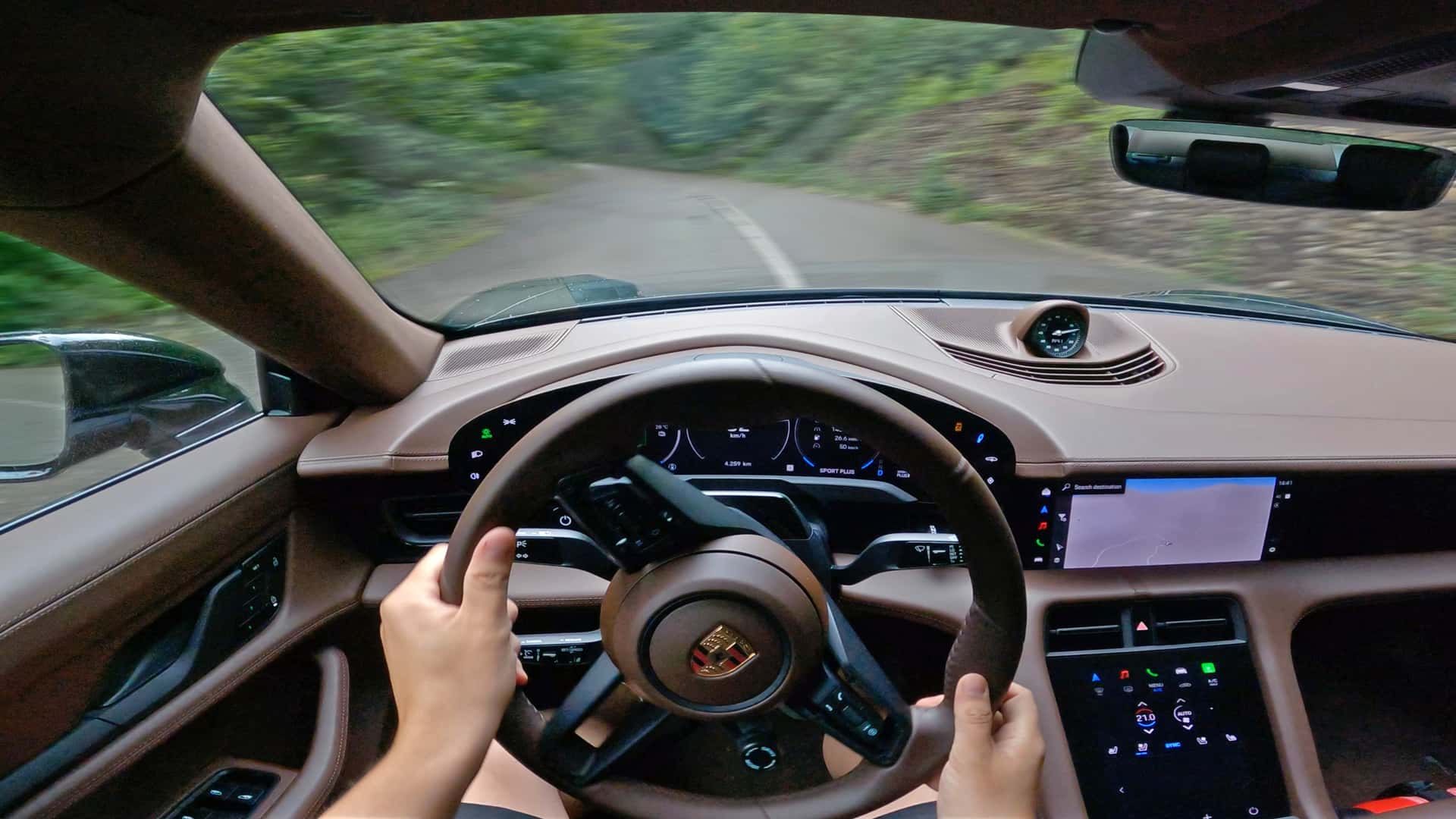
A recent extensive drive in the refreshed 2026 Porsche Taycan offered compelling insights into the true essence of high-performance EV driving. The particular test model did not feature the optional simulated engine and gear-swapping system, providing an unfiltered perspective on the Taycan’s capabilities.
The absence of artificial sounds and shifts proved inconsequential to the driving thrill. The Taycan, even in complete silence, delivers an exceptionally accomplished and rewarding experience for the keen driver. Its unique driving dynamics position it as a benchmark, transcending conventional distinctions between electric and combustion-powered vehicles.
As a true “corner-carving weapon,” the Taycan surpasses many traditional performance cars. Its chassis exhibits remarkable neutrality, poise, and predictability, fostering immense driver confidence on challenging, winding roads. The vehicle transitions seamlessly from corner to corner, creating a fluid and immersive driving sensation.
During spirited maneuvers, the thought of needing a simulated engine or gear shifts simply did not arise. The car’s intrinsic balance and dynamic prowess command full attention, proving that a masterfully engineered EV can provide profound engagement through pure handling and responsiveness.
The Crucial Role of Acoustic Feedback in EVs
While artificial engine sounds may be debatable, the necessity of some form of acoustic feedback in electric vehicles is increasingly acknowledged. A subtle, spaceship-like acceleration sound, as heard in the Taycan 4 tester, serves a crucial function in helping drivers gauge speed.
Without auditory cues, drivers often find themselves constantly checking the speedometer, a distraction from the road. Sound provides an immediate reference for speed and acceleration, enabling more intuitive braking and power modulation. This acoustic feedback allows drivers to react more instinctively, enhancing both safety and engagement.
A BMW engineer, when elaborating on the sound design for the upcoming electric M3, underscored this principle. “He argued that it’s about having an audible reference to gauge your speed, rather than recreating a gas-car-like experience.” This perspective resonates deeply, highlighting that the purpose of EV sound is not imitation, but functional augmentation.
The impact of sound on the EV driving experience becomes evident when considering vehicles like the Tesla Model 3 Performance. While an undeniably capable machine offering dynamics comparable to the Taycan at a lower price point, its complete silence can occasionally dull the experience. This lack of auditory input can lead to unintentionally carrying excessive speed into corners, necessitating abrupt braking.
Furthermore, intuitive accelerator modulation, critical for balancing a car through a bend, benefits significantly from responsive audio. A sound that dynamically reacts to accelerator input provides an additional layer of feedback, making fine adjustments more natural and instinctive. Research supports the notion that sound plays a role in the perceived delivery of power, suggesting its importance in driver control.
The Unfiltered Sounds of Driving: Tire Dynamics
Conversely, the inherent quietness of an EV amplifies other critical vehicle sounds, most notably those emanating from the tires. This unfiltered acoustic environment allows drivers to perceive the nuances of tire grip more clearly than in a combustion vehicle, where engine noise often masks these vital cues.
In the Porsche Taycan, the ability to distinctly hear the tires at work provides invaluable feedback. Drivers can discern how closely they are approaching the limits of grip, enabling precise corrections through subtle adjustments of the accelerator and brakes. This direct communication from the tires fosters a deeper connection between driver and road, enhancing control and confidence.
The concern arises that simulating engine sounds could inadvertently drown out these natural, highly informative tire noises. If a system continuously produces artificial engine noise, or if lifting off the accelerator doesn’t silence the sound, it could obscure the crucial auditory signals from the tires. For performance driving, preserving these organic cues is paramount for optimal vehicle control.
Expanding the Scope: Porsche Cayenne Electric and Future Perspectives
The discussion around simulated sounds extends beyond the Taycan. The new Porsche Cayenne Electric, for example, also offers the option of fake shifting. However, a test drive of a Cayenne Electric without this feature during the Eurocharge by Schaeffler EV road trip highlighted similar conclusions.
The vehicle’s gearless acceleration sound—described as a “futuristic V-8 fueled by something that isn’t yet on the periodic table”—was perfectly adequate for conveying speed. Descending Austria’s dramatic Grossglockner high Alpine pass, the authentic vehicle dynamics and minimal, functional sound proved superior to the prospect of engaging pretend gears that could artificially impede performance.
For many driving purists, the idea of slowing a car down or adding an artificial layer simply to mimic a combustion engine feels antithetical to the pursuit of authentic driving pleasure. The technical achievement of believably faking combustion is impressive, but it raises questions about what truly constitutes an engaging experience in the electric era.
As the automotive landscape continues to evolve, a new generation of drivers will form their earliest automotive memories with electric vehicles. These individuals may one day look back with nostalgia at early performance EVs, much as current enthusiasts recall naturally aspirated engines. The hope is that manufacturers will cultivate unique and original characteristics for future EVs to be cherished and missed, rather than simply offering software reenactments of past technologies.
FAQ Section
Q1: Why are some EVs incorporating simulated engine sounds and gears?
A1: Manufacturers are adding simulated engine sounds and gear shifts to EVs primarily to enhance driver engagement. These features aim to replicate the auditory and tactile feedback traditionally associated with internal combustion engine vehicles, which many enthusiasts find missing in quieter EVs. It helps create a more familiar and immersive driving experience.
Q2: How does Porsche’s approach to simulated sounds compare to other brands?
A2: Porsche’s simulated engine and gear system is meticulously engineered, reflecting the brand’s commitment to quality. While systems like Mercedes-AMG’s aim for highly realistic V-8 emulation, Porsche’s solution, similar to Hyundai’s, tends towards a more “video game-esque” or futuristic sound. This differentiates it from direct combustion engine mimicry, offering a distinct electric auditory signature.
Q3: Is acoustic feedback truly necessary in an EV?
A3: Yes, some form of acoustic feedback is considered necessary in EVs. It helps drivers gauge their speed, modulate accelerator input, and react instinctively. Without sound, drivers may find themselves constantly checking the speedometer, potentially leading to less intuitive control. A subtle, functional sound serves as an audible reference, enhancing safety and driving feel.
Q4: How does the Porsche Taycan perform without simulated gears?
A4: The 2026 Porsche Taycan delivers an exceptionally accomplished and rewarding driving experience even without simulated gears or engine sounds. Its superior engineering, neutral chassis, and predictable dynamics allow it to flow seamlessly through corners, providing immense driver confidence and engagement. The car’s intrinsic performance negates the need for artificial enhancements.
Q5: Can simulated engine sounds interfere with other important driving cues?
A5: Yes, simulated engine sounds can potentially mask crucial natural driving cues. The quietness of EVs amplifies sounds from components like tires, which provide valuable feedback about grip levels. If artificial engine noise is too prominent or doesn’t react realistically to driver input, it might drown out these vital tire sounds, hindering a driver’s ability to precisely control the vehicle.
Q6: What does the article suggest for the future of EV driving experience?
A6: The article suggests that rather than mimicking past technologies, EV manufacturers should focus on developing original and authentic driving characteristics for electric vehicles. It proposes that future generations should have unique EV experiences to grow nostalgic about, rooted in the inherent strengths and innovative possibilities of electric powertrains, rather than software reenactments of combustion engines.