
Key Takeaways
- Porsche, initially wary of simulated engine sounds, has integrated optional fake gears into its EVs like the Taycan, reflecting an industry trend to enhance driver engagement.
- Despite the availability of simulated sounds, the refreshed 2026 Porsche Taycan delivers an exceptionally engaging driving experience without them, highlighting its superior chassis and handling.
- Industry debate centers on the purpose of EV sound: some, like BMW, advocate for audible cues primarily for speed perception, while others aim for realistic combustion engine replication.
- The absence of traditional engine noise in EVs amplifies other crucial auditory feedback, such as tire grip, which can enhance a discerning driver’s connection to the road.
- The core question remains whether future EV enthusiasts will value authentic electric vehicle acoustics or software-driven simulations of internal combustion engine experiences.
The Shifting Landscape of EV Driving Dynamics
The automotive industry is grappling with a fundamental question as electric vehicles (EVs) rapidly gain market share: how to maintain driver engagement and enhance the overall driving experience without the traditional aural and haptic feedback of internal combustion engines (ICE). A notable development in this evolving landscape is Porsche’s decision to integrate simulated gears and engine sounds into its electric offerings, a move that initially appeared to contradict the brand’s long-standing dedication to unadulterated engineering prowess.
For years, Porsche championed the raw mechanical integrity and handling characteristics of its vehicles. The introduction of artificial sounds and shifts into its EVs, such as the Taycan, marked a significant pivot. This strategic shift underscores a broader trend among luxury and performance EV manufacturers to address perceived deficits in the electric vehicle driving experience, aiming to replicate the sensory excitement traditionally associated with high-performance gasoline cars.

Porsche’s Approach to Simulated Feedback
The development of Porsche’s simulated engine and gear system for its EVs involved considerable engineering effort. The brand’s commitment to quality ensures the system is refined and authentic within its digital confines. However, observations from recent road tests suggest that while well-executed, the simulated feedback does not necessarily define the driving experience in the same way it might in other electric models.
In contrast, other manufacturers have adopted diverse strategies for simulated sounds. Mercedes-AMG, for instance, has meticulously crafted a highly believable fake V-8 sound for its GT 4-Door EV, aiming for realism. Hyundai, with models like the Ioniq 5 N, opts for a more overt, video game-esque approach, clearly signaling that the sounds are simulated and not organic.
The Taycan’s Unadulterated Performance: A Silent Revelation
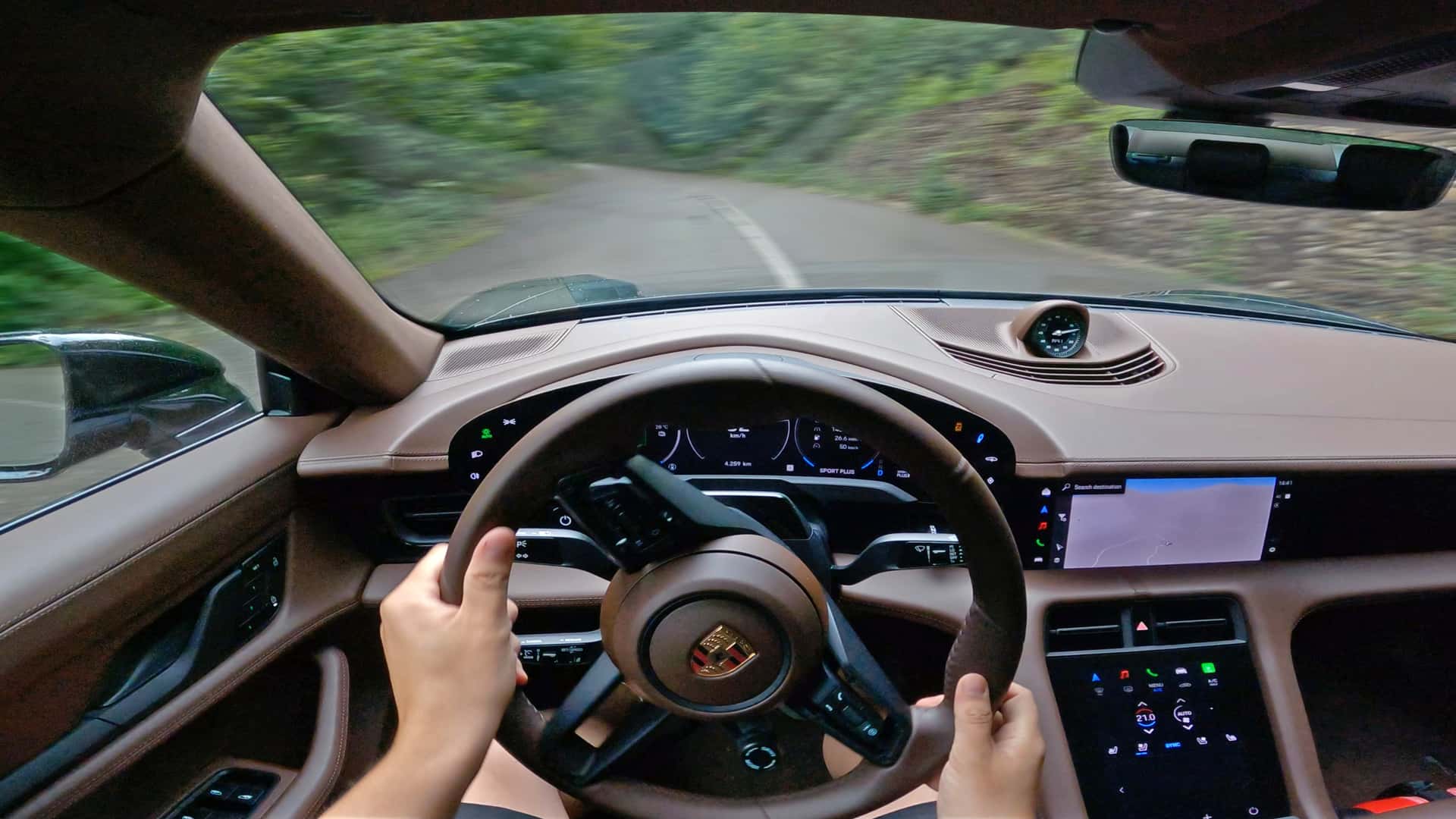
A recent comprehensive drive of the refreshed 2026 Porsche Taycan provided crucial insights into the debate surrounding simulated EV driving dynamics. The particular test vehicle did not feature the optional simulated engine and gear-swapping system, offering an opportunity to assess the Taycan’s inherent driving capabilities in its purest electric form.

Strikingly, the absence of artificial sounds did not diminish the driving enjoyment. The Taycan delivered an accomplished driving experience, rewarding a keen driver even in complete silence. Its prowess lies in its exceptional chassis and predictable handling characteristics, which allow it to excel as a corner-carving machine, rivaling and often surpassing many traditional performance cars.
The vehicle’s chassis demonstrated remarkable neutrality, poise, and predictability. This allowed for an immediate rhythm to develop during spirited driving, fostering immense confidence on winding roads. The sensation of flowing seamlessly from one corner to the next superseded any desire for the aural accompaniment of an engine or the tactile feedback of gear shifts.
The Indispensable Role of Authentic Acoustic Feedback
While a silent high-performance EV like the Taycan can be profoundly engaging, the need for some form of acoustic feedback remains. The Taycan 4 tester, for example, featured a basic spaceship-like acceleration sound. This auditory cue serves a vital function in electric vehicles: providing an audible reference for gauging speed, eliminating the constant need to glance at the speedometer.
This point was underscored by a BMW engineer discussing the development of acceleration sounds for the upcoming electric M3. The engineer posited that the primary purpose of these sounds is to offer an audible reference for speed, rather than merely mimicking a gasoline car. This perspective resonates strongly, especially for drivers accustomed to combustion engines.
Experiences in high-performance EVs lacking any sound, such as the Tesla Model 3 Performance, highlight this issue. While a fantastic driving car, the complete absence of sound can dull the experience and even present practical challenges. Without an audible cue, drivers may inadvertently carry excessive speed into corners, necessitating abrupt and forceful braking.
Beyond Engine Noise: The Tire’s Song
Another critical aspect of the silent EV driving experience is the amplification of other crucial vehicle sounds. Foremost among these is the feedback from the tires. In a combustion-engined car, the engine’s roar often masks the subtle nuances of tire noise. In a quiet EV, these sounds become distinctly audible, offering a direct indication of grip levels.
The ability to clearly hear what the tires are doing in the Taycan significantly aids in correcting the driving line through nuanced applications of the accelerator and brakes. This heightened auditory awareness of tire performance provides an additional layer of feedback, enabling a more precise and intuitive control over the vehicle’s dynamics.
Conversely, artificially simulating an engine sound, particularly one that persists even when lifting off the accelerator, can inadvertently obscure this vital tire feedback. Such simulations, while technically impressive, risk detracting from an authentic connection between the driver and the vehicle’s actual grip limits, potentially hindering performance and safety during aggressive driving.
The Cayenne Electric and the Future of EV Acoustics
The simulated shifting functionality is also available in the new Porsche Cayenne Electric. However, a recent test drive of the Cayenne Electric during the Eurocharge by Schaeffler EV road trip, like the Taycan, did not include this feature. Instead, it utilized a gearless acceleration sound described as a futuristic V-8, seemingly fueled by an unknown element.
This unique acoustic profile proved perfectly adequate for conveying speed during a brisk descent of Austria’s stunning Grossglockner high Alpine pass. It added to the experience without imposing artificial gear changes that might unnecessarily slow the vehicle or force it to behave like something it inherently is not. For automotive purists, this direct, unadulterated EV driving experience holds particular appeal.
The ongoing evolution of electric vehicle technology prompts a fascinating question about future automotive nostalgia. Drivers learning today might one day fondly recall the original, unsimulated performance of an early EV with the same reverence that current enthusiasts hold for a naturally aspirated straight-six engine. The challenge for manufacturers lies in innovating genuine EV experiences that will be genuinely missed, rather than simply offering software-driven re-enactments of past automotive eras.
Frequently Asked Questions About EV Driving Dynamics and Simulated Sounds
Understanding the nuances of electric vehicle performance, especially concerning sound and driver engagement, is crucial as the automotive landscape shifts.
What are simulated gears and engine sounds in EVs?
Simulated gears and engine sounds are software-generated audio and haptic feedback systems designed to mimic the traditional experience of a combustion engine. They aim to enhance driver engagement by providing auditory cues and sensations of gear shifts, even though electric powertrains typically have single-speed transmissions.
Why do some EV manufacturers add fake gears and engine sounds?
Manufacturers add these features to address a common critique of EVs: their perceived lack of emotional connection due to silence and linear power delivery. Simulated sounds and shifts aim to replicate the sensory engagement and familiar feedback drivers associate with high-performance gasoline cars, making the EV driving experience feel more dynamic.
Does the Porsche Taycan need simulated gears for a good driving experience?
Based on recent driving impressions, the Porsche Taycan delivers an exceptionally engaging and rewarding driving experience even without simulated gears or engine sounds. Its superior chassis, precise handling, and predictable dynamics provide ample driver feedback, demonstrating that a silent EV can be profoundly enjoyable.
How do simulated EV sounds differ across manufacturers?
Approaches vary significantly. Mercedes-AMG strives for highly realistic combustion engine replication, while Hyundai often adopts a more ‘video game-esque’ or futuristic sound profile, making it clear the sound is an enhancement rather than an imitation. Porsche’s system, while refined, often complements rather than defines the driving experience.
What is the role of tire noise in a silent EV?
In a silent EV, the absence of engine noise amplifies other auditory cues, such as tire noise. This allows drivers to hear the tires working more clearly, providing valuable feedback on grip levels and vehicle limits. This enhanced auditory awareness can contribute to more precise control and a deeper connection to the road.
What is the primary purpose of sound in an EV, according to some engineers?
Some automotive engineers, notably from BMW, argue that the primary purpose of sound in an EV should be to provide an audible reference for gauging speed and accelerator input, rather than solely to mimic a combustion engine. This helps drivers modulate speed and power more intuitively without constantly checking the speedometer.
Will future EV drivers miss traditional engine sounds?
The question of future nostalgia for traditional engine sounds remains open. As EVs become mainstream, new generations of drivers may develop an appreciation for unique EV driving dynamics and acoustic profiles. The challenge for manufacturers is to create original, compelling EV experiences that stand on their own merits, rather than relying on simulations of the past.