
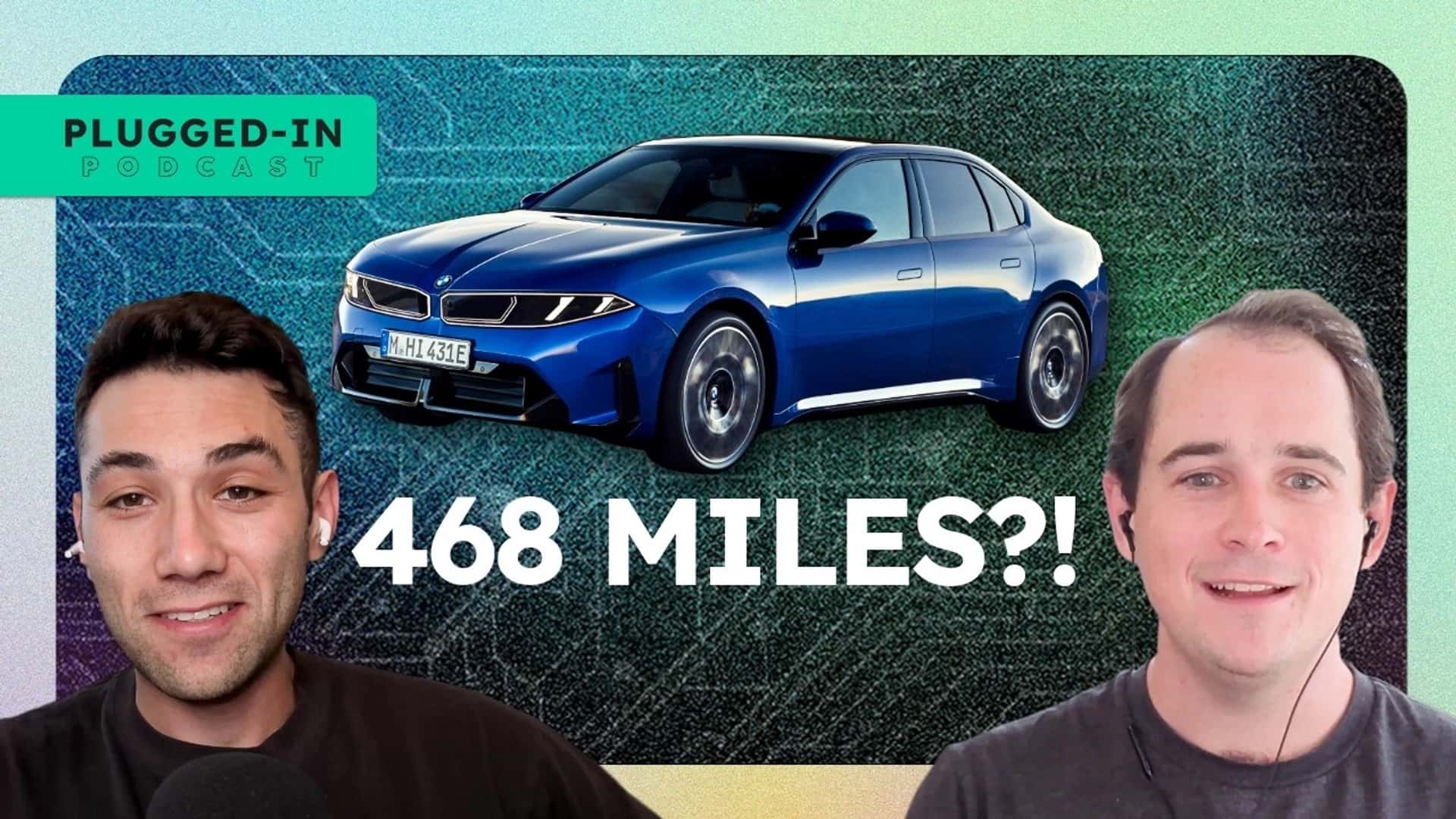
In a significant development for the electric vehicle (EV) market, BMW has once again exceeded expectations, following the success of its iX3 crossover. The German automaker has officially unveiled the i3 sedan, an electric 3-Series variant poised to redefine range benchmarks with an impressive 468-mile EPA-rated range.
This formidable offering, specifically in its all-wheel-drive 50 xDrive trim, is slated for release early next year as the inaugural variant. The achievement places the BMW i3’s 468-mile range squarely ahead of most competitors, notably surpassing every Tesla model currently available on the market.

Key Takeaways
- New Range Benchmark: The BMW i3 50 xDrive is set to offer an EPA-rated 468 miles of range, establishing a new standard for luxury electric sedans.
- Market Disruption: This extensive range capability positions the i3 ahead of all current Tesla models, challenging established perceptions of EV endurance and performance.
- Addressing Range Anxiety: The generous range aims to alleviate persistent consumer concerns about running out of charge, particularly crucial for long-distance travel and in varied climatic conditions.
- Cost-Benefit Analysis: While a technological feat, the larger battery required for this range comes with a price tag of $61,500 for the 50 xDrive model, raising questions about optimal value.
- Evolving Infrastructure: The long-term necessity of such extreme range is subject to ongoing debate as global public charging infrastructure continues to expand and improve significantly.
BMW i3 Sets New Range Standard in Luxury EV Segment
The introduction of the electric 3-Series marks a pivotal moment for BMW and the broader automotive industry. The BMW i3’s 468-mile range in the upcoming 50 xDrive trim represents a substantial leap in electric vehicle capabilities, demonstrating a clear commitment to pushing technological boundaries and enhancing consumer confidence in electric mobility.
This remarkable figure is not merely an incremental improvement; it signifies a significant advancement that positions the i3 as a frontrunner in the highly competitive luxury EV sedan segment. For context, achieving an EPA rating of over 400 miles was once an exclusive domain, first claimed by the Tesla Model S in 2020.
The Rapid Evolution of EV Range Capabilities
The electric vehicle landscape has witnessed an astonishing pace of development in range capabilities over a relatively short period. What was once considered exceptional is now becoming increasingly common among high-end electric vehicles, albeit still below the i3’s newly established benchmark.

Contemporary luxury EVs like the Audi A6 E-Tron boast a commendable 395-mile rating, showcasing robust long-distance potential. Similarly, the Volvo EX60 is estimated to achieve approximately 400 miles, while the upcoming Mercedes C-Class electric variant is also anticipated to offer a similar range, indicating a clear industry trend towards greater endurance.
However, the BMW i3’s 468-mile range trounces most of these established offerings, signaling BMW’s aggressive strategy to carve out a leading position in the premium EV market. This ambitious move is particularly fitting for the 3-Series, a model historically recognized as BMW’s core offering and a benchmark in its conventional internal combustion engine form.
Challenging the Reigning Range Champion
Despite BMW’s groundbreaking achievement, the title for America’s undisputed range champion has, for the past five years, belonged to the Lucid Air, which offers a compelling 500-plus-mile rating. The i3’s entry into this high-stakes arena suggests a burgeoning competition at the very top echelon of EV performance, bringing diverse engineering philosophies to the forefront.
While the Lucid Air maintains its slight lead in absolute range, the i3’s substantial capability provides a strong alternative, blending premium German engineering and the established 3-Series pedigree with cutting-edge electric vehicle technology to compete in this elite club of ultra-long-range electric vehicles.
The Great Debate: Is 468 Miles of Range Overkill?
The unveiling of the BMW i3’s 468-mile range naturally prompts a critical question within the industry and among consumers: Is such extensive range truly necessary? This debate highlights differing philosophies regarding optimal EV capabilities and market demands, reflecting a dynamic period of transition in the automotive sector.
Proponents argue that while Tesla has achieved considerable success with models offering range in the mid-300s, the market might still be ripe for even greater distances. This perspective is heavily influenced by prevailing consumer sentiments and a range of practical considerations that extend beyond typical daily driving.
The Case for Extended Range: Overcoming Psychological Barriers
A significant factor driving the demand for higher EV range is consumer psychology. Surveys consistently indicate that American car buyers harbor concerns about having sufficient range, often referred to as ‘range anxiety.’ This apprehension acts as a notable impediment to wider EV adoption across various demographic segments.
Offering “absurd amounts of range could help break down the psychological barrier many people have about running out of juice.” By providing an ample buffer, manufacturers can effectively mitigate this concern, making electric vehicles a more appealing and less daunting proposition for a broader segment of the population.
Beyond psychological comfort, practical considerations also underscore the intrinsic value of extended range. For individuals who frequently engage in long-distance highway driving or reside in colder climates, where battery efficiency can be significantly impacted, a 400-mile-plus range may be precisely what is required to ensure reliable and convenient travel, minimizing the need for frequent charging stops.
The Counter-Argument: Defining the ‘Sweet Spot’ for Most Drivers
Conversely, not everyone agrees on the universal necessity of near-500-mile range figures. As discussed on a recent ‘Plugged-In Podcast,’ one perspective, articulated by co-host Mack, posits that somewhere in the 300s represents the “sweet spot” for most drivers, deeming anything beyond that as potentially “overkill for most people.”
This viewpoint suggests that for typical daily commutes and common usage patterns, a more moderate range is entirely sufficient. It also considers the implications of larger batteries on vehicle design, overall weight, and the significant manufacturing resources required, questioning whether the added range justifies these factors for the average consumer.
Cost Implications of High-Capacity Batteries
Achieving extended range is intrinsically linked to increased costs. Fundamentally, more range necessitates a bigger battery pack, and “every kilowatt-hour will cost you.” This direct correlation between battery size, technological complexity, and vehicle price is a critical aspect of EV economics that manufacturers must balance.
The BMW i3’s 468-mile range 50 xDrive model is expected to be priced at $61,500. This figure is notably “fairly well-priced with its gas-powered equivalent,” suggesting BMW has meticulously managed to balance advanced electric vehicle technology with competitive market positioning against its conventional counterparts.
However, the question arises whether a model with a more modest range, perhaps around 350 miles, could cater to a larger audience at an even more attractive price point. Such an offering might provide a “better deal” for many consumers who may not require the absolute maximum range, thus expanding market accessibility.
The Evolving Landscape of Charging Infrastructure
Another crucial element in the ongoing debate surrounding the necessity of extensive EV range is the rapid evolution of public charging infrastructure. As charging stations become faster, more reliable, and increasingly ubiquitous across urban and rural landscapes, the imperative for vehicles to carry enormous range buffers may gradually diminish.
The ongoing expansion and continuous improvement of charging networks mean that drivers will have more frequent opportunities to top up their batteries conveniently, effectively reducing the anxiety associated with longer journeys and unforeseen detours. This significant shift in infrastructure could fundamentally alter consumer priorities regarding absolute range figures.
The prevailing expectation is that as charging solutions become more seamlessly integrated into everyday life, “carmakers and the public will become far less obsessed with absolute range as time goes on. Once there’s charging basically everywhere you need it, the need for a huge range buffer fades away.”
Consumer Adoption and Market Dynamics
Ultimately, the successful integration of advanced electric vehicles like the electric 3-Series into the mainstream hinges on understanding and effectively responding to diverse consumer needs. The BMW i3’s 468-mile range is a direct response to a perceived market demand for greater autonomy, particularly during this pivotal transitional phase of broader EV adoption.
While some industry experts contend that incremental range improvements might suffice for the current market, BMW’s bold move with the i3 suggests a strategic effort to decisively address lingering hesitations and accelerate the global shift towards electric mobility, especially within the discerning luxury segment.
The Road Ahead for Electric Mobility
The unveiling of the BMW i3 with its remarkable 468-mile range underscores the dynamic and intensely competitive nature of the electric vehicle industry. It highlights a period of significant innovation, where manufacturers are not only pushing boundaries in performance but also actively addressing core consumer anxieties and practical transportation needs.
As the EV market matures and global charging infrastructure becomes even more robust and accessible, the conversation around ‘optimal range’ will undoubtedly continue to evolve. For now, the BMW i3 stands as a testament to what is technologically possible, offering consumers an unprecedented level of confidence and capability in their electric driving experience.
What are your thoughts on this significant development? Is the extensive range offered by luxury EVs like the BMW i3 perfectly aligned with current consumer needs, or does it exceed practical requirements in the face of improving charging solutions?
Frequently Asked Questions (FAQ)
What is the reported range of the new BMW i3?
The new BMW i3 sedan, specifically the all-wheel-drive 50 xDrive trim, is projected to achieve an impressive EPA-rated range of up to 468 miles. This positions it as one of the leading electric vehicles in terms of single-charge endurance upon its release early next year.
How does the BMW i3’s range compare to Tesla models?
With its 468-mile EPA rating, the BMW i3 is reported to surpass the range capabilities of all current Tesla models on the market. This marks a significant competitive advantage for BMW in the premium electric vehicle segment.
When will the BMW i3 50 xDrive be available?
The all-wheel-drive 50 xDrive trim of the electric BMW i3 is expected to be the first variant offered, with its market debut anticipated in early next year. Further details on other trims and regional availability will likely follow.
Why is such a long range considered important by some buyers?
Extended range addresses common ‘range anxiety’ among car buyers, reducing concerns about running out of power. It also provides practical benefits for long-distance highway travel and ensures better performance in colder climates where battery efficiency can be reduced.
What are the cost implications of the BMW i3’s large battery?
A larger battery, essential for extended range, directly contributes to higher vehicle costs. The BMW i3 50 xDrive is priced at $61,500, which BMW states is competitive with its gas-powered equivalent, reflecting the advanced technology.
Will the need for extensive EV range diminish over time?
As public charging infrastructure improves, becoming faster, more reliable, and widely available, the necessity for extremely long range might decrease. Experts suggest that as charging becomes more convenient, the focus on absolute range may lessen for consumers.
How does the BMW i3 compare to other luxury EVs in terms of range?
The BMW i3’s 468-mile range significantly surpasses most other luxury EVs, including the Audi A6 E-Tron (395 miles) and Volvo EX60 (estimated 400 miles). Only the Lucid Air, with 500+ miles, currently holds a higher range crown in the U.S. market.
What is the ‘sweet spot’ for EV range according to some experts?
According to some industry perspectives, particularly highlighted on the ‘Plugged-In Podcast,’ a range in the 300s is considered the ‘sweet spot’ for most drivers. This viewpoint suggests that greater range might be overkill for typical daily use and comes with unnecessary cost implications.