
Seoul, South Korea — LG Energy Solution (LGES), a prominent global battery manufacturer and key supplier to Tesla, reported record quarterly earnings on Thursday. The robust performance in the third quarter of 2023 was primarily propelled by a burgeoning energy storage business in the United States and a significant uptake in electric vehicle (EV) sales across Europe. These growth areas have effectively offset a slowdown in demand for EV batteries in North America, highlighting the company’s strategic adaptability in a dynamic global market.
Preliminary results indicate a substantial financial uplift for LGES. The company’s third-quarter revenue soared by an impressive 59% year-over-year, reaching $7.21 billion. Concurrently, its operating profit witnessed a healthy 25% increase, climbing to $565 million. These figures, detailed in a regulatory filing in South Korea, underscore a resilient financial performance despite earlier challenges in specific market segments. Full official results are anticipated to be disclosed in November, providing a comprehensive overview of the quarter’s financial intricacies.
Key Takeaways: A Strategic Pivot Towards Growth
- LG Energy Solution posted record Q3 2023 earnings, with revenue up 59% and operating profit up 25%.
- Growth was primarily driven by strong demand for energy storage batteries in the U.S. and robust EV battery sales in Europe.
- The company’s success in energy storage solutions, particularly for AI data centers and grid upgrades, offset a North American EV battery production slowdown.
- U.S. Inflation Reduction Act’s Section 45X manufacturing tax credits and compensation from automakers further bolstered financial performance.
- LGES is actively expanding its North American supply chain, including a lithium offtake agreement and a new Michigan gigafactory for diverse battery production.
Navigating Market Disruptions: The Rise of Energy Storage Solutions
The global battery manufacturing landscape has experienced considerable turbulence over the past two years, particularly in North America. Many battery manufacturers, including LGES, initially recalibrated their electric vehicle battery production ambitions due to a slower-than-anticipated pace of EV adoption in the region. This presented a significant challenge, prompting companies to explore alternative avenues for growth.
In response, LGES strategically pivoted towards the burgeoning market for stationary energy storage solutions. This segment has witnessed a surge in demand, fueled by two critical trends: the escalating power requirements of advanced AI data centers and the urgent need for comprehensive grid modernization initiatives. Data centers, which are the backbone of the digital economy, are becoming increasingly power-hungry with the proliferation of artificial intelligence, machine learning, and cloud computing services. This necessitates robust and reliable energy backup and storage systems.
Simultaneously, existing electrical grids worldwide are undergoing extensive upgrades to enhance resilience, integrate renewable energy sources more effectively, and accommodate growing electricity consumption. Energy storage batteries are pivotal in these upgrades, providing stability, peak-shaving capabilities, and a reliable power supply. LGES’s proactive investment and expansion in this sector have begun to yield substantial returns, showcasing the foresight of their strategic decisions. The company now produces these essential energy storage system (ESS) batteries locally at multiple U.S. plants, ensuring proximity to a rapidly expanding market.
Europe’s Electric Vehicle Boom Fuels Battery Demand
While the North American EV battery market presented headwinds, the European market offered a contrasting narrative of robust expansion. A significant portion of LGES’s stellar performance can be attributed to the flourishing plug-in vehicle sales across Europe. This strong demand has provided a crucial boost to the company’s electric vehicle battery business, underscoring the regional disparities in EV adoption rates and market maturity.
According to reports from The Korea Herald, LGES’s manufacturing facility in Poland has been operating at high capacity to meet the substantial demand emanating from major European automakers. Specifically, Volkswagen and Renault have shown strong growth in their EV sales, directly translating into increased orders for LGES’s reliable and high-performance electric vehicle batteries. This regional strength demonstrates the effectiveness of LGES’s distributed global manufacturing footprint in capturing diverse market opportunities.
Strategic Financial Levers: US Tax Credits and Automaker Compensation
Beyond market demand, LGES’s record earnings were further bolstered by strategic financial mechanisms. A key contributor has been the battery-manufacturing credits received through the U.S. Inflation Reduction Act (IRA). This landmark legislation, enacted in 2022, aims to incentivize domestic production of clean energy technologies, including electric vehicle batteries and components, through various tax credits and subsidies.
The Section 45X Advanced Manufacturing Production tax credits, a core component of the IRA, provide significant financial benefits for companies manufacturing eligible components, such as battery cells and modules, within the United States. These crucial tax credits for domestic battery manufacturing remain available through 2032, providing long-term certainty and a competitive advantage for LGES’s U.S. operations. Additionally, the company benefited from compensation received from automakers for failing to meet minimum EV battery purchase requirements, as reported by Reuters. This compensation serves as a protective measure for battery suppliers against fluctuations in OEM demand.
Fortifying the North American Battery Supply Chain
In a strategic move to enhance its supply chain resilience and localize production, LGES has been actively expanding its footprint and securing raw materials within North America. This initiative is crucial for meeting the rising demand for both EV and energy storage batteries while also complying with the domestic content requirements of incentives like the IRA.
Demonstrating this commitment, LGES recently solidified a multi-year offtake agreement with Canada’s Electra Lithium. As part of this crucial deal, LGES is set to receive 240,000 metric tonnes of raw lithium concentrate from Electra’s mining operations in Quebec. Securing a stable supply of critical raw materials like lithium is paramount for battery manufacturers, mitigating geopolitical risks and ensuring continuous production capabilities. This move underscores the industry’s push towards regionalizing supply chains to enhance security and efficiency.
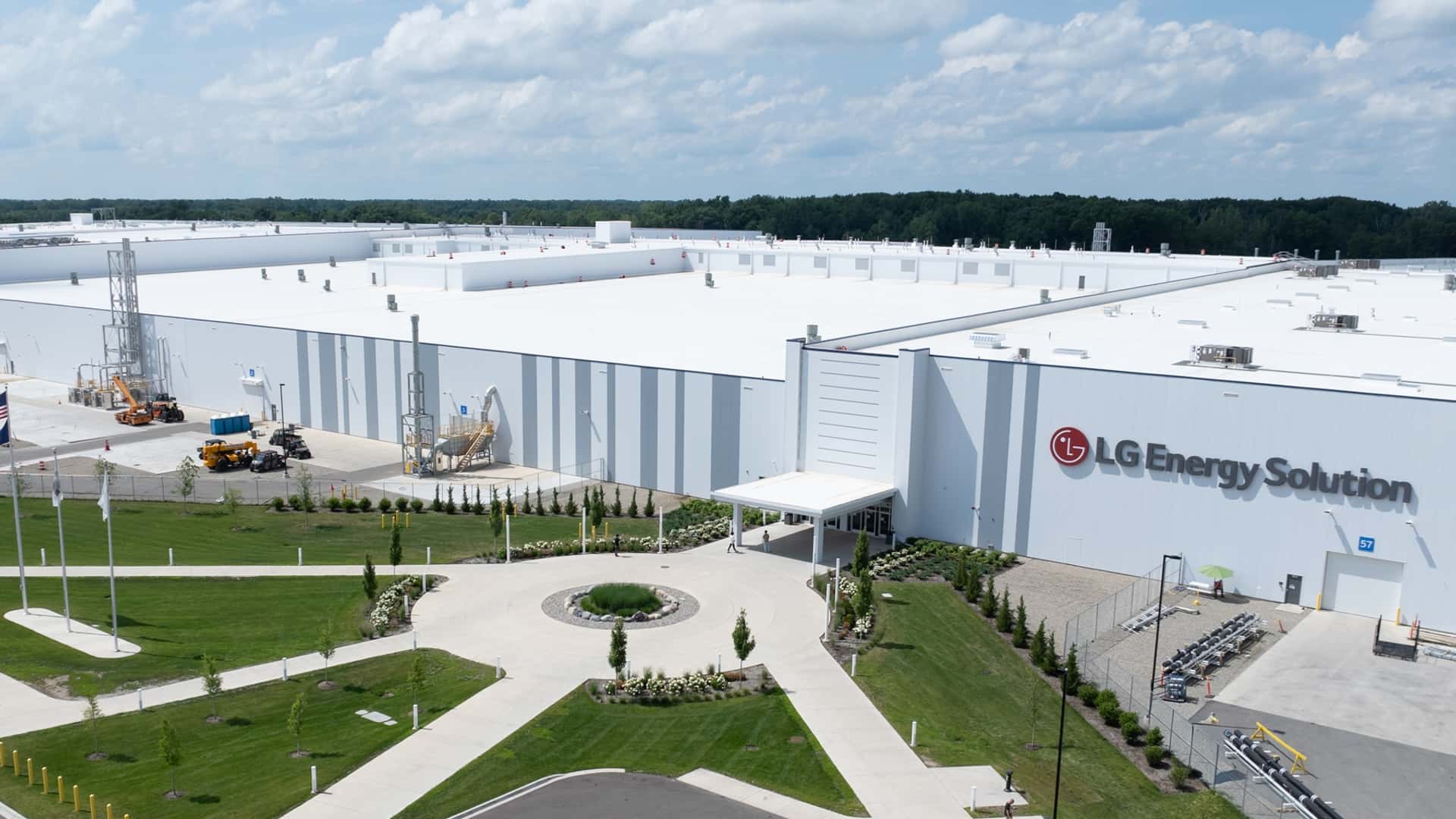
Further solidifying its North American manufacturing base, LGES inaugurated its state-of-the-art $2 billion gigafactory in Lansing, Michigan, in August. This expansive facility represents a significant investment in U.S. manufacturing capabilities and is poised to play a pivotal role in the nation’s energy transition. The Michigan plant is equipped to produce diverse battery chemistries, specifically energy storage lithium-iron-phosphate (LFP) batteries for Tesla and nickel-manganese-cobalt (NMC) EV batteries for Toyota. This multi-chemistry production capability allows LGES to cater to a broader spectrum of customer needs and market applications, from stationary energy storage to high-performance electric vehicles, further strengthening its position as a leading battery innovator.
Global Battery Dynamics and LGES’s Strategic Vision
LG Energy Solution’s latest earnings report offers a compelling snapshot of the evolving global battery market. It illustrates a landscape where growth drivers are diverse, encompassing not only the burgeoning electric vehicle sector but also critical infrastructure needs like energy storage for data centers and grid stability. The company’s ability to swiftly adapt its production and sales strategies to capitalize on these varied demands underscores a robust and flexible business model.
The emphasis on localizing both manufacturing and supply chains in key markets like North America reflects a broader industry trend towards greater self-sufficiency and reduced reliance on distant global suppliers. This strategy not only mitigates logistical challenges and trade complexities but also aligns with governmental incentives aimed at fostering domestic industrial growth and job creation. By diversifying its product portfolio and geographical market focus, LGES is strategically positioning itself for sustained growth in the long-term, navigating the complexities of an industry at the forefront of the global energy transition.
Conclusion: A Blueprint for Resilience and Growth
LG Energy Solution’s record third-quarter earnings stand as a testament to its strategic acumen and operational efficiency in a rapidly transforming energy landscape. By deftly balancing the fluctuating demands of the EV battery market with a decisive expansion into high-demand energy storage solutions, coupled with leveraging governmental incentives and fortifying its supply chain, LGES has established a blueprint for resilience and sustainable growth. As the world continues its pivot towards electrification and renewable energy, the strategic decisions made by key players like LGES will undoubtedly shape the future of battery technology and its profound impact on global industries.
Frequently Asked Questions (FAQ)
What were LG Energy Solution’s key financial highlights for Q3 2023?
LGES reported a record-breaking Q3 2023, with revenue surging by 59% year-over-year to $7.21 billion. The operating profit also saw a significant increase of 25%, reaching $565 million. These preliminary results highlight the company’s strong financial performance driven by strategic market diversification and operational efficiencies.
Which market segments primarily drove LGES’s record earnings?
The record earnings were predominantly fueled by two key market segments: the robust demand for energy storage batteries in the United States and the strong sales of electric vehicle (EV) batteries in the European market. These areas of growth successfully compensated for a temporary slowdown in North American EV battery production.
How did the U.S. energy storage market contribute to LGES’s success?
The U.S. energy storage market contributed significantly due to increasing demand from power-hungry AI data centers and ongoing grid modernization projects. LGES’s strategic focus on stationary energy storage solutions, with local production at multiple U.S. plants, allowed it to capitalize on these critical infrastructure needs and emerging technological requirements.
What role did the U.S. Inflation Reduction Act play in LGES’s earnings?
The U.S. Inflation Reduction Act (IRA) played a crucial role by providing battery-manufacturing credits, specifically the Section 45X Advanced Manufacturing Production tax credits. These incentives, available through 2032, encourage domestic battery manufacturing, significantly bolstering LGES’s profitability from its U.S. operations and investments.
What steps is LGES taking to strengthen its North American supply chain?
LGES is strengthening its North American supply chain through strategic agreements and new manufacturing facilities. This includes a multi-year offtake agreement with Canada’s Electra Lithium for 240,000 metric tonnes of raw lithium concentrate and the opening of a $2 billion gigafactory in Lansing, Michigan, for localized battery production.
What types of batteries are being produced at the new Michigan gigafactory?
The new $2 billion gigafactory in Lansing, Michigan, is producing a diverse range of batteries to meet various market demands. It manufactures energy storage lithium-iron-phosphate (LFP) batteries specifically for Tesla and nickel-manganese-cobalt (NMC) EV batteries designed for Toyota vehicles, showcasing its advanced multi-chemistry production capabilities.
How is LGES adapting to the evolving global EV battery market?
LGES is adapting by diversifying its market focus, not solely relying on EV battery production but also expanding significantly into energy storage solutions. Its strategy includes localizing manufacturing, securing raw material supply chains, and leveraging governmental incentives, demonstrating a flexible and resilient business model to navigate global market shifts.