
Key Takeaways:
- LG Energy Solution (LGES), a prominent global battery manufacturer and key Tesla supplier, reported record quarterly earnings, signaling a successful strategic pivot.
- The company’s robust Q3 performance was significantly bolstered by strong demand for energy storage batteries in the U.S. and flourishing electric vehicle (EV) sales across Europe.
- This growth in stationary storage and European EV markets has effectively offset a previously reported slowdown in North American EV battery production.
- Contributing factors include U.S. manufacturing credits from the Inflation Reduction Act and compensation from automakers for unfulfilled purchase commitments.
- LGES is actively expanding its North American supply chain and manufacturing footprint, including a new gigafactory in Michigan, underscoring its commitment to localized production.
Seoul, South Korea – LG Energy Solution (LGES), a global leader in battery technology and a critical supplier to manufacturers like Tesla, has announced record quarterly earnings, defying recent industry headwinds. The company’s preliminary results for the third quarter reveal substantial growth, primarily propelled by burgeoning demand for energy storage batteries in the United States and a robust market for electric vehicle batteries in Europe.
This performance underscores a strategic shift for battery makers who have navigated a turbulent period marked by fluctuating demand in certain EV markets. LGES’s success highlights the critical role of diversification and localized production in maintaining profitability within the dynamic global battery landscape.
Navigating Market Shifts: The Q3 Performance Overview
In a regulatory filing in South Korea, LG Energy Solution reported a remarkable 59% year-over-year surge in its third-quarter revenue, reaching an estimated $7.21 billion. Concurrently, the company’s operating profit climbed by 25% to $565 million.
These impressive figures come after a challenging period for North American battery production, where LGES had previously scaled back its electric vehicle battery output due to a slower-than-anticipated uptick in EV sales. However, the latest results indicate a successful reorientation of business strategies to capitalize on high-growth segments.
The full official results for the quarter are anticipated to be disclosed in November, providing further granular detail into the financial drivers behind this record-setting performance.
The Energy Storage Boom in the United States
A significant catalyst for LGES’s record earnings has been the burgeoning market for stationary energy storage batteries in the United States. This sector has witnessed a substantial surge in demand, fueled by two primary forces: the proliferation of power-hungry AI data centers and the urgent need for comprehensive grid infrastructure upgrades across the nation.
Artificial intelligence technologies require immense computational power, leading to the construction of large-scale data centers that necessitate reliable and efficient energy solutions. Stationary energy storage systems provide the critical backup and load-balancing capabilities these facilities require, ensuring uninterrupted operation.
Furthermore, an aging electrical grid in the U.S. is undergoing extensive modernization efforts to enhance reliability, integrate renewable energy sources, and manage increasing electricity demand. Energy storage solutions are fundamental to these grid upgrades, offering stability and flexibility.
LGES has strategically positioned itself to meet this demand by producing its energy storage system (ESS) batteries locally at multiple U.S. plants. This localized manufacturing not only addresses supply chain efficiencies but also potentially qualifies the company for various domestic production incentives.
Robust EV Demand Fuels European Operations
While some regions experienced a deceleration in EV adoption, Europe presented a contrasting narrative for LG Energy Solution. The company’s electric vehicle battery business witnessed a strong resurgence, significantly contributing to its overall record earnings.
According to The Korea Herald, LGES’s plant in Poland has been a key operational hub, experiencing robust demand. This facility is actively supplying batteries to major European automakers such as Volkswagen and Renault, whose electric vehicle sales have demonstrated consistent growth across the continent.
The sustained demand from these automotive giants underscores the ongoing momentum of EV adoption in Europe, providing a critical counterbalance to the more restrained growth observed in other markets. LGES’s established presence and production capabilities in the region have allowed it to capitalize effectively on this strong market appetite.
Policy Tailwinds and Financial Incentives
The surge in LGES’s earnings is also attributable to a confluence of supportive policies and financial mechanisms, particularly within the United States. The company benefited significantly from battery-manufacturing credits provided through the U.S. Inflation Reduction Act (IRA).
Specifically, the Section 45X Advanced Manufacturing Production tax credits are designed to incentivize domestic production of critical clean energy components, including batteries. These credits offer financial advantages to companies manufacturing eligible products within the U.S. and are slated to remain available through 2032.
Despite political shifts and the potential for changes to some climate-related policies under different administrations, the core framework of the Section 45X tax credits has largely been preserved. This provides long-term stability and predictability for battery manufacturers investing heavily in U.S. facilities.
Additionally, LGES received compensation from certain automakers. These payments were issued for failing to meet their minimum electric vehicle battery purchase requirements, further bolstering the company’s financial bottom line for the quarter.
Strengthening the North American Supply Chain
In a strategic move to secure critical raw materials and enhance its North American operational independence, LGES has proactively expanded its supply chain within the region. This initiative is crucial for long-term sustainability and reduces reliance on potentially volatile international supply lines.
A significant development in this regard is the multi-year off-take agreement signed with Canada’s Elevra Lithium. Under this agreement, LGES will receive a substantial supply of 240,000 metric tonnes of raw lithium concentrate from Elevra’s mine located in Quebec.
Securing a stable and ethical supply of lithium, a cornerstone component of modern battery technology, is paramount for battery manufacturers globally. This agreement safeguards LGES’s access to vital raw materials, ensuring consistent production capacity.
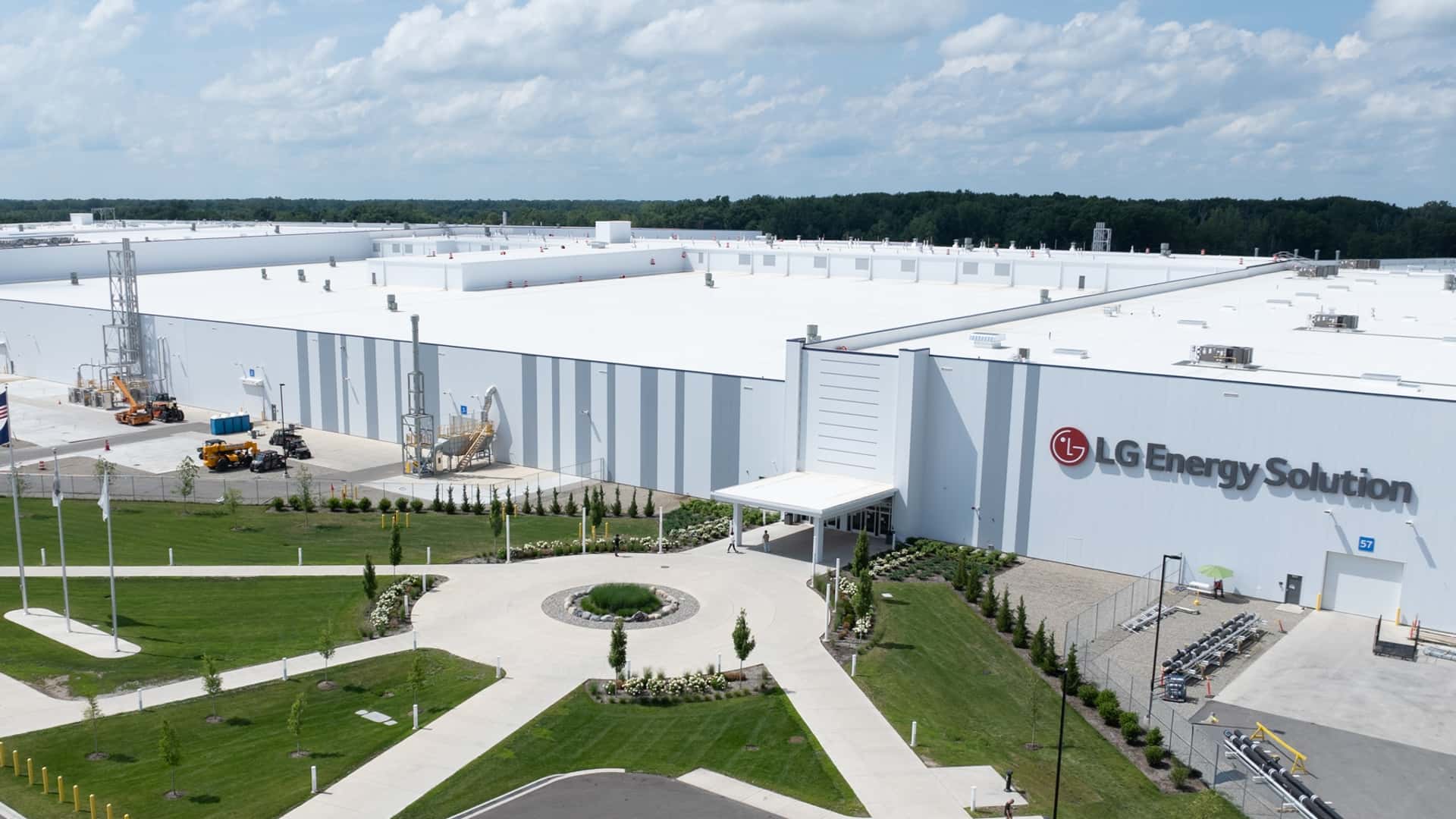
Furthermore, LGES has significantly invested in its manufacturing footprint with the opening of its $2 billion gigafactory in Lansing, Michigan, in August. This state-of-the-art facility is a testament to LGES’s commitment to localized production and innovation.
The Michigan gigafactory is engaged in producing advanced battery cells for diverse applications. It is manufacturing energy storage lithium-iron-phosphate (LFP) batteries specifically for Tesla, supporting their energy storage and EV initiatives. Concurrently, the plant is also producing nickel-manganese-cobalt (NMC) EV batteries, which are designated for Toyota, powering their next generation of electric vehicles.
Looking Ahead: Strategic Positioning in a Dynamic Market
LG Energy Solution’s record earnings underscore a successful navigation of a complex and evolving global battery market. By strategically diversifying its focus to encompass both robust European EV demand and the rapidly expanding U.S. energy storage sector, the company has demonstrated remarkable resilience.
The ongoing investments in North American manufacturing, coupled with crucial supply chain agreements, position LGES strongly for continued growth. These efforts not only enhance operational efficiencies but also align with global trends towards localized production and greater energy independence.
As the electric vehicle transition continues and the need for advanced energy storage solutions intensifies, LG Energy Solution’s proactive strategies in technology development, market diversification, and supply chain management appear to be paying significant dividends, reinforcing its stature as a dominant player in the global battery industry.
Frequently Asked Questions (FAQ)
What contributed to LG Energy Solution’s record earnings in Q3?
LG Energy Solution’s record Q3 earnings were primarily driven by strong demand for energy storage batteries in the U.S., particularly for AI data centers and grid upgrades, and robust electric vehicle sales in Europe. U.S. manufacturing credits from the Inflation Reduction Act also played a significant role.
How much did LGES’s revenue and operating profit grow in Q3?
For the third quarter, LG Energy Solution’s preliminary results indicated a 59% year-over-year increase in revenue, reaching $7.21 billion. The operating profit saw a 25% rise, amounting to $565 million, showcasing strong financial performance.
Why is there high demand for energy storage batteries in the U.S.?
The high demand for energy storage batteries in the U.S. stems from the proliferation of power-intensive AI data centers that require reliable energy backup. Additionally, significant investments in grid modernization and upgrades to improve reliability and integrate renewable energy sources further fuel this demand.
Which markets are driving LGES’s EV battery sales?
LGES’s EV battery sales are primarily driven by strong demand in the European market. Its plant in Poland is actively supplying batteries to major automakers like Volkswagen and Renault, who are experiencing growing electric vehicle sales across Europe, contributing significantly to LGES’s revenue.
What is the impact of the U.S. Inflation Reduction Act on LGES?
The U.S. Inflation Reduction Act (IRA) positively impacts LGES through its Section 45X Advanced Manufacturing Production tax credits. These credits incentivize domestic battery manufacturing, providing financial benefits and long-term stability for LGES’s U.S. operations, including its new gigafactory in Michigan.
What is LGES doing to strengthen its North American supply chain?
LGES is strengthening its North American supply chain by securing raw materials, exemplified by a multi-year off-take agreement with Canada’s Elevra Lithium for 240,000 metric tonnes of raw lithium concentrate. It also opened a $2 billion gigafactory in Lansing, Michigan, for local battery production.
Which companies are using batteries from LGES’s Michigan gigafactory?
The new $2 billion gigafactory in Lansing, Michigan, is producing different types of batteries for key automotive and energy players. It is manufacturing energy storage lithium-iron-phosphate (LFP) batteries for Tesla and nickel-manganese-cobalt (NMC) EV batteries for Toyota.