
Key Takeaways (TL;DR)
- LG Energy Solution (LGES) posted record quarterly earnings for Q3, driven by a strategic pivot towards energy storage and robust European electric vehicle (EV) battery sales.
- The company’s third-quarter revenue surged by 59% year-over-year to $7.21 billion, with operating profit climbing 25% to $565 million, according to preliminary results.
- While North American EV battery production faced slowdowns due to lower demand, this was successfully offset by a booming market for stationary energy storage batteries in the U.S.
- Increased demand for energy storage systems (ESS) is primarily fueled by the proliferation of power-hungry AI data centers and critical grid infrastructure upgrades across the United States.
- Significant contributions to LGES’s bottom line also came from battery-manufacturing credits provided by the U.S. Inflation Reduction Act and compensation from automakers for unfulfilled purchase agreements.
- LGES is actively expanding its North American supply chain, including an offtake agreement for lithium concentrate from Canada and the operation of a $2 billion gigafactory in Michigan, serving major clients like Tesla and Toyota.
Seoul, South Korea — LG Energy Solution (LGES), a prominent global battery manufacturer and a key supplier to Tesla, announced record quarterly earnings on Thursday, October 8. The robust financial performance for the third quarter of 2023 underscores a successful strategic pivot towards high-demand energy storage solutions in the United States, alongside sustained growth in electric vehicle battery sales across Europe.
The South Korean battery giant reported preliminary third-quarter revenue of $7.21 billion, marking a significant 59% increase year-over-year. Operating profit also saw a healthy rise, climbing 25% to reach $565 million. These impressive figures highlight LGES’s agility in navigating evolving market dynamics, particularly in the competitive EV battery market.
The full official results for the third quarter are anticipated to be disclosed in November, providing further detailed insights into the company’s operational performance and strategic direction.
A Strategic Pivot: Energy Storage Fuels Growth Amid EV Market Shifts
The past couple of years have presented a challenging landscape for battery manufacturers in North America. Slower-than-anticipated electric vehicle sales growth led many companies, including LGES, to temper their initial EV production ambitions in the region. However, LGES has effectively mitigated these potential losses through its proactive engagement in the burgeoning market for stationary energy storage batteries.
This strategic shift has begun to yield substantial dividends. The burgeoning demand for energy storage solutions, particularly in the U.S., has proven to be a critical revenue driver, offsetting the softer demand observed in certain segments of the EV battery market. This balanced approach demonstrates LGES’s resilience and foresight in diversifying its portfolio.
North American Energy Storage Boom
The increasing need for stationary energy storage batteries in the U.S. is multifaceted. A significant factor is the proliferation of power-hungry AI data centers, which require stable and reliable energy supplies. These centers consume vast amounts of electricity, driving a strong demand for robust battery-based storage systems to ensure continuous operation and grid stability.
Furthermore, extensive grid upgrades across the United States are contributing to this surge. Modernizing national power grids to accommodate more renewable energy sources and enhance overall reliability necessitates sophisticated energy storage infrastructure. LGES has capitalized on this demand by producing its energy storage system (ESS) batteries locally at multiple facilities within the U.S., enhancing supply chain efficiency and responsiveness to the domestic market.
European EV Demand Bolsters Battery Sales
While the North American EV battery market experienced some headwinds, Europe emerged as a strong growth engine for LGES’s electric vehicle battery business. According to insights from The Korea Herald, the company’s manufacturing plant in Poland has observed robust demand.
This heightened demand is attributed to the growing sales of electric vehicles from key European automakers, specifically Volkswagen and Renault. Their expanding EV lineups and increasing market penetration across the continent have translated into substantial orders for LGES’s batteries, solidifying Europe as a vital market for the company’s EV sector.
U.S. Policy and Strategic Compensation Driving Financial Performance
Beyond market demand, LGES’s recent surge in earnings has been significantly bolstered by supportive U.S. governmental policies and strategic financial arrangements with automotive partners. A key contributor is the battery-manufacturing credits the company received under the U.S. Inflation Reduction Act (IRA).
Specifically, the Section 45X Advanced Manufacturing Production tax credits are designed to incentivize domestic production of clean energy components, including batteries. These critical tax credits remain available through 2032, providing a stable and long-term financial incentive for LGES’s U.S. manufacturing operations. The predictability and durability of these incentives play a crucial role in the company’s investment and production strategies.
Additionally, LGES has benefited from compensation payments from certain automakers. These payments were issued for failing to meet their minimum EV battery purchase requirements, as stipulated in contractual agreements. Such compensations provide an additional financial buffer and underscore the contractual protections in place for battery suppliers in the evolving EV battery market.
Expanding North American Supply Chain and Manufacturing Footprint
In a move to further secure and localize its supply chain, LGES recently finalized a multi-year offtake agreement with Canada’s Electra Battery Materials (formerly Elevra Lithium). This pivotal deal, signed on Thursday, October 8, ensures LGES will receive 240,000 metric tonnes of raw lithium concentrate from Electra’s mine in Quebec. This agreement is a crucial step towards establishing a more robust and regionally integrated supply network for essential battery raw materials.
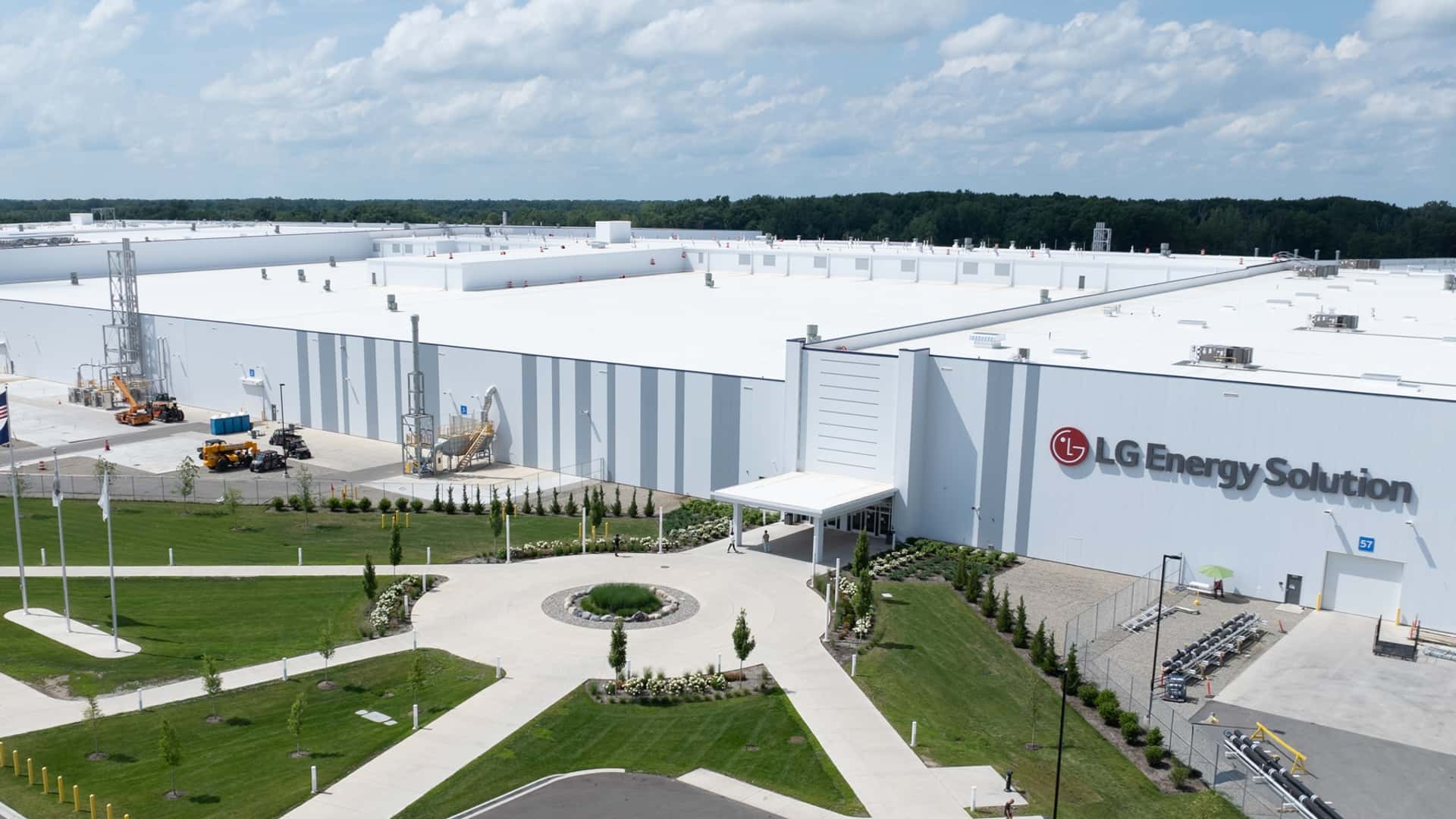
Reinforcing its commitment to North American manufacturing, LGES also inaugurated its $2 billion gigafactory in Lansing, Michigan, in August. This state-of-the-art facility is a testament to LGES’s significant investment in local production capabilities. The Lansing plant is actively engaged in producing two distinct battery chemistries to cater to diverse client needs.
Specifically, the Michigan gigafactory manufactures energy storage lithium-iron-phosphate (LFP) batteries for Tesla, supporting its grid-scale and residential energy storage solutions. Concurrently, the facility produces nickel-manganese-cobalt (NMC) EV batteries tailored for Toyota’s electric vehicle lineup. This dual production capability highlights LGES’s versatile manufacturing prowess and its strategic partnerships within the automotive and energy sectors.
The comprehensive strategy, encompassing diversified market focus, leveraging policy incentives, and securing a localized supply chain, firmly positions LG Energy Solution as a pivotal player in the global transition towards sustainable energy solutions.
Frequently Asked Questions (FAQ)
What contributed to LG Energy Solution’s record Q3 earnings?
LGES’s record Q3 earnings were primarily driven by strong demand for energy storage batteries in the U.S., particularly from AI data centers and grid upgrades. Additionally, robust electric vehicle sales in Europe and the benefits from U.S. Inflation Reduction Act tax credits significantly boosted the company’s financial performance.
How much did LGES’s revenue and operating profit grow in Q3 2023?
For the third quarter of 2023, LG Energy Solution reported preliminary revenue growth of 59% year-over-year, reaching $7.21 billion. Its operating profit also saw a substantial increase of 25%, amounting to $565 million, reflecting a strong period of financial expansion.
Why is there high demand for energy storage batteries in the U.S.?
The high demand for stationary energy storage batteries in the U.S. is largely due to the rapid expansion of power-intensive AI data centers and ongoing nationwide efforts to upgrade and modernize the electricity grid. These applications require reliable, large-scale battery solutions to ensure stability and efficiency.
What role does the U.S. Inflation Reduction Act play in LGES’s earnings?
The U.S. Inflation Reduction Act (IRA) provides Section 45X Advanced Manufacturing Production tax credits for domestic battery manufacturing. These credits significantly contribute to LGES’s profitability by incentivizing local production, and they are slated to remain available through 2032, offering long-term financial support.
How is LGES expanding its North American supply chain?
LGES is expanding its North American supply chain through strategic partnerships, including a multi-year offtake agreement with Canada’s Electra Battery Materials for raw lithium concentrate. The company also operates a $2 billion gigafactory in Lansing, Michigan, producing batteries for key clients like Tesla and Toyota, localizing its manufacturing footprint.
Which types of batteries are produced at LGES’s Michigan gigafactory?
The LG Energy Solution gigafactory in Lansing, Michigan, produces two primary types of batteries: lithium-iron-phosphate (LFP) batteries specifically for Tesla’s energy storage systems and nickel-manganese-cobalt (NMC) EV batteries for Toyota. This dual production capability caters to diverse needs in both the energy storage and electric vehicle sectors.