
Key Takeaways:
- LG Energy Solution (LGES) has reported record preliminary quarterly earnings, driven by diversified revenue streams.
- Strong demand for electric vehicle (EV) batteries in Europe and a burgeoning market for energy storage systems (ESS) in the U.S. were primary growth catalysts.
- U.S. Inflation Reduction Act manufacturing credits and compensation from automakers also contributed significantly to the financial results.
- The company’s strategic pivot towards stationary energy storage has effectively offset earlier slowdowns in North American EV battery production.
- LGES is actively expanding its North American manufacturing footprint and strengthening its raw material supply chain.
SEO Keyword: LG Energy Solution earnings
LG Energy Solution Posts Record Quarterly Performance
Seoul, South Korea – LG Energy Solution, a global leader in battery manufacturing and a key Tesla supplier, announced record preliminary quarterly earnings, signaling robust growth across its diverse portfolio. The South Korean battery giant attributed its strong performance to a significant uptick in electric vehicle battery demand across Europe and the burgeoning market for energy storage solutions in the United States.
The company, which had previously scaled back some of its North American electric vehicle battery production due to anticipated market corrections, has successfully leveraged its investments in stationary energy storage batteries. This strategic pivot has proven timely, as demand for grid-scale and data center energy solutions continues to soar.
According to preliminary results released in a regulatory filing in South Korea, LG Energy Solution’s third-quarter revenue surged by 59% year-over-year, reaching an impressive $7.21 billion. Operating profit also witnessed substantial growth, climbing 25% to $565 million. The full, official financial results are slated for disclosure in November.
Navigating Market Dynamics: The Dual Engine Strategy
The global battery manufacturing sector has experienced significant volatility in recent years. North America, in particular, witnessed a period of adjustment as electric vehicle adoption rates did not fully align with earlier, more aggressive projections. This led many battery manufacturers, including LG Energy Solution, to recalibrate their EV ambitions.
However, LGES demonstrated strategic foresight by expanding its focus beyond automotive applications. The company’s substantial investments in energy storage systems (ESS) have begun to yield significant returns. These stationary batteries are critical for supporting power-hungry artificial intelligence data centers and facilitating essential upgrades to aging electrical grids, both of which are experiencing unprecedented demand in the U.S.
The ability to offset losses from slower EV battery demand with the rapidly expanding energy storage sector highlights LGES’s adaptability and market responsiveness. This diversification strategy has positioned the company to capitalize on broader trends in the global energy transition.
European EV Boom Fuels Battery Demand
While the North American EV market presented certain challenges, Europe emerged as a powerhouse for electric vehicle adoption. LG Energy Solution’s manufacturing facilities, particularly its plant in Poland, have been instrumental in meeting this surging demand.
Reports from *The Korea Herald* indicate that the Polish facility is experiencing robust orders from major European automakers like Volkswagen and Renault. The increasing popularity of their electric vehicle models across the continent has directly translated into strong sales for LGES’s EV battery division, contributing significantly to the company’s overall profitability.
U.S. Energy Storage Market: A Strategic Priority
The escalating demand for energy storage batteries in the United States is a critical component of LGES’s recent success. The proliferation of AI data centers, which require massive, reliable power supplies, alongside extensive grid modernization initiatives, has created a fertile ground for ESS deployment.
In response to this growing market need, LG Energy Solution has strategically established and expanded local production capabilities for its energy storage system (ESS) batteries at multiple U.S. plants. This localized manufacturing approach not only ensures closer proximity to key customers but also aligns with broader national efforts to bolster domestic supply chains for critical energy technologies.
Policy Tailwinds and Supply Chain Reinforcement
Beyond market demand, several policy initiatives and strategic partnerships have bolstered LG Energy Solution’s financial performance and future outlook. The U.S. Inflation Reduction Act (IRA) has played a pivotal role, offering significant incentives for domestic battery production.
Specifically, the company has benefited from battery-manufacturing credits provided through Section 45X of the Advanced Manufacturing Production tax credits. These credits are designed to incentivize the production of critical components within the United States and are slated to remain available through 2032. This long-term policy support provides a stable framework for continued investment in North American manufacturing.
Additionally, LGES has received compensation from various automakers for failing to meet minimum electric vehicle battery purchase requirements, as reported by *Reuters*. This compensation further augmented the company’s bottom line during a period of market reevaluation.
Securing Raw Materials and Expanding Production Footprint
Recognizing the critical importance of a stable and secure supply chain, LG Energy Solution is actively engaging in strategic partnerships to secure essential raw materials. In a significant move, the company signed a multi-year offtake agreement with Canada’s Elevra Lithium. This agreement will provide LGES with 240,000 metric tonnes of raw lithium concentrate from Elevra’s mine in Quebec, Canada, ensuring a crucial supply for its expanding battery production.
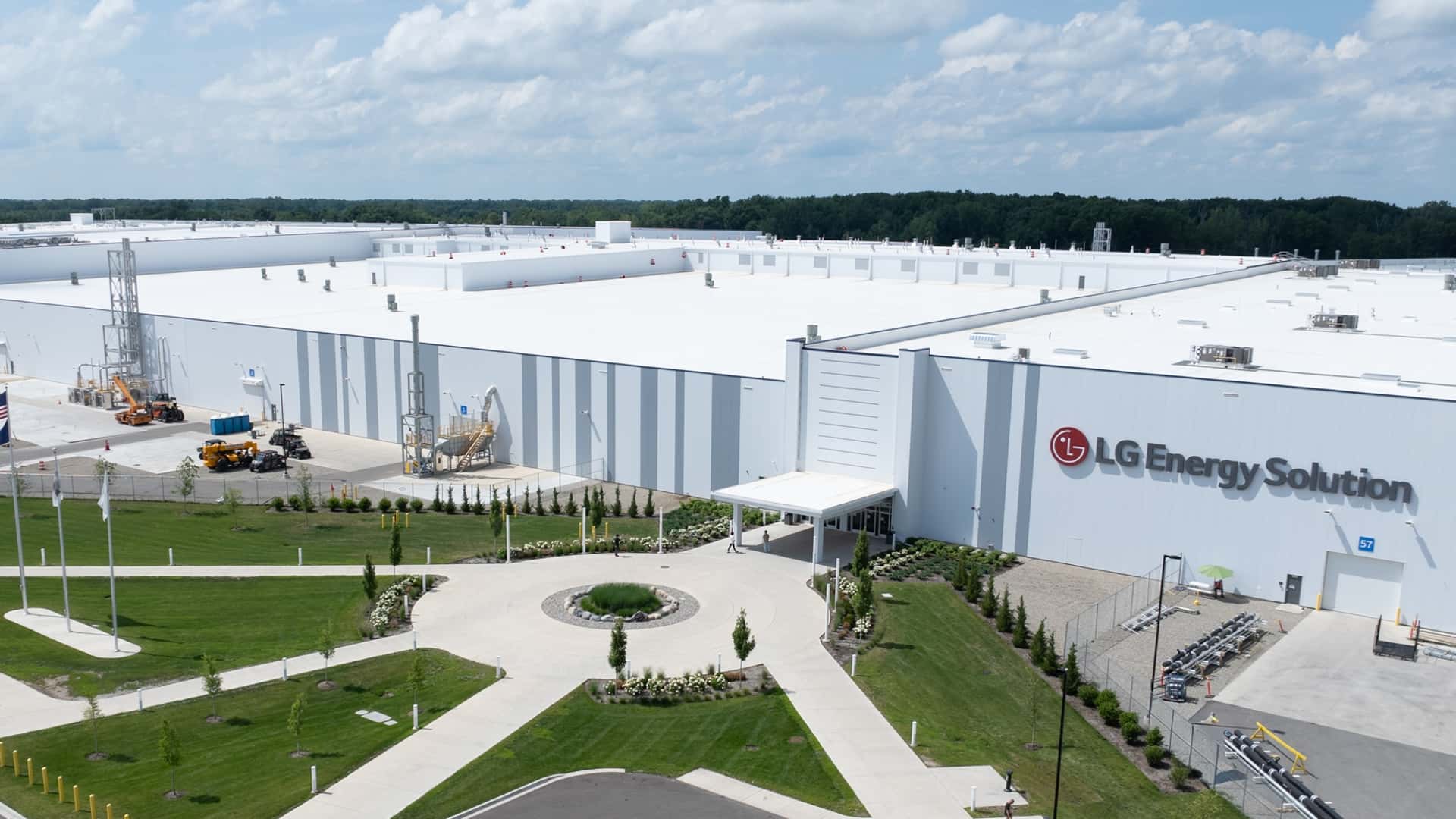
Further solidifying its commitment to the North American market, LG Energy Solution inaugurated its new $2 billion gigafactory in Lansing, Michigan, in August. This state-of-the-art facility is currently producing lithium-iron-phosphate (LFP) energy storage batteries specifically for Tesla, alongside nickel-manganese-cobalt (NMC) EV batteries for Toyota. This dual-purpose production strategy underscores the company’s adaptable manufacturing capabilities and its crucial role in the broader electric vehicle and renewable energy ecosystems.
Looking Ahead: A Resilient Battery Major
LG Energy Solution’s latest financial results paint a picture of a resilient and strategically agile company. By effectively balancing its focus between the dynamic electric vehicle market and the rapidly expanding energy storage sector, LGES has demonstrated its capacity to adapt to evolving industry landscapes.
The combination of strong European EV demand, burgeoning U.S. energy storage needs, supportive governmental policies like the Inflation Reduction Act, and proactive supply chain management positions LG Energy Solution for sustained growth. As the global push for electrification and renewable energy integration intensifies, the company’s comprehensive approach to battery technology and manufacturing is set to maintain its authoritative standing in the industry.
FAQ Section
Q1: What are the primary reasons behind LG Energy Solution’s record earnings?
A1: LG Energy Solution’s record earnings in Q3 were primarily driven by robust electric vehicle battery sales in Europe and a significant surge in demand for energy storage systems (ESS) in the United States, coupled with U.S. Inflation Reduction Act manufacturing credits.
Q2: How did LG Energy Solution address the slowdown in North American EV battery demand?
A2: The company strategically shifted its focus to capitalize on the growing market for stationary energy storage batteries in the U.S., which are in high demand for AI data centers and grid upgrades. This diversification helped offset any slowdowns in EV battery production.
Q3: What role did the U.S. Inflation Reduction Act play in LGES’s financial performance?
A3: The U.S. Inflation Reduction Act (IRA) provided LG Energy Solution with Section 45X Advanced Manufacturing Production tax credits for domestic battery manufacturing, significantly boosting its bottom line and incentivizing localized production efforts.
Q4: Where are LG Energy Solution’s key manufacturing hubs contributing to this growth?
A4: LGES’s plant in Poland is reportedly seeing strong demand from European automakers like Volkswagen and Renault. In the U.S., its multiple local plants are producing energy storage system (ESS) batteries, including the recently opened $2 billion gigafactory in Lansing, Michigan.
Q5: How is LG Energy Solution securing its raw material supply chain?
A5: To ensure a stable supply chain, LGES recently signed a multi-year offtake agreement with Canada’s Elevra Lithium, securing 240,000 metric tonnes of raw lithium concentrate from Quebec for its battery manufacturing operations.