
Key Takeaways
- LG Energy Solution (LGES) reported record quarterly earnings, driven by diversified revenue streams.
- Strong demand for energy storage batteries in the U.S., spurred by AI data centers and grid upgrades, significantly boosted profitability.
- Robust electric vehicle (EV) sales across Europe provided a substantial uplift to the company’s EV battery segment.
- U.S. Inflation Reduction Act (IRA) manufacturing credits and automaker compensation also contributed positively to the bottom line.
- Despite initial slowdowns in North American EV battery production, strategic investments in local manufacturing and supply chain resilience are paying off.
Seoul, South Korea — LG Energy Solution (LGES), a global leader in battery manufacturing, has announced record quarterly earnings, signaling a successful strategic pivot amidst evolving market demands. The South Korean battery giant reported a significant surge in its third-quarter performance, primarily propelled by burgeoning demand for energy storage batteries in the United States and robust electric vehicle adoption across European markets.
According to preliminary results filed in South Korea, LG Energy Solution’s third-quarter revenue soared by an impressive 59% year-over-year, reaching an estimated $7.21 billion. Concurrently, operating profit witnessed a substantial 25% increase, climbing to $565 million. These figures underscore the company’s resilience and adaptability in a dynamic global battery landscape. Full official results are anticipated in November.
Navigating Market Dynamics: The U.S. Energy Storage Boom
The past couple of years have presented a complex environment for battery manufacturers, particularly in North America, where initial aggressive expansion plans for electric vehicle battery production faced recalibration due to slower-than-anticipated EV sales growth. In response, many industry players, including LG Energy Solution, strategically shifted focus towards the rapidly expanding market for stationary energy storage batteries.
This strategic redirection has proven highly lucrative for LGES. The demand for energy storage systems (ESS) has surged significantly in the U.S., fueled by two primary factors: the exponential growth of power-hungry AI data centers and critical grid infrastructure upgrades aimed at enhancing reliability and integrating renewable energy sources. These developments have created a robust market for large-scale battery solutions, allowing LGES to offset earlier setbacks in its EV battery division.
LGES has proactively strengthened its local production capabilities for ESS batteries across multiple facilities in the U.S. This localized manufacturing approach not only caters to the surging domestic demand but also aligns with broader efforts to establish more resilient and geographically diversified supply chains within the critical energy sector.
Driving Growth in Europe’s Thriving EV Market
While the North American EV market presented challenges, LG Energy Solution’s electric vehicle battery business found strong momentum in Europe. The continent’s burgeoning EV boom has translated into significant demand for LGES products, bolstering the company’s overall financial performance.
Reports from The Korea Herald indicate that LGES’s manufacturing plant in Poland has been a key beneficiary of this European growth. The facility is experiencing robust demand from major automotive manufacturers such as Volkswagen and Renault, both of whom are expanding their electric vehicle portfolios and market penetration across Europe. This strong performance in Europe has been a crucial pillar, complementing the growth observed in the energy storage segment.
The European Union’s ambitious climate targets and supportive regulatory frameworks have consistently driven EV adoption, creating a fertile ground for battery suppliers like LGES. The consistent demand from established automakers underscores the quality and reliability of LGES’s EV battery technology.
Leveraging U.S. Policy: The Inflation Reduction Act’s Impact
A significant factor contributing to LG Energy Solution’s robust earnings surge is the strategic benefit derived from U.S. governmental incentives. Specifically, the company has capitalized on battery-manufacturing credits provided through the U.S. Inflation Reduction Act (IRA).
The IRA, enacted in August 2022, is a landmark piece of legislation designed to accelerate clean energy production and encourage domestic manufacturing across various sectors. Among its key provisions is the Section 45X Advanced Manufacturing Production tax credit. This credit provides incentives for the domestic production of certain clean energy components, including battery cells and modules, offering a per-unit credit that significantly enhances the profitability of U.S.-based battery manufacturing.
According to Reuters, these production credits have substantially improved LGES’s bottom line, reinforcing the company’s decision to invest heavily in its U.S. manufacturing footprint. Crucially, while there have been shifts in U.S. climate policy under different administrations, the Section 45X Advanced Manufacturing Production tax credits have largely remained available and are slated to continue through 2032. This long-term stability provides a predictable economic incentive for battery manufacturers operating within the United States.
In addition to these manufacturing credits, LGES also received compensation from certain automakers who failed to meet minimum EV battery purchase requirements. Such contractual clauses provide a financial safeguard for suppliers in an industry characterized by evolving demand forecasts and production targets.
Strengthening North American Supply Chain and Production
LG Energy Solution’s commitment to the North American market extends beyond merely capturing demand; it involves strategically fortifying its supply chain and expanding its production footprint. These initiatives are crucial for long-term growth and compliance with local content requirements.
In a significant move to secure raw material supply, LGES recently signed a multi-year offtake agreement with Canada’s Electra Lithium. Under this agreement, LGES will receive 240,000 metric tonnes of raw lithium concentrate from Electra Lithium’s mine in Quebec. This partnership highlights the importance of establishing diversified and regionalized sourcing of critical minerals, reducing reliance on single geographic regions and enhancing supply chain resilience.
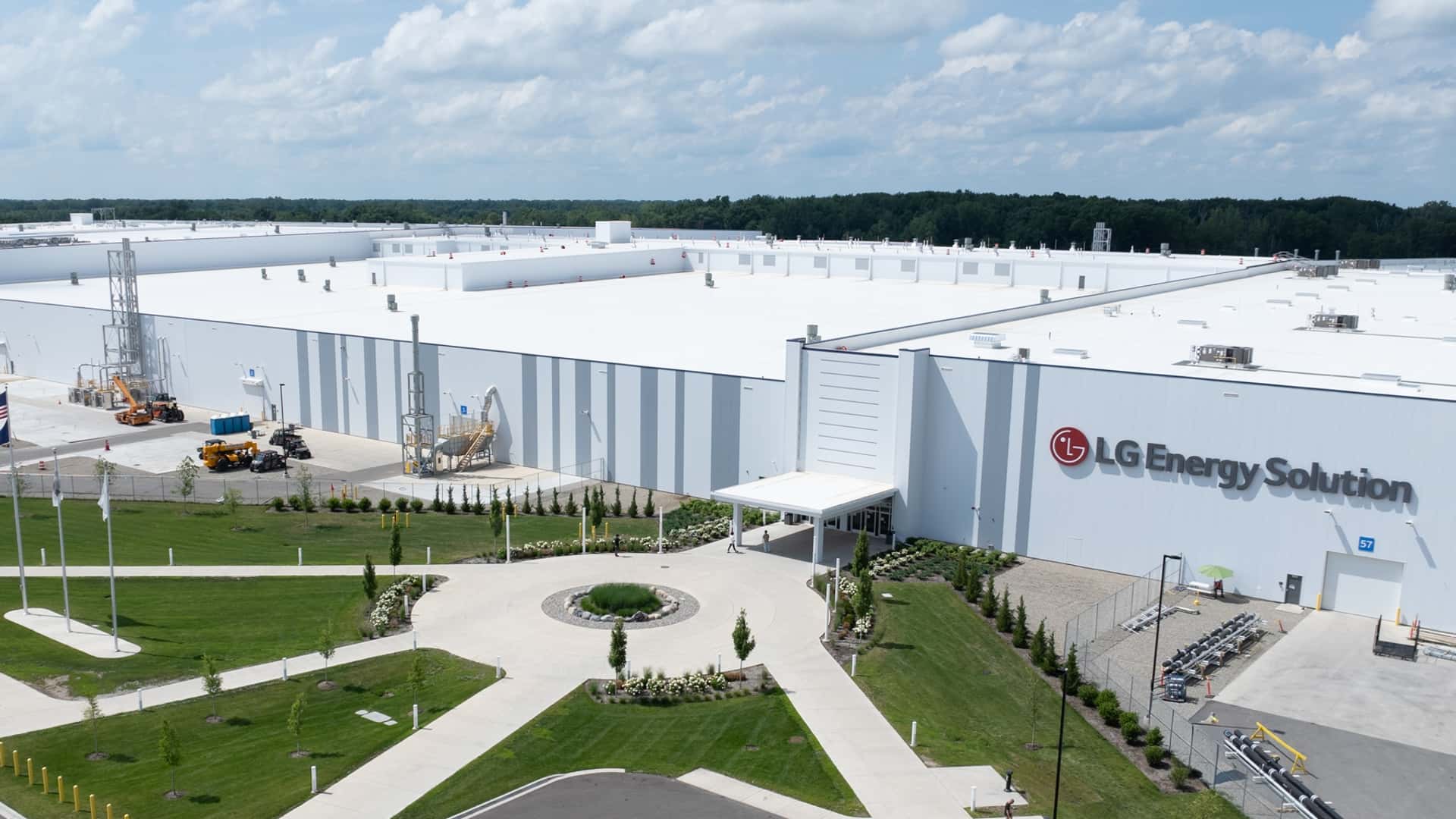
Further cementing its presence, LGES inaugurated its $2 billion gigafactory in Lansing, Michigan, in August. This state-of-the-art facility is a cornerstone of the company’s North American manufacturing strategy. The Michigan plant is designed to produce a diverse range of advanced battery cells, including energy storage lithium-iron-phosphate (LFP) batteries specifically for Tesla, and nickel-manganese-cobalt (NMC) EV batteries for Toyota. This multi-client, multi-chemistry approach underscores LGES’s versatility and its critical role as a supplier to leading automotive brands.
Future Outlook: Diversification as a Key to Stability
LG Energy Solution’s record earnings underscore the strategic wisdom of diversifying its product portfolio and market focus. By not solely relying on the fluctuating demand for EV batteries in one region, and instead aggressively pursuing the robust energy storage market while capitalizing on European EV growth and U.S. incentives, LGES has built a more resilient business model.
The continued expansion of AI technologies and the global push towards renewable energy integration will likely sustain the high demand for advanced energy storage solutions. Coupled with the ongoing transition to electric vehicles worldwide, LGES appears well-positioned to leverage these megatrends. The company’s proactive investments in local manufacturing, supply chain security, and a broad client base are critical elements that will continue to drive its growth and reinforce its leadership position in the global battery industry.
FAQ
What drove LG Energy Solution’s record Q3 earnings?
LG Energy Solution’s record Q3 earnings were primarily driven by strong demand for energy storage batteries in the U.S., fueled by AI data centers and grid upgrades. Additionally, robust electric vehicle sales in Europe and benefits from U.S. Inflation Reduction Act manufacturing credits significantly contributed to the company’s profitability.
How did LGES address the slowdown in North American EV battery demand?
Despite slower-than-expected EV sales in North America, LGES successfully offset potential losses by pivoting to the rapidly growing market for stationary energy storage batteries. The company intensified local production of these systems in the U.S., catering to the high demand from data centers and grid modernization projects.
What role does the U.S. Inflation Reduction Act play in LGES’s success?
The U.S. Inflation Reduction Act provides crucial Section 45X Advanced Manufacturing Production tax credits for domestic battery manufacturing. These credits offer per-unit financial incentives, significantly enhancing the profitability of LGES’s U.S.-based operations and encouraging further investment in local production facilities through 2032.
Which markets are key contributors to LGES’s EV battery sales?
The European market is a significant contributor to LGES’s EV battery sales. The company’s plant in Poland experiences strong demand from major automakers like Volkswagen and Renault, who are expanding their electric vehicle offerings across Europe, capitalizing on the continent’s growing EV adoption.
What strategic investments has LGES made in North America?
LGES has made substantial investments in North America, including an offtake agreement with Canada’s Electra Lithium for raw lithium concentrate to secure supply. The company also opened a $2 billion gigafactory in Lansing, Michigan, producing LFP batteries for Tesla and NMC batteries for Toyota, bolstering local manufacturing and client partnerships.
What types of batteries does LGES produce at its Michigan gigafactory?
The $2 billion gigafactory in Lansing, Michigan, produces two main types of batteries. It manufactures lithium-iron-phosphate (LFP) batteries specifically designed for energy storage systems used by Tesla, and nickel-manganese-cobalt (NMC) batteries, which are utilized in electric vehicles manufactured by Toyota.