
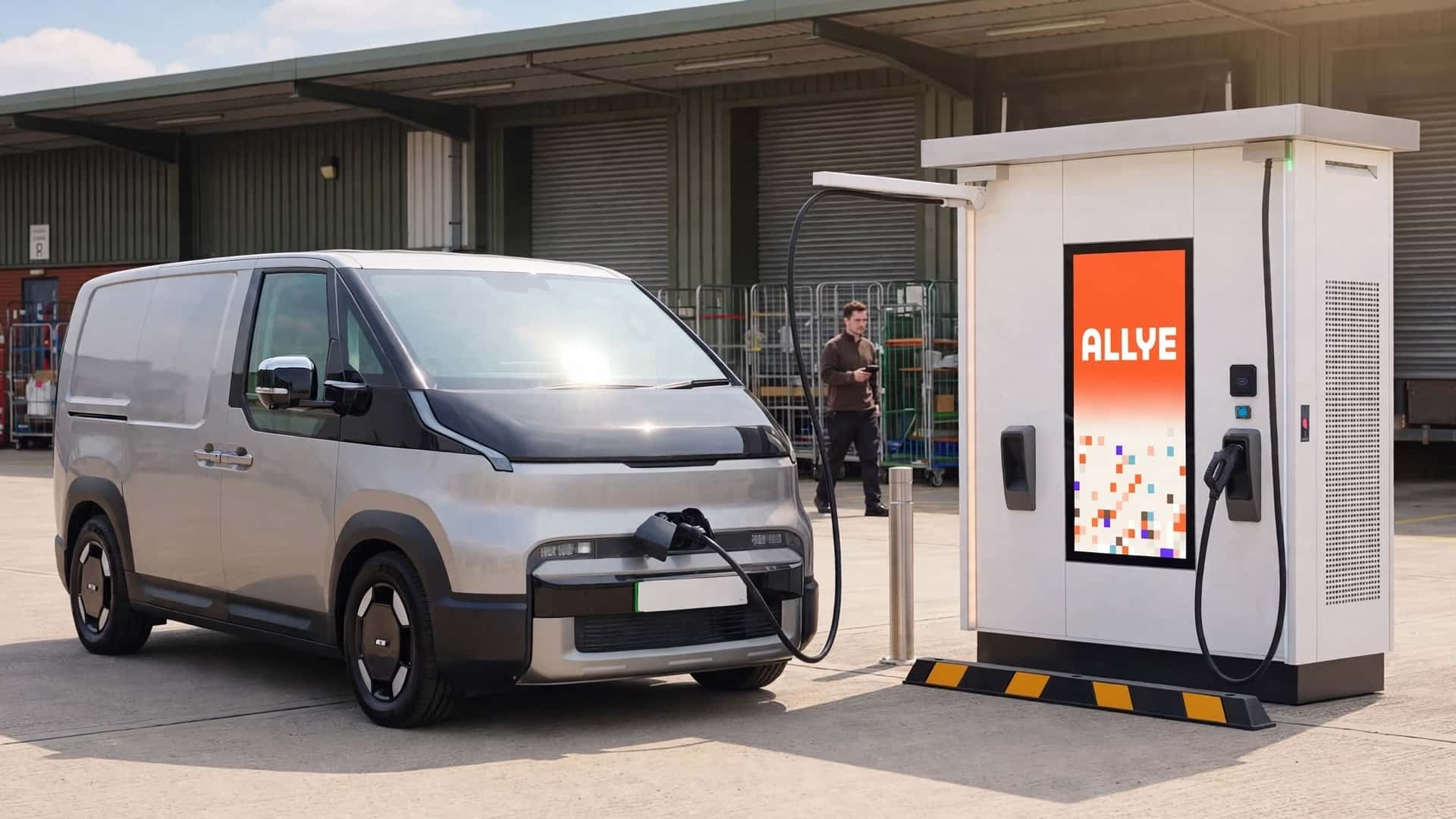
The rapid expansion of electric vehicle (EV) fleets and individual EV ownership presents a significant challenge: the need for robust charging infrastructure. Traditional high-power DC fast charger installations often necessitate extensive, expensive grid upgrades and can involve protracted administrative processes, extending deployment times from weeks to many months. This creates a bottleneck, especially for businesses requiring immediate, flexible charging solutions at various locations.
Key Takeaways
- Allye Energy introduces a 400 kW battery-buffered EV fast charger leveraging repurposed electric vehicle batteries.
- The system enables DC fast charging with a minimal 16-ampere grid connection, avoiding costly and time-consuming infrastructure upgrades.
- Capable of delivering up to 400 kW simultaneously to two EVs or multiple charging satellites, it offers significant power output.
- With built-in battery storage of 155 or 232 kWh, the charger is ideal for depots and temporary sites, offering quick deployment and easy relocation.
- The solution champions a circular economy model by utilising second-life EV batteries, predominantly sourced from UK-registered vehicles.
Addressing Infrastructure Bottlenecks with Innovation
In a groundbreaking development poised to accelerate electric vehicle adoption, Allye Energy, a UK-based innovator, has introduced a cutting-edge solution to circumvent the typical obstacles of EV charging infrastructure. The company’s new Mobile Electric Vehicle (MEV) charger is a battery-buffered EV fast charger designed to go online in mere hours, requiring only a modest grid connection.

This innovative system is particularly significant for companies and organisations that need immediate fast-charging capabilities at sites where long-term EV usage might not be permanent, or where substantial grid upgrades are economically unfeasible. By utilising repurposed electric vehicle batteries, Allye’s solution simultaneously reduces costs and promotes sustainability.
The Allye MEV: A Paradigm Shift in Fast Charging
Billed as the world’s first dedicated EV charger with integrated battery storage constructed from second-life EV battery packs, the Allye MEV represents a substantial leap forward. This all-in-one unit delivers impressive performance, capable of supplying up to 400 kilowatts of power.
This output can be directed to two electric vehicles simultaneously via its integrated cables or distributed to multiple charging satellites as required. The versatility ensures efficient power distribution tailored to varying operational needs.

Harnessing Second-Life Batteries for Sustainable Power
Central to the MEV’s design are its built-in EV batteries, sourced from various manufacturers and of different ages, offering either 155 or 232 kilowatt-hours of storage capacity. This strategic use of second-life batteries not only provides robust energy buffering but also champions a circular economy model, extending the lifecycle of valuable resources.
The charger ingeniously manages its energy flow: it efficiently tops up its internal batteries when charging ports are not in use, then draws power from these stored reserves to deliver a high-capacity charge when an EV is plugged in. This buffering mechanism allows for high-power output from a relatively low-power grid input.
Minimal Grid Dependency, Maximum Output
One of the most compelling features of the Allye MEV is its minimal grid connection requirement. While supporting up to a 125A three-phase hookup, it can operate effectively with as little as a three-phase 16-ampere connection. This significantly reduces the need for expensive and time-consuming utility upgrades that typically plague the deployment of conventional high-power fast chargers.
The ability to connect to an existing industrial electrical connection through a simple industrial outlet or by hardwiring means that the charger can be operational within hours. This rapid deployment capability is a game-changer for businesses seeking agile and cost-effective charging solutions.
Ideal Applications: Depots, Temporary Sites, and Flexibility
Allye highlights that the optimal use case for its new battery-buffered EV fast charger is in depots. These industrial environments often have existing electrical connections suitable for the MEV’s modest requirements. The unit’s standalone nature means it can be simply placed on the ground, connected, and immediately put into service.
Furthermore, the MEV offers unparalleled flexibility. Should a lease expire, or a depot need to be relocated, the charger can be easily lifted, transported on a truck, and redeployed to a new site. This mobility factor eliminates the sunk costs associated with fixed, upgraded infrastructure, providing businesses with adaptable charging solutions.
A Real-World Success Story in Glasgow
The efficacy and economic benefits of Allye’s technology were convincingly demonstrated at J&M Murdoch’s refuse depot in Glasgow. The depot faced a quoted cost of £300,000 (approximately $400,000 USD at the time) for a necessary grid upgrade to support their EV charging needs. Opting for Allye’s battery-backed EV charger instead, the company avoided this substantial capital expenditure.
The innovative charger was up and running within a single day, supplying approximately 200 kilowatt-hours of energy daily. This practical application underscores the immediate and tangible cost savings and operational efficiency gains offered by the battery-buffered EV fast charger.
Robust Design and Enhanced Safety Protocols
Allye’s MEV charger is engineered for both performance and security. It is compatible with a wide range of electric vehicles, supporting both 800-volt and 400-volt architectures. The company prides itself on the charger’s provenance, stating that 95% of its components are British-sourced, including the repurposed batteries, which are exclusively from UK-registered cars.
To mitigate the risk of cable theft, a pervasive issue for public charging infrastructure, the units are equipped with advanced cut detection systems, forensic marking, and quick-release terminals for swift and secure replacement. Inside, safety is paramount, with a pyro fuse for each battery pack, complemented by off-gas detection and robust fire barriers strategically placed between individual packs as standard safety features.
Broader Implications for the Future of EV Infrastructure
The introduction of advanced battery-buffered EV fast charger technologies like Allye’s MEV is pivotal for the widespread adoption of electric vehicles, particularly within commercial and industrial sectors. By significantly lowering the entry barrier for high-power charging, these solutions address critical pain points related to cost, deployment time, and grid capacity.
Such innovations pave the way for more flexible, scalable, and sustainable EV charging networks. They enable businesses to electrify their fleets without the prohibitive upfront infrastructure costs and extensive lead times, ultimately fostering a greener, more efficient transportation ecosystem.
FAQ Section
What is a battery-buffered EV fast charger?
A battery-buffered EV fast charger integrates a large internal battery pack that charges slowly from a low-power grid connection. When an EV plugs in, the charger delivers high power directly from its internal battery, allowing for fast charging without requiring a high-power grid connection.
How does Allye’s charger avoid costly grid upgrades?
Allye’s MEV charger uses its internal battery storage to deliver high power (up to 400 kW) to EVs, while only drawing a modest current (as low as 16 amps) from the main grid. This buffering capability eliminates the need for expensive and time-consuming utility upgrades.
What type of batteries does the Allye MEV use?
The Allye MEV charger utilises second-life electric vehicle batteries, repurposed from UK-registered cars. This approach enhances sustainability by extending the useful life of EV battery packs and reduces the overall cost of the charging unit.
Where is the Allye MEV best suited for deployment?
The Allye MEV is ideal for industrial depots, temporary sites, and locations where rapid deployment and flexibility are crucial. Its ability to be easily relocated makes it perfect for facilities with expiring leases or evolving operational needs.
What are the power capabilities of the Allye MEV?
The Allye MEV can deliver up to 400 kW of power simultaneously to two electric vehicles or multiple charging satellites. It offers internal battery storage options of 155 or 232 kilowatt-hours and supports both 800-volt and 400-volt EVs.
What safety features are integrated into the charger?
For enhanced safety and security, the Allye MEV includes cable cut detection, forensic marking, and quick-release terminals to prevent theft. Internally, each battery pack is protected by a pyro fuse, off-gas detection, and fire barriers between packs.