
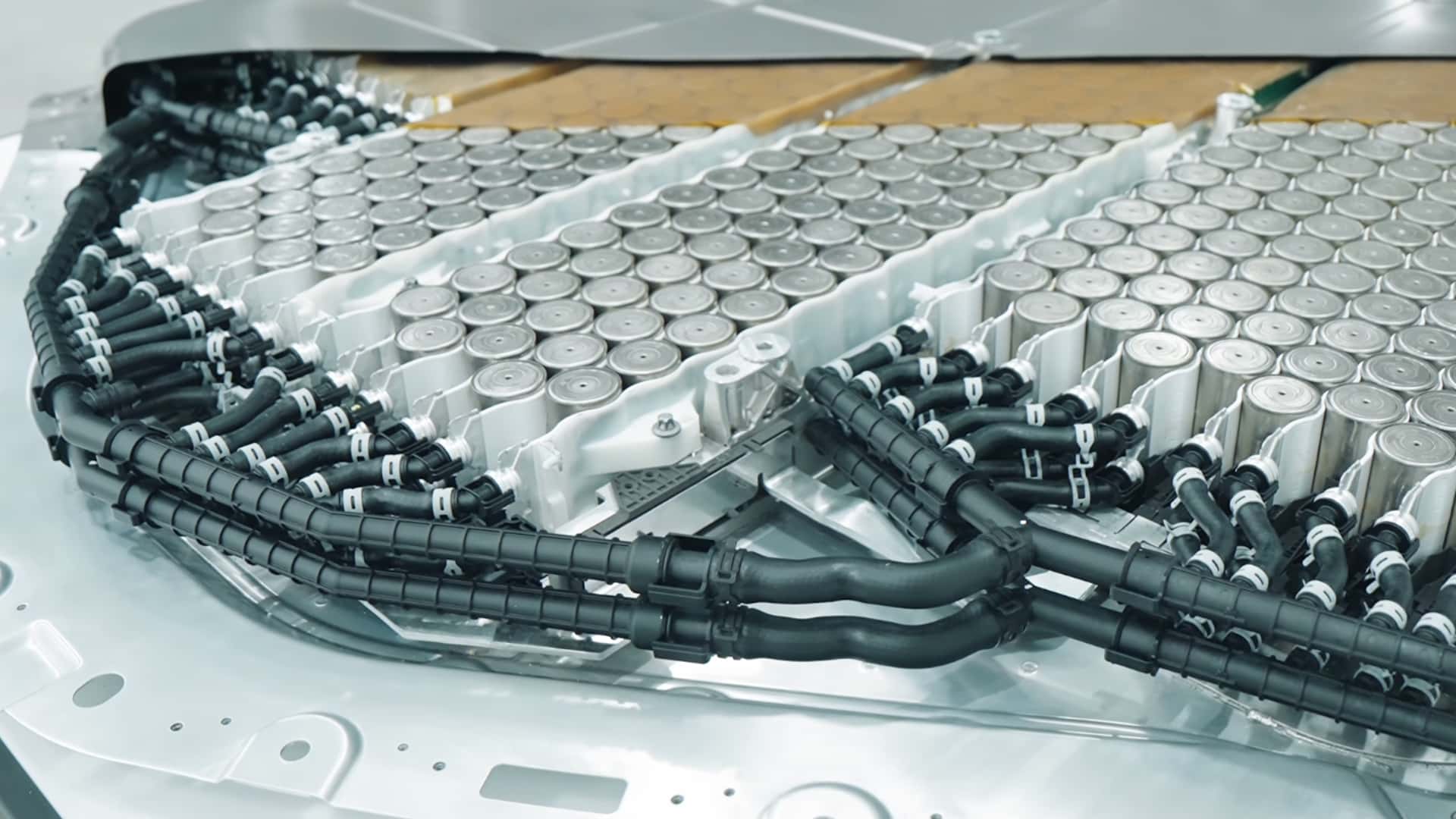
While the Tesla Roadster garnered significant attention for its innovative features, such as SpaceX-developed cold gas thrusters and a powerful suction system, its foundational electric vehicle (EV) capabilities are equally groundbreaking. Central to its extraordinary on-road performance is Tesla’s most advanced high-voltage battery pack to date, signalling a significant leap in automotive engineering.
This cutting-edge power unit is poised to deliver not only an impressive range but also unparalleled charging and discharging performance. Lars Moravy, Tesla’s Vice President of Engineering, articulated the significance of this development to Hagerty’s Henry Catchpole, stating, “It’s everything we learned at Tesla for 20+ years making electric vehicles put into one.”
Key Takeaways
- The Tesla Roadster features the automaker’s most advanced battery pack, designed for extreme power density and performance.
- It utilises bespoke 4680 cylindrical cells with a unique lithium-ion and nickel-based chemistry.
- An innovative thermal management system employs double-sided coolant tubes, aluminum cell cans, and a titanium upper plate for superior heat dissipation.
- The Roadster is projected to be the fastest-charging Tesla, achieving a 15-85% charge in approximately 10 minutes.
- It offers a range exceeding 300 miles and boasts a peak output of 1,341 horsepower.
A New Era for EV Powertrains
While specific details regarding the battery pack’s exact capacity remain undisclosed, Tesla has confirmed it will provide more than 300 miles of range. This figure is complemented by robust charging and discharging capabilities, critical for a vehicle designed to push the boundaries of electric supercar performance.
Unlike batteries in mass-market models such as the Model Y and Model 3, which prioritise longevity and everyday practicality, the Roadster’s cells are specifically engineered for maximum power density and immediate performance. This strategic shift underscores its positioning as a top-tier electric vehicle.
Proprietary 4680 Cells and Bespoke Chemistry
At the core of this advanced battery technology are Tesla’s in-house developed 4680 cylindrical cells. These larger-format cells are a pivotal component, offering a combination of higher energy density and improved power output compared to previous generations.
Moravy further elaborated on the cell composition in a Top Gear video, describing it as a “bespoke chemistry for high power throughput.” He clarified that despite its specialised nature, the materials remain lithium-ion and nickel-based, reflecting a refinement rather than a radical departure from established battery chemistries.
This custom chemistry is crucial for managing the immense power demands of the Roadster, particularly given its formidable dual rear motors. These motors generate a combined peak output of 1,341 horsepower and 1,032 pound-feet of torque on the top trim, necessitating a battery system that can deliver and sustain such intense energy transfer.
Revolutionary Thermal Management
A critical aspect of enabling such high-performance electric vehicles is efficient thermal management. The rapid discharge and charge cycles, coupled with the immense power generation from the motors, can lead to quick heat build-up within the battery cells. Inadequate cooling would compromise both performance and cell longevity.
To address this challenge, Tesla has implemented a sophisticated thermal management system. Moravy detailed that the company utilises double-sided coolant tubes for each individual cell, a design that significantly enhances heat dissipation efficiency. This innovative approach ensures that heat is drawn away from the cells more effectively, even under extreme operational demands.
Further enhancing this system, the cells themselves are housed in aluminum cans. Aluminum, being lighter and possessing superior thermal conductivity compared to traditional steel, aids significantly in dissipating heat generated during intense performance. This material choice contributes to both the battery’s efficiency and the vehicle’s overall weight reduction.
Additionally, the battery pack features a titanium upper plate. This material offers a lighter and thinner alternative to steel, while also providing improved thermal insulation, safeguarding the cells from external temperature fluctuations. The lower plate, situated at the vehicle’s underbody, remains aluminum, prioritising dent and impact resistance, essential for protecting the pack from road debris and potential collisions.
Unprecedented Charging Speed
The combination of advanced cell chemistry and superior thermal management allows the Roadster’s battery to not only discharge power rapidly but also to recharge at an astonishing pace. Moravy revealed that the Tesla Roadster will be capable of charging from 15% to 85% in approximately 10 minutes.
This places the Roadster among the fastest-charging electric vehicles globally, rivalling some of the most advanced offerings from other prominent Western automakers. For context, the new battery-powered Mercedes-AMG GT can achieve an 11-80% charge in approximately 11 minutes, largely due to its peak charging rate of 600 kilowatts.
Many contemporary high-end EVs typically require between 16 to 20 minutes for a 10-80% charge, highlighting the Tesla Roadster’s significant advantage in this critical area of EV performance. This rapid charging capability substantially enhances the practicality and appeal of the electric supercar.
Despite these impressive figures, the exact peak charging speed of the Roadster remains somewhat ambiguous. Tesla has indicated it could handle anywhere between 500 kW and a megawatt, a notably broad range. Similarly, the precise voltage architecture is yet to be definitively confirmed, with estimates placing it between 800 and 1,000 volts. These specifications, once finalised, will offer a clearer picture of the Roadster’s full charging potential.
Impact on the Electric Vehicle Landscape
The Tesla Roadster’s battery technology not only elevates its own performance but also sets new benchmarks for the broader electric vehicle industry. Its focus on extreme power, rapid charging, and sophisticated thermal management represents the culmination of years of EV development and research.
While the Roadster will undoubtedly come with a premium price tag commensurate with its groundbreaking capabilities, the innovations developed for this supercar hold significant promise. There is an anticipation within the industry that elements of this advanced battery technology may eventually trickle down to Tesla’s more accessible mass-market models, fostering wider adoption of high-performance EV fundamentals.
This advancement underscores Tesla’s commitment to pushing the boundaries of electric vehicle engineering. The Roadster’s battery system is not merely an incremental upgrade; it represents a significant leap forward, redefining expectations for what an electric supercar can achieve in terms of speed, range, and charging efficiency.
Frequently Asked Questions (FAQ)
What type of battery cells does the Tesla Roadster use?
The Tesla Roadster uses Tesla’s own in-house developed 4680 cylindrical cells. These cells feature a bespoke lithium-ion and nickel-based chemistry specifically engineered for high power throughput, enabling the vehicle’s extreme performance demands.
How fast can the Tesla Roadster charge?
The Tesla Roadster is designed to be one of the fastest-charging EVs, capable of charging from 15% to 85% in approximately 10 minutes. This speed places it competitively among top-tier electric vehicles currently available.
What is special about the Roadster’s thermal management system?
The Roadster’s thermal management system is highly advanced, incorporating double-sided coolant tubes for each cell. It also features lightweight aluminum cans for the cells and a titanium upper plate for improved heat dissipation and insulation, ensuring optimal performance under high loads.
What is the expected range of the Tesla Roadster?
Tesla has stated that the Roadster’s advanced battery pack will deliver an impressive range of more than 300 miles on a single charge. This range, combined with its rapid charging capabilities, enhances its usability as a high-performance electric vehicle.
What power output does the Roadster achieve?
The Tesla Roadster, in its top trim, achieves a peak output of 1,341 horsepower and 1,032 pound-feet of torque from its dual rear motors. This immense power output is directly supported by its highly capable and advanced battery system.
Will this advanced battery technology be available in other Tesla models?
While the technology is currently tailored for the high-performance Roadster, there is industry speculation and hope that aspects of these advanced battery innovations, particularly regarding cell design and thermal management, may eventually trickle down to Tesla’s mass-market models, enhancing their performance and efficiency.