
Key Takeaways:
- Allye Energy’s new MEV mobile DC fast charger integrates repurposed electric vehicle batteries.
- This innovative design allows for high-power charging (up to 400 kW) with minimal grid connection requirements, as low as 16 amperes.
- The system significantly reduces the need for expensive and time-consuming grid infrastructure upgrades.
- Deployment can occur in hours, offering a flexible solution for temporary sites and vehicle depots.
- The charger champions a circular economy by utilising second-life EV batteries.
The rapid expansion of electric vehicle (EV) fleets worldwide presents an urgent demand for robust charging infrastructure. However, a significant hurdle in this transition has been the prohibitive cost and extended timelines associated with upgrading electrical grid connections to support powerful DC fast chargers. These infrastructure enhancements often run into hundreds of thousands of pounds and can delay project deployment for months, if not years.

Addressing this critical challenge, Great Britain’s Allye Energy has introduced an innovative solution: a battery-buffered EV fast charger that leverages second-life EV batteries. This pioneering system promises to revolutionise how businesses and municipalities establish high-capacity EV charging capabilities, enabling rapid deployment and drastically cutting initial infrastructure costs.
The Innovation: Battery-Buffered EV Fast Charger
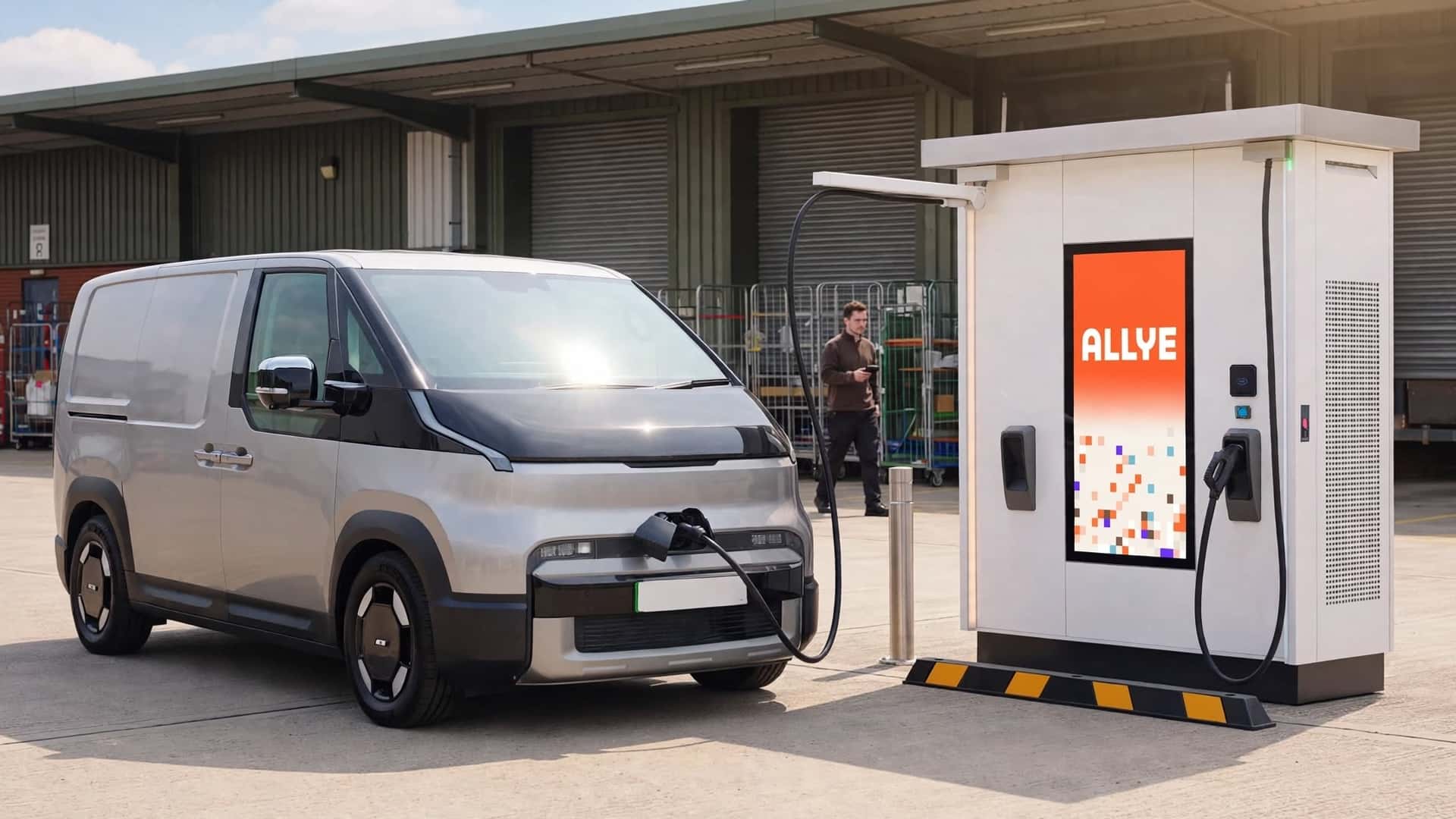
Allye Energy’s new MEV unit is billed as the world’s first dedicated EV charger featuring integrated battery storage derived from repurposed electric vehicle packs. This all-in-one charging solution is designed to bypass the traditional pitfalls of grid upgrades, offering a pathway to immediate and powerful EV charging infrastructure.
Unlike conventional fast chargers that demand direct, high-capacity grid connections, the Allye MEV operates with a modest electrical input. It requires a minimum three-phase 16-ampere grid hookup, though it can support up to 125A, making it compatible with existing industrial electrical connections often found in depots or temporary sites.

Harnessing Second-Life EV Batteries
At the core of the MEV’s efficiency is its integrated battery storage system, which utilises second-life EV batteries from various manufacturers and ages. These batteries provide substantial storage capacities of either 155 or 232 kilowatt-hours. This approach not only provides the necessary buffer for high-power delivery but also contributes to a circular economy by giving used EV batteries a vital second life, reducing waste and enhancing sustainability.
The battery-backed charger intelligently manages power flow. When charging ports are not in use, the unit efficiently tops up its internal battery packs from the minimal grid connection. When an EV is plugged in, the system then delivers energy directly from these buffered batteries, providing up to 400 kilowatts of power simultaneously to two electric vehicles through its integrated cables, or distributing power to multiple charging satellites as required.
Streamlined Deployment and Flexible Applications
The design philosophy behind the Allye MEV emphasises speed and flexibility. The unit can be brought online in a matter of hours, a stark contrast to the months-long processes associated with traditional grid upgrades. This rapid deployment capability makes it an ideal solution for a diverse range of applications.
Primary beneficiaries include vehicle depots, logistics hubs, and construction sites where robust industrial electrical connections are typically available. For such operations, the all-in-one unit can be simply positioned on the ground and connected to the main power supply via an industrial outlet or through hardwiring. Its mobile design also means that if a lease expires or a depot needs to be relocated, the battery-buffered EV fast charger can be easily transported to a new location, ensuring uninterrupted service and maximum asset utilisation.
Overcoming Infrastructure Challenges
The development of adequate charging infrastructure is crucial for the widespread adoption of electric vehicles. However, the existing electrical grid, particularly in older industrial areas, is often not equipped to handle the instantaneous, high-demand loads presented by multiple fast EV chargers.
Traditional solutions involve extensive trenching, new transformer installations, and significant paperwork for utility approvals, leading to considerable financial outlay and prolonged waiting periods. The Allye MEV’s innovative approach circumvents these obstacles by buffering the power demand, drawing energy slowly from the grid over time and delivering it quickly when needed, thus alleviating strain on the local electrical network.
Financial and Operational Advantages
The economic benefits of employing a battery-buffered EV fast charger are substantial. By negating the need for costly grid connection upgrades, businesses can save hundreds of thousands of pounds, reallocating capital to other critical operational areas. The speed of deployment also translates into faster revenue generation or operational savings for commercial fleets transitioning to electric vehicles.
Operationally, the MEV offers unparalleled flexibility. It provides reliable fast charging even in locations with limited grid capacity, enabling companies to electrify their fleets or provide charging services in remote or temporary settings without extensive infrastructure investment. This adaptability is key for businesses with evolving needs or those operating across various sites.
Technical Specifications and Safety Measures
Designed for broad compatibility, the standalone charger supports both 800-volt and 400-volt electric vehicles, accommodating a wide array of modern EVs. A notable aspect of the Allye MEV is its commitment to local sourcing; 95% of its components are British-sourced, including the repurposed batteries, which originate from UK-registered cars, further enhancing its sustainability credentials and supporting local economies.
Safety is paramount in EV charging technology, and Allye has incorporated robust measures into the MEV. To deter cable theft, units are equipped with cut detection systems, forensic marking, and quick-release terminals for efficient replacement. Internally, each battery pack features a pyro fuse, complemented by off-gas detection and fire barriers strategically placed between packs, ensuring a high level of operational safety and reliability.
Real-World Implementation: A Case Study
The efficacy and benefits of Allye’s battery-buffered EV fast charger have been demonstrated in a real-world scenario. J&M Murdoch, a refuse depot located in Glasgow, faced a formidable challenge when considering an EV fleet transition. The estimated cost for a grid upgrade to support fast charging at their facility was quoted at an astonishing £300,000 (approximately $400,000 USD).
Opting for Allye’s solution, the depot deployed one of the battery-backed dispensers. The installation was completed within a single day, a testament to the system’s ease of deployment. Since its activation, the charger has consistently supplied approximately 200 kilowatt-hours of energy daily, efficiently supporting J&M Murdoch’s electric fleet without the need for the previously estimated, highly expensive grid infrastructure overhaul.
This successful implementation underscores the tangible advantages of such innovative charging solutions, proving their capacity to accelerate the adoption of electric vehicles by making high-power charging more accessible and economically viable.
Conclusion
The introduction of Allye Energy’s battery-buffered EV fast charger marks a significant step forward in addressing the infrastructural challenges of the electric vehicle transition. By ingeniously utilising second-life batteries and requiring minimal grid connections, this technology offers a cost-effective, rapidly deployable, and sustainable solution for businesses and municipalities. It paves the way for a more flexible and robust EV charging ecosystem, accelerating the shift towards electrified transport without the traditional burdens of extensive grid upgrades.
Frequently Asked Questions (FAQ)
What is a battery-buffered EV fast charger?
A battery-buffered EV fast charger integrates a large internal battery pack that stores energy from a standard grid connection and delivers high power to EVs when needed. This approach allows high-speed charging without requiring expensive, high-capacity grid upgrades.
How does this charger use old EV batteries?
Allye’s charger incorporates second-life EV batteries, meaning batteries that have been retired from electric vehicles but still retain significant capacity. Repurposing these batteries extends their lifespan, contributes to a circular economy, and reduces the environmental impact of battery manufacturing.
What are the primary benefits of using second-life batteries for charging?
Utilising second-life batteries offers several benefits: it reduces the cost of the charging unit, minimises waste, and lowers the carbon footprint associated with new battery production. It also provides a robust energy buffer for reliable fast charging.
How quickly can Allye’s charger be deployed?
One of the key advantages of this battery-buffered EV fast charger is its rapid deployment. It can be installed and become operational within hours, compared to the months it typically takes for traditional charging stations requiring grid upgrades.
What kind of grid connection does the MEV charger require?
The Allye MEV charger is designed to operate with a modest grid connection, requiring as little as a three-phase 16-ampere hookup. This minimal requirement allows it to be installed in locations without extensive electrical infrastructure, such as existing depots.
Can this charger be moved to different locations?
Yes, the all-in-one unit is designed for mobility and flexibility. It can be easily lifted and transported on a truck to new locations, making it ideal for temporary sites, leased properties, or evolving operational needs.
What safety features are included in the Allye MEV?
Safety features include cut detection and forensic marking for cable theft prevention, quick-release terminals for easy replacement, pyro fuses for each battery pack, off-gas detection, and fire barriers between battery packs, ensuring secure operation.
How much power can the Allye MEV deliver?
Despite its minimal grid connection requirement, the Allye MEV can deliver up to 400 kilowatts of power, capable of simultaneously charging two electric vehicles through its integrated cables or supplying multiple charging satellites.