
Key Takeaways
- The new Tesla Roadster features the company’s most advanced high-voltage battery pack, developed over two decades.
- It prioritises extreme power density and performance, enabling a 0-60 mph time under two seconds.
- The Roadster utilises bespoke 4680 cylindrical cells with a unique lithium-ion and nickel-based chemistry optimised for high power throughput.
- An innovative dual-sided coolant tube thermal management system, coupled with lightweight aluminum cell cans and a titanium upper plate, ensures rapid heat dissipation.
- The vehicle is engineered for ultra-fast charging, achieving a 15-85% charge in approximately 10 minutes, making it one of the fastest-charging EVs globally.
- With over 300 miles of range, 1,341 horsepower, and a potential charging rate between 500 kW and 1 megawatt, the Roadster sets new benchmarks for electric supercar capabilities.
While much of the initial fanfare surrounding the Tesla Roadster focused on its audacious SpaceX-developed cold gas thrusters and a powerful suction system, the electric supercar’s true prowess fundamentally rests on its sophisticated electric vehicle (EV) engineering. At the core of its extraordinary capabilities lies Tesla’s most advanced high-voltage battery pack to date, a technological marvel poised to redefine performance benchmarks in the automotive industry.
This groundbreaking battery system not only underpins the Roadster’s astonishing acceleration and extended range but also introduces a new era of rapid charging, positioning it as the fastest-charging Tesla ever produced. The innovations packed into this power source are a testament to years of dedicated research and development, aiming to deliver unparalleled on-road performance and efficiency.
Decades of Innovation Culminate in Roadster Battery Technology
The development of the Tesla Roadster battery technology is a culmination of extensive expertise. Lars Moravy, Tesla’s Vice President of Engineering, articulated the significance of this achievement to *Hagerty*’s Henry Catchpole, stating, “It’s everything we learned at Tesla for 20+ years making electric vehicles put into one.” This assertion highlights a two-decade journey of refining battery science and engineering, specifically tailored for the demanding requirements of a hyper-performance vehicle.
Unlike the batteries found in Tesla’s mass-market offerings such as the Model Y and Model 3, which are meticulously engineered for longevity and everyday usability, the Roadster’s energy storage system is designed with a singular focus: extreme power density and unadulterated performance. This fundamental shift in priority underscores a commitment to pushing the boundaries of what electric vehicles can achieve in terms of raw power delivery.
Bespoke 4680 Cells: Engineered for High Power Throughput
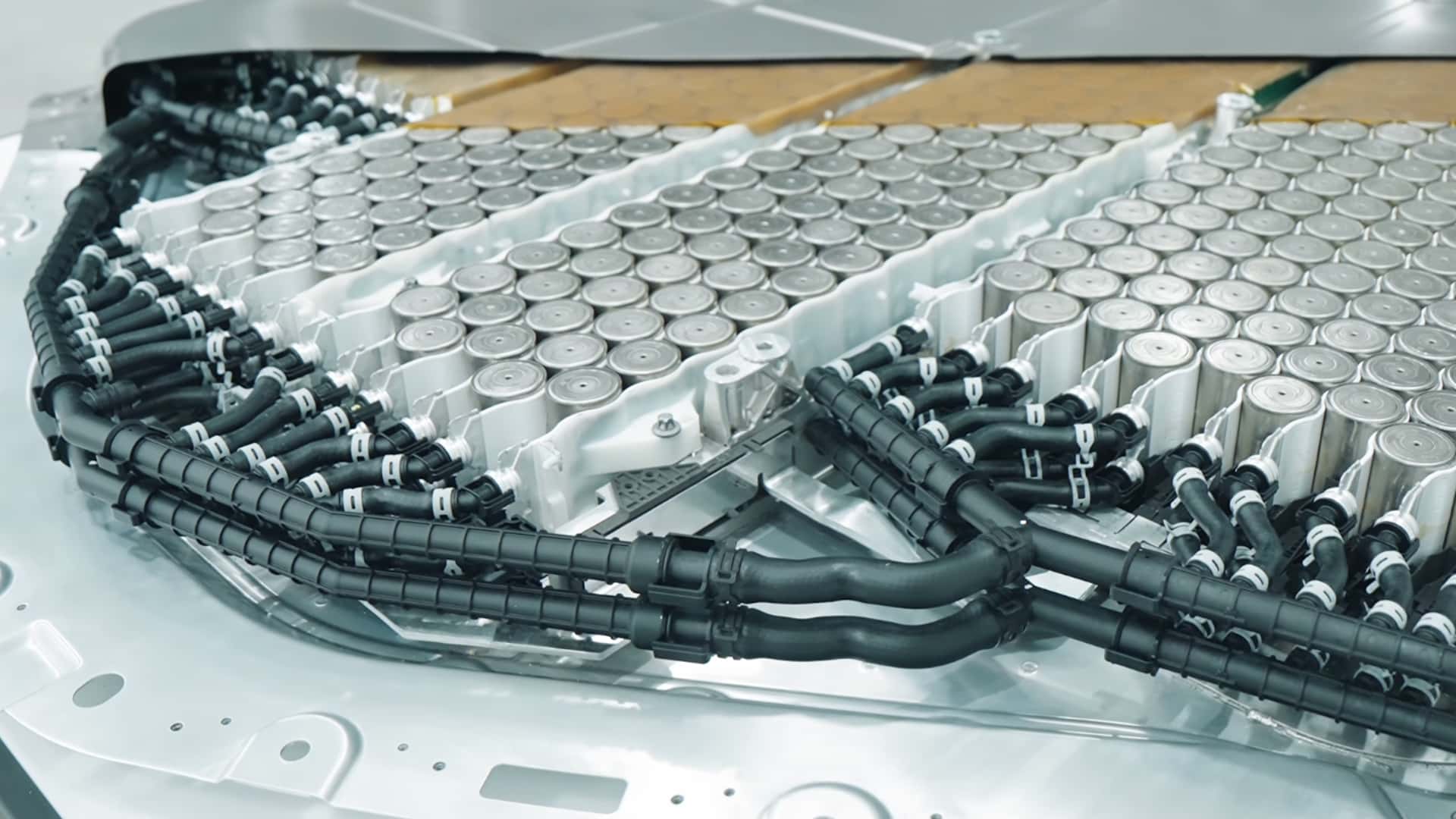
Central to the Tesla Roadster battery technology are its in-house developed 4680 cylindrical cells. These large-format cells represent a significant advancement over previous generations, offering a superior balance of energy density and power output. Moravy, in a *Top Gear* video, described the cell chemistry as “bespoke chemistry for high power throughput,” while confirming that the materials remain lithium-ion and nickel-based.

This bespoke formulation is crucial for an electric supercar capable of generating immense forces. It allows the battery to discharge electrical energy at an exceptionally high rate, directly translating to the instantaneous torque and horsepower required for blistering acceleration. The strategic choice of a specific cell chemistry, while retaining familiar materials, optimises the battery for rapid energy cycling, which is vital for both performance and fast charging.
Revolutionary Thermal Management for Sustained Performance
In a high-performance EV like the Tesla Roadster, effective thermal management of the battery pack is paramount. The dual rear motors alone generate a staggering peak output of 1,341 horsepower and 1,032 pound-feet of torque in the top trim. Such immense power generation inevitably leads to rapid heat accumulation within the battery cells, which if not properly managed, can significantly degrade performance, accelerate wear, and even pose safety risks.
To counteract this, Tesla has implemented an innovative thermal management system featuring dual-sided coolant tubes for each individual cell. This advanced cooling architecture ensures that heat is efficiently drawn away from both sides of every cylindrical cell, maintaining optimal operating temperatures even during periods of intense discharge or ultra-fast charging. This precise temperature control is a cornerstone of the Tesla Roadster battery technology, enabling sustained high performance without thermal throttling.
Advanced Materials for Enhanced Efficiency and Durability
Further enhancing the thermal efficiency and overall robustness of the battery pack is the intelligent use of advanced materials. The cells themselves are encased in aluminum cans, a deliberate choice by Tesla engineers. Moravy highlighted that aluminum cans are inherently lighter than traditional steel cans and possess superior thermal conductivity, allowing for more effective heat dissipation from the cell interiors.
Above the entire battery pack, a titanium upper plate is utilised. This material offers a lighter and thinner alternative to steel, contributing to overall weight reduction while providing better thermal insulation. Concurrently, the lower plate, situated at the vehicle’s underbody, remains constructed from aluminum. This strategic placement ensures robust dent and impact resistance, protecting the crucial battery components from road hazards. These material choices collectively enable the battery cells to not only discharge power with extreme rapidity but also to recharge within minutes, showcasing a holistic approach to high-performance design.
Pioneering Ultra-Fast Charging Capabilities
One of the most compelling features of the new Tesla Roadster battery technology is its unprecedented charging speed. Lars Moravy confirmed that the Roadster is capable of charging from 15% to 85% in approximately just 10 minutes. This places it among the elite tier of fastest-charging electric vehicles currently available from Western automakers, setting a new benchmark for convenience and efficiency.
To put this into perspective, the new battery-powered Mercedes-AMG GT, a leading competitor, can achieve an 11-80% charge in merely 11 minutes, thanks to its peak charging rate of 600 kilowatts (kW). While most latest high-end EVs typically require between 16 to 20 minutes for a 10-80% charge, the Roadster’s ability to achieve a substantial charge in half that time signifies a monumental leap in electric vehicle infrastructure compatibility and usability.
High-Voltage Architecture and Megawatt Charging Potential
Although the exact peak charging speed for the Roadster remains somewhat elusive, Moravy indicated a capacity to handle anywhere between 500 kW and a staggering 1 megawatt (MW). While this represents a broad range, it underscores the immense power throughput capabilities of the Tesla Roadster battery technology and its supporting architecture. The implied potential for megawatt-level charging hints at future-proofing and compatibility with next-generation charging infrastructure.
Similarly, the precise voltage architecture of the Roadster is stated to be somewhere between 800 and 1,000 volts. This high-voltage system is critical for enabling such rapid charging speeds, as it allows for lower current flows for a given power level, thereby reducing heat generation and enabling thinner cables within the charging system. These robust electrical foundations are integral to unlocking the full potential of its ultra-fast charging capabilities.
Performance Metrics and Range of the Tesla Roadster
Beyond its advanced battery system, the Tesla Roadster boasts formidable performance figures that solidify its status as a true supercar. The vehicle’s dual rear motors collectively deliver an astounding 1,341 horsepower and 1,032 pound-feet of torque. This immense power output is a direct result of the battery pack’s ability to provide a consistent and rapid surge of energy, propelling the vehicle from standstill to incredible speeds in mere moments.
Despite its performance-oriented design, the Tesla Roadster also promises an impressive driving range of more than 300 miles on a single charge. This blend of exhilarating power and practical range demonstrates a balanced approach to electric vehicle engineering, aiming to deliver both track-ready excitement and the capability for longer journeys without frequent recharging stops.
Future Implications: Trickle-Down Technology
The Tesla Roadster serves not merely as a halo car but also as a rolling laboratory for advanced electric vehicle technologies. While its initial price tag is expected to be substantial, the innovations integrated into its design — particularly the sophisticated Tesla Roadster battery technology, advanced thermal management, and ultra-fast charging capabilities — hold significant implications for the broader EV market.
Industry observers and consumers alike are hopeful that elements of this cutting-edge technology will eventually trickle down into Tesla’s more accessible mass-market models. Such a development could usher in a new era of performance, efficiency, and charging convenience for everyday electric vehicles, further accelerating the global transition towards sustainable transportation. The Roadster’s groundbreaking engineering is thus not just about a single supercar, but about shaping the future of electric mobility.
Frequently Asked Questions (FAQ)
What makes the Tesla Roadster’s battery technology so advanced?
The Roadster’s battery is the culmination of over 20 years of Tesla’s EV development, featuring bespoke 4680 cylindrical cells. It prioritises extreme power density and performance, unlike mass-market models. Its unique chemistry and revolutionary dual-sided coolant tube thermal management system are key to its advanced capabilities and sustained high output.
How does the Roadster’s battery thermal management system work?
The system uses dual-sided coolant tubes for each cell, efficiently drawing heat away during intense discharge or rapid charging. Coupled with lightweight aluminum cell cans and a titanium upper plate for insulation, it maintains optimal operating temperatures, crucial for performance and longevity in a high-power electric supercar.
What are the charging capabilities of the new Tesla Roadster?
The Roadster is designed for ultra-fast charging, capable of going from 15% to 85% charge in approximately 10 minutes. It can handle peak charging rates estimated between 500 kilowatts and 1 megawatt, supported by an advanced 800-1,000 volt architecture, making it one of the fastest-charging EVs available globally.
What kind of cells does the Tesla Roadster use?
The Tesla Roadster utilises in-house developed 4680 cylindrical cells. These cells feature a bespoke lithium-ion and nickel-based chemistry specifically engineered for high power throughput, enabling the extreme performance metrics and rapid energy cycling required by an electric supercar.
What is the expected range and horsepower of the Tesla Roadster?
The Tesla Roadster is projected to offer an impressive driving range of over 300 miles on a single charge. Its dual rear motors deliver a combined peak output of 1,341 horsepower and 1,032 pound-feet of torque, allowing for unprecedented acceleration and a top-tier supercar driving experience.
Will the Roadster’s battery technology be available in other Tesla models?
While the Roadster introduces cutting-edge innovations, it acts as a technology demonstrator. It is anticipated that some aspects of its advanced Tesla Roadster battery technology, thermal management systems, and fast-charging capabilities may eventually trickle down to future mass-market Tesla models, enhancing performance and efficiency across the lineup.