
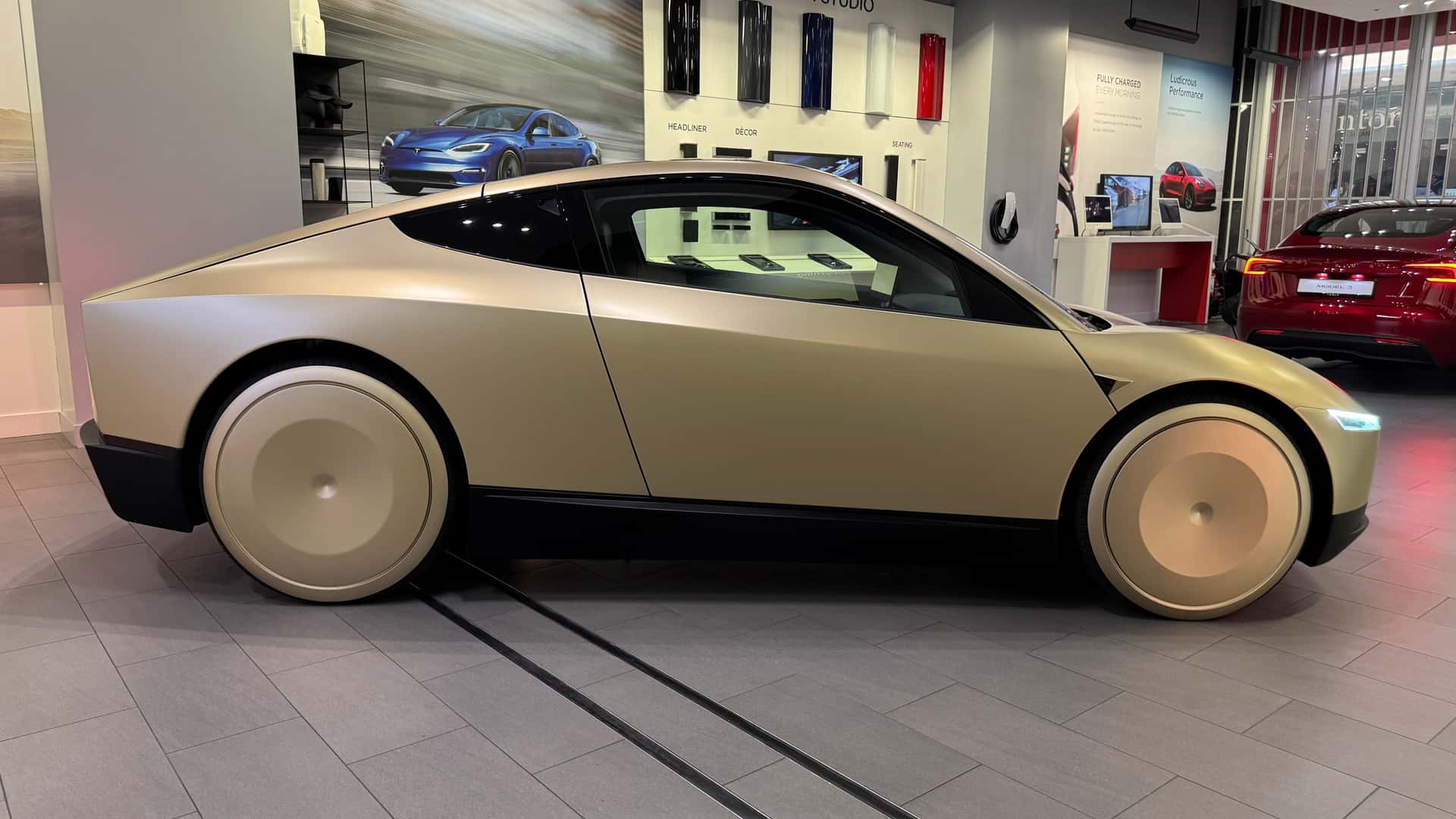
Tesla, a pioneer in innovative electric vehicle (EV) technology, is implementing a significant design shift in its upcoming Cybercab robotaxi, prioritising repairability over the pure energy density focus seen in earlier structural battery packs. This strategic decision comes after internal assessments revealed considerable serviceability challenges with the integrated battery design found in some Model Y units and the Cybertruck.
The move signals an evolving understanding within the automotive industry regarding the long-term total cost of ownership (TCO) for electric fleets, particularly for high-mileage commercial applications. While structural battery designs offer distinct advantages, their integrated nature has presented hurdles for maintenance and repair.
Key Takeaways
- Tesla is moving from highly integrated structural battery packs (like in some Model Ys) to a more modular, repairable design for its Cybercab.
- The Model Y’s structural battery was internally graded a ‘D’ for its manufacturing complexity and ‘zero repairability’ by external analysis firm Munro & Associates.
- The Cybercab’s battery will feature four separate modules of 4680 cells, allowing for individual module replacement rather than entire pack replacement.
- This pivot prioritises long-term serviceability and total cost of ownership (TCO), especially crucial for robotaxi fleets operating hundreds of thousands of miles.
- While structural packs offer density and cost benefits, the Cybercab’s ‘semi-structural’ approach aims to balance these with practical repair considerations.
The Evolution of Tesla’s EV Battery Architecture
For years, Tesla has been at the forefront of battery innovation, including the development of structural battery packs. This design integrates battery cells directly into the vehicle’s chassis, eliminating traditional modules to save weight, reduce complexity, and maximise energy density within a smaller footprint.
Vehicles like certain versions of the Model Y and the Cybertruck have adopted this advanced approach, utilising in-house 4680 battery cells directly embedded into a single, tightly integrated assembly. This cell-to-pack strategy was initially lauded for its potential to streamline manufacturing and enhance vehicle performance.
Addressing the Model Y’s Structural Battery Dilemma
Despite its forward-thinking nature, the structural battery design in the Model Y presented significant practical challenges, particularly concerning manufacturing and subsequent repair. Robert Sumpf, director of mechanical design engineering for Tesla’s battery modules and packs, offered a candid assessment during a discussion on the Munro & Associates YouTube channel.
Sumpf admitted, “It’s good to be self-critical. I’m going to give our Model Y structural battery a grade D.” He further acknowledged that while it was an “awesome product” from a customer’s perspective, its inherent design made it “hard to build.” This internal critique highlights the complexities involved in mass-producing such advanced, integrated components.
The ‘Zero Repairability’ Challenge
A critical issue that emerged with the Model Y’s structural battery was its lack of practical repairability. The design involves binding all cells together within the pack using a hard potting material. This integration makes it nearly impossible to address issues with individual cells or components once the pack is assembled.
External engineering analysis firm Munro & Associates, known for its detailed vehicle teardowns, reached a similar conclusion. After dissecting a Model Y equipped with a structural pack a few years ago, their experts determined that its battery possessed “zero repairability.” This finding underscored the significant hurdle for maintenance and long-term service. This aspect of Tesla EV battery repairability was a major concern.
Industry Trends in Structural Battery Design
The pursuit of structural battery designs is not unique to Tesla. Several other prominent automakers, including BMW, Porsche, and Ford, are actively exploring or implementing similar cell-to-pack or cell-to-chassis architectures. The rationale remains consistent across the industry: such designs enable manufacturers to fit more battery cells into a given area, thereby boosting range or performance, and potentially reducing material costs by eliminating intermediate module structures.
This industry-wide trend reflects a collective effort to optimise electric vehicle construction and efficiency. However, the experience with early structural packs, particularly concerning serviceability, is prompting a re-evaluation of the optimal balance between integration benefits and practical maintenance needs across the electric mobility sector.
The Cybercab’s Pragmatic Approach to EV Battery Technology
In a notable divergence from its earlier designs, Tesla has opted for a different battery architecture for its forthcoming Cybercab. Instead of a single, fully integrated structural pack, the Cybercab will utilise four separate modules comprising its 4680 battery cells. This ‘semi-structural’ design, as described by Sumpf, marks a strategic pivot towards enhanced serviceability.
The modular arrangement means that if a single battery module malfunctions or degrades, it can be individually replaced without necessitating the costly and complex replacement of the entire battery pack. This approach directly addresses the repairability shortcomings identified in the Model Y’s structural battery.
Balancing Efficiency and Service Cost
Explaining the trade-offs, Robert Sumpf elaborated on the benefits and drawbacks of the two approaches. He noted, “You’re going to get maybe 10% more volume for cells in a structural pack when you delete the structure. You’re going to save a little cost as a result, but the issue is the service cost.” This insight highlights the delicate balance between initial manufacturing advantages and the ongoing expenses associated with repairs.
While a fully structural pack might offer a marginal increase in cell volume and slight upfront cost savings, these benefits can be overshadowed by exorbitant service costs if the battery requires extensive repairs. The Cybercab’s design represents a conscious decision to optimise for the latter, ensuring more viable long-term operations.
Total Cost of Ownership: A Fleet Operator’s Priority
For consumer electric vehicles, battery degradation is typically predictable and manageable over the vehicle’s lifespan, with outright battery failures being rare. Range and performance often take precedence for individual buyers. However, the operational demands of a robotaxi fleet like the Cybercab fundamentally alter these priorities.
Robotaxis are designed to endure “hundreds of thousands of miles of round-the-clock abuse.” In such a demanding environment, the total cost of ownership (TCO) becomes paramount. Every aspect of vehicle design, including battery maintenance and repair, is scrutinised for its impact on operational economics and overall profitability.
Eric Earley, the Cybercab’s chief engineer, underscored this critical consideration, stating, “When you think of TCO as we’ve talked about, replacing an entire pack before half a million miles is a killer on cost. So we have to think of [remanufacturing], we have to think of pack serviceability, we have to think of all those things that actually get us to our cost target for the product.” This perspective reveals a matured understanding of EV deployment in commercial fleet operations, where longevity and repair protocols are vital.
The emphasis on remanufacturing and pack serviceability reflects a strategic commitment to reducing operational expenditures over the Cybercab’s extensive service life. This focus on practical maintenance aspects for Tesla EV battery repairability is crucial for the economic viability of a large-scale robotaxi service.
The Broader Implications for EV Battery Repairability
Tesla’s shift with the Cybercab battery design carries significant implications for the broader electric vehicle industry. It underscores that while advancements in energy density and manufacturing integration are crucial, they must be balanced with considerations for long-term sustainability, repairability, and the overall economic life cycle of EV components.
This pragmatic approach to EV battery technology suggests a growing recognition that innovative design must also be robust and serviceable in real-world, high-utilization scenarios. As electric mobility expands into diverse applications, including autonomous fleets, the emphasis on cost-effective maintenance solutions and sustainable battery management will likely become a defining factor in future vehicle development.
FAQ Section
Q: What is a structural battery pack?
A structural battery pack integrates battery cells directly into the vehicle’s chassis, eliminating traditional modules. This design aims to save weight, reduce manufacturing complexity, and increase energy density by maximising the space available for cells, enhancing both vehicle range and performance.
Q: Why was the Model Y’s structural battery given a ‘D’ grade?
Robert Sumpf, Tesla’s mechanical design engineering director for batteries, gave the Model Y’s structural battery a ‘D’ grade primarily due to its complexity in manufacturing. He also noted significant challenges with its serviceability, making repairs nearly impossible if an individual cell or component failed.
Q: How does the Cybercab’s battery design differ from the Model Y’s?
The Cybercab’s battery is designed with four separate modules of 4680 cells, making it a ‘semi-structural’ pack. Unlike the Model Y’s integrated design where cells are tightly bound, this modular approach allows for the replacement of individual modules, significantly improving overall repairability and reducing service costs.
Q: What does ‘zero repairability’ mean for EV owners?
‘Zero repairability’ means that if a fault occurs within the battery pack, especially in an integrated structural design, the entire pack would likely need replacement rather than a targeted repair of the faulty component. This can lead to substantially higher repair costs and increased downtime for the vehicle.
Q: Why is repairability crucial for robotaxis like the Cybercab?
For robotaxis, which are expected to operate for hundreds of thousands of miles around the clock, total cost of ownership (TCO) is paramount. High repair costs from needing to replace entire battery packs would severely impact profitability. Easy repairability ensures lower maintenance expenses and greater vehicle uptime, vital for fleet economics.
Q: Are other automakers adopting structural battery designs?
Yes, several major automakers, including BMW, Porsche, and Ford, are also developing or implementing structural battery designs. They aim to leverage benefits like increased energy density and reduced material costs. However, the industry is increasingly evaluating these designs against long-term repairability and serviceability concerns.