
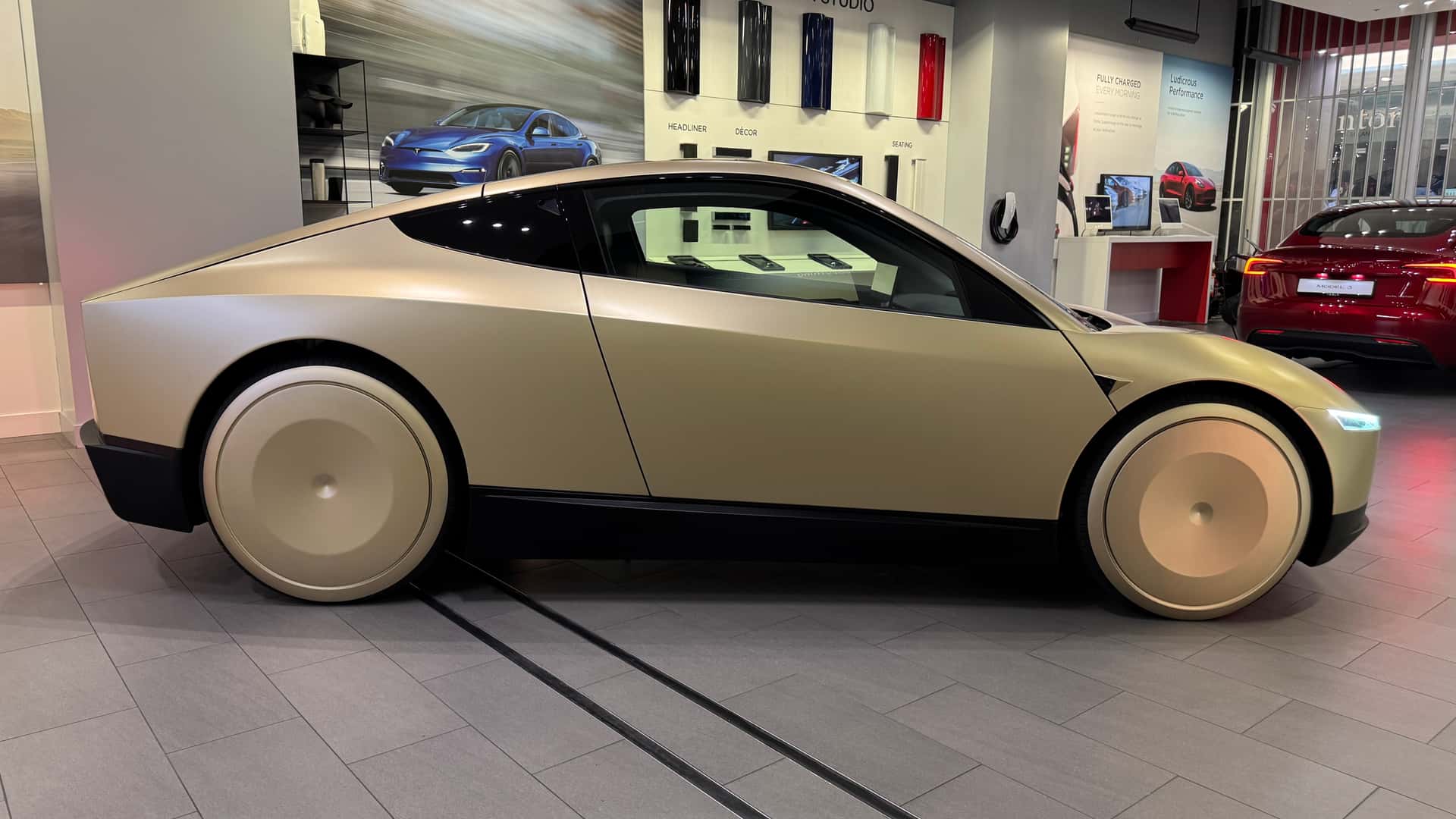
Tesla, a pioneer in advanced electric vehicle (EV) technology, is signaling a significant shift in its battery pack philosophy. While the company initially championed the development of structural battery packs, notably seen in some Model Y variants and the Cybertruck, its upcoming Cybercab robotaxi is set to feature a more modular, repairable design. This strategic pivot underscores a renewed focus on long-term serviceability and total cost of ownership (TCO), particularly critical for high-utilization commercial fleets.
Key Takeaways
- Tesla is moving from highly integrated, difficult-to-repair structural battery packs to a more modular design for its Cybercab.
- The Model Y’s structural battery received a ‘D’ grade internally due to its complex manufacturing and ‘zero repairability.’
- The Cybercab’s new battery architecture comprises four separate modules of 4680 cells, allowing for easier individual module replacement.
- This design change prioritizes serviceability, remanufacturing, and lower operating costs, crucial for the Cybercab’s role as a high-mileage robotaxi.
- While structural packs offer benefits like increased energy density and material savings, the ‘service cost’ was deemed a significant drawback for commercial applications.
The Structural Battery Dilemma: Model Y’s Challenges
Tesla has been at the forefront of innovating electric vehicle battery technology, notably with its structural battery packs. These designs integrate hundreds of in-house 4680 battery cells directly into the vehicle’s chassis, eliminating traditional modules to save weight and maximize energy density within a confined space. This approach, while revolutionary, presented unforeseen challenges in manufacturing and maintenance.
Robert Sumpf, Tesla’s director of mechanical design engineering for battery modules and packs, offered a candid assessment of the Model Y’s structural battery. Speaking in a video on the YouTube channel of engineering firm Munro & Associates, Sumpf stated, “It’s good to be self-critical.” He then assigned the Model Y’s structural battery a “D” grade, acknowledging it as an “awesome product” for the customer but highlighting its inherent difficulty to build.
The primary hurdle with this highly integrated design lies in its serviceability. The 4680 battery cells are bound together within the pack using a hard potting material. This robust, resin-like compound, designed to provide structural integrity and thermal management, inadvertently makes individual cell or module replacement virtually impossible. As Munro & Associates discovered after conducting a teardown of a Model Y with a structural pack a few years ago, the battery suffered from “zero repairability.”
Understanding Structural Battery Packs and 4680 Cells
Structural battery packs represent an advanced form of cell-to-pack technology, where individual battery cells are directly integrated into the battery pack, or even the vehicle structure itself, without intermediate modules. This innovative approach aims to enhance volumetric efficiency and reduce the overall vehicle weight by making the battery pack a load-bearing component.

Tesla’s 4680 battery cells are a key component in this design. These larger cylindrical cells (46mm diameter, 80mm height) are designed to offer higher energy density, improved power output, and a more efficient manufacturing process compared to previous cell formats. However, when these cells are combined with a strong potting compound, the advantages of space and weight savings come at the expense of repair access.
Introducing the Cybercab’s Modular Approach
In a notable divergence from its prior strategy, Tesla’s upcoming Cybercab is set to feature a redesigned battery pack that prioritizes ease of repair. Rather than a single, tightly integrated structural assembly, the Cybercab’s battery system will incorporate four separate modules, each containing the advanced 4680 battery cells. This modularity marks a significant architectural shift.
This “semi-structural” design allows for a faulty module to be individually swapped out without necessitating the replacement of the entire battery pack. This change directly addresses the critical serviceability issues encountered with the Model Y’s fully structural battery. The ability to isolate and replace specific components is a fundamental principle of efficient maintenance and repair in complex systems.
The Strategic Shift: Repairability Over Raw Efficiency
The decision to adopt a semi-structural, more modular battery design for the Cybercab reflects a careful re-evaluation of priorities by Tesla’s engineering teams. While structural battery packs offer undeniable benefits in terms of optimizing space and reducing material costs, the long-term implications for maintenance and operational expenses have driven this change.
Robert Sumpf elaborated on this trade-off, acknowledging that a fully structural pack might yield “maybe 10% more volume for cells” by deleting additional structural elements, resulting in “a little cost” saving during initial manufacturing. However, he emphasized, “the issue is the service cost.” This statement highlights the growing importance of post-sale operational efficiency in EV battery technology, especially for commercial applications.
Comparing Design Philosophies
The debate between fully structural and modular battery designs encapsulates a core challenge in electric vehicle manufacturing: balancing initial production efficiency and energy density with long-term serviceability and sustainability. Fully structural packs excel in maximizing the number of cells within a given footprint, potentially leading to greater range or a more compact vehicle.
However, this integration often sacrifices the ability to repair or upgrade individual components, leading to higher replacement costs and a less sustainable lifecycle. Modular battery systems, conversely, might incur slightly higher initial manufacturing costs or occupy marginally more space but offer significant advantages in repair, refurbishment, and potential repurposing of battery components.
Total Cost of Ownership: The Robotaxi Imperative
The shift to a more repairable Tesla Cybercab battery design is primarily driven by the unique demands of a robotaxi fleet. While EV batteries generally exhibit predictable degradation and infrequent failures in typical consumer usage, a robotaxi operates under vastly different conditions. These vehicles are designed for “round-the-clock abuse,” expected to accumulate hundreds of thousands of miles over their operational lifespan.
For a fleet-based business, the Total Cost of Ownership (TCO) is paramount. TCO encompasses not just the initial purchase price but also fuel (electricity), insurance, maintenance, and, critically, the cost of repairs and replacements over the vehicle’s entire operational life. A battery pack that cannot be repaired and must be replaced entirely for a minor fault would severely inflate TCO, undermining the economic viability of a robotaxi service.
Eric Earley, the Cybercab’s chief engineer, articulated this financial imperative during the Munro Live YouTube channel discussion. He explained, “When you think of TCO as we’ve talked about, replacing an entire pack before half a million miles is a killer on cost.” He underscored the need to consider “remanufacturing,” “pack serviceability,” and other factors that contribute to achieving cost targets for the product. This focus on remanufacturing and granular serviceability points towards a more circular economy approach for EV batteries within commercial fleets.
Industry Context: The Evolving Landscape of EV Battery Design
Tesla’s journey with structural battery packs and its subsequent pivot with the Cybercab battery design reflects a broader industry trend of continuous innovation and adaptation in EV battery technology. Automakers worldwide are exploring various cell-to-pack and cell-to-body architectures to improve performance, reduce weight, and lower manufacturing costs.
Companies like BMW, Porsche, and Ford are also designing vehicles with cells that go directly into packs or even directly into the vehicle’s body structure. This signifies a collective push towards maximizing the inherent advantages of battery electric vehicle platforms. However, Tesla’s experience highlights that the optimal battery architecture is not a one-size-fits-all solution, but rather one tailored to the specific application and its corresponding operational requirements and economic model.
The balance between achieving high energy density for extended range, streamlining manufacturing processes for cost efficiency, and ensuring practical repairability and sustainability is a complex challenge for automotive engineers. The Cybercab’s semi-structural battery represents an adaptive response to these multifaceted considerations, prioritizing the long-term economic realities of commercial fleet operation.
Looking Ahead: Implications for Future EV Development
The strategic decision behind the Tesla Cybercab battery design could have significant implications for future electric vehicle development, both within Tesla and across the broader automotive industry. It suggests a maturing understanding of the complete lifecycle costs and practicalities associated with advanced EV battery systems.
While maximizing range and initial performance remains crucial for consumer vehicles, the emphasis on robust serviceability for high-utilization commercial applications like robotaxis demonstrates a nuanced approach to battery architecture. This focus on long-term sustainability and reduced operational expenditure could pave the way for more adaptable and modular battery platforms in future Tesla models and potentially influence competitors’ design strategies for their own commercial EV fleets.
The evolution of battery design, from tightly integrated structural packs to more repairable modular systems, signifies a dynamic industry where innovation is tempered by practical experience and a keen eye on the total economic impact for diverse vehicle applications.
FAQ Section
Q1: What is a structural battery pack?
A structural battery pack integrates battery cells directly into the vehicle’s chassis, making the pack a load-bearing component. This design aims to save weight, maximize energy density, and optimize space by eliminating traditional battery modules and external casings. Tesla’s Model Y and Cybertruck utilized this advanced cell-to-pack strategy.
Q2: Why did Tesla grade the Model Y’s structural battery pack a ‘D’?
Tesla’s director of mechanical design engineering, Robert Sumpf, gave the Model Y’s structural battery a ‘D’ grade primarily due to its manufacturing complexity and severe lack of repairability. The tightly integrated cells with hard potting material made it nearly impossible to service or replace individual faulty cells or modules, leading to high service costs.
Q3: How does the Cybercab’s battery design differ from the Model Y’s?
Unlike the Model Y’s single, highly integrated structural battery, the Cybercab features a “semi-structural” design with four separate modules of 4680 battery cells. This modularity allows for individual modules to be swapped out if faulty, significantly improving the battery pack’s repairability and serviceability.
Q4: What are the advantages of a modular battery design?
A modular battery design offers several advantages, including enhanced repairability, easier remanufacturing, and lower service costs. When a single module fails, only that specific module needs replacement, rather than the entire expensive battery pack. This approach contributes to a lower total cost of ownership (TCO) and improved sustainability.
Q5: Why is Total Cost of Ownership (TCO) crucial for the Cybercab?
TCO is critical for the Cybercab because it is designed as a robotaxi, operating for hundreds of thousands of miles around the clock. High repair costs, particularly for an unrepairable battery pack, would significantly inflate operational expenses. A modular, repairable design ensures greater longevity and economic viability for a commercial fleet.
Q6: Are other automakers using structural battery designs?
Yes, other prominent automakers, including BMW, Porsche, and Ford, are also exploring and implementing various forms of cell-to-pack or cell-to-body battery architectures. The industry collectively aims to leverage the benefits of direct integration for improved energy density, weight reduction, and manufacturing efficiency in their electric vehicle offerings.