
Key Takeaways
- LG Energy Solution (LGES) posted record Q3 revenue of $7.21 billion and operating profit of $565 million, marking significant year-over-year growth.
- The strong financial performance was fueled by robust electric vehicle (EV) battery sales in the European market.
- A pivotal factor was the surging demand for energy storage system (ESS) batteries in the U.S., driven by power-hungry AI data centers and critical grid upgrades.
- The company benefited from U.S. Inflation Reduction Act (IRA) manufacturing credits, which incentivize domestic battery production.
- LGES has strategically expanded its North American footprint, including a raw lithium offtake agreement in Canada and the operationalization of its $2 billion gigafactory in Michigan.
Seoul, South Korea — LG Energy Solution (LGES), a prominent global manufacturer of advanced battery technologies, has announced record preliminary earnings for its third fiscal quarter. The company attributes this significant financial milestone to a dual growth engine: flourishing electric vehicle (EV) battery sales across Europe and a rapidly expanding market for energy storage system (ESS) batteries in the United States.
These robust results highlight LGES’s strategic adaptability in navigating a dynamic global market. While some regions have experienced a slowdown in EV adoption, the South Korean firm has successfully capitalized on other high-growth segments, demonstrating resilience and foresight in its operational strategies.

Record-Breaking Financial Performance Unveiled
In a recent regulatory filing within South Korea, LG Energy Solution reported a substantial 59% year-over-year increase in its third-quarter revenue, reaching an impressive $7.21 billion. This remarkable growth was complemented by a 25% surge in operating profit, which climbed to $565 million for the same period.
These preliminary figures, with full official results expected in November, underscore a quarter of exceptional financial health for the battery giant. The performance reflects effective market penetration and a diversified product portfolio of advanced EV and energy storage batteries.
Navigating North America’s Evolving EV Battery Landscape
The North American battery manufacturing sector has witnessed a period of adjustment. Several battery makers, including LGES, initially scaled back their ambitious EV battery production targets due to slower-than-anticipated sales growth in the electric vehicle market.

However, LGES demonstrated strategic agility by redirecting its focus. The company successfully mitigated potential impacts from the EV market’s uneven pace by aggressively pursuing opportunities in the burgeoning stationary energy storage battery segment, effectively balancing its portfolio.
The Pivotal Rise of Energy Storage System (ESS) Demand
A significant catalyst for LGES’s record earnings has been the burgeoning demand for stationary energy storage batteries in the U.S. This sector is experiencing unprecedented growth, primarily driven by critical infrastructure needs and technological advancements.
The relentless expansion of artificial intelligence (AI) data centers, which require immense and uninterrupted power supplies, has created a substantial market for sophisticated ESS solutions. These systems are vital for ensuring stability and efficiency in managing the colossal energy consumption of modern digital infrastructure.
Concurrently, extensive initiatives for grid modernization and upgrades across the U.S. are fueling the demand for reliable energy storage. These upgrades are crucial for integrating a growing share of intermittent renewable energy sources, enhancing grid stability, and preventing blackouts. LGES has strategically positioned itself to meet these demands, producing ESS batteries locally at its U.S. facilities.
Sustained Growth in the European EV Battery Market
While the U.S. market for stationary storage thrived, LGES also capitalized on the robust demand for plug-in electric vehicles in Europe. The European Union has shown consistent leadership in EV adoption, creating a fertile ground for the company’s EV-battery business segment.
According to reports from The Korea Herald, LGES’s manufacturing plant in Poland has experienced strong demand from major European automakers. The growing EV sales of companies like Volkswagen and Renault have translated directly into significant orders for LGES’s electric vehicle batteries, reinforcing the company’s strong European market presence.
Strategic Advantages: U.S. Incentives and Supply Chain Integration
LGES’s financial success is not solely attributed to market demand but also to advantageous governmental policies and proactive supply chain management. The company has notably benefited from battery-manufacturing credits provided under the U.S. Inflation Reduction Act (IRA).
Specifically, the Section 45X Advanced Manufacturing Production tax credits are designed to incentivize domestic production of EV and energy storage batteries. These crucial credits are slated to remain available through 2032, providing a long-term financial incentive for LGES’s significant investments in U.S.-based manufacturing facilities.
Furthermore, Reuters reported that LGES also received compensation from certain automakers. This compensation was related to their failure to meet pre-established minimum purchase requirements for EV batteries, contributing an additional boost to LGES’s quarterly financial performance.
Fortifying the North American Raw Material Supply Chain
In a strategic move to bolster its North American supply chain, LGES recently solidified a multi-year offtake agreement with Canada’s Elevra Lithium. This critical deal ensures the supply of 240,000 metric tonnes of raw lithium concentrate from Elevra’s mine in Quebec.
Securing a stable and localized supply of essential raw materials is paramount for the consistent, high-volume production of EV and energy storage batteries, and this agreement significantly enhances LGES’s operational security and regional independence.
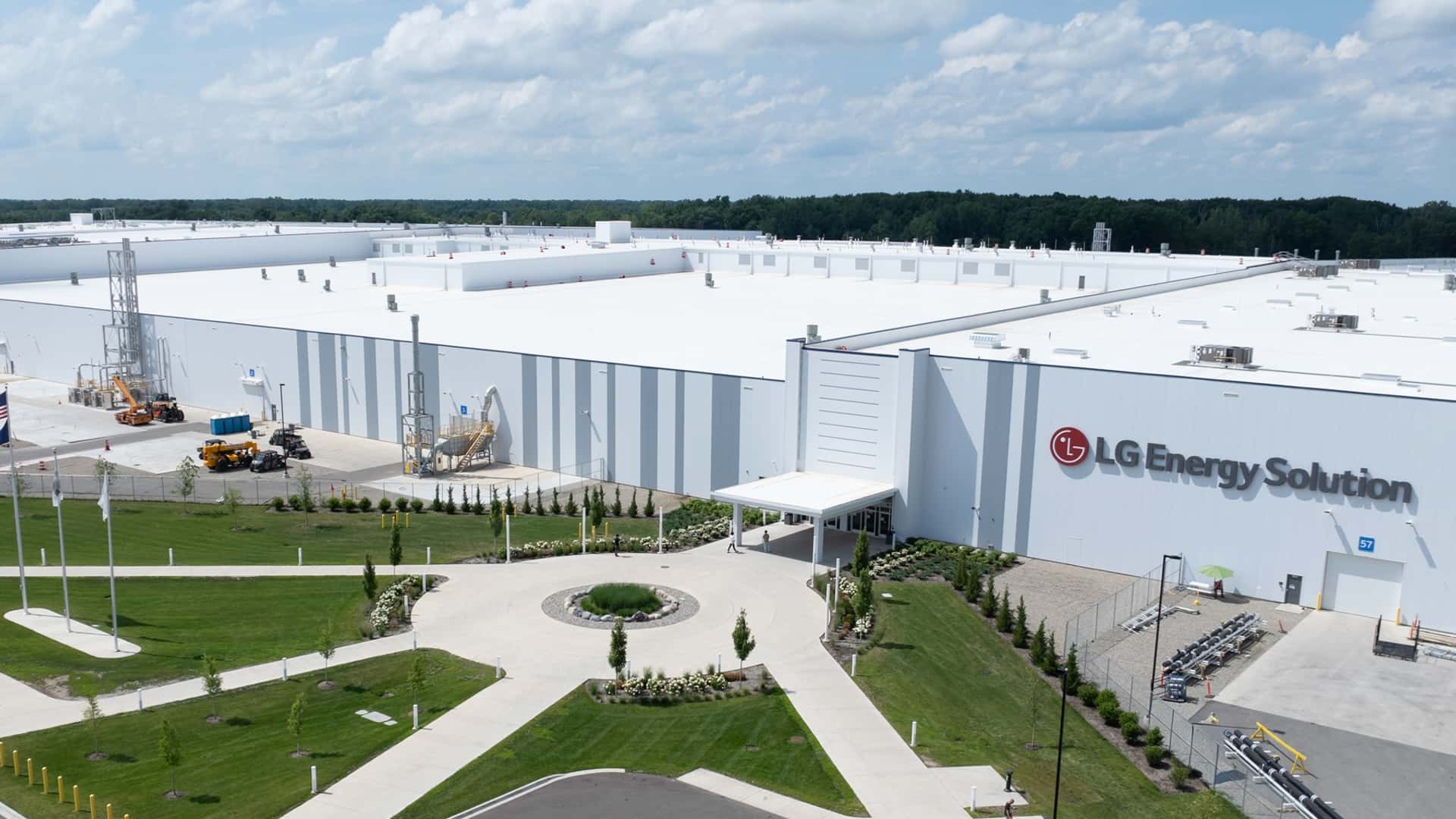
Adding to its strategic footprint, LGES inaugurated its $2 billion gigafactory in Lansing, Michigan, in August. This advanced manufacturing facility is now actively producing diverse battery types, including energy storage lithium-iron-phosphate (LFP) batteries specifically for Tesla’s energy solutions.
Simultaneously, the Michigan plant is manufacturing nickel-manganese-cobalt (NMC) EV batteries, earmarked for Toyota vehicles. This dual production capability underscores LGES’s versatility and its critical role as a supplier of advanced EV and energy storage batteries to industry leaders.
Outlook for a Diversified Battery Future
LG Energy Solution’s robust third-quarter performance provides compelling evidence of a dynamic and evolving global battery market. The company’s ability to strategically diversify its product offerings and capitalize on both electric vehicle and stationary energy storage demands demonstrates a resilient and forward-thinking business model.
As global energy transitions accelerate, the demand for high-performance EV and energy storage batteries will only intensify. LGES’s proactive investments in research and development, manufacturing capacity, and securing vital supply chains position it strongly to maintain its leadership role in this critical sector.
Frequently Asked Questions (FAQs)
What were the main drivers of LG Energy Solution’s record Q3 earnings?
LGES’s record Q3 earnings were primarily driven by strong demand for electric vehicle (EV) batteries in the European market and a significant surge in sales of energy storage system (ESS) batteries in the U.S., particularly for AI data centers and grid upgrades.
What were LGES’s reported revenue and operating profit for Q3?
LG Energy Solution reported preliminary Q3 revenue of $7.21 billion, representing a 59% year-over-year increase. Its operating profit for the same period rose by 25%, reaching $565 million, indicating a highly successful quarter.
Why is demand for energy storage batteries increasing in the U.S.?
Increased demand for energy storage batteries in the U.S. is fueled by the escalating power requirements of AI data centers and extensive grid modernization efforts. These batteries ensure stable power, integrate renewables, and enhance overall grid reliability.
How does the U.S. Inflation Reduction Act benefit LGES?
The U.S. Inflation Reduction Act (IRA) provides Section 45X Advanced Manufacturing Production tax credits. These credits incentivize domestic battery manufacturing, significantly bolstering LGES’s financial performance for its U.S.-based production of EV and energy storage batteries.
What types of batteries are manufactured at LGES’s Michigan gigafactory?
LGES’s $2 billion gigafactory in Lansing, Michigan, produces energy storage lithium-iron-phosphate (LFP) batteries for Tesla and nickel-manganese-cobalt (NMC) EV batteries for Toyota, demonstrating the company’s diverse production capabilities.
How is LGES ensuring its raw material supply?
LGES is securing its raw material supply through strategic partnerships, such as a multi-year offtake agreement with Canada’s Elevra Lithium. This deal ensures the supply of 240,000 metric tonnes of raw lithium concentrate from Quebec, critical for its EV and energy storage battery production.