
Key Takeaways:
- Tesla is shifting its battery strategy for the upcoming Cybercab, moving away from the tightly integrated structural packs seen in some Model Ys and the Cybertruck.
- The new approach for the Tesla Cybercab battery incorporates four separate modules of 4680 cells, significantly enhancing repairability.
- This design decision addresses critical feedback regarding the near-impossible repairability of previous structural battery designs, which received a “D” grade from internal Tesla engineers.
- While structural packs offer weight savings and increased energy density, the high service costs associated with their repair proved prohibitive, especially for a high-mileage robotaxi fleet.
- The move reflects a strategic focus on Total Cost of Ownership (TCO) for commercial applications, balancing manufacturing efficiency with long-term serviceability.
Tesla Shifts Battery Strategy for Cybercab, Prioritizing Serviceability
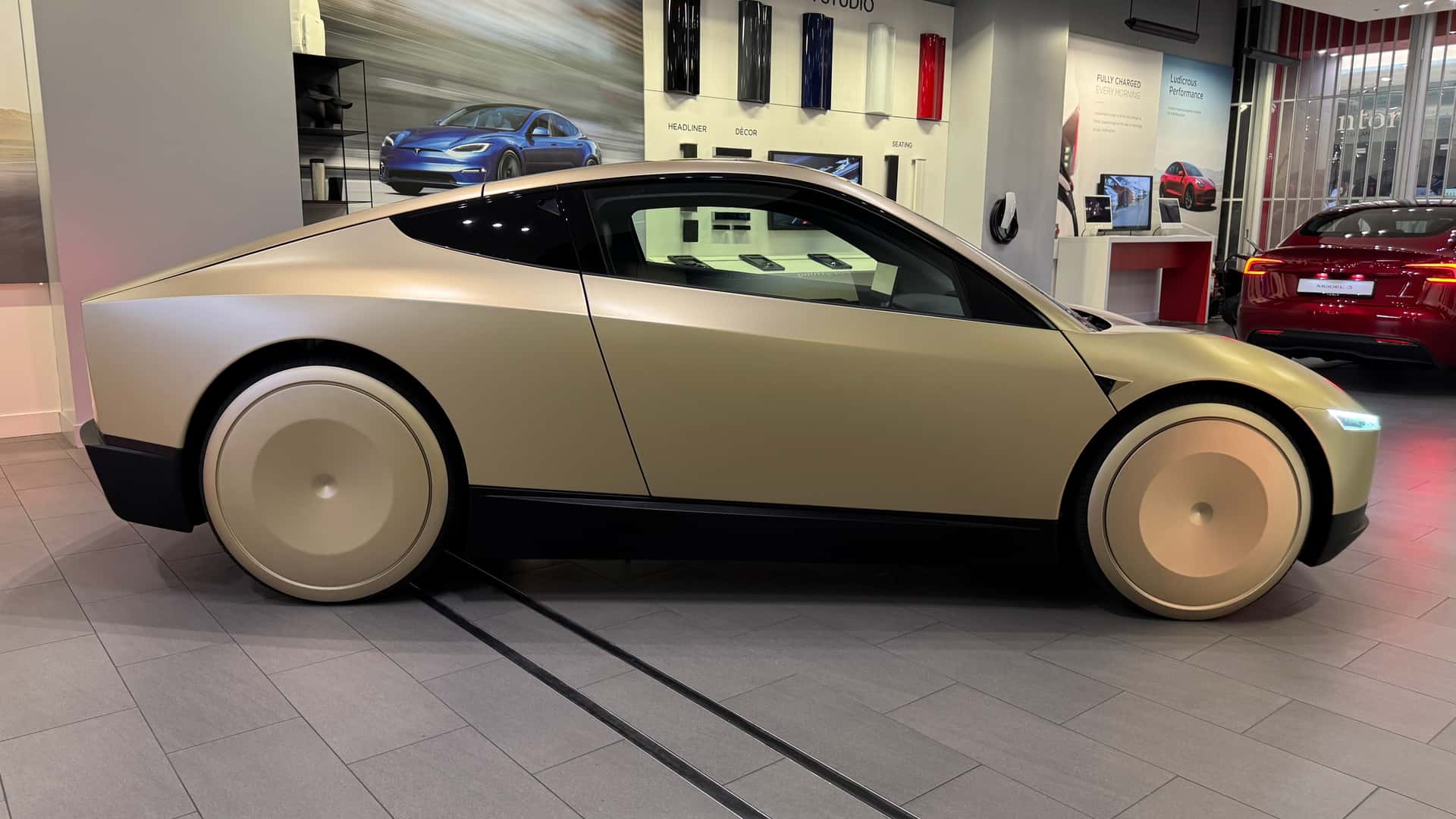
In a significant pivot from its recent innovations, electric vehicle giant Tesla is rethinking its approach to battery pack design for the eagerly anticipated Cybercab. The company, which has been a trailblazer in developing structural battery packs, is now moving towards a more modular system for its forthcoming robotaxi, a decision aimed at drastically improving repairability.

This strategic shift directly addresses a critical challenge posed by earlier designs, particularly the structural battery packs integrated into certain Model Y vehicles and the Cybertruck. These prior iterations, while lauded for their efficiency and energy density, proved exceptionally difficult to repair, leading to a candid internal assessment.
Robert Sumpf, Tesla’s director of mechanical design engineering for battery modules and packs, openly acknowledged the limitations of the earlier structural design. In a video shared on the YouTube channel of engineering firm Munro & Associates, Sumpf stated, “It’s good to be self-critical.” He then assigned a “D” grade to the Model Y’s structural battery, noting that while it was an “awesome product” for the customer, it presented considerable manufacturing difficulties.
The Challenge of Structural Battery Repair
The core issue with the previous structural approach, according to Sumpf, lay in its serviceability. Tesla’s innovative 4680 battery cells were embedded into a single, tightly integrated assembly, often utilizing a hard potting material. This design effectively bonded all cells together within the pack, rendering repair virtually impossible if even a single cell malfunctioned.

Independent analysis corroborated Tesla’s internal findings. Following a teardown of a Model Y equipped with a structural pack several years ago, Munro & Associates, a renowned engineering firm known for its detailed automotive analyses, concluded that its battery had “zero repairability.” This stark assessment highlighted a significant drawback in an otherwise groundbreaking engineering feat.
The promise of structural battery design has been compelling across the automotive industry. By eliminating conventional module structures, which act as building blocks within a larger battery pack, manufacturers can integrate more cells into a given space. This approach also allows for material cost savings and contributes to a lighter overall vehicle weight, directly enhancing efficiency and range.
Automakers like BMW, Porsche, and Ford have been actively exploring and implementing designs where cells are directly integrated into packs or even into the vehicle’s body structure itself. This industry trend underscores the perceived benefits of moving away from traditional modular battery architectures.
Cybercab’s Semi-Structural Solution: A Focus on Longevity
Despite the inherent advantages of fully structural battery designs, Tesla’s leadership ultimately determined that the compromise on serviceability was not acceptable for the Cybercab. This new vehicle, envisioned as a robotaxi operating continuously for hundreds of thousands of miles, demands exceptional durability and cost-effective maintenance.
The Cybercab’s design incorporates a “semi-structural” battery, as described by Sumpf. Instead of a single, monolithic unit, the Tesla Cybercab battery features four separate modules of 4680 cells. This modularity means that if a single module fails or degrades, it can be individually swapped out without necessitating the replacement of the entire, expensive battery pack.
Sumpf elaborated on the trade-offs involved in this decision, stating, “You’re going to get maybe 10% more volume for cells in a structural pack when you delete the structure.” He added, “You’re going to save a little cost as a result, but the issue is the service cost.” This statement underscores the delicate balance between initial manufacturing efficiency and long-term operational expenses.
Total Cost of Ownership (TCO) Drives Design Philosophy
While battery degradation in consumer electric vehicles is generally predictable and manageable over their typical lifespan, the operational demands of a robotaxi fleet are vastly different. These vehicles are expected to endure relentless, round-the-clock usage, accumulating mileage at a rate far exceeding that of private cars.
For a fleet-based business model like the Cybercab, the Total Cost of Ownership (TCO) becomes the paramount factor. Every aspect of vehicle design, from manufacturing to maintenance and potential remanufacturing, is scrutinized for its impact on overall costs. A minor improvement in range from a fully structural battery might be appealing to individual consumers, but it pales in comparison to the financial implications of extensive repairs for a commercial operator.
Eric Earley, the Cybercab’s chief engineer, highlighted this crucial consideration in the discussion with Munro Live. “When you think of TCO as we’ve talked about, replacing an entire pack before half a million miles is a killer on cost,” Earley explained. He continued, “So we have to think of [remanufacturing], we have to think of pack serviceability, we have to think of all those things that actually get us to our cost target for the product.”
This focus on long-term serviceability and remanufacturing capabilities for the Tesla Cybercab battery signals a mature approach to EV engineering for commercial applications. It demonstrates Tesla’s willingness to adapt its pioneering battery technologies to meet specific market demands, prioritizing operational longevity and cost-effectiveness over purely maximizing range or initial manufacturing simplicity in certain contexts.
The move to a more repairable, modular battery system for the Cybercab suggests a strategic evolution in Tesla’s engineering philosophy, one that recognizes the unique demands of a robotaxi fleet and the critical importance of minimizing downtime and repair expenses over the vehicle’s extensive operational life. This decision could set a new benchmark for battery design in the burgeoning autonomous vehicle sector, emphasizing resilience and sustainability.
FAQ Section
What is a structural battery pack?
A structural battery pack integrates battery cells directly into the vehicle’s chassis or frame, eliminating traditional modules and using the battery enclosure as a load-bearing structural component. This design aims to save weight, reduce costs, and increase energy density by maximizing the number of cells within a given space.
Why did Tesla give the Model Y’s structural battery a “D” grade?
Robert Sumpf, Tesla’s director of mechanical design engineering, assigned a “D” grade primarily due to the manufacturing complexity and extremely low repairability of the Model Y’s structural battery. The tight integration and potting material made it nearly impossible to service or replace individual faulty cells, often requiring an entire pack replacement.
How does the Cybercab’s new battery design differ?
The Tesla Cybercab battery adopts a “semi-structural” approach, utilizing four separate modules of 4680 cells instead of a single integrated unit. This modularity allows for individual modules to be swapped out if they fail, significantly improving repairability and reducing the cost of service compared to replacing the entire pack.
What are the advantages of modular battery design for the Cybercab?
For a robotaxi like the Cybercab, which is designed for high-mileage, continuous operation, modularity is key for Total Cost of Ownership (TCO). It enables easier, more affordable repairs, extends the vehicle’s operational life, and reduces downtime. This is crucial for maintaining profitability in a commercial fleet environment.
Are other automakers using structural battery packs?
Yes, the concept of structural battery packs is gaining traction across the automotive industry. Manufacturers such as BMW, Porsche, and Ford are exploring and implementing designs where battery cells are more directly integrated into the vehicle’s architecture to achieve similar benefits in weight reduction and energy efficiency.
What are 4680 battery cells?
4680 battery cells refer to a new cylindrical cell format developed by Tesla, measuring 46mm in diameter and 80mm in height. These larger cells are designed for higher energy density, improved power delivery, and are a key component in Tesla’s strategy for more efficient and cost-effective battery production and integration into structural packs.