
Key Takeaways
- Tesla is moving away from the highly integrated structural battery pack design seen in some Model Ys.
- The Model Y’s structural pack received a ‘D’ grade internally for its build difficulty and ‘zero repairability’ by external experts.
- The upcoming Cybercab will feature a ‘semi-structural’ battery with four separate modules, significantly improving serviceability.
- This shift is driven by the imperative of Total Cost of Ownership (TCO) for high-mileage robotaxi operations, where replacing an entire pack is prohibitive.
- While structural packs offer advantages like weight savings and increased energy density, the Cybercab design balances these with practical repair needs.
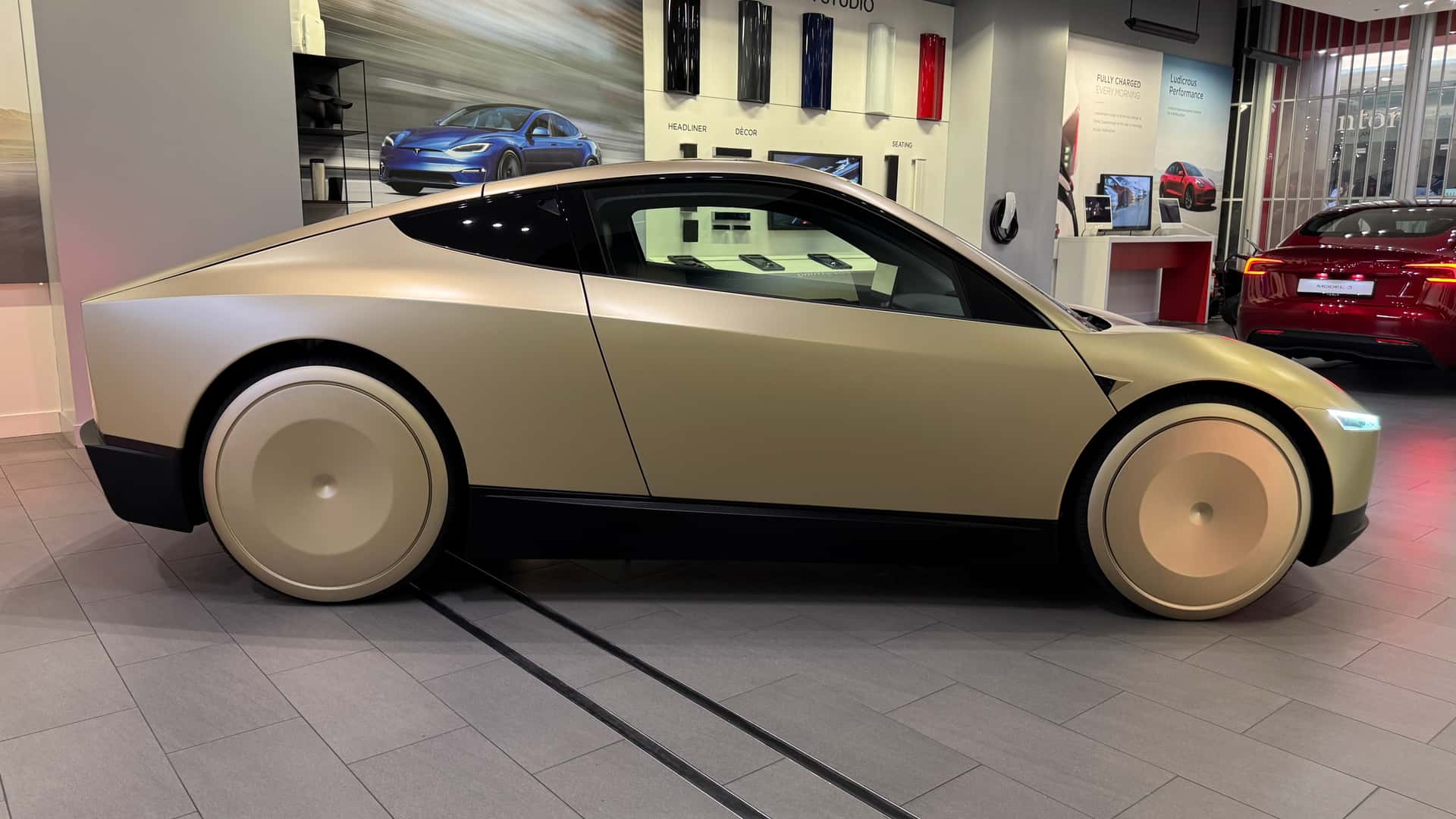
Tesla, a pioneer in innovative electric vehicle (EV) battery technology, is reportedly making a significant strategic pivot in its battery pack design. Having led the charge towards structural battery packs aimed at reducing weight and maximizing energy density, the automotive giant is now re-evaluating this approach for its upcoming Cybercab robotaxi.
The company’s latest vehicle iteration introduces a design that prioritizes repairability, marking a departure from the tightly integrated structural battery units found in some Model Y vehicles and the Cybertruck. This evolution underscores a growing industry focus on the practicalities of electric vehicle repair and long-term serviceability.

The Model Y’s Structural Battery: An Internal Assessment
The structural battery pack concept, which eliminates traditional modules to embed hundreds of 4680 battery cells directly into a vehicle’s structure, was initially lauded for its efficiency gains. However, its implementation in models like the Model Y presented considerable challenges, particularly in manufacturing and post-sale service.
Robert Sumpf, Tesla’s director of mechanical design engineering for battery modules and packs, candidly acknowledged these difficulties. In an interview featured on the YouTube channel of engineering firm Munro & Associates, Sumpf stated, “It’s good to be self-critical. I’m going to give our Model Y structural battery a grade D.” He further elaborated that while it was an “awesome product” for the customer, it proved “hard to build.”
A primary concern revolves around the serviceability of these early structural battery packs. The design integrates all cells using a hard potting material, rendering repairs practically impossible if even a single cell becomes defective. This rigid construction led Munro & Associates, after conducting a teardown of a Model Y equipped with a structural pack, to conclude that its battery possessed “zero repairability.”

Introducing the Cybercab’s ‘Semi-Structural’ Design
In response to these challenges, Tesla has engineered the Cybercab with a revised battery architecture. Instead of a monolithic, module-free structural pack, the Cybercab’s design incorporates four distinct modules of 4680 battery cells. This modular approach is central to enhancing electric vehicle repairability.
The strategic shift means that a faulty module can now be individually swapped out without necessitating the replacement of the entire battery pack. Tesla executives describe this new configuration as “semi-structural,” aiming to strike a balance between the advantages of structural integration and the crucial demands of maintenance and service.
Sumpf explained the trade-offs involved: “You’re going to get maybe 10% more volume for cells in a structural pack when you delete the structure. You’re going to save a little cost as a result, but the issue is the service cost.” This insight highlights Tesla’s pragmatic approach to automotive engineering, weighing manufacturing efficiency and energy density against the long-term implications for repair and maintenance.
Understanding Structural Battery Technology in EVs
The adoption of structural battery packs across the automotive industry stems from several compelling advantages. By integrating the battery directly into the vehicle’s body, manufacturers can stuff more cells into a given area, thereby boosting energy density and potentially range. This design also contributes to weight reduction and material cost savings by eliminating the need for separate module casings and supporting structures.
Several prominent automakers, including BMW, Porsche, and Ford, are actively exploring or implementing designs where battery cells go directly into packs or even directly into the vehicle’s body structure. This trend underscores the industry’s pursuit of optimized space utilization, enhanced structural rigidity, and improved overall vehicle performance through advanced EV battery technology.
However, Tesla’s latest move with the Cybercab signals a critical re-evaluation of this trend, particularly concerning the practical challenges of service and repair. While the benefits of a module-free design in terms of packaging efficiency are clear, the difficulty and cost associated with servicing such intricate assemblies have prompted a rethinking of optimal battery pack design, especially for vehicles with demanding operational profiles.
Total Cost of Ownership Drives Design for Robotaxi Fleets
The decision to prioritize serviceability in the Cybercab’s battery design is heavily influenced by its intended use as a robotaxi. Unlike consumer EVs, which typically experience predictable degradation over their lifespan, robotaxis are designed for continuous, round-the-clock operation, accumulating hundreds of thousands of miles of heavy usage.
In such a fleet-based business model, the Total Cost of Ownership (TCO) becomes the paramount factor. Even though studies generally indicate that EV batteries rarely fail entirely and degradation is often manageable, the extreme operational demands of a robotaxi significantly elevate the importance of repairability.
Eric Earley, the Cybercab’s chief engineer, articulated this economic imperative on the Munro Live YouTube channel. He stated, “When you think of TCO as we’ve talked about, replacing an entire pack before half a million miles is a killer on cost. So we have to think of [remanufacturing], we have to think of pack serviceability, we have to think of all those things that actually get us to our cost target for the product.”
This perspective highlights that for high-utilization vehicles, the slight gains in range or material cost from a fully structural, module-free pack are outweighed by the substantial potential costs of battery replacement or extensive repair. The ability to diagnose and replace individual modules dramatically reduces repair time and expense, directly impacting the profitability and viability of a robotaxi fleet.
Looking Ahead: The Future of Tesla Battery Innovation
Tesla’s pragmatic adjustment to its battery architecture for the Cybercab illustrates the company’s continuous innovation and adaptability in electric vehicle manufacturing. The shift acknowledges that optimal battery design is not a one-size-fits-all solution but rather dependent on the specific application and operational demands of the vehicle.
This evolution in the structural battery strategy reflects a mature approach to EV battery technology, where initial pioneering designs are refined based on real-world manufacturing experience, service data, and the critical economic considerations of diverse market segments. The Cybercab’s ‘semi-structural’ battery design could set a new benchmark for balancing performance, manufacturability, and repairability in future electric vehicles, particularly those destined for rigorous commercial deployment.
FAQ Section
What is a structural battery pack?
A structural battery pack integrates battery cells directly into the vehicle’s chassis, making the pack a load-bearing part of the car’s structure. This design aims to save weight, reduce material costs, and increase energy density by eliminating traditional battery modules and their casings.
Why was the Tesla Model Y’s structural battery pack difficult to repair?
The Model Y’s structural battery pack was challenging to repair because its cells were tightly bound together using a hard potting material. This integration made it nearly impossible to access or replace individual defective cells without replacing the entire expensive battery pack, leading to ‘zero repairability’ in some assessments.
How does the Cybercab’s battery design differ from the Model Y’s?
The Cybercab features a ‘semi-structural’ battery pack, which, unlike the Model Y’s fully integrated design, contains four separate battery modules. This modular approach allows for easier diagnosis and replacement of individual faulty modules, significantly enhancing the overall repairability and serviceability of the battery system.
What is ‘Total Cost of Ownership’ (TCO) and why is it important for the Cybercab?
Total Cost of Ownership (TCO) refers to the entire cost of owning and operating a vehicle over its lifespan, including purchase price, fuel, maintenance, repairs, and insurance. For the Cybercab, designed for extensive robotaxi operations, TCO is critical. High repair costs, like replacing an entire battery pack, would severely impact profitability, making repairability a key design factor.
Will this new battery design reduce the Cybercab’s range?
Tesla acknowledges that a fully structural, module-free pack might offer about ‘10% more volume for cells.’ While the ‘semi-structural’ design might slightly reduce the maximum possible cell volume compared to a completely structural approach, the trade-off is deemed worthwhile for the substantial improvements in serviceability and long-term cost efficiency, especially for a robotaxi fleet.