
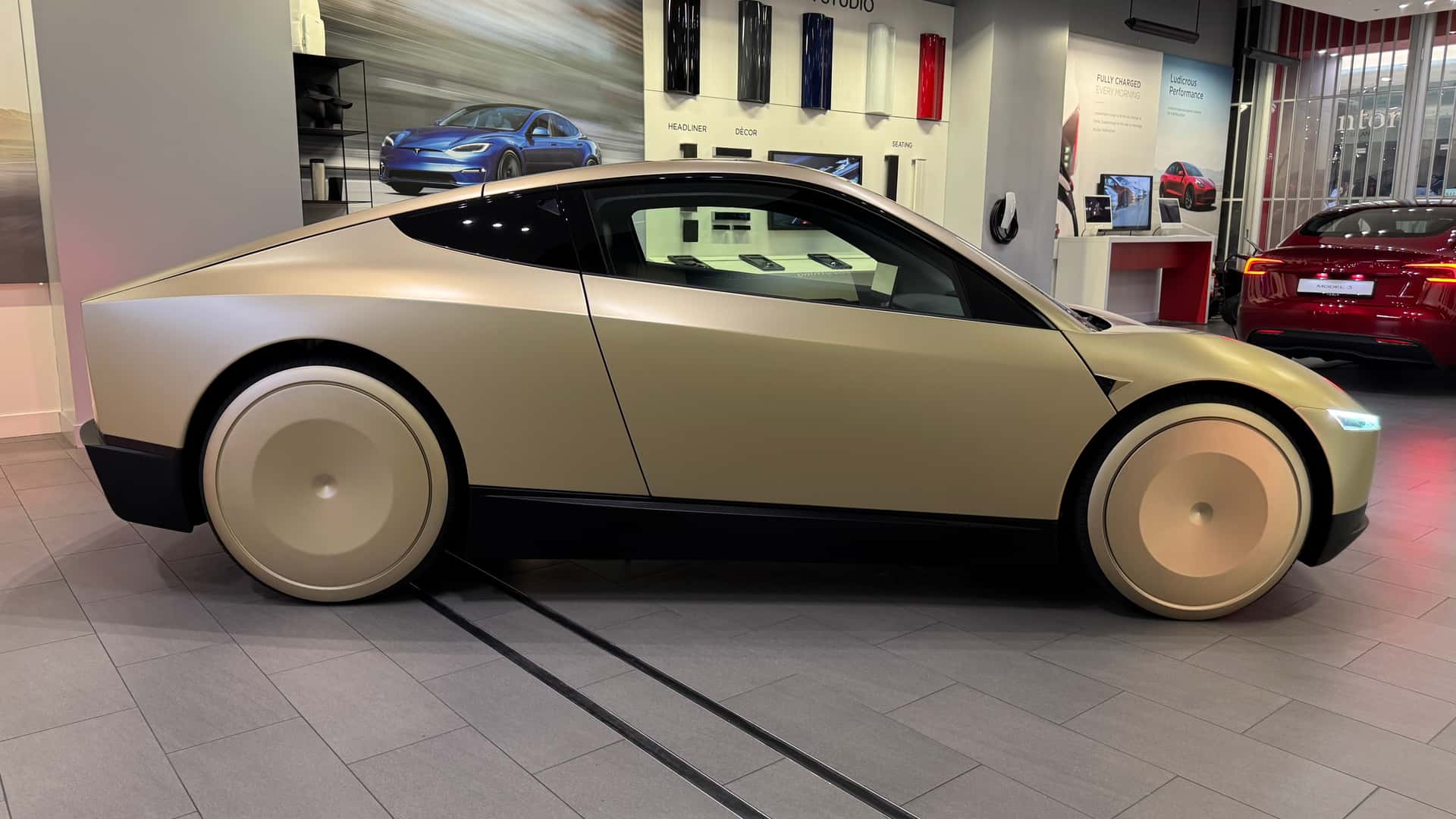
Tesla, a pioneer in the electric vehicle (EV) industry known for its innovative engineering, is implementing a significant shift in its battery pack design for the upcoming Cybercab. While the company previously championed highly integrated structural battery packs in vehicles like certain Model Y variants and the Cybertruck, the Cybercab is adopting a more modular approach. This strategic pivot prioritizes enhanced repairability and long-term serviceability, particularly crucial for its intended application as a high-utilization robotaxi.
The decision reflects an internal re-evaluation of design trade-offs, moving away from a system that, while offering certain advantages, proved exceptionally challenging to repair. This evolution in battery architecture highlights Tesla’s adaptive engineering philosophy, balancing performance with practical operational considerations for future mobility solutions.

Key Takeaways: Tesla’s Battery Design Evolution
- Shift in Design Philosophy: Tesla moves from a fully structural, highly integrated battery pack (seen in some Model Ys) to a semi-structural, modular design for the Cybercab.
- Improved Repairability: The Cybercab’s battery comprises four separate modules of 4680 cells, allowing individual faulty modules to be replaced instead of the entire pack.
- Model Y Structural Battery Challenges: Tesla’s Model Y structural battery was internally graded a “D” for its difficulty in manufacturing and virtually “zero repairability” due to hard potting material.
- Total Cost of Ownership (TCO) Focus: For robotaxi fleets, TCO is paramount. The modular design reduces service costs and enhances vehicle uptime, making it economically viable for hundreds of thousands of miles of operation.
- Balancing Innovation and Practicality: This change underscores Tesla’s commitment to optimizing its EV technology not just for performance but also for the realities of fleet management and long-term operational efficiency.
The Model Y’s Structural Battery: A Design Conundrum
In its pursuit of innovation, Tesla introduced the structural battery pack in certain Model Y vehicles and the Cybertruck. This design represented a departure from conventional EV battery modules, embedding hundreds of in-house 4680 battery cells directly into a single, tightly integrated assembly. The primary objectives were to reduce weight, optimize space, and improve the vehicle’s structural rigidity by making the battery an integral part of the chassis.
However, this cutting-edge approach presented unforeseen challenges, particularly concerning manufacturing complexity and maintenance. Robert Sumpf, Tesla’s director of mechanical design engineering for battery modules and packs, candidly acknowledged these difficulties. “It’s good to be self-critical,” Sumpf stated in a video discussing the design. He continued, “I’m going to give our Model Y structural battery a grade D,” despite acknowledging it as an “awesome product” for the end customer.
The ‘Zero Repairability’ Dilemma
The core issue with the Model Y’s structural battery centered on its serviceability. The intricate integration and the use of a hard potting material to bind all cells together within the pack made any form of repair nearly impossible. Should even a single cell malfunction, the entire battery unit became effectively irreparable, necessitating a full replacement rather than a targeted repair.

This stark reality was further corroborated by independent analysis. Following a comprehensive teardown of a Model Y equipped with a structural pack a few years prior, the engineering firm Munro & Associates concluded that its battery had “zero repairability.” This assessment highlighted a significant operational hurdle, especially for a technology intended for widespread adoption and long-term use.
Introducing the Cybercab’s ‘Semi-Structural’ Evolution
Learning from the experiences with the Model Y, Tesla has re-engineered its battery strategy for the Cybercab, its dedicated robotaxi. The Cybercab’s battery pack adopts a “semi-structural” design, moving away from the single, monolithic assembly. Instead, it incorporates four distinct modules of 4680 battery cells.
This modular architecture offers a critical advantage: if a single battery module becomes faulty, it can be individually swapped out. This eliminates the need to replace the entire battery pack, significantly streamlining the repair process and reducing associated costs and downtime. This design choice underscores a pragmatic shift towards operational efficiency, recognizing the unique demands of a robotaxi fleet.
Balancing Energy Density with Maintenance Practicality
The initial motivation behind structural battery packs was clear: by eliminating conventional module structures, manufacturers could pack more cells into a given area and potentially save on material costs. This design allows for superior energy density and often contributes to a stiffer vehicle structure, appealing to many automakers, including BMW, Porsche, and Ford, who are also exploring direct cell-to-pack or cell-to-chassis integrations in their EV architectures.
However, Tesla’s executives weighed these advantages against the practical realities of long-term operation. Sumpf explained the trade-off: “You’re going to get maybe 10% more volume for cells in a structural pack when you delete the structure. You’re going to save a little cost as a result, but the issue is the service cost.” For a vehicle like the Cybercab, which is expected to operate continuously for extended periods, this service cost becomes a paramount consideration.
The Imperative of Total Cost of Ownership (TCO) for Robotaxis
While consumer EVs typically experience predictable battery degradation over their lifespan, robotaxis operate under fundamentally different economic and operational pressures. These vehicles are designed for hundreds of thousands of miles of round-the-clock service, making their longevity and ease of maintenance critical factors for profitability.
For fleet-based businesses, the Total Cost of Ownership (TCO) is the ultimate metric. A highly repairable battery system directly impacts TCO by reducing maintenance expenses and maximizing vehicle uptime. The ability to quickly and affordably replace a single module, rather than an entire multi-thousand-dollar pack, offers a substantial economic advantage over the vehicle’s operational lifetime.
Eric Earley, the Cybercab’s chief engineer, emphasized this point during an interview with the Munro Live YouTube channel. “When you think of TCO as we’ve talked about, replacing an entire pack before half a million miles is a killer on cost,” Earley explained. “So we have to think of [remanufacturing], we have to think of pack serviceability, we have to think of all those things that actually get us to our cost target for the product.” This highlights Tesla’s strategic focus on long-term operational viability rather than solely on initial manufacturing efficiencies or marginal range gains.
Broader Implications for EV Battery Technology and Fleet Management
Tesla’s decision with the Cybercab battery design underscores a broader trend in the electric vehicle industry: the evolving balance between cutting-edge innovation and practical, sustainable operational models. While structural batteries offer compelling advantages in vehicle performance and manufacturing simplicity, the challenges associated with their repairability have become increasingly apparent, particularly for commercial applications demanding extreme durability and cost-effectiveness.
This shift in design for the Cybercab illustrates a mature approach to automotive engineering, where the entire lifecycle of the product—from manufacturing and performance to maintenance and end-of-life considerations—is critically evaluated. For electric vehicle manufacturers, ensuring that advanced battery systems are not only efficient but also maintainable will be crucial for the widespread adoption and long-term success of diverse EV segments, especially in the burgeoning robotaxi and fleet management sectors.
FAQ Section
Q1: What is a structural battery pack in an EV?
A structural battery pack integrates the battery cells directly into the vehicle’s chassis, making it a load-bearing component. This design aims to save weight, increase energy density, and improve the vehicle’s structural rigidity by eliminating separate modules and housing.
Q2: Why did Tesla initially use structural batteries in some Model Ys?
Tesla adopted structural batteries in certain Model Ys to reduce vehicle weight, maximize the volume available for battery cells, and potentially lower manufacturing costs by simplifying the vehicle’s overall structure and assembly process. It was seen as an advanced step in automotive engineering.
Q3: What were the main issues with the Model Y’s structural battery?
The primary issues were its difficulty to manufacture and virtually impossible repairability. Due to the tight integration and hard potting material binding the cells, replacing a single faulty cell or module meant replacing the entire costly battery pack.
Q4: How does the Cybercab’s battery design differ from the Model Y’s structural battery?
The Cybercab features a “semi-structural” battery pack that consists of four separate, swappable modules of 4680 cells. This modular design allows for individual module replacement, significantly improving serviceability compared to the Model Y’s single, integrated unit.
Q5: Why is repairability particularly important for the Cybercab?
The Cybercab is designed as a robotaxi, meaning it will operate continuously for hundreds of thousands of miles. For such fleet vehicles, Total Cost of Ownership (TCO) is critical. Improved repairability reduces maintenance costs and minimizes vehicle downtime, directly impacting profitability and operational efficiency.
Q6: Will other Tesla vehicles adopt this new modular design?
The article specifically mentions the Cybercab’s shift, indicating it’s a strategic decision for this particular high-usage robotaxi application. While this highlights a learning curve, Tesla has not indicated a full transition for all its consumer vehicles, as the trade-offs vary across product lines.
Q7: What does “4680 battery cells” mean?
4680 refers to a new cylindrical battery cell format developed by Tesla, measuring 46 millimeters in diameter and 80 millimeters in height. These cells are designed to offer higher energy density, increased power, and improved thermal management compared to previous cell formats.