
Key Takeaways
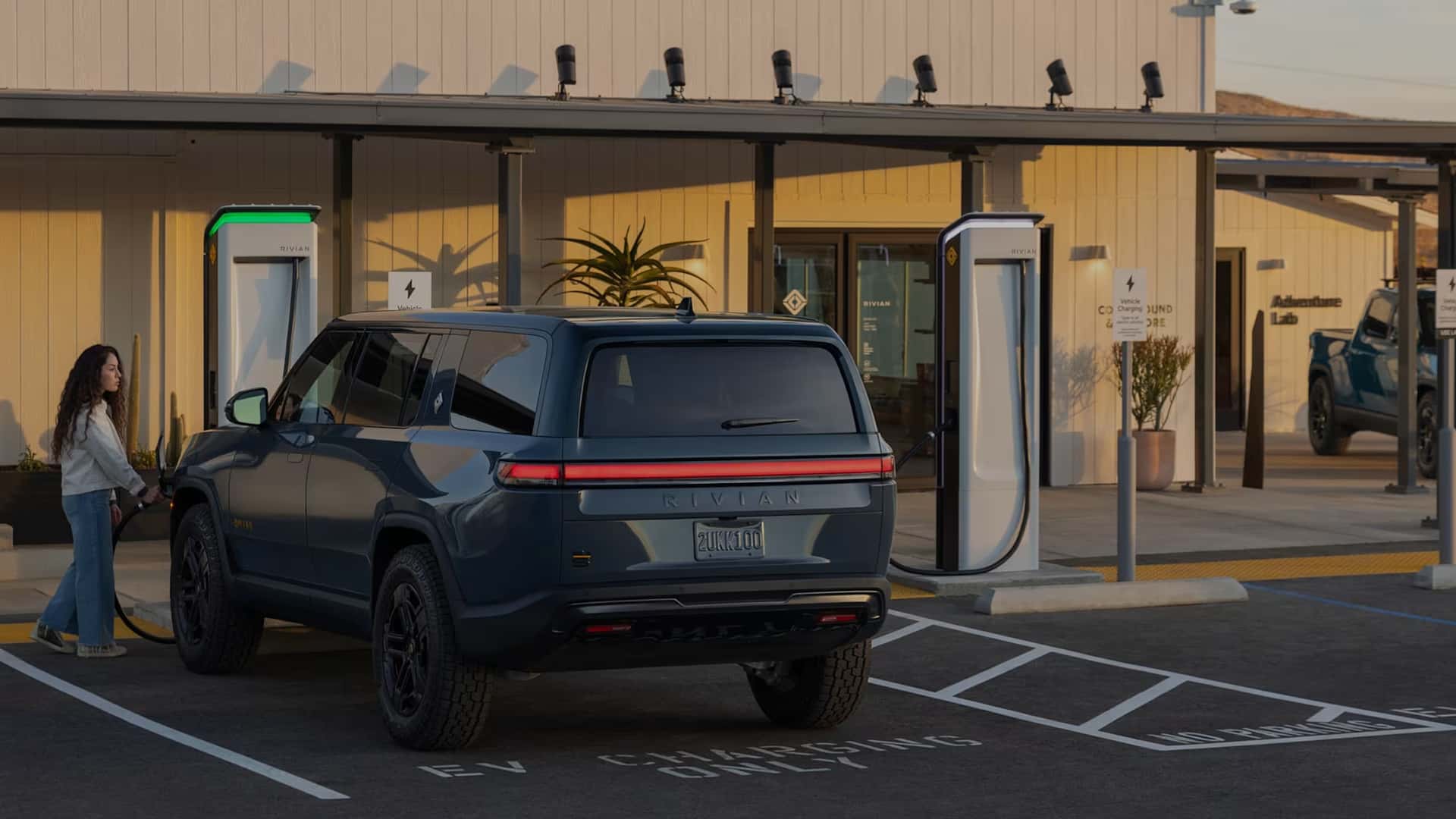
- Rivian’s proprietary Adventure Network (RAN) of DC fast chargers expanded by an impressive 39% over the past year.
- The network now boasts 1,185 individual fast-charging ports across 165 locations in the United States.
- These high-power chargers are capable of delivering up to 300 kilowatts and are designed to be powered by 100% renewable energy.
- Despite the significant growth in its fast-charging infrastructure, Rivian’s slower Level 2 Waypoint chargers have seen comparatively modest expansion.
- Rivian continues to invest in its own network even as its vehicles gain access to the extensive Tesla Supercharger network via NACS.
In a significant development for electric vehicle (EV) infrastructure, Rivian, the burgeoning American automotive manufacturer, has reported substantial growth in its proprietary direct current (DC) fast-charging network. The Rivian Adventure Network (RAN) has expanded by a robust 39% over the last 12 months, according to the company’s latest third-quarter earnings report. This strategic expansion underscores Rivian’s commitment to building a comprehensive charging ecosystem for its owners, even as the broader industry moves towards greater charging standard interoperability.
The acceleration in the Rivian charging network’s footprint is a critical component of the company’s long-term vision, aiming to alleviate range anxiety and enhance the ownership experience for its R1T and R1S vehicle owners. This focused investment highlights the competitive landscape within the electric vehicle market, where access to reliable and efficient charging solutions is paramount for consumer adoption.
Expanding the Rivian Adventure Network
The Rivian Adventure Network, a cornerstone of the company’s charging strategy, has surpassed key milestones. The network now features 1,185 individual charging ports, strategically distributed across 165 operational stations throughout the United States. This represents a substantial increase not only in the number of ports but also a 26% rise in the total number of stations compared to the third quarter of the previous year.
Each of these advanced charging ports is engineered to deliver an impressive maximum power output of 300 kilowatts (kW). This high-power capability is crucial for enabling rapid charging, significantly reducing the time required to replenish an EV battery and ensuring that Rivian owners can quickly get back on the road. The deployment of such powerful chargers positions Rivian’s network to support future battery technologies and larger capacity packs, which will demand even faster charging rates.
An integral aspect of the Rivian Adventure Network’s design ethos is its commitment to sustainability. The company asserts that its fast chargers are powered by 100% renewable energy. While this does not always imply that the electricity consumed at each specific charging location originates directly from an on-site solar array or wind farm, Rivian ensures that every kilowatt-hour dispensed through a RAN charger is matched with an equivalent amount of renewable energy procured from certified sources, often operating within the broader regional grid. This mechanism, typically involving Renewable Energy Credits (RECs), helps to offset the carbon footprint of the charging process, aligning with Rivian’s overarching environmental objectives.
Strategic Investment Amidst Industry Convergence
Rivian’s continued and aggressive investment in its dedicated charging infrastructure is a noteworthy strategy, especially in light of recent industry shifts. Its passenger vehicle models now have the capability to access a vast array of public DC charging stations nationwide, including the expansive Tesla Supercharger network, thanks to the adoption of the North American Charging Standard (NACS).
The decision to maintain and expand a proprietary network, despite gaining access to tens of thousands of NACS-equipped Tesla Superchargers, underscores several strategic considerations. It allows Rivian to maintain a distinct brand experience, ensure specific uptime and service quality standards, and potentially offer unique amenities or integration with its vehicle’s navigation and payment systems. This dual approach provides Rivian owners with both the convenience of a widespread public network and the tailored experience of their brand-specific infrastructure.
The Waypoints Network: A Contrasting Trajectory
While the Rivian Adventure Network has received considerable attention for its rapid expansion, the company’s Level 2 Waypoints charging network has seen a comparatively slower growth trajectory. These slower chargers, designed primarily for destination charging where vehicles are parked for extended periods, received limited mention in Rivian’s recent financial disclosures, indicating a concentrated focus on the faster DC charging solutions.
Level 2 chargers, typically delivering 11 kilowatts (kW) of power, are vital for everyday charging needs at homes, workplaces, and public destinations like hotels and retail centres. They offer a convenient, albeit slower, charging option that complements the rapid top-ups provided by DC fast chargers. However, data from the Department of Energy’s Alternative Fuels Data Center (AFDC) reveals a muted pace of expansion for Rivian’s Waypoint network. In the current year, only ten new 11-kilowatt chargers were installed, with the latest additions coming online in October.
Presently, Rivian operates a total of 540 Waypoint Level 2 chargers spread across 208 locations throughout the United States. This existing infrastructure provides a foundational layer for owners to charge their vehicles at various points of interest, supporting longer stays and overnight charging. However, the disparity in growth rates between the two networks suggests a clear prioritization of high-speed charging capability to address long-distance travel and rapid replenishment needs.
Rivian’s Position in the Broader EV Charging Landscape
Despite the notable growth within its own DC charging network, Rivian remains a relatively nascent player in the rapidly evolving and intensely competitive electric vehicle charging industry. The scale of its infrastructure, while expanding, is still considerably smaller when compared to established giants in the sector.
For context, Tesla, an industry pioneer and dominant force in EV infrastructure, boasts a vastly larger network. In the United States alone, Tesla operates more than 40,000 fast-charging ports across nearly 3,300 locations. Furthermore, its extensive network includes an additional 14,000 Level 2 Destination Chargers available at approximately 4,000 sites. This comparative analysis highlights the significant investment and time required for any new entrant, including Rivian, to build a truly ubiquitous and comprehensive charging presence.
Rivian’s strategic decision to heavily invest in its own EV fast charging network, even while embracing industry standards like NACS, reflects a complex approach to market penetration and customer satisfaction. The company appears to be balancing the need for proprietary control and brand differentiation with the practical benefits of broader network access. As the electric vehicle market continues its rapid expansion, the evolution of charging infrastructure will remain a critical factor influencing consumer choices and the overall success of EV manufacturers.
Looking Ahead: Bolstering the EV Fast Charging Network
The journey towards a fully mature and accessible EV fast charging network across the nation is ongoing, with players like Rivian making substantial, albeit relative, contributions. The strategic deployment of high-power charging solutions, coupled with a commitment to renewable energy, positions Rivian as a significant contributor to the future of electric mobility.
While the growth of its Level 2 Waypoint chargers has been more measured, the rapid expansion of the Rivian Adventure Network signals a clear intent to equip its customers with reliable, high-speed charging options for their long-haul journeys. This dual strategy will be key to meeting diverse customer needs and solidifying Rivian’s standing in the increasingly competitive electric vehicle ecosystem.
FAQ Section
What is the Rivian Adventure Network (RAN)?
The Rivian Adventure Network (RAN) is Rivian’s proprietary network of DC fast-charging stations designed specifically for its electric vehicles. It provides high-speed charging capabilities, enabling Rivian owners to quickly recharge their vehicles, particularly during longer trips and at strategic locations across the United States. The network is a key part of Rivian’s commitment to enhancing the EV ownership experience.
How much has Rivian’s fast-charging network grown recently?
Rivian’s DC fast-charging network, the Rivian Adventure Network, experienced a substantial growth of 39% over the last 12 months. This expansion is detailed in the company’s third-quarter earnings report, reflecting a significant investment in bolstering its charging infrastructure. The growth underscores Rivian’s proactive approach to supporting its expanding fleet of electric vehicles.
How many charging ports and stations does the RAN currently have?
As of the latest reports, the Rivian Adventure Network now comprises 1,185 individual fast-charging ports. These ports are distributed across 165 operational charging stations located throughout the United States. This represents a 26% increase in the number of stations compared to the same period last year, indicating a widespread expansion effort.
What is the power output of Rivian’s fast chargers?
Rivian’s fast chargers within the Adventure Network are capable of delivering an impressive power output of up to 300 kilowatts (kW). This high-power delivery ensures rapid charging times for Rivian vehicles, significantly reducing the duration required to replenish the battery and offering greater convenience for drivers on the go.
Are Rivian’s chargers powered by renewable energy?
Yes, Rivian states that its fast chargers are powered by 100% renewable energy. This is achieved by matching every kilowatt-hour delivered through a RAN charger with certified renewable energy credits (RECs) from sources that may operate in different locations. This approach aligns with Rivian’s environmental goals and contributes to a lower carbon footprint for EV charging.
What are Rivian Waypoints, and how are they growing?
Rivian Waypoints are Level 2 (slower) chargers designed for destination charging, such as at hotels or parks, where vehicles are parked for longer durations. Their growth rate has been considerably slower than the fast-charging network. The company installed only ten new 11-kilowatt Waypoint chargers this year, bringing the total to 540 chargers at 208 locations in the U.S.
How does Rivian’s network compare to Tesla’s Supercharger network?
Rivian’s charging network is significantly smaller than Tesla’s. Tesla operates over 40,000 fast-charging ports at nearly 3,300 locations in the U.S., alongside 14,000 Level 2 Destination Chargers at almost 4,000 sites. While Rivian’s network is growing rapidly, it reflects the company’s relatively newer entry into the market compared to Tesla’s established infrastructure.
Why is Rivian investing in its own network despite NACS access?
Rivian continues to invest in its proprietary network despite its vehicles gaining access to Tesla Superchargers via NACS. This strategy allows Rivian to maintain a distinct brand experience, control service quality and uptime, and potentially offer unique integrations with its vehicle systems. It provides customers with both broad public access and a tailored, dedicated charging option.