
Key Takeaways
- Rivian’s proprietary DC fast charging network, the Adventure Network, expanded by an impressive 39% in the last 12 months.
- The network now comprises 1,185 fast charging ports across 165 locations in the United States, offering up to 300 kilowatts of power.
- Despite offering access to Tesla Superchargers, Rivian continues strategic investments in its own EV fast charging infrastructure, powered by 100% renewable energy credits.
- In contrast, the slower Level 2 Waypoint charging network has seen significantly slower growth, with only ten new chargers installed this year.
- Rivian remains a comparatively smaller player in the overall EV charging landscape when benchmarked against industry giants like Tesla.
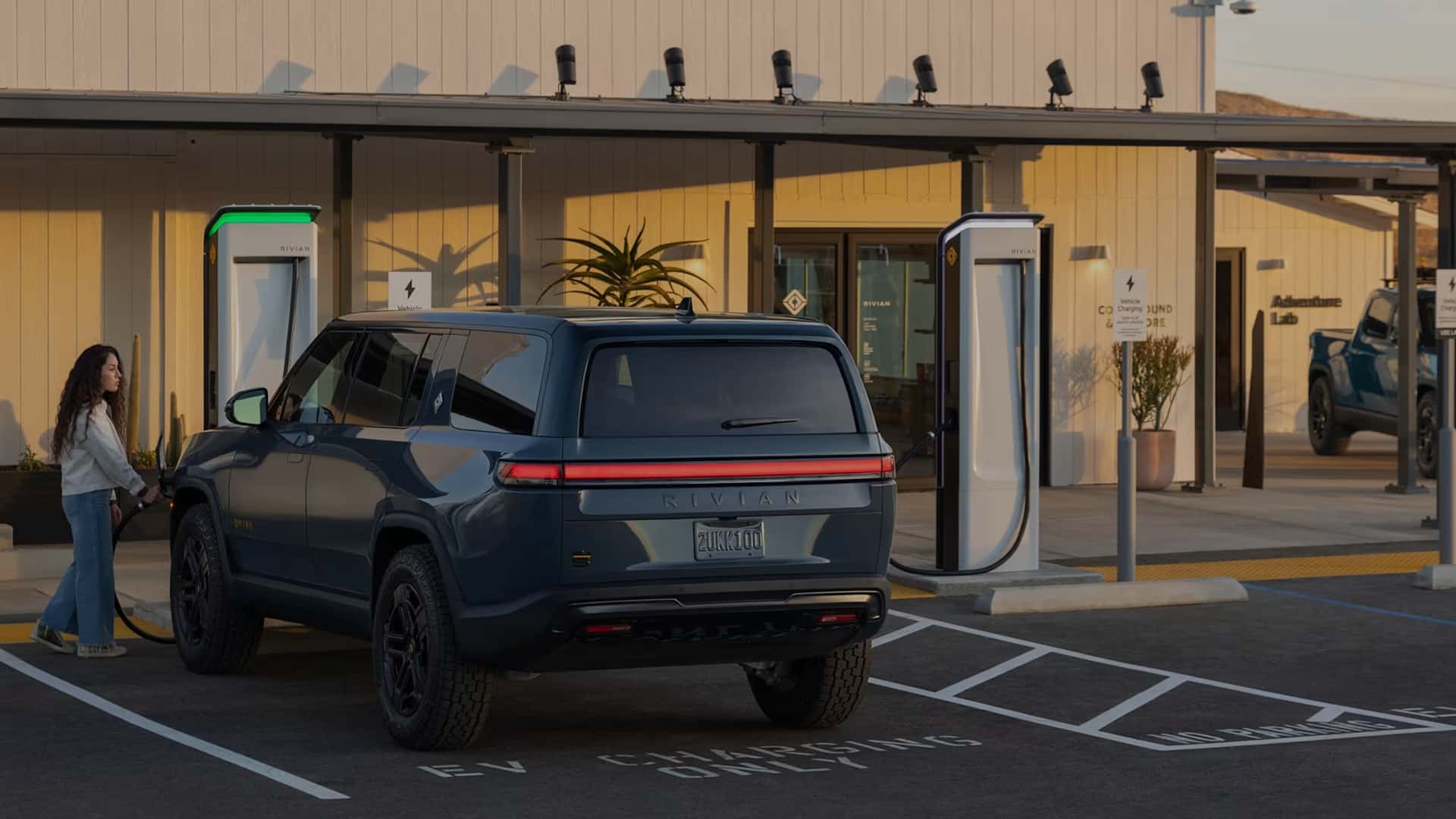
Rivian, the emerging electric vehicle manufacturer, has demonstrated a robust commitment to its dedicated charging infrastructure, marking a substantial expansion of its Rivian Adventure Network (RAN). Over the past 12 months, the company’s DC fast charging network has surged by an impressive 39%, now exceeding 1,100 individual chargers across the United States. This strategic growth underscores Rivian’s efforts to enhance the charging experience for its customers, even as broader EV charging network access becomes available.
This significant development was highlighted in the company’s recent third-quarter earnings report, detailing the rapid scaling of its proprietary charging solutions. The expansion is a critical component of Rivian’s strategy to support its adventure-focused electric vehicles, ensuring long-distance travel capabilities and mitigating range anxiety for owners.

Significant Expansion of Rivian Adventure Network
The Rivian Adventure Network has achieved considerable milestones in its rapid deployment. As of the latest reporting, the network now boasts 1,185 charging ports, each capable of delivering up to 300 kilowatts of power. This represents a substantial 39% increase in port count when compared to the third quarter of the previous year, signaling an aggressive push in infrastructure development.
Furthermore, the physical footprint of the network has also expanded considerably. The number of charging stations has grown to 165 locations across the U.S., reflecting a 26% increase from the corresponding period of the previous year. These strategically placed stations are designed to serve Rivian owners on various routes, particularly those traversing less populated areas typically favored by adventure enthusiasts.
Power and Sustainability at a Glance
Each fast charger within the Rivian Adventure Network is engineered for high-speed charging, providing up to 300 kilowatts (kW) of power. This capacity allows for rapid replenishment of electric vehicle batteries, significantly reducing downtime during long journeys. The focus on high-power output aligns with the demands of Rivian’s R1T pickup and R1S SUV, which feature large battery packs.
A notable aspect of the Rivian charging network is its commitment to sustainability. The company asserts that its fast chargers are powered by 100% renewable energy. This is achieved through the matching of every kilowatt-hour delivered by a RAN charger with renewable energy credits (RECs) from sources such as solar and wind farms, even if those renewable sources operate in different geographical locations.
Strategic Investment Amidst Broader Accessibility
Rivian’s sustained investment in its own charging infrastructure is particularly noteworthy given the evolving landscape of EV charging. Its passenger models now have access to tens of thousands of public DC chargers across the U.S., including the extensive network of Tesla Superchargers, following the adoption of the North American Charging Standard (NACS).
Despite this expanded access, Rivian continues to bolster its proprietary network, utilizing purpose-built stalls that integrate seamlessly with the Rivian brand experience. This strategic decision likely stems from a desire to maintain control over the customer charging experience, ensure reliability, and reinforce the brand’s unique identity within the electric vehicle market.
The emphasis on developing a robust and reliable Rivian charging network offers a dedicated ecosystem for its users. This approach mirrors that of established EV manufacturers who initially built their own networks to support nascent electric vehicle adoption and ensure a premium user experience.
The Stagnation of Waypoint Level 2 Chargers
In stark contrast to the rapid growth observed in the DC fast-charging Rivian Adventure Network, the company’s Waypoints network of Level 2 chargers has received considerably less attention. These slower chargers, designed for longer-duration stops such as hotels or recreational areas, were notably absent from detailed discussions in Rivian’s most recent corporate documents.
While not entirely overlooked, the growth rate for Waypoint chargers has been significantly more subdued. Data from the Department of Energy’s Alternative Fuels Data Center (AFDC) indicates a modest increase in this segment of the Rivian charging network. The company installed only ten 11-kilowatt chargers throughout the current year, with the most recent pair activated in October.
Cumulatively, Rivian operates 540 Waypoint Level 2 chargers distributed across 208 locations throughout the United States. This segment of the Rivian charging network provides a foundational charging option, albeit at a much slower rate than the fast chargers, catering to different charging needs and user behaviors.
Navigating a Competitive Charging Landscape
Despite the notable growth in its DC fast charging infrastructure, Rivian remains a relatively small player in the rapidly expanding and highly competitive electric vehicle charging industry. The scale of its operations, while growing, is still dwarfed by that of industry leaders.
For instance, Tesla, which pioneered proprietary charging networks, operates a significantly larger infrastructure. Its Supercharger network alone boasts over 40,000 fast charging ports at nearly 3,300 locations within the U.S. In addition to this, Tesla also provides approximately 14,000 Level 2 Destination Chargers at almost 4,000 sites, demonstrating a far more extensive deployment.
This comparison highlights the immense challenge and capital investment required for new entrants like Rivian to build out a comprehensive charging ecosystem comparable to industry veterans. The continued expansion of the Rivian charging network is therefore not just about growth, but about strategically positioning itself within a dynamic and evolving market.
Rivian’s dual-speed strategy—rapid expansion of its Adventure Network while maintaining a slower pace for Waypoint chargers—reflects a focused approach. This prioritizes the high-demand, long-distance charging needs of its customers, crucial for vehicles designed for adventure, while navigating the broader complexities of EV infrastructure development.
FAQ Section
What is the Rivian Adventure Network?
The Rivian Adventure Network (RAN) is Rivian’s proprietary direct current (DC) fast-charging network. It is designed to provide rapid charging for Rivian electric vehicles, particularly in locations suitable for adventure travel and long-distance journeys across the United States. Its strategic placement supports the unique usage patterns of Rivian owners.
How much has the Rivian Adventure Network grown recently?
The Rivian Adventure Network has experienced significant growth, expanding by 39% in terms of individual charging ports over the last 12 months. This expansion has led to 1,185 fast charging ports now operational across 165 locations nationwide, enhancing accessibility for Rivian owners.
What is the power output of Rivian’s fast chargers?
Each individual port within the Rivian Adventure Network is capable of delivering up to 300 kilowatts (kW) of power. This high-speed charging capability is essential for quickly recharging the large battery packs found in Rivian’s electric trucks and SUVs, minimizing wait times for users.
Are Rivian’s chargers powered by renewable energy?
Yes, Rivian states that its Adventure Network chargers are powered by 100% renewable energy. This commitment is fulfilled by matching every kilowatt-hour of electricity consumed by the chargers with renewable energy credits (RECs) sourced from solar or wind energy projects.
What are Rivian Waypoint chargers?
Rivian Waypoint chargers are Level 2 alternating current (AC) chargers, which provide slower charging speeds compared to the DC fast chargers of the Adventure Network. These chargers are typically found at destinations like hotels, parks, and retail locations, suitable for overnight or extended stay charging.
How does Rivian’s charging network compare to Tesla’s?
While Rivian’s charging network is growing rapidly, it is significantly smaller than Tesla’s established infrastructure. Tesla operates over 40,000 fast charging ports across nearly 3,300 U.S. locations, alongside approximately 14,000 Level 2 Destination Chargers, positioning it as a dominant player in the EV charging landscape.