
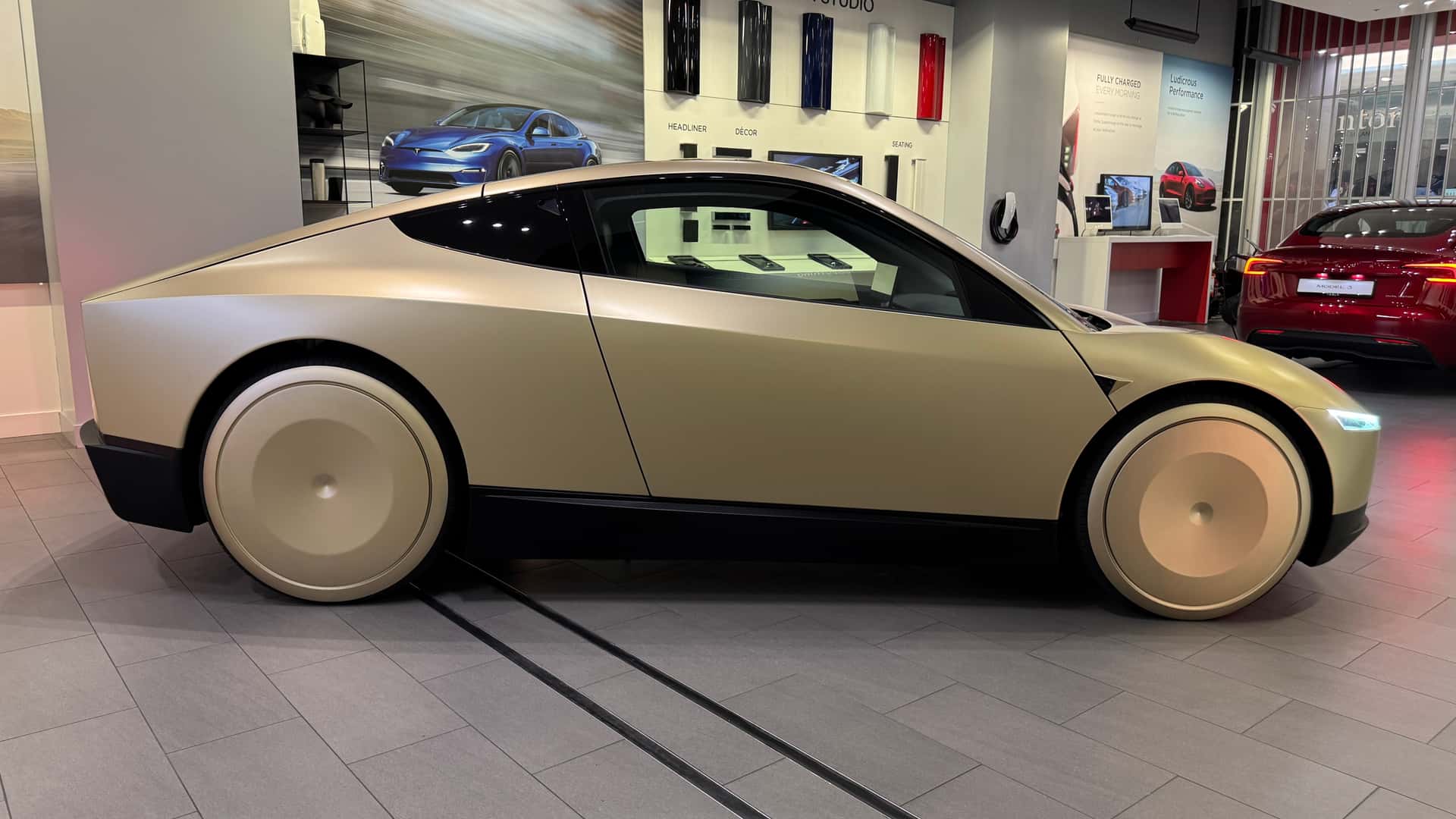
Tesla, a pioneer in advanced electric vehicle (EV) battery technology, is reportedly making a significant pivot in its battery design philosophy. For its upcoming Cybercab, the company is moving away from the highly integrated structural battery packs seen in some Model Y variants and the Cybertruck, opting for a design that prioritises repairability and long-term serviceability.
This strategic shift addresses a critical challenge posed by earlier designs: the near-impossibility of repairing structural battery packs once damaged. The change signals Tesla’s evolving approach to vehicle lifecycle management, particularly for its planned robotaxi fleet where operational uptime and maintenance costs are paramount.

Key Takeaways
- Tesla is shifting its battery design for the Cybercab from a fully structural pack (found in some Model Ys) to a “semi-structural” approach.
- The Model Y’s structural battery, integrated with hard potting, was deemed “practically impossible to repair” by engineers and received a “D” grade from Tesla’s Director of Mechanical Design Engineering, Robert Sumpf.
- The Cybercab’s new design incorporates four separate 4680 battery cell modules, allowing for individual module replacement rather than entire pack overhaul.
- This modularity is crucial for reducing Total Cost of Ownership (TCO) in a robotaxi fleet, where high mileage and continuous operation necessitate efficient and cost-effective repairs.
- The decision reflects a balance between energy density gains from structural packs and the practical realities of long-term commercial vehicle operation and maintenance.
The Evolution of Tesla Battery Design
Tesla has long been at the forefront of automotive innovation, particularly in optimising battery technology for electric vehicles. The company’s development of structural battery packs marked a notable advancement, aiming to integrate the battery directly into the vehicle’s chassis structure. This approach eliminates traditional modules, saving weight and allowing for a more compact arrangement of battery cells, thereby maximising energy density within a smaller footprint.
The core concept behind these structural packs involves embedding hundreds of in-house 4680 battery cells into a single, tightly integrated assembly. This design, first implemented in specific configurations of the Tesla Model Y and subsequently in the Cybertruck, promised efficiency gains and a streamlined manufacturing process. However, the pursuit of these advantages inadvertently introduced significant complexities in another crucial area: serviceability.
The Model Y’s Structural Battery Challenge
While the structural battery in the Tesla Model Y represented an ambitious engineering feat, its design presented substantial hurdles for repair and maintenance. Robert Sumpf, Tesla’s director of mechanical design engineering for battery modules and packs, candidly acknowledged these difficulties. “It’s good to be self-critical,” Sumpf stated in a video on the Munro & Associates YouTube channel. He added, “I’m going to give our Model Y structural battery a grade D,” despite acknowledging its merits as an “awesome product” for the customer.

The primary issue, according to Sumpf, stemmed from the construction of the structural pack. In this innovative design, the individual 4680 battery cells are bound together using a hard potting material. This robust encapsulation, while contributing to structural integrity and thermal management, renders the battery virtually impervious to targeted repairs. If even a single cell becomes defective, the entire pack becomes almost impossible to service.
Criticisms from Industry Experts
The challenges in repairing the Tesla Model Y structural battery were also highlighted by independent automotive engineering firms. After conducting a comprehensive teardown of a Model Y featuring this advanced pack, Munro & Associates, a renowned engineering consulting firm known for its detailed automotive analyses, concluded that its battery possessed “zero repairability.” This assessment underscored the severity of the design’s serviceability limitations.
Such a verdict from industry experts indicates that while the structural design might excel in manufacturing efficiency and initial performance metrics like energy density, it falls short in terms of long-term maintenance and sustainability. This feedback loop from internal engineering evaluations and external analyses appears to have played a significant role in Tesla’s subsequent design adjustments for its next-generation vehicles.
Introducing the Cybercab’s “Semi-Structural” Approach
In a notable strategic adjustment, Tesla has developed a new battery pack architecture for its forthcoming Cybercab, a vehicle designed for continuous operation as a robotaxi. This new design marks a clear departure from the fully structural packs found in models like the Tesla Model Y, moving towards what Tesla executives describe as a “semi-structural” configuration.
Unlike its predecessors, the Cybercab’s battery pack integrates four separate modules containing the 4680 battery cells. This modular arrangement is a deliberate engineering choice aimed at resolving the repairability issues that plagued earlier structural designs. The transition from a single, unserviceable unit to a segmented, modular system represents a significant rethinking of battery lifecycle management at Tesla.
Enhanced Repairability and Modular Design
The key advantage of the Cybercab’s modular battery design lies in its enhanced repairability. Should a single battery module become faulty or degrade, it can now be swapped out individually without necessitating the replacement of the entire battery pack. This approach drastically reduces the complexity, time, and cost associated with battery maintenance, offering a more practical solution for high-utilisation vehicles.
Robert Sumpf elaborated on the design rationale, acknowledging the trade-offs involved. While a purely structural pack might offer “maybe 10% more volume for cells” and potentially “save a little cost as a result” in initial manufacturing, he emphasised that “the issue is the service cost.” This statement highlights Tesla’s recognition that the operational expenses associated with repairs can quickly outweigh the initial benefits of extreme integration, especially for commercial applications.
Cost Implications and Total Cost of Ownership (TCO)
The decision to embrace a modular, more repairable battery design for the Cybercab is intrinsically linked to the vehicle’s intended purpose as a robotaxi. Such vehicles are expected to operate for hundreds of thousands of miles, enduring relentless round-the-clock use. In this context, Total Cost of Ownership (TCO) becomes the paramount metric, overshadowing incremental gains in range or initial manufacturing simplicity.
Eric Earley, the Cybercab’s chief engineer, articulated this focus on TCO in an interview on the Munro Live YouTube channel. He stated, “When you think of TCO as we’ve talked about, replacing an entire pack before half a million miles is a killer on cost.” Earley further stressed the importance of considering “remanufacturing,” “pack serviceability,” and “all those things that actually get us to our cost target for the product.” This holistic view of costs, encompassing everything from initial build to long-term maintenance and potential remanufacturing, underscores the commercial pragmatism driving the Cybercab’s battery architecture.
Industry Trends in Battery Integration
Tesla’s journey with structural batteries and its subsequent pivot with the Cybercab occurs within a broader industry context where numerous automakers are exploring innovative battery integration strategies. The goal across the sector remains consistent: to enhance energy density, reduce weight, and streamline manufacturing processes.
Automakers like BMW, Porsche, and Ford are actively designing vehicles with configurations where battery cells are placed directly into packs, or even directly into the vehicle’s body structure. This ‘cell-to-pack’ or ‘cell-to-chassis’ approach reflects a collective industry drive to optimise vehicle architecture for electric powertrains. However, as Tesla’s experience with the Tesla Model Y structural battery demonstrates, balancing these advanced integration techniques with practical considerations such as repairability, thermal management, and long-term durability remains a complex engineering challenge for the entire automotive sector.
Future Implications for Tesla’s EV Strategy
This strategic decision regarding the Cybercab’s battery pack has significant implications for Tesla’s broader electric vehicle strategy. While EV batteries are generally robust and exhibit predictable degradation over a consumer vehicle’s lifespan, the extreme demands of a robotaxi fleet necessitate a different calculus. The emphasis shifts from maximising initial range for individual consumers to optimising operational efficiency and minimising downtime for a commercial enterprise.
By moving to a modular, semi-structural battery for the Cybercab, Tesla is showcasing its adaptability and responsiveness to real-world operational data and engineering feedback. This pivot underscores a mature understanding that innovation must be tempered with practicality, especially when scaling up autonomous mobility services. It suggests that future Tesla designs, particularly those destined for commercial applications, may continue to balance cutting-edge integration with pragmatic considerations for serviceability and Total Cost of Ownership.
FAQ Section
What is a structural battery pack?
A structural battery pack integrates battery cells directly into the vehicle’s chassis, making the pack part of the car’s structure. This design aims to save weight, space, and manufacturing costs by eliminating traditional battery modules and utilising the battery enclosure as a structural component of the vehicle.
Why was the Tesla Model Y’s structural battery difficult to repair?
The Tesla Model Y’s structural battery used a hard potting material to bind hundreds of 4680 cells into a single, integrated unit. This robust, inseparable design made it practically impossible to access and repair individual defective cells, necessitating the replacement of the entire pack even for minor faults.
How does the Cybercab’s battery design improve repairability?
The Cybercab features a “semi-structural” battery pack composed of four separate modules of 4680 cells. This modular approach allows technicians to replace individual faulty modules instead of the entire battery pack, significantly reducing repair time, complexity, and overall cost.
What is Total Cost of Ownership (TCO) and why is it important for the Cybercab?
TCO includes all costs associated with owning and operating a vehicle over its lifetime, including purchase price, fuel, maintenance, insurance, and repairs. For the Cybercab, designed as a high-utilisation robotaxi, TCO is critical because frequent and costly battery replacements would severely undermine its economic viability over hundreds of thousands of miles.
Are other automakers adopting structural battery designs?
Yes, many automakers, including BMW, Porsche, and Ford, are exploring or implementing various forms of structural battery integration (cell-to-pack or cell-to-chassis). The industry seeks to leverage the benefits of these designs, but also faces similar challenges in balancing energy density with practical considerations like serviceability and long-term durability.