
Key Takeaways:
- Tesla is shifting its battery design philosophy for the upcoming Cybercab, moving away from the fully integrated structural battery pack seen in some Model Ys and the Cybertruck.
- The Model Y’s structural battery, while innovative for energy density and weight savings, was graded “D” by a Tesla executive for its manufacturing difficulty and was deemed to have “zero repairability” by engineering firm Munro & Associates.
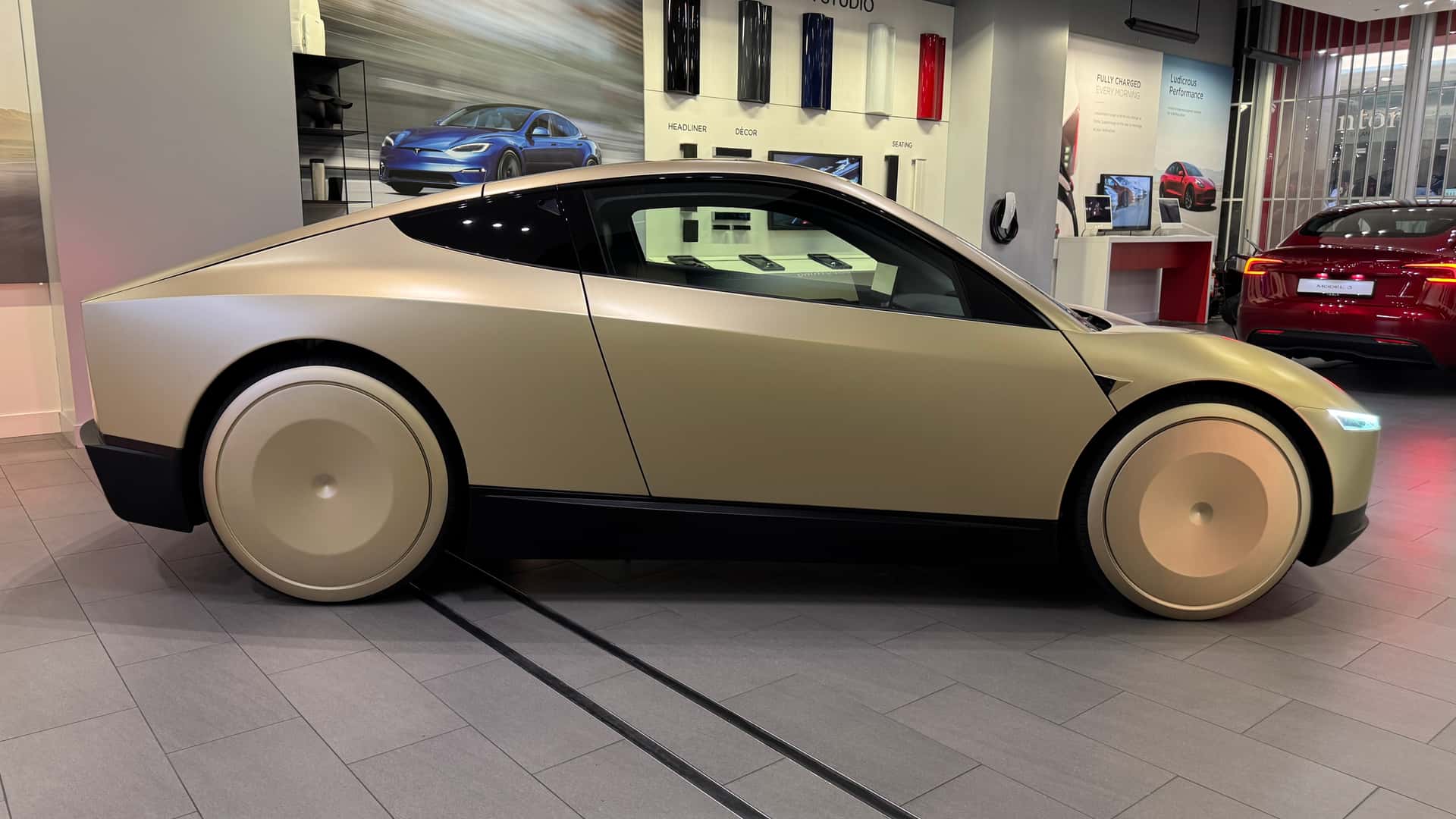
- The Cybercab will feature a “semi-structural” battery design, incorporating four separate modules of 4680 cells, enabling individual module replacement and significantly enhancing serviceability.
- This strategic change prioritises Total Cost of Ownership (TCO) and remanufacturing capabilities, crucial for the rigorous demands and extended operational life expected of robotaxi fleets.
- The move signifies Tesla’s self-critical approach to innovation, balancing cutting-edge design with practical considerations for long-term fleet viability and maintenance.
A Strategic Pivot in Tesla’s Battery Innovation
In a significant development, Tesla, a pioneer in advanced electric vehicle (EV) battery architecture, is reportedly making a calculated shift in its design philosophy. The company, which spearheaded the adoption of structural battery packs to reduce weight and maximise energy density, is now embracing a more modular and repairable approach for its forthcoming Cybercab. This new direction directly addresses the formidable repair challenges identified with earlier iterations, such as the Tesla structural battery in certain Model Y vehicles.

The transition underscores a critical evaluation of long-term serviceability and Total Cost of Ownership (TCO), particularly pertinent for vehicles intended for intensive, round-the-clock operation like robotaxis. While the initial structural designs were celebrated for their innovation, practical feedback and engineering assessments have prompted a re-evaluation, leading to a battery architecture designed for easier maintenance and enhanced longevity.
The Model Y’s Structural Battery: Innovation Meets Obstacle
Tesla’s earlier venture into structural battery packs represented a bold step forward in EV manufacturing. By embedding hundreds of in-house 4680 battery cells directly into a single, tightly integrated assembly, the design aimed to eliminate traditional battery modules. This innovative method promised substantial benefits, including reduced vehicle weight, improved structural rigidity, and the ability to pack more energy into a smaller footprint.
However, the real-world application of this advanced Tesla structural battery design, particularly in some Model Y vehicles and the Cybertruck, soon revealed a critical drawback. The very integration that delivered performance gains also posed significant challenges when it came to repair or replacement of faulty components within the battery system. This led to an assessment that highlighted the need for improved serviceability for future high-use vehicles.

The Model Y’s “D” Grade for Repairability
The complexities inherent in the Model Y’s structural battery design did not go unnoticed, even within Tesla’s engineering ranks. Robert Sumpf, Director of Mechanical Design Engineering for Tesla’s battery modules and packs, offered a candid assessment of the existing structural pack. In a video featured on the YouTube channel of engineering firm Munro & Associates, Sumpf acknowledged the product’s success from a consumer standpoint but highlighted its manufacturing and repair difficulties.
“It’s good to be self-critical,” Sumpf stated. “I’m going to give our Model Y structural battery a grade D,” he added, noting that it was an “awesome product” to the customer but was hard to build. This frank internal evaluation underscores Tesla’s commitment to continuous improvement and addressing engineering challenges head-on.
The primary hurdle identified by experts was the pack’s repairability. The 4680 battery cells within the structural pack are meticulously bound together using a hard potting material. This bonding method, while contributing to structural integrity, renders individual cell or module replacement practically impossible. Following a detailed teardown of a Model Y equipped with such a pack, Munro & Associates corroborated this assessment, concluding that its battery possessed “zero repairability.”
The Cybercab’s Strategic Shift to Semi-Structural Design
Learning from the experiences with its earlier structural battery packs, Tesla has adopted a distinct approach for the Cybercab. Instead of a monolithic, fully integrated unit, the Cybercab’s battery system will incorporate four separate modules, each housing a collection of 4680 battery cells. This departure from a single, tightly bound assembly marks a strategic evolution in Tesla’s battery architecture.
This “semi-structural” design, as described by Tesla executives, represents a deliberate compromise. While it may not offer the absolute maximum energy density or minimal material cost of a fully structural pack, it dramatically enhances the battery’s serviceability. The modularity means that if a single battery module malfunctions or degrades, it can be individually swapped out without necessitating the replacement of the entire, expensive battery pack. This approach is a testament to the company’s focus on practical, long-term operational efficiency.
Prioritising Serviceability and Total Cost of Ownership (TCO)
The decision to move towards a more repairable battery design for the Cybercab is deeply rooted in the economic realities of operating a robotaxi fleet. For consumer EVs, battery degradation is often predictable and manageable over the vehicle’s lifetime, and complete failures are rare. However, robotaxis are subjected to an entirely different operational paradigm, expected to endure “hundreds of thousands of miles of round-the-clock abuse.” This intensive usage profile significantly elevates the importance of durability and ease of maintenance.
Robert Sumpf elaborated on the trade-offs: “You’re going to get maybe 10% more volume for cells in a structural pack when you delete the structure,” he said. “You’re going to save a little cost as a result, but the issue is the service cost.” For a business model reliant on fleet utilization, the Total Cost of Ownership (TCO) becomes paramount. Replacing an entire Tesla structural battery pack prematurely due to a localized fault would severely impact profitability and operational viability.
Eric Earley, the Cybercab’s chief engineer, underscored this point on the Munro Live YouTube channel: “When you think of TCO as we’ve talked about, replacing an entire pack before half a million miles is a killer on cost,” he explained. “So we have to think of [remanufacturing], we have to think of pack serviceability, we have to think of all those things that actually get us to our cost target for the product.” This holistic view of the product lifecycle, encompassing repairability and remanufacturing, is critical for achieving the stringent cost targets associated with large-scale robotaxi deployments.
Broader Industry Context and Future Implications
Tesla’s journey with structural battery packs, from groundbreaking innovation to pragmatic recalibration, reflects a broader trend within the automotive industry. Other prominent automakers, including BMW, Porsche, and Ford, are also actively developing and implementing designs where battery cells are integrated directly into packs or even the vehicle’s body structure. These initiatives aim to capitalise on similar benefits of improved packaging efficiency and structural integrity.
However, Tesla’s pivot with the Cybercab serves as an important lesson: while pushing the boundaries of engineering is essential, practical considerations like serviceability and TCO are equally vital for commercial success, especially in new segments like autonomous ride-hailing. The balance between maximum efficiency and real-world maintenance is a delicate one that EV manufacturers continue to navigate.
This evolution in Tesla’s battery strategy highlights a mature approach to product development, where initial innovations are refined based on empirical data and strategic objectives. For the burgeoning robotaxi market, where uptime and operational costs dictate success, a repairable, module-based battery design could be a significant differentiator, ensuring that the Cybercab is not only technologically advanced but also economically viable for its intended purpose.
FAQ Section
What is a structural battery pack?
A structural battery pack integrates battery cells directly into the vehicle’s chassis, making the battery itself a structural component. This design eliminates traditional modules, aiming to reduce weight, save space, and increase energy density by maximizing the volume available for cells.
Why did Tesla grade its Model Y structural battery a “D”?
Robert Sumpf, a Tesla executive, graded it a “D” primarily due to its manufacturing difficulty. While innovative and beneficial to the customer, the complex integration and bonding of cells made it challenging to build and nearly impossible to repair if a single cell or component failed.
How does the Cybercab’s battery design differ from the Model Y’s?
The Cybercab adopts a “semi-structural” design featuring four separate battery modules of 4680 cells. Unlike the Model Y’s fully integrated pack, this modular approach allows for individual faulty modules to be replaced, significantly improving repairability and reducing service costs.
What does “zero repairability” mean for the Model Y’s structural pack?
According to Munro & Associates, “zero repairability” means that due to the hard potting material binding all cells together, repairing a single defective cell or component within the pack is practically impossible. This necessitates replacing the entire Tesla structural battery pack, even for minor faults.
Why is repairability so important for the Cybercab?
The Cybercab is designed as a robotaxi, meaning it will operate continuously for hundreds of thousands of miles. For such a high-use fleet vehicle, Total Cost of Ownership (TCO) is paramount. Easy repairability, including module replacement, drastically reduces maintenance expenses and downtime, making the robotaxi economically viable over its extensive operational lifespan.
Are other automakers also developing structural battery packs?
Yes, several other automakers, including BMW, Porsche, and Ford, are also exploring and implementing designs where battery cells go directly into packs or even directly into the vehicle’s body structure. This indicates a broader industry trend towards more integrated and efficient battery designs, with varying approaches to modularity and repairability.