
Key Takeaways
- While Rivian’s R2 crossover garners significant public attention, its Electric Delivery Van (EDV) is quietly transforming into a substantial revenue generator and strategic asset.
- Amazon’s demand for Rivian EDVs has surged this year, driven by the electric vehicles’ lower operating and maintenance costs compared to traditional diesel vans.
- Rivian’s revenue from Amazon, primarily from EDV sales, nearly tripled year-over-year, reaching $1.6 billion, significantly contributing to the company’s financial health.
- The commercial EV market is seeing rivals like Ford and General Motors scale back or exit, positioning Rivian as a frontrunner in medium-duty electric fleets.
- Rivian is expanding its EDV offerings with new variants and is in discussions with other potential commercial customers beyond Amazon, signaling broader market penetration.
The spotlight often shines brightly on Rivian’s consumer offerings, particularly the anticipated R2 crossover. Envisioned as a more affordable entry point into the electric vehicle (EV) market, the R2, with its projected $45,000 price tag, is widely considered Rivian’s key to achieving long-term profitability. This strategy appears to be gaining traction, as the California-based startup announced the R2 was its best-selling vehicle in Q3, merely months after its June market debut.
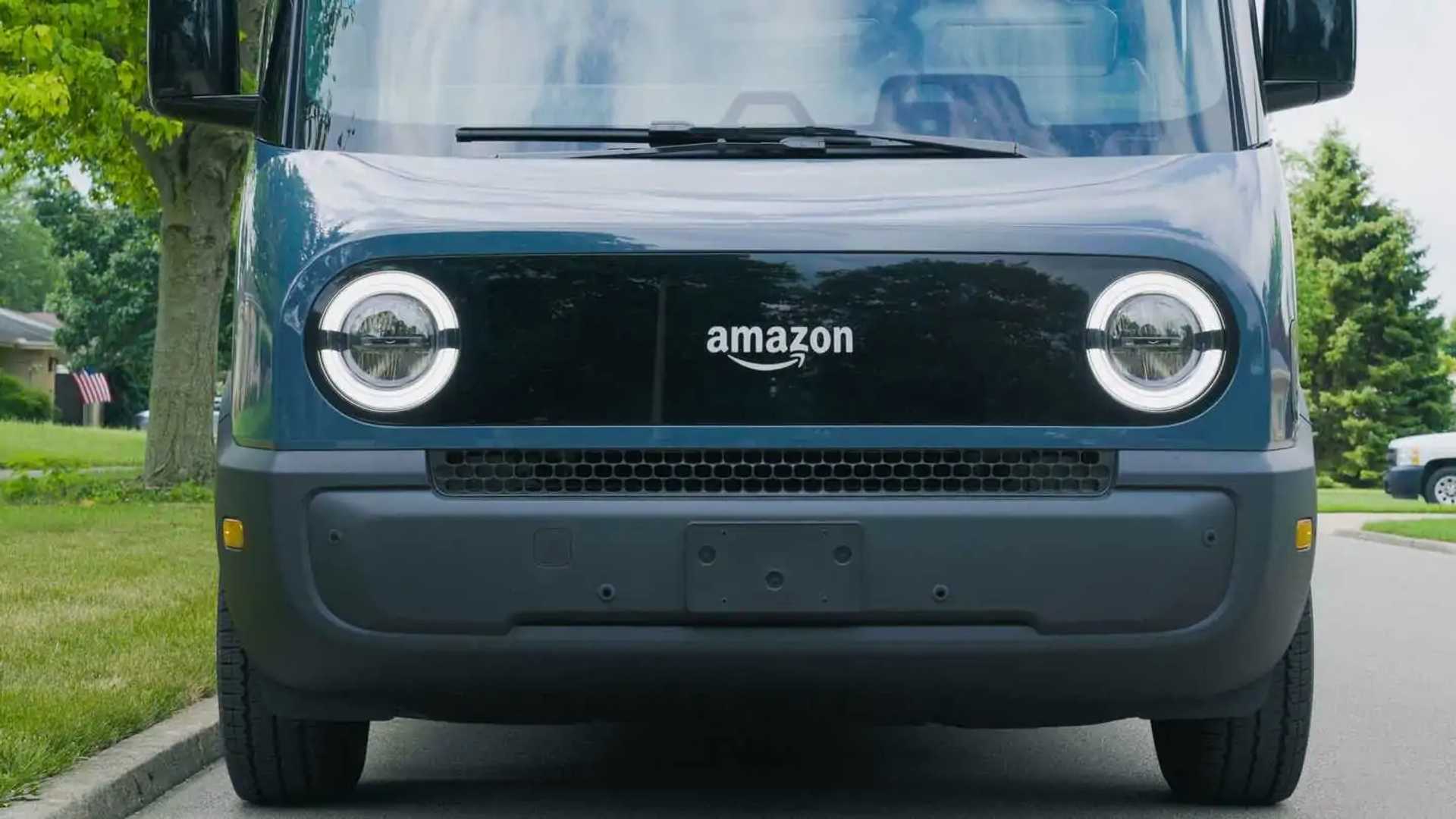
However, away from the glare of consumer enthusiasm, another Rivian product is steadily carving out a formidable position: the Electric Delivery Van (EDV). This unassuming commercial vehicle, frequently seen navigating neighborhoods for Amazon deliveries, is rapidly evolving into a pivotal revenue stream and a strategic linchpin for the company’s financial future.
Amazon’s Escalating Demand for Rivian Electric Delivery Vans
Rivian’s founder and CEO, RJ Scaringe, recently highlighted a significant uptick in demand from Amazon for its EDVs. Speaking on an earnings call, Scaringe noted that the e-commerce behemoth, an early investor in Rivian, is increasing its acquisition of these vans due to their compelling operational economics.
This surge in orders from the logistics giant is attributed primarily to the EDV’s lower running costs. The inherent efficiencies of electric vehicles, including reduced maintenance requirements and the soaring prices of diesel fuel, present a powerful economic incentive for fleet operators.
Scaringe articulated this advantage, stating, “It’s creating true and very real structural cost advantages that are leading Amazon to double down to continue to buy more vehicles.” This declaration underscores the tangible financial benefits that sustainable logistics solutions offer to large-scale commercial operations.
Financial Impact and Revenue Growth
While Rivian does not publicly disaggregate delivery volumes by individual models, the company’s financial disclosures clearly indicate a robust and expanding van business. In the third quarter alone, Amazon remitted $596 million to Rivian, a figure that surpasses the total payments made throughout the first three quarters of the preceding year combined.
Year-to-date, Rivian has recorded an impressive $1.6 billion in revenue from Amazon, predominantly attributed to EDV sales. This represents a nearly threefold increase compared to the same period last year, signaling the profound impact of the electric delivery van on Rivian’s overall financial performance.
Despite these gains, Rivian continues to navigate the complexities of scaling production and achieving profitability. For the third quarter, the company reported a net loss of $913 million. However, this represents a notable improvement from the $1.17 billion loss incurred during Q3 of 2025, suggesting a positive trajectory towards financial stability.
The company views the R2 as instrumental to its long-term financial health, alongside a burgeoning high-margin software and services business. These combined efforts are crucial in generating the necessary capital to fund Rivian’s ambitious growth strategy and vehicle development plans.
A Shrinking Competitive Landscape in Commercial EVs
The competitive environment for medium-duty electric delivery vehicles is becoming less crowded, further bolstering Rivian’s position. Several established players have struggled to gain traction or have withdrawn from the segment, creating a clearer path for agile EV startups.
Ford, for instance, has reported a significant decline in its E-Transit van sales this year, with fewer than 700 units sold. This represents an 85% drop compared to the corresponding period in 2025. Adding to this, the automotive giant has opted to cancel a planned next-generation model for its electric van.
Similarly, General Motors made the decision to discontinue its BrightDrop electric delivery vans entirely late last year. These developments highlight the considerable challenges and capital intensity involved in developing and scaling commercial EV offerings, allowing specialized manufacturers like Rivian to solidify their market share.
The Rise of EV-Only Manufacturers in Commercial Fleet Electrification
Industry experts emphasize that the electrification of commercial vehicles in the American market is largely being spearheaded by EV-only manufacturers. Ray Minjares, who directs the heavy-duty vehicles program at the International Council on Clean Transportation, observes that these specialized companies are driving innovation and market adoption.
Rivian is notably leading the charge in the medium-duty electric vehicle segment. Concurrently, Tesla’s Semi is making significant inroads in the long-haul trucking sector, demonstrating the potential for electrification across various commercial transportation categories. Another U.S. startup, Harbinger Motors, recently secured a substantial agreement to supply 2,000 electric trucks to FedEx, underscoring the dynamic shift in commercial fleet procurement.
Expanding Reach and Future Prospects for the Rivian EDV
In a strategic move to broaden its market presence, Rivian commenced opening fleet orders to companies beyond Amazon last year. These customized EDV models start at $79,900 for the smaller variant, offering a competitive solution for diverse commercial operators seeking to transition to electric fleets.
The company recently announced the delivery of two new EDV variants specifically designed to address the demands of more challenging and rural delivery routes for Amazon. One variant features all-wheel drive capabilities, enhancing traction and performance in varied terrains. The other is equipped with a larger battery, providing a substantial 30% increase in range, crucial for extended routes and operational efficiency.
Speculation about additional high-profile partnerships has also surfaced. A photograph depicting an EDV on a transporter truck bearing Walmart livery circulated widely this week, sparking considerable interest. While Rivian executives prudently refrained from direct comment on the image during the recent earnings call, CEO RJ Scaringe confirmed ongoing discussions with other potential EDV customers.
Scaringe conveyed the company’s enthusiasm for these opportunities: “We do see other commercial operators, as they start to really look at ways to drive more efficiency into the business, starting to look at the EDV,” he remarked, adding, “And we’re excited for those potential future customers on this program as well.” This suggests a strategic expansion of Rivian’s commercial vehicle division, moving beyond its foundational partnership with Amazon to capture a broader share of the nascent but rapidly growing electric fleet market.
Frequently Asked Questions (FAQ)
What is the Rivian EDV?
The Rivian EDV, or Electric Delivery Van, is a commercial electric vehicle designed primarily for last-mile delivery services. It is known for its distinctive design and is a key component of Amazon’s growing electric fleet, aiming to reduce operational costs and environmental impact through sustainable transportation.
Why is Amazon increasing its demand for Rivian EDVs?
Amazon’s increased demand stems from the significant operational cost advantages offered by the EDV. These include lower maintenance burdens inherent to electric vehicles, reduced fuel costs due to high diesel prices, and overall greater efficiency, which provides structural cost savings for the logistics giant.
How much revenue has Rivian generated from Amazon EDV sales this year?
As of this year, Rivian has generated $1.6 billion in revenue from Amazon, primarily attributed to EDV sales. This figure represents a nearly threefold increase year-over-year, highlighting the substantial financial contribution of the commercial van segment to Rivian’s total revenue.
Is Rivian’s EDV facing strong competition in the commercial EV market?
The competitive landscape for medium-duty electric delivery vans is becoming less saturated. Key rivals like Ford have seen significant sales drops and cancelled future models, while General Motors has exited the segment entirely. This positions Rivian as a leading player among EV-only manufacturers in this niche.
What new variants of the Rivian EDV are being introduced?
Rivian has introduced two new EDV variants designed for more diverse routes. One features all-wheel drive, enhancing capability in varied conditions, while the other boasts a larger battery, providing 30% more range to accommodate longer, more rural delivery routes, improving operational flexibility.
Beyond Amazon, is Rivian looking for other EDV customers?
Yes, Rivian has expanded its fleet order options to companies beyond Amazon and is actively engaging with other potential commercial operators. CEO RJ Scaringe confirmed these ongoing discussions, indicating Rivian’s ambition to broaden its customer base and further penetrate the commercial electric vehicle market.
How does the EDV contribute to Rivian’s overall profitability goals?
While the R2 crossover is seen as a long-term profitability driver, the EDV is currently a significant and immediate revenue generator, contributing substantial income through large-scale fleet sales. Its success helps fund ongoing R&D and manufacturing efforts, supporting the company’s broader financial health and transition to profitability.