
Key Takeaways
- While Rivian’s R2 garners significant attention as a consumer vehicle, its Electric Delivery Van (EDV) is quietly emerging as a critical revenue driver and a strategic asset.
- Amazon’s demand for Rivian EDVs has surged, contributing nearly $1.6 billion in revenue this year—a threefold increase compared to the previous year, driven by the vans’ lower operational costs.
- The commercial electric vehicle market is witnessing a consolidation, with major players like Ford and General Motors scaling back or exiting, leaving Rivian in a dominant position within the medium-duty EV segment.
- Rivian is expanding its EDV program beyond Amazon, offering fleet orders to other companies and introducing new variants tailored for diverse operational needs, including all-wheel drive and extended range.
- Despite ongoing net losses, the EDV’s strong performance, coupled with the upcoming R2 and a growing software business, is crucial for Rivian’s long-term financial health and profitability goals.
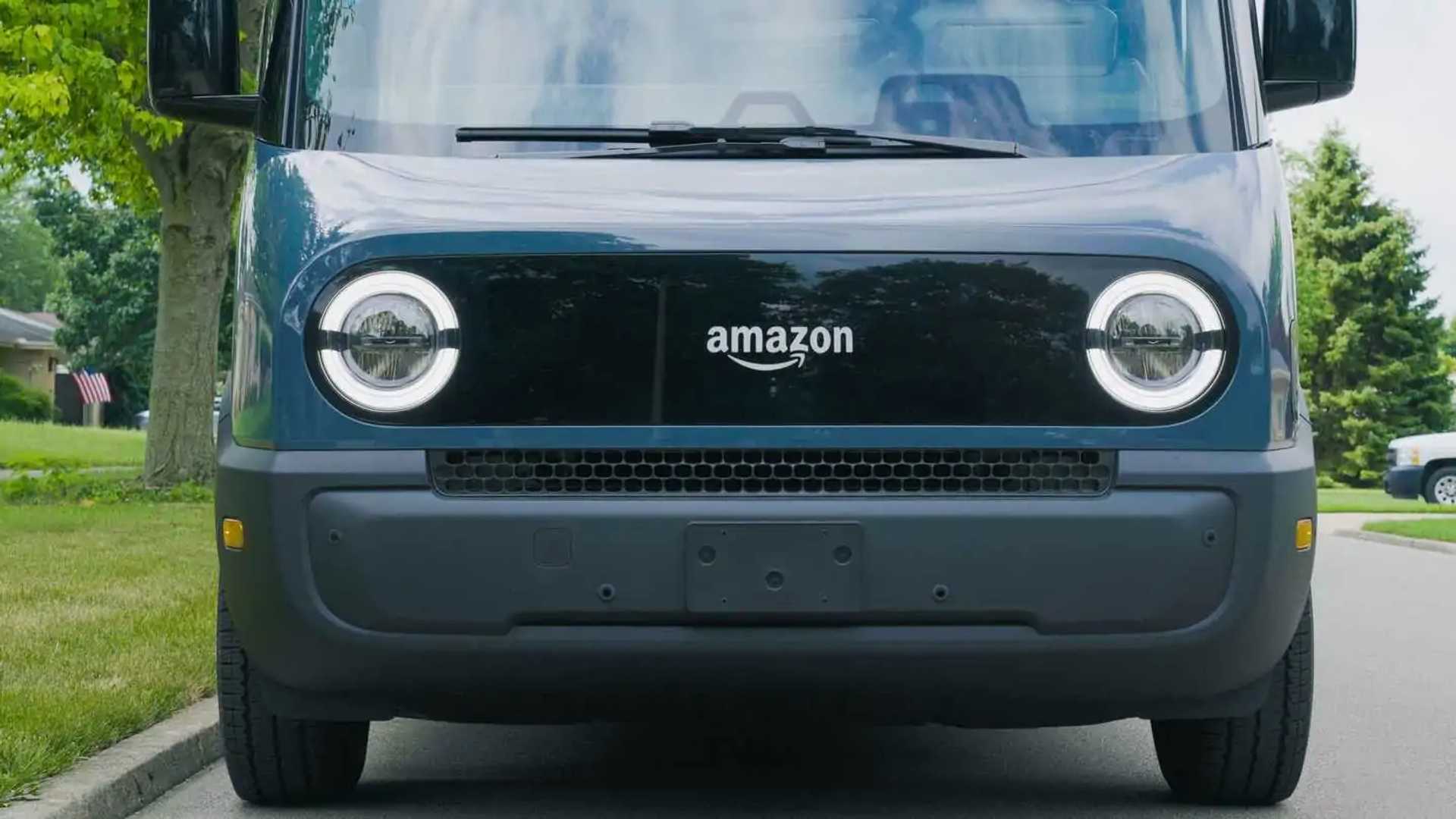
While the highly anticipated R2 crossover captures headlines as Rivian’s ambitious entry into the mainstream electric vehicle market, a less glamorous but strategically vital component of the company’s portfolio is quietly transforming its financial trajectory. The Rivian Electric Delivery Van (EDV), often seen silently navigating urban and suburban routes for Amazon, is rapidly becoming a formidable secret weapon, significantly bolstering the automotive startup’s revenue and fortifying its position in the evolving commercial EV landscape.
This unassuming workhorse, purpose-built for logistics, has seen a dramatic surge in demand from its primary client, Amazon, signaling a shift in how the industry perceives the viability and operational advantages of electric commercial fleets. This increased adoption underscores the EDV’s role not just as a delivery vehicle, but as a testament to the practical application of sustainable transport solutions in large-scale operations.
Rivian’s EDV: A Commercial Powerhouse in the Making
Rivian’s journey to profitability is widely linked to the consumer appeal of its R1T pick-up and R1S SUV, and the future mass-market potential of the R2. However, the commercial segment, particularly through its EDV, is providing substantial and immediate financial impetus. The EDV, with its distinctive design, has been an integral part of Amazon’s delivery ecosystem since its rollout, demonstrating reliability and efficiency in last-mile logistics.
The strategic partnership with Amazon, an early investor in Rivian, has evolved beyond initial commitments. This year, the logistics giant has notably accelerated its acquisition of Rivian EDVs, driven by compelling economic factors. Rivian CEO RJ Scaringe recently highlighted this escalating demand, pointing to the tangible benefits experienced by Amazon’s extensive delivery network.
“This year we have seen a significant step up in the level of demand from Amazon,” Scaringe stated on a recent earnings call. He attributed this increased interest primarily to the substantial operational cost savings offered by the electric vans, a critical advantage in an industry sensitive to fuel prices and maintenance expenditures.
Amazon’s Commitment Drives Revenue Surge
The financial impact of Amazon’s intensified commitment to Rivian’s EDVs is clearly visible in the startup’s latest financial reports. In the third quarter alone, Amazon injected $596 million into Rivian, a figure that surpasses the total revenue generated from Amazon throughout the first three quarters of the previous year combined. This robust quarterly performance illustrates the accelerating pace of EDV deployments.
Cumulatively, Rivian has recorded an impressive $1.6 billion in revenue from Amazon this year, predominantly stemming from EDV sales. This represents a nearly threefold increase year-over-year, showcasing the rapid expansion and deepening of their commercial relationship. These figures underscore the EDV’s critical role in Rivian’s current revenue generation, providing a stable and growing income stream amidst broader market volatility.
The economic rationale behind Amazon’s preference for electric delivery vehicles is straightforward and compelling. “It’s creating true and very real structural cost advantages that are leading Amazon to double down to continue to buy more vehicles,” Scaringe explained. The inherent characteristics of electric vehicles, such as reduced maintenance requirements due to fewer moving parts and the elimination of soaring diesel costs, contribute to a significantly lower total cost of ownership (TCO) over the lifespan of the vehicle.
Navigating the Competitive Landscape: Rivian’s Strategic Advantage
The commercial electric vehicle market is currently undergoing a significant transformation, marked by both innovation and consolidation. While Rivian’s EDV is gaining traction, several established automotive giants have encountered considerable challenges in this segment, inadvertently clearing a path for newer, specialized EV manufacturers.
Ford, for instance, has reported a substantial decline in sales of its E-Transit vans, with fewer than 700 units sold this year, marking an 85% drop compared to the same period in 2025. Furthermore, the company made the strategic decision to cancel a planned next-generation model of the E-Transit, indicating a recalibration of its commercial EV strategy. Similarly, General Motors opted to discontinue its BrightDrop electric delivery van program entirely late last year, exiting the segment that Rivian currently dominates.
These withdrawals from the market by traditional automotive behemoths create a vacuum that Rivian, alongside other dedicated EV startups, is well-positioned to fill. This shift highlights a broader trend: the electrification of commercial fleets in America is increasingly being driven by companies that were conceived specifically around electric vehicle technology, rather than traditional automakers adapting existing internal combustion engine platforms.
Ray Minjares, who leads the heavy-duty vehicles program at the International Council on Clean Transportation, affirmed this trend. He noted, “The dynamics that are playing out now in the U.S. market are basically being led by the EV-only manufacturers.” Minjares further specified that Rivian is leading the charge in medium-duty electric vehicles, while other players like Tesla, with its Semi, are making significant strides in long-haul trucking, and Harbinger Motors recently secured a deal to supply 2,000 electric trucks to FedEx.
Expanding Reach and Future Prospects for the EDV
Recognizing the substantial potential beyond its foundational partnership with Amazon, Rivian has actively begun to broaden the market for its EDV. Last year, the company opened up fleet orders to a wider array of commercial operators, moving beyond its exclusive agreement with Amazon. These specialized vans, designed for high efficiency and robust performance, are available to other companies starting at $79,900 for the smaller model, offering a competitive edge in the rapidly electrifying logistics sector.
In a testament to its commitment to innovation and adaptability, Rivian has also introduced new variants of the EDV specifically engineered to tackle diverse operational challenges. This week, the company announced the commencement of deliveries for two new EDV models to Amazon, designed to be more suitable for demanding rural delivery routes. One variant features an all-wheel-drive (AWD) system, enhancing traction and capability in varied terrains and weather conditions. The other boasts a larger battery, providing a significant 30% increase in range, crucial for extended routes and reduced charging frequency.
The prospect of further strategic partnerships also looms large for Rivian’s EDV program. Recent speculation ignited when a photograph of an EDV adorned with Walmart’s livery appeared on a transporter truck and quickly went viral. While Rivian executives maintained a cautious stance when questioned about the image on their earnings call, Scaringe did allude to ongoing discussions with other potential commercial clients.
“We do see other commercial operators, as they start to really look at ways to drive more efficiency into the business, starting to look at the EDV,” he remarked. This statement underscores Rivian’s proactive engagement with the broader commercial sector and its confidence in the EDV’s appeal. He further added, “And we’re excited for those potential future customers on this program as well,” hinting at promising new collaborations that could further diversify and expand Rivian’s commercial vehicle footprint.
Financial Health and the Road Ahead
Despite the considerable success and increasing revenue generated by the EDV, Rivian, like many burgeoning automotive startups, continues to operate at a net loss. For the third quarter, the company reported a net loss of $913 million. While this represents an improvement from the $1.17 billion loss recorded in the third quarter of 2025, it highlights the significant capital investment required for scaling production, research, and development in the competitive EV market.
The company views the forthcoming R2 as a pivotal product for its long-term financial stability, aiming for higher sales volumes and broader market penetration with its more accessible price point. Alongside hardware, Rivian is also strategically developing a high-margin software and services business, which is already contributing to its overall profitability and is seen as a crucial element in funding its ambitious growth vision.
The strong performance of the EDV is therefore not just a revenue stream but a vital pillar supporting Rivian’s journey toward sustainable profitability. It demonstrates the company’s capability to deliver robust, economically viable electric vehicles at scale, building trust and expertise in the commercial sector. This dual approach—capturing the mass consumer market with R2 while solidifying commercial dominance with the EDV—positions Rivian strategically to navigate the complexities of the global electric vehicle transition and achieve its ambitious financial objectives.
FAQ Section
What is the Rivian EDV?
The Rivian Electric Delivery Van (EDV) is a purpose-built commercial electric vehicle designed for last-mile logistics. It’s known for its distinctive appearance and is a key component of Amazon’s delivery fleet, offering lower operational costs and reduced environmental impact compared to traditional diesel vans.
How much revenue has Rivian generated from Amazon’s EDV orders this year?
Rivian has generated approximately $1.6 billion in revenue from Amazon’s EDV orders this year. This figure represents a nearly threefold increase compared to the same period last year, highlighting Amazon’s growing investment in electric delivery solutions.
Why is Amazon increasing its EDV orders from Rivian?
Amazon is significantly increasing its EDV orders primarily due to the structural cost advantages offered by the electric vans. These advantages include lower maintenance requirements and reduced fuel costs, especially given the high price of diesel, leading to better overall operational efficiency.
How is Rivian’s EDV performing against competitors?
Rivian’s EDV is performing strongly in a shrinking competitive field. Major competitors like Ford (E-Transit) have seen significant sales drops and canceled future models, while General Motors (BrightDrop) has exited the electric delivery van market entirely. This positions Rivian as a leader among EV-only manufacturers in the medium-duty segment.
Is Rivian selling the EDV to customers other than Amazon?
Yes, Rivian began opening fleet orders for its EDV to other companies apart from Amazon last year, with prices starting at $79,900 for the smaller model. The company is actively engaging with other potential commercial operators and has introduced new variants to cater to diverse customer needs.
What new EDV variants has Rivian introduced?
Rivian has started delivering two new EDV variants designed for more challenging routes, particularly rural ones. One model features all-wheel drive (AWD) for improved traction, while the other is equipped with a larger battery, providing an impressive 30% increase in overall range.
What is Rivian’s overall financial situation?
Despite increased revenue from EDV sales, Rivian reported a net loss of $913 million for the third quarter, though this is an improvement over the $1.17 billion loss in Q3 2025. The company is focused on the R2 and its software/services business for long-term financial health and profitability.