
Key Takeaways
- Tesla is shifting its battery strategy for the Cybercab, moving away from the highly integrated structural packs seen in some Model Ys and the Cybertruck.
- The Model Y’s structural battery, while innovative for density and weight savings, received a ‘D’ grade from Tesla’s own engineers for being exceptionally difficult to build and virtually impossible to repair due to its ‘potted’ cell design.
- The upcoming Cybercab will feature a ‘semi-structural’ battery pack composed of four separate modules, enabling easier repair and replacement of individual faulty components.
- This design choice is driven by the imperative of Total Cost of Ownership (TCO) for robotaxi fleets, where high-mileage operation demands maximum uptime and cost-effective maintenance, making EV battery repairability crucial.
- The decision reflects a pragmatic trade-off, valuing serviceability and long-term operational efficiency over marginal gains in energy density or initial material costs.
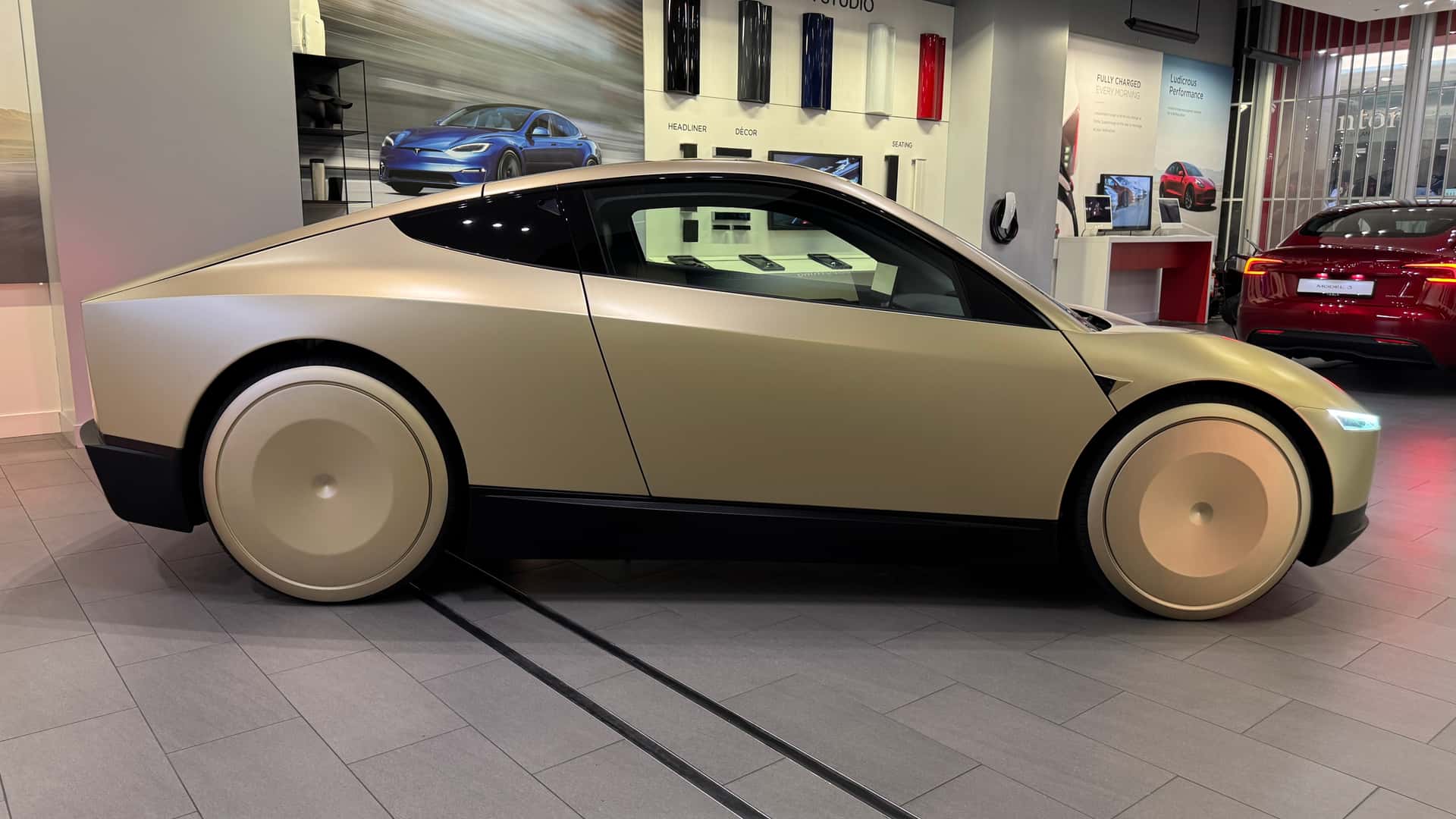
Tesla, a pioneer in advanced electric vehicle (EV) battery technologies, is embarking on a significant strategic shift with the battery architecture for its forthcoming Cybercab. This marks a notable departure from the highly integrated structural battery packs that debuted in some Model Y vehicles and the Cybertruck, which were designed to eliminate traditional modules and maximise energy density.
The company is now moving towards a design that prioritises EV battery repairability, a crucial factor for the demanding operational lifecycle of its planned robotaxi fleet. This evolution highlights a pragmatic reassessment of manufacturing efficiency and long-term service costs in the realm of electric vehicle maintenance.

The Model Y’s Structural Battery: Innovation and Its Repairability Challenge
For years, Tesla has been at the forefront of battery pack innovation, notably with its in-house 4680 battery cells. The structural battery concept involved embedding hundreds of these cylindrical cells into a single, tightly integrated assembly, directly contributing to the vehicle’s chassis rigidity and overall structural integrity. This approach aimed to save weight and efficiently package more energy within a smaller footprint, enhancing vehicle range and performance.
However, this revolutionary design presented significant challenges, particularly concerning manufacturability and serviceability. Robert Sumpf, Tesla’s Director of Mechanical Design Engineering for battery modules and packs, openly critiqued the Model Y’s structural battery in a video featured on the engineering firm Munro & Associates’ YouTube channel. He candidly stated, “It’s good to be self-critical. I’m going to give our Model Y structural battery a grade D,” acknowledging its brilliance for the customer while highlighting its difficulty in production.
The ‘Zero Repairability’ Conundrum
A primary drawback of the original structural battery design was its lack of practical repairability. The 4680 cells were bound together within the pack using a hard potting material. This encapsulation method, while contributing to structural rigidity and thermal management, rendered individual cell repair virtually impossible.

Following a comprehensive teardown of a Model Y featuring this structural pack, Munro & Associates, an independent engineering and consulting firm renowned for its in-depth analysis of automotive manufacturing, concluded that the battery possessed “zero repairability.” This assessment underscored a critical limitation for electric vehicle maintenance, particularly for components as vital and costly as the battery pack.
Industry Trends in Battery Architecture
The push towards structural battery packs and module-free designs is not unique to Tesla. Several prominent automakers, including BMW, Porsche, and Ford, are actively exploring or implementing similar battery pack architectures. These designs typically involve integrating cells directly into packs (cell-to-pack) or even directly into the vehicle’s body structure (cell-to-chassis).
The underlying motivation for these approaches across the electric vehicle industry is to maximise space utilisation, reduce component count, simplify assembly processes, and ultimately lower manufacturing costs. By eliminating the conventional module structures—the intermediate building blocks of a battery pack—manufacturers can theoretically stuff more cells into a given area, thereby boosting energy density and overall vehicle range.
The Cybercab’s ‘Semi-Structural’ Evolution
Despite the inherent advantages of a fully structural battery for certain performance metrics, Tesla’s leadership has opted for a different path with the Cybercab. The new design is described as ‘semi-structural,’ featuring four distinct modules of 4680 battery cells.
This modular arrangement fundamentally changes the EV battery repairability landscape. Instead of a monolithic unit, the Cybercab’s battery pack allows for the individual replacement of a faulty module. This means that a localised defect, such as a single defective cell affecting a module, no longer necessitates the replacement of the entire, prohibitively expensive battery pack.
Balancing Volume Gains with Service Costs
The decision to move to a semi-structural, modular design represents a calculated trade-off. Robert Sumpf articulated this balance, noting, “You’re going to get maybe 10% more volume for cells in a structural pack when you delete the structure.” He further explained, “You’re going to save a little cost as a result, but the issue is the service cost.”
While a fully structural design might offer a marginal increase in cell volume and slight material cost savings during initial production, these benefits are outweighed by the long-term implications of service and repair. The complexity and high cost associated with servicing or replacing an entire, unrepairable structural pack pose a significant challenge to the economic viability of commercial operations.
Total Cost of Ownership: The Driving Force for Robotaxi Fleets
The pivot towards enhanced EV battery repairability in the Cybercab is largely dictated by the stringent requirements of Total Cost of Ownership (TCO) for robotaxi fleets. Unlike consumer-owned electric vehicles, which typically accumulate predictable mileage over several years, robotaxis are designed for continuous, round-the-clock operation, potentially accumulating hundreds of thousands of miles rapidly.
In such a high-utilisation scenario, even infrequent battery failures or significant degradation can have a devastating impact on operational costs. While studies generally indicate that EV batteries exhibit predictable and manageable degradation over a consumer vehicle’s lifetime, the intense duty cycles of a robotaxi amplify any potential issues, making robust serviceability paramount.
Remanufacturing and Serviceability for Longevity
Eric Earley, the Cybercab’s chief engineer, underscored the criticality of TCO in the decision-making process. Speaking on the Munro Live YouTube channel, he stated, “When you think of TCO as we’ve talked about, replacing an entire pack before half a million miles is a killer on cost.” This directly addresses the economic realities of operating a large fleet.
For a business model reliant on maximising vehicle uptime and minimising operational expenses, the ability to efficiently remanufacture, repair, and service battery packs is indispensable. The modular design facilitates not only easier repairs but also potential future upgrades or selective cell replacements, extending the effective lifespan of the battery system and the vehicle as a whole.
Implications for the Future of EV Battery Design
Tesla’s decision with the Cybercab battery architecture sends a clear signal to the wider EV industry: while innovative designs that push performance boundaries are vital, practical considerations like EV battery repairability and the long-term cost of ownership cannot be overlooked, especially for commercial applications.
This move suggests a maturing understanding within the electric vehicle manufacturing sector, where the initial allure of maximum energy density is being balanced with the real-world demands of vehicle lifecycle management, maintenance, and fleet economics. The ‘semi-structural’ approach may well become a significant trend, offering a compromise that leverages advanced cell technology while ensuring sustainable and cost-effective operation over the vehicle’s extensive service life.
FAQ Section
What is a structural battery pack in an EV?
A structural battery pack integrates battery cells directly into the vehicle’s chassis, making the pack itself a structural component. This design eliminates traditional battery modules to save weight, reduce complexity, and maximise the internal volume for battery cells, thereby increasing energy density and range. It’s a method of simplifying vehicle architecture.
Why was the Tesla Model Y’s structural battery difficult to repair?
The Model Y’s structural battery cells were tightly bound together with a hard potting material. This integration, while enhancing structural integrity, made it practically impossible to access or replace individual cells or small sections of the battery. Consequently, any significant fault often necessitated the replacement of the entire, expensive battery pack.
How does the Cybercab’s battery design improve repairability?
The Cybercab features a ‘semi-structural’ battery pack composed of four separate modules of 4680 cells. This modular approach means that if a fault occurs in one section, only the affected module needs to be replaced, rather than the entire pack. This significantly reduces repair time, complexity, and overall cost, enhancing EV battery repairability.
What is Total Cost of Ownership (TCO) and why is it important for the Cybercab?
Total Cost of Ownership (TCO) is the overall cost of owning and operating an asset over its lifetime, including purchase, maintenance, repair, and operational expenses. For the Cybercab, which is designed for high-mileage robotaxi operations, TCO is paramount. High repair costs, especially for major components like batteries, directly impact profitability and operational viability, making efficient maintenance essential.
Are other automakers also adopting structural battery designs?
Yes, many automakers, including BMW, Porsche, and Ford, are exploring or implementing various forms of structural battery designs, such as cell-to-pack or cell-to-chassis concepts. The aim is generally to improve packaging efficiency, reduce weight, and enhance vehicle performance, similar to Tesla’s initial motivations with its structural packs.