
Key Takeaways:
- Mercedes-Benz is pioneering a new Power Converter technology to fundamentally change electric vehicle battery management.
- This innovation allows individual control over battery cells, enabling precise charge and discharge for enhanced longevity.
- The system supports diverse cell chemistries, simplifies power electronics, and natively integrates bidirectional charging.
- It promises improved battery lifespan, greater modularity, and increased efficiency for future Mercedes-Benz EV models.
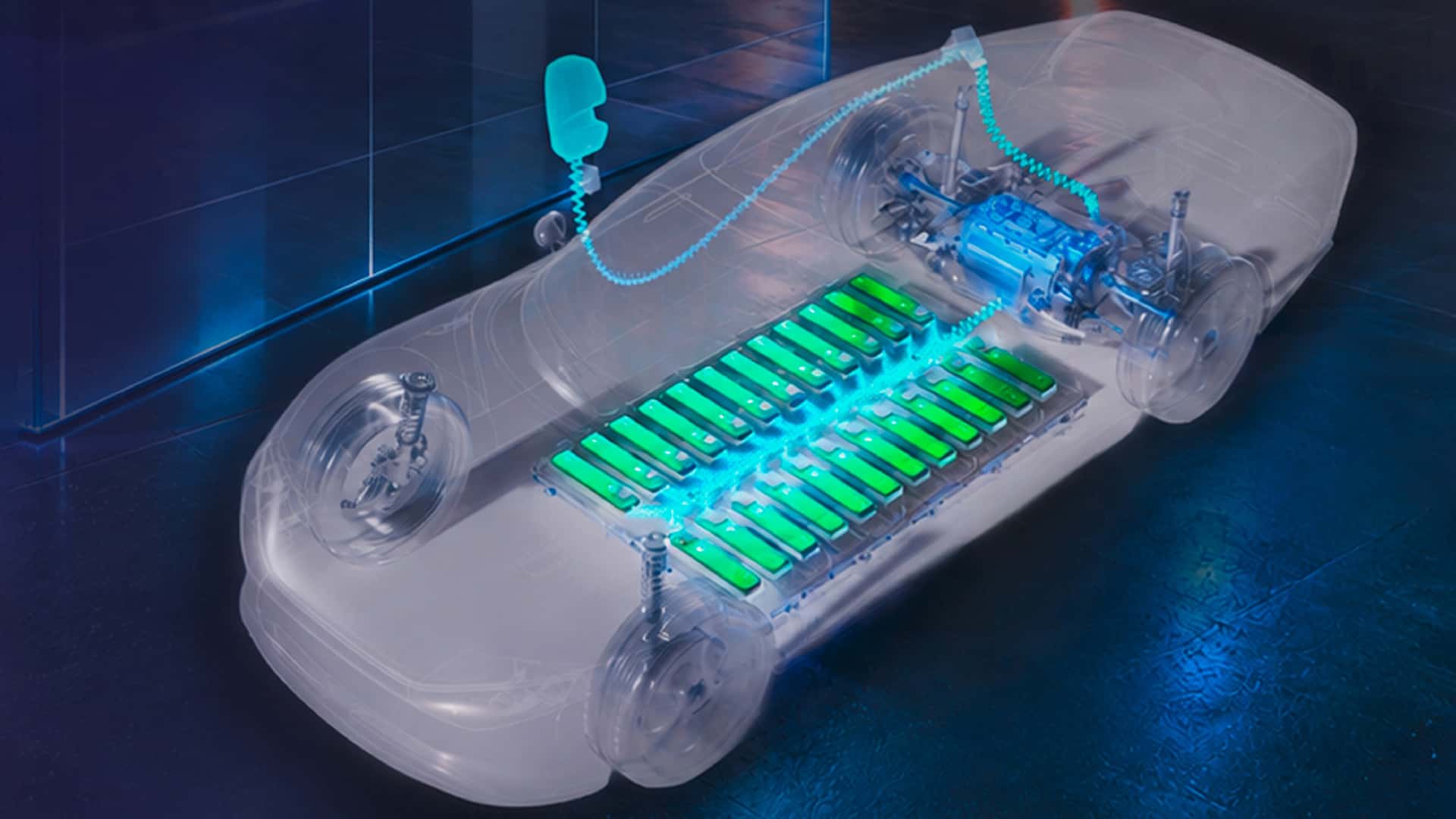
Stuttgart, Germany — In a significant development poised to redefine the future of electric mobility, Mercedes-Benz has revealed an advanced Power Converter technology currently under development. This groundbreaking system aims to transform how electric vehicle batteries operate, moving away from conventional whole-pack management to individual cell control.

The innovation, which is still in its developmental phase, proposes a radical shift: instead of treating the battery as a monolithic unit, it enables precise charging and discharging of each individual cell. This level of granular control represents a substantial departure from the existing architecture prevalent in the vast majority of electric vehicle batteries today.
Rethinking Traditional EV Battery Architecture
For decades, high-voltage traction batteries in electric vehicles have relied on a relatively uniform operational model. These batteries typically comprise thousands of individual cells, meticulously arranged into modules that collectively form the battery pack.
While the vehicle’s sophisticated Battery Management System (BMS) can monitor the voltage and temperature of individual cells or modules, their charging and discharging processes are largely synchronized. When an electric motor demands power, the entire pack delivers it; similarly, during charging, all cells are treated with a largely uniform input.

This conventional approach, while effective, has inherent limitations, particularly concerning battery degradation and overall pack longevity. Mercedes-Benz’s new Power Converter directly addresses these challenges by introducing unprecedented control at the cellular level.
The Innovative Power Converter System Explained
At the heart of this Mercedes-Benz EV battery technology lies the Power Converter. This system is designed with programmable micro-converters, each dedicated to monitoring and controlling an individual cell within the battery pack. This allows for unparalleled precision in managing energy flow.
Unlike current systems where the entire pack receives the same treatment, these micro-converters can individually regulate the energy input and output of each cell. This means that if a particular cell requires less charge or discharge due to its specific state or condition, the micro-converter can adjust accordingly, preventing overstressing or underutilization.
The theoretical advantages of this cellular-level management are extensive. They span from significantly prolonging the operational lifespan of the battery pack to enabling greater flexibility in battery design and simplifying crucial power electronics within the vehicle.
Extending Battery Lifespan and Enhancing Reliability
One of the most compelling benefits of the Mercedes-Benz Power Converter is its potential to extend the operational life of electric vehicle batteries. A common point of failure in current EV battery packs occurs when one or more cells degrade faster than their counterparts, becoming unable to sustain the required voltage.
This imbalance often triggers error messages, frequently leading to the costly and complex replacement of the entire battery pack, especially once the warranty period has expired. Such replacements represent a significant financial burden for owners and contribute to electronic waste.
With Mercedes-Benz’s new methodology, if a cell’s performance diminishes or it can no longer maintain the necessary voltage, its dedicated micro-converter can simply isolate or disable it. While this might lead to a minor, almost imperceptible reduction in overall battery capacity, the rest of the pack can continue to function efficiently, allowing the vehicle to operate normally.
This targeted approach avoids premature system-wide failures, offering a more resilient and sustainable solution for electric vehicle batteries. It shifts the paradigm from ‘replace the whole’ to ‘manage the individual,’ dramatically improving the economics and environmental impact of EV ownership.
Towards Greater Modularity and Component Integration
The implementation of multiple micro-converters in parallel also promises to streamline the design of electric vehicle power electronics. This system can regulate the energy flow of individual cells or cell groups, potentially eliminating the need for a single, bulky main converter that traditionally handles the entire battery’s energy management.
Furthermore, this advanced Mercedes-Benz EV battery technology opens doors for greater flexibility in cell chemistry. It means that cells with varying chemical compositions or even different ages could be integrated into the same battery pack. The micro-converters would intelligently manage each cell, ensuring appropriate charging and discharging levels regardless of their individual characteristics.
This capability is crucial for advancing battery technology, as it allows for the integration of new, more energy-dense chemistries alongside established ones without requiring complete redesigns. It also means that the high-voltage output of the battery will no longer be solely dictated by the number of cells connected in series, but rather by the sophisticated, software-controlled management of the converters.
Optimising Range, Efficiency, and Usability
Beyond longevity and flexibility, the Power Converter technology also enables a more dynamic and modular approach to battery usage, which can significantly enhance driving range and overall efficiency. For instance, if an electric vehicle with a large-capacity battery is primarily used for short daily commutes, where only a fraction of its total capacity is needed, the car’s intelligent system can place unused sections of the battery pack into a standby mode.
During this standby period, these cells can be maintained at an optimal state of charge for preservation, minimizing degradation from unnecessary cycling. When a longer journey or road trip is anticipated, the vehicle’s computer can seamlessly reactivate and unlock the full battery capacity, providing maximum range when needed.
This adaptive management ensures that the battery is utilized most efficiently for the given driving scenario, maximizing both performance and longevity. It moves beyond a one-size-fits-all approach to battery usage, aligning energy delivery with real-world demands.
Embracing Bidirectional Charging Capabilities
A notable feature baked into the Mercedes-Benz Power Converter is its inherent support for bidirectional charging. This crucial functionality allows electric vehicles to not only draw power from the grid but also to feed energy back into it or even power a home (Vehicle-to-Grid or Vehicle-to-Home).
With the micro-converters directly handling both AC and DC conversion, as well as the intricate processes of bidirectional charging, the system offers incredibly fine-grained control over how the battery interacts with external power sources. This integration simplifies the overall charging infrastructure and enhances the versatility of electric vehicles as mobile energy storage units.
The ability to precisely control energy flow to and from individual cells makes the entire bidirectional charging process more efficient, safer, and potentially more beneficial for grid stability. This positions future Mercedes-Benz models not just as transportation, but as integral components of smart energy ecosystems.
Challenges and the Road Ahead for Mercedes-Benz EV Battery Technology
While the potential benefits are substantial, Mercedes-Benz acknowledges that this innovative Power Converter technology is still in the development stage. One of the key considerations highlighted is the complexity introduced by having thousands of micro-converters sealed within a single battery pack.
This inevitably means a significant increase in the number of individual components, each presenting a potential point of failure. The success of this system will hinge on the reliability and robustness of these individual micro-converters and the sophisticated software managing them.
Nevertheless, if these engineering challenges are effectively addressed, this Mercedes-Benz EV battery technology could introduce an unparalleled level of modularity, fine-tuning, and longevity to electric vehicle batteries. The company asserts that this innovation has the potential to significantly boost the driving range and efficiency of future plug-in models, marking a pivotal step in the ongoing evolution of electric mobility.
Frequently Asked Questions (FAQ)
What is the core innovation of Mercedes-Benz’s new battery technology?
The core innovation is the Power Converter, which utilizes programmable micro-converters to individually control the charge and discharge of each cell within an electric vehicle battery pack. This is a departure from traditional systems that manage the battery as a whole unit, offering unprecedented precision and control.
How does this technology improve battery lifespan?
By enabling individual cell control, the system can isolate or disable underperforming cells without affecting the entire pack. This prevents a single faulty cell from causing a system-wide failure, thereby prolonging the overall operational life of the battery and potentially reducing the need for costly full-pack replacements.
Can different types of battery cells be used together with this system?
Yes, a significant advantage of the Power Converter is its ability to manage cells of varying chemistries or ages within the same pack. The micro-converters can individually adjust power levels for each cell, ensuring proper charging and discharging regardless of their specific characteristics, which boosts design flexibility.
What impact does this have on power electronics in EVs?
The integrated nature of the micro-converters means that the system can regulate energy flow at the cell level, potentially eliminating the need for a single, bulky external converter. This can lead to less complex, lighter, and more space-efficient power electronics within the electric vehicle, simplifying design and manufacturing.
Does this technology support bidirectional charging?
Yes, bidirectional charging is a fundamental capability of the Power Converter. The micro-converters directly handle both AC and DC conversion, as well as the bidirectional energy flow. This allows for finer control over how the battery interacts with the grid, facilitating vehicle-to-grid (V2G) and vehicle-to-home (V2H) functionalities.
How could this improve an EV’s driving range?
The technology enables more intelligent battery management, such as putting unused sections of the battery into standby mode to preserve them. This optimized usage, combined with precise energy flow control, can lead to enhanced overall efficiency and effectively boost the actual usable driving range for future Mercedes-Benz electric models.
What are the potential challenges for this new battery system?
The primary challenge lies in the increased complexity of having thousands of micro-converters within a single battery pack. This introduces more potential points of failure. Mercedes-Benz will need to ensure extreme reliability and robust software management for these components to realize the technology’s full potential.