
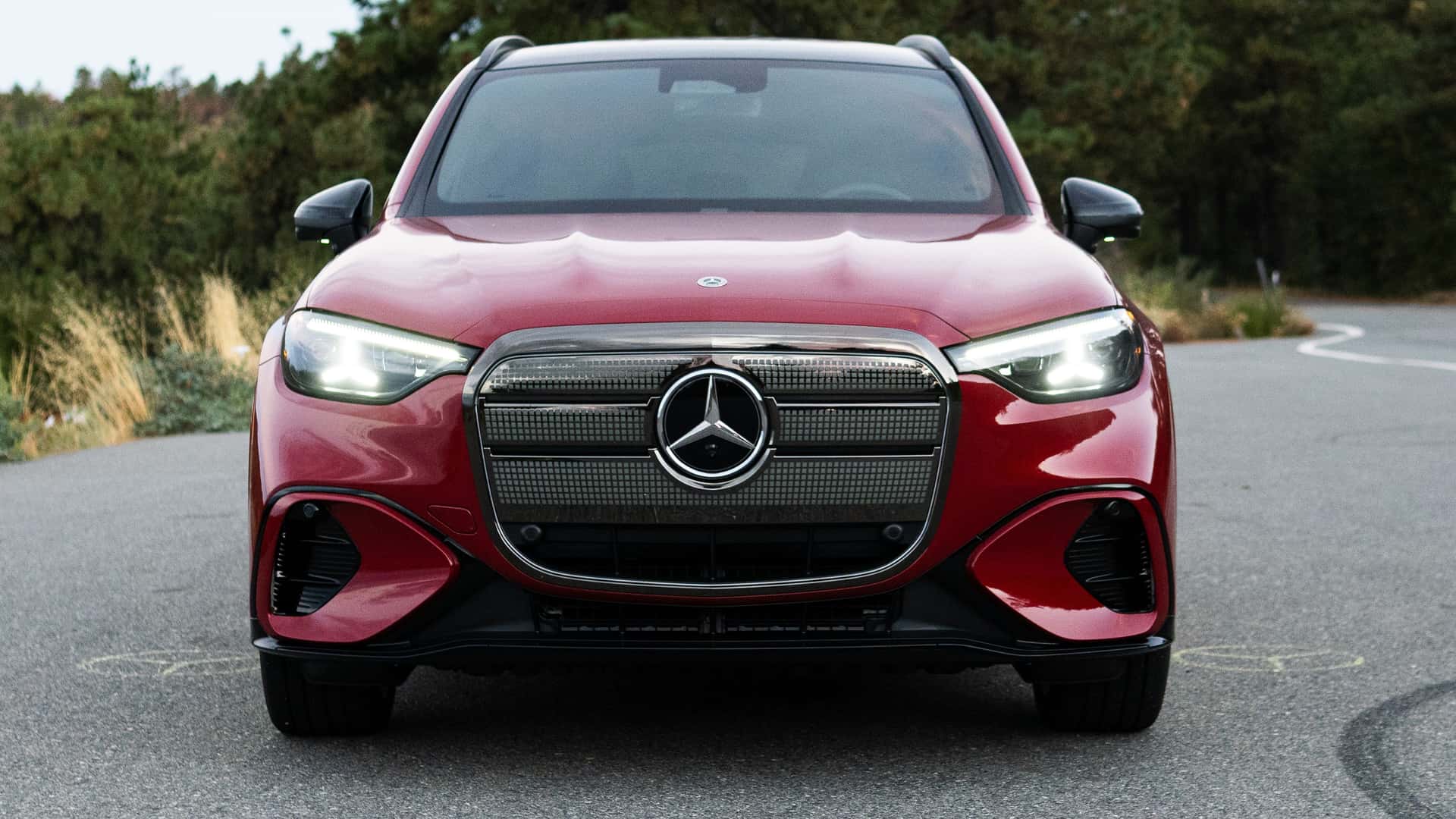
Stuttgart, Germany — Mercedes-Benz has announced a significant collaboration with Wayve, a UK-based autonomous-driving startup, to integrate advanced driver-assistance systems (ADAS) into its future vehicle lineup. This strategic partnership aims to deploy a sophisticated point-to-point driving assistant, akin to Tesla’s Full Self-Driving (Supervised) capabilities, within the next two years.
The deal underscores Mercedes-Benz’s aggressive push into the forefront of automotive artificial intelligence and automated driving technology. Wayve’s ‘AI Driver’ system is set to power what the companies describe as “advanced urban point-to-point driving assistance,” signifying a leap towards more comprehensive autonomous functionality in everyday driving scenarios.
Key Takeaways:
- Mercedes-Benz has partnered with UK-based Wayve for next-generation advanced driver-assistance systems.
- The collaboration will introduce a Wayve-powered point-to-point driving assistant in Mercedes vehicles within two years.
- Wayve’s ‘AI Driver’ system employs an end-to-end approach to automated driving, notably without requiring high-definition (HD) maps.
- This initiative expands Mercedes-Benz’s efforts in autonomous driving, running parallel to existing partnerships like that with Nvidia for similar technologies.
- The move reflects a growing industry trend towards advanced Level 2+ and Level 3 autonomous capabilities, with Mercedes aiming to be a leader in this competitive landscape.
Forging Ahead with AI Driver Technology
The core of this new agreement revolves around Wayve’s distinctive “AI Driver” technology. This system is designed to provide comprehensive point-to-point urban driving assistance, navigating complex environments such as city streets, intersections, and pedestrian zones with enhanced autonomy.
A key differentiator for Wayve’s approach lies in its end-to-end learning model. Unlike many traditional autonomous driving systems that rely heavily on pre-mapped high-definition (HD) maps, Wayve’s technology is engineered to operate efficiently without them. This could potentially streamline deployment across diverse geographical regions and dynamic urban landscapes, offering greater scalability and flexibility.
Mercedes-Benz, already an investor in Wayve, stated that this new agreement is a natural progression, building “on a multi-year technical partnership.” This existing relationship suggests a deep integration and a shared vision for the future of intelligent mobility solutions.

Strategic Implications and Market Positioning
While the announcement was concise on specific details regarding deployment markets and initial vehicle models, its implications for the automotive industry are substantial. Mercedes-Benz’s commitment to delivering such advanced capabilities within a two-year timeframe signals an accelerated race for leadership in the autonomous driving sector.
The collaboration comes amidst Mercedes-Benz’s existing initiatives in advanced driver-assistance systems. The automaker has a prominent partnership with Nvidia, aimed at developing its own point-to-point system. Last year, Mercedes demonstrated MB.Drive Assist Pro, an Nvidia-based solution designed to guide vehicles to their destination under driver supervision, handling intricate traffic scenarios.
The coexistence of these two major partnerships — one with Wayve and another with Nvidia — raises questions about Mercedes-Benz’s long-term strategy. It could indicate a dual-track approach, exploring different technological pathways to achieve superior advanced driver-assistance systems, or a modular strategy where different partners contribute to specific functionalities or markets.
Mercedes-Benz’s Legacy in Driver Assistance
Mercedes-Benz has historically been a pioneer in developing sophisticated driver assistance technologies. In the late 1990s, the company introduced its radar-based Distronic system on the S-Class, a groundbreaking innovation that enabled vehicles to automatically adjust speed in response to the vehicle ahead. This marked a significant step towards adaptive cruise control and predictive driving functions.
More recently, in 2023, Mercedes-Benz achieved another industry first by launching Drive Pilot in the United States. This system was the first Level 3 driver-assistance software available to customers in California and Nevada. Operating hands- and eyes-free under specific highway conditions and at low speeds, Drive Pilot represented a critical milestone in semi-autonomous driving, shifting legal responsibility from the driver to the vehicle under certain circumstances.
However, earlier this year, Mercedes opted to pause the expansion of Drive Pilot, reportedly to reallocate resources and sharpen its focus on the point-to-point project being developed with Nvidia. This strategic pivot highlights the company’s dynamic approach to ADAS development, prioritizing comprehensive, supervised point-to-point navigation as a key immediate goal.
The Competitive Landscape of Autonomous Driving
The announcement of the Wayve partnership positions Mercedes-Benz squarely in the intensifying global race for advanced driver-assistance systems leadership. Competitors worldwide are similarly striving to develop and deploy highly automated driving features, recognizing their potential to transform mobility and enhance vehicle safety and convenience.
Tesla, with its Full Self-Driving (Supervised) system, has often been seen as a benchmark in the industry, offering point-to-point navigation capabilities that traverse varied urban and highway environments. This aggressive push by Tesla has spurred other traditional automakers and technology companies to accelerate their own development cycles.
Other major players are also making significant strides. Rivian, for instance, has announced plans to introduce a point-to-point upgrade to its Autonomy+ system this year. Toyota is reportedly targeting a Level 2++ feature launch by 2028. Hyundai has engaged Nvidia for near-term Level 2+ capabilities while simultaneously developing its proprietary Atria AI system for later in the decade.
Even luxury electric vehicle manufacturer Lucid is leveraging Nvidia’s advanced computing platforms for its autonomous driving solutions. These widespread collaborations and in-house development efforts underscore the industry-wide consensus on the importance of advanced driver-assistance systems for future vehicle differentiation and market share.
Wayve’s Expanding Influence
Wayve, though a newer entrant compared to some industry giants, is rapidly becoming a pivotal force in the autonomous driving ecosystem. The UK startup’s innovative approach to AI-powered driving has attracted considerable interest and investment.
Beyond its deepened partnership with Mercedes-Benz, Wayve has successfully secured collaborations with other prominent global automakers. Over the past year, the company has announced deals to integrate its cutting-edge technology into vehicles from Stellantis and Nissan, showcasing its growing footprint and the industry’s confidence in its end-to-end AI models.
As the automotive sector increasingly transitions towards software-defined vehicles and AI-driven functionalities, partnerships with specialized technology providers like Wayve are becoming crucial for automakers seeking to deliver next-generation advanced driver-assistance systems that meet evolving consumer expectations and regulatory standards.
The Road Ahead for Mercedes-Benz
Mercedes-Benz’s collaboration with Wayve marks a clear commitment to integrating advanced artificial intelligence into its vehicles, moving towards a future where sophisticated driving assistants redefine the driving experience. The planned deployment of Wayve’s “AI Driver” within the next two years will be a critical milestone, offering Mercedes-Benz customers a taste of highly automated, point-to-point navigation.
The concurrent development efforts with both Wayve and Nvidia illustrate Mercedes-Benz’s comprehensive strategy to explore multiple avenues in advanced driver-assistance systems. This multi-pronged approach aims to ensure that the luxury automaker remains at the forefront of innovation, delivering trusted, safe, and highly capable autonomous driving technologies to the global market.
FAQ
What is the new partnership between Mercedes-Benz and Wayve?
Mercedes-Benz has partnered with Wayve, a UK-based autonomous-driving startup, to develop and integrate advanced urban point-to-point driving assistance systems into future Mercedes vehicles, aiming for deployment within two years.
What makes Wayve’s ‘AI Driver’ technology unique?
Wayve’s ‘AI Driver’ uses an end-to-end deep learning approach that allows its autonomous driving system to operate without the need for high-definition (HD) maps, potentially offering greater scalability and adaptability in diverse driving environments.
How does this deal relate to Mercedes-Benz’s existing collaboration with Nvidia?
Mercedes-Benz also has a partnership with Nvidia for its MB.Drive Assist Pro, another point-to-point driver assistance system. The Wayve deal appears to be a parallel or complementary initiative, suggesting a multi-faceted strategy for developing advanced driver-assistance systems.
What kind of capabilities will the new system offer?
The Wayve-powered system is designed to provide “advanced urban point-to-point driving assistance,” implying the ability to navigate from a starting point to a destination through complex city environments under driver supervision.
What is Mercedes-Benz’s history with advanced driver-assistance systems?
Mercedes-Benz introduced radar-based Distronic cruise control in the late 1990s and launched Drive Pilot, the first Level 3 hands- and eyes-free driver-assistance system in the US, in 2023, showcasing a long history of innovation in ADAS.
Which other automakers are Wayve partnering with?
Wayve is expanding its influence in the autonomous driving sector through partnerships with other major automakers, including Stellantis and Nissan, demonstrating the industry’s increasing interest in its unique AI-driven technology.