
Key Takeaways
- Mercedes-Benz has partnered with UK-based autonomous driving startup Wayve to integrate its ‘AI Driver’ technology into future vehicles.
- The collaboration aims to deliver an advanced urban point-to-point driving assistant, akin to Tesla’s Full Self-Driving (Supervised), within the next two years.
- Wayve’s distinctive ‘end-to-end’ approach to automated driving differentiates itself by not requiring high-definition (HD) maps.
- This new alliance builds upon Mercedes-Benz’s existing multi-year technical partnership with Wayve, in which Mercedes-Benz is also an investor.
- The development raises questions about its integration with Mercedes-Benz’s ongoing collaboration with Nvidia for its MB.Drive Assist Pro system.
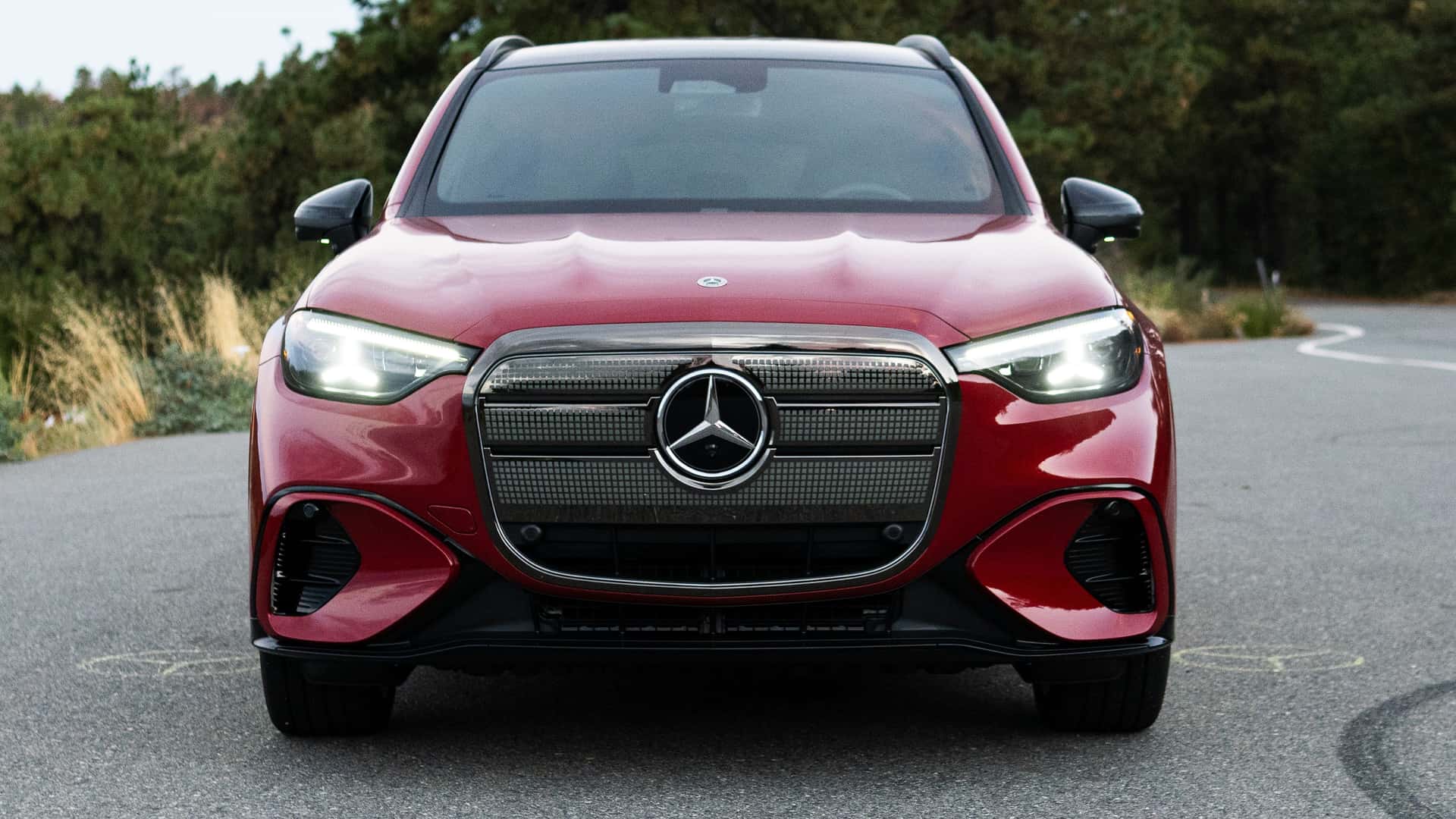
Mercedes-Benz, a global leader in luxury automobiles, has announced a strategic partnership with Wayve, a United Kingdom-based autonomous driving startup. This collaboration is set to significantly advance Mercedes-Benz’s autonomous driving technology, with plans to introduce a sophisticated point-to-point driving assistant within the next two years.
The agreement focuses on integrating Wayve’s innovative ‘AI Driver’ technology into future Mercedes-Benz vehicles. This move aims to deliver what the companies describe as “advanced urban point-to-point driving assistance,” a capability often compared to Tesla’s lauded Full Self-Driving (Supervised) system.
Wayve’s AI Driver: A New Paradigm in Autonomous Driving
At the core of this partnership is Wayve’s distinctive approach to automated driving. The startup champions an ‘end-to-end’ system that notably does not rely on high-definition (HD) maps, a technology often considered a cornerstone for many contemporary autonomous vehicle systems.
This innovative method allows Wayve’s ‘AI Driver’ to learn and adapt from real-world driving data, promising a more scalable and adaptable solution for complex urban environments. The absence of HD map dependency could potentially simplify deployment across diverse geographic regions and evolving road conditions.
Mercedes-Benz has been an investor in Wayve and this latest development signifies a deepening of their existing multi-year technical partnership. The transition from investor to primary technology partner underscores the confidence Mercedes-Benz places in Wayve’s pioneering autonomous driving technology.
Expanding Mercedes-Benz’s Advanced Driver-Assistance Systems
The integration of Wayve’s technology is expected to augment Mercedes-Benz’s already robust suite of advanced driver-assistance systems (ADAS). While specific details regarding market availability or initial vehicle models remain undisclosed, the announcement marks a clear direction towards enhanced automation for the marque.
Historically, Mercedes-Benz has been at the forefront of automotive innovation, pioneering radar-based cruise control with its Distronic system in the late 1990s. This early adaptive cruise control system modulated vehicle speed effectively in response to the vehicle ahead, setting a benchmark for future ADAS developments.
Navigating Multiple Autonomous Driving Collaborations
This latest announcement regarding Wayve prompts questions about its relationship with Mercedes-Benz’s existing collaboration with Nvidia. Mercedes-Benz has been working with Nvidia to develop its own point-to-point system, known as MB.Drive Assist Pro.
Last year, Mercedes-Benz showcased the MB.Drive Assist Pro, an Nvidia-based system designed to navigate complex scenarios, including pedestrians and traffic lights, guiding the vehicle to its destination under driver supervision. Despite the CLA model being available, the MB.Drive Assist Pro system has yet to reach customer hands.
The company has not yet provided clarity on how these two significant partnerships—with Wayve and Nvidia—will harmonise or potentially overlap in the development and deployment of Mercedes-Benz autonomous driving technology. This multi-faceted approach suggests a comprehensive strategy to accelerate the integration of cutting-edge ADAS capabilities.
The Race for Point-to-Point Autonomous Driving
The automotive industry is currently engaged in a highly competitive race to develop and deploy advanced point-to-point driving assistants. Tesla’s Full Self-Driving (Supervised) system is often cited as a key benchmark, pushing other automakers to enhance their own Mercedes-Benz autonomous driving technology offerings.
In a notable strategic shift earlier this year, Mercedes-Benz reportedly paused the broader expansion of its Drive Pilot system. This decision was made to reallocate resources and intensify focus on its point-to-point projects, including the one with Nvidia, and now, significantly, with Wayve.
Drive Pilot: A Milestone in Level 3 Autonomy
In 2023, Mercedes-Benz achieved a significant milestone by becoming the first automaker in America to sell a driver-assistance system that did not require constant driver supervision. Known as Drive Pilot, this Level 3 autonomous driving technology could operate hands- and eyes-free under specific conditions.
Drive Pilot’s operation was restricted to certain highways in California and Nevada, functioning reliably at low speeds. This certification as the country’s first Level 3 software underscored Mercedes-Benz’s commitment to advancing automotive autonomy and setting new industry standards for Mercedes-Benz autonomous driving technology.
The Broader Landscape of Autonomous Innovation
The pursuit of advanced Mercedes-Benz autonomous driving technology extends across the industry. Rivian, for instance, has announced plans to launch a point-to-point upgrade to its Autonomy+ system later this year. Toyota is reportedly aiming to introduce its own Level 2++ feature by 2028.
Hyundai has also engaged with Nvidia for near-term Level 2+ capabilities while simultaneously developing its in-house Atria AI system for later in the decade. Luxury electric vehicle manufacturer Lucid is also collaborating with Nvidia, highlighting the pervasive influence of chip technology in this evolving sector.
Wayve, the UK startup now integral to Mercedes-Benz’s plans, has rapidly emerged as a key player in this dynamic field. Over the past year, the company has secured agreements to supply its advanced autonomous driving technology to other major automotive groups, including Stellantis and Nissan.
These partnerships underscore Wayve’s growing reputation and the industry’s increasing interest in its unique AI-driven, mapless approach to autonomous driving. The collaboration with Mercedes-Benz positions Wayve at the forefront of delivering next-generation driver-assistance features to a global luxury market.
The strategic alliance between Mercedes-Benz and Wayve signals a significant leap forward in the development of sophisticated driver-assistance systems. As the automotive world continues its transition towards more autonomous vehicles, this partnership is poised to shape the future of intelligent mobility.
Frequently Asked Questions (FAQ)
What is the core of Mercedes-Benz’s new partnership with Wayve?
Mercedes-Benz is collaborating with Wayve to integrate its ‘AI Driver’ technology into future vehicles. This partnership aims to introduce an advanced urban point-to-point driving assistant, enhancing Mercedes-Benz autonomous driving technology, similar to Tesla’s FSD (Supervised), within two years.
What makes Wayve’s ‘AI Driver’ technology unique?
Wayve’s ‘AI Driver’ stands out due to its ‘end-to-end’ approach, which enables autonomous driving without the need for high-definition (HD) maps. This characteristic distinguishes it from many traditional systems, potentially offering greater flexibility and scalability for Mercedes-Benz autonomous driving technology in diverse environments.
How does this deal affect Mercedes-Benz’s existing collaboration with Nvidia?
Mercedes-Benz already has an ongoing partnership with Nvidia for its MB.Drive Assist Pro, another point-to-point system. The company has not yet clarified how these two significant collaborations will integrate or operate alongside each other within its overall strategy for Mercedes-Benz autonomous driving technology.
What is Mercedes-Benz’s ‘Drive Pilot’ system?
Drive Pilot is Mercedes-Benz’s Level 3 autonomous driving system, which in 2023 became the first in America to allow hands- and eyes-free operation under specific conditions. It functions on certain highways in California and Nevada at low speeds, marking a significant step in the development of Mercedes-Benz autonomous driving technology.
When can we expect to see Wayve-powered features in Mercedes-Benz vehicles?
According to the announcement, Mercedes-Benz plans to deploy Wayve-based point-to-point driving assistance in its vehicles within the next two years. The specific markets or initial models that will receive this advanced Mercedes-Benz autonomous driving technology have not yet been detailed.