
Key Takeaways
- Mercedes-Benz has partnered with UK-based autonomous-driving startup Wayve to integrate its ‘AI Driver’ technology into future vehicles.
- This collaboration aims to deliver an advanced urban point-to-point driving assistant, akin to Tesla’s Full Self-Driving (Supervised), within the next two years.
- Wayve’s technology employs an ‘end-to-end’ AI approach that does not rely on high-definition (HD) maps, a notable departure from some traditional autonomous driving systems.
- The new deal with Wayve complements Mercedes-Benz’s existing collaborations, including a partnership with Nvidia for a similar point-to-point system, MB.Drive Assist Pro.
- This move underscores a broader industry shift towards sophisticated point-to-point driver assistance, with multiple automakers now actively developing or deploying such features.
Mercedes-Benz Forges Partnership with Wayve for Next-Generation Driving Assistance
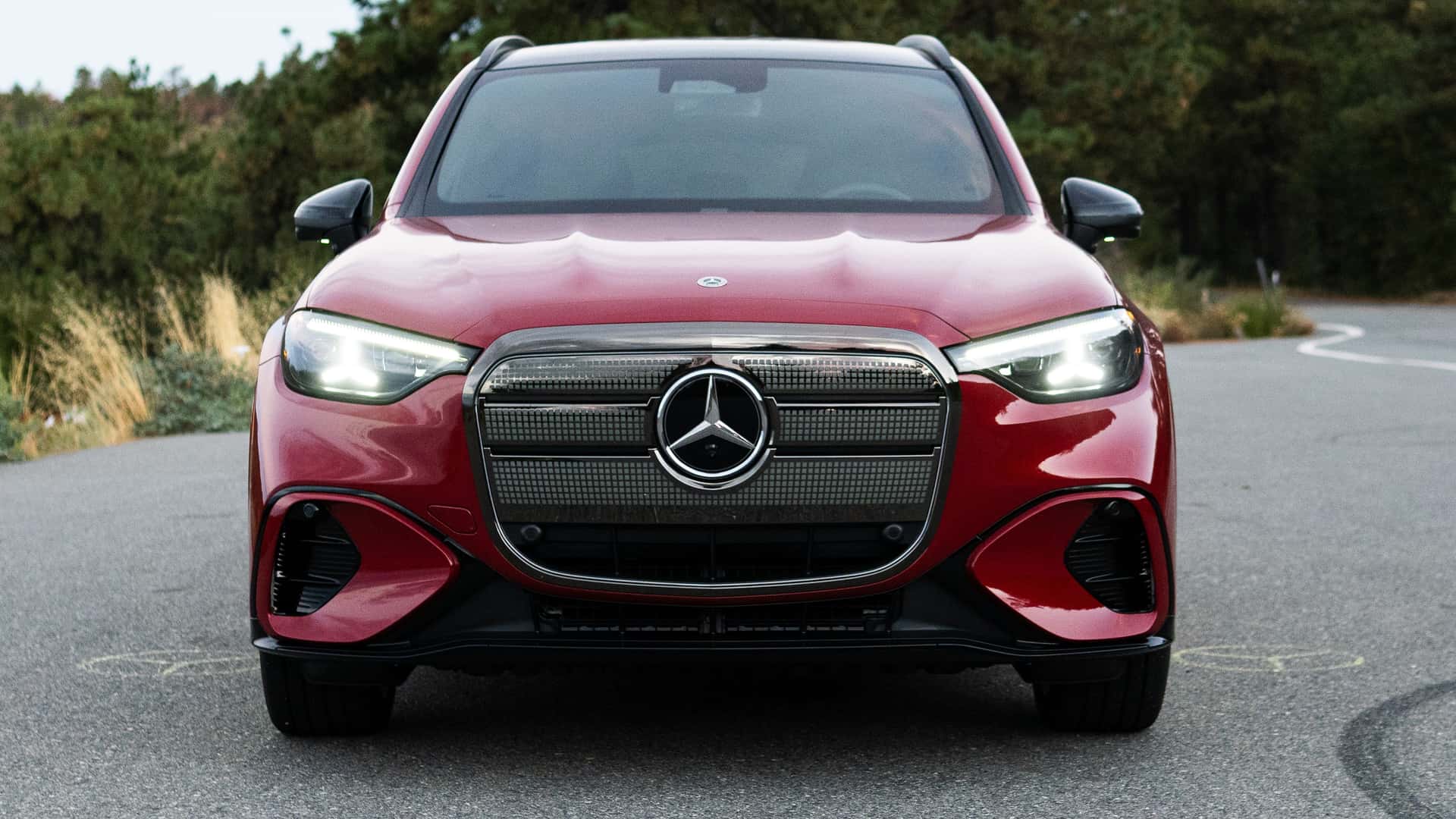
Stuttgart-based luxury automotive giant Mercedes-Benz has announced a strategic collaboration with Wayve, a United Kingdom-based autonomous-driving startup. The partnership, revealed on Tuesday, is set to integrate Wayve’s advanced ‘AI Driver’ technology into future Mercedes-Benz vehicles. This initiative aims to introduce sophisticated urban point-to-point driving assistance capabilities, a system conceptually similar to Tesla’s widely discussed Full Self-Driving (Supervised) feature, within the next two years.
The announcement signifies Mercedes-Benz’s accelerated pursuit of advanced driver-assistance systems (ADAS) that offer comprehensive navigation and control across diverse driving environments. The integration of Wayve’s technology is expected to enhance vehicle autonomy, providing a more intuitive and capable driving experience under specified conditions.
Wayve’s AI Driver: A Paradigm Shift in Autonomous Technology
At the heart of this new collaboration is Wayve’s innovative ‘AI Driver’ system, which distinguishes itself through an ‘end-to-end’ approach to automated driving. This method fundamentally differs from many conventional autonomous systems by not requiring pre-loaded high-definition (HD) maps. Instead, Wayve’s technology leverages artificial intelligence and machine learning to interpret real-time sensor data, enabling vehicles to learn and adapt to various road conditions and traffic scenarios dynamically.
This mapless approach could potentially offer greater scalability and flexibility for deployment in diverse geographic regions, reducing the reliance on intricate, constantly updated mapping infrastructure. Wayve has publicly advocated for its AI-driven methodology, emphasizing its potential to unlock more robust and adaptable autonomous driving capabilities.
Bridging Existing Collaborations: Nvidia and Wayve’s Role
The recent announcement with Wayve adds another significant layer to Mercedes-Benz’s multifaceted strategy in advanced driver-assistance systems. Mercedes-Benz has previously engaged in a substantial collaboration with Nvidia, a leading developer of graphics processing units and AI computing platforms, to develop its own proprietary point-to-point system known as MB.Drive Assist Pro.

This Nvidia-based system, which promises to guide a vehicle to its destination under driver supervision while adeptly handling complex urban situations such as pedestrians and traffic lights, was demonstrated last year. While the CLA model, intended to feature MB.Drive Assist Pro, is currently on sale, the system itself has yet to reach customer vehicles.
The precise interplay between the Wayve and Nvidia agreements remains somewhat undefined in the public domain. However, Wayve confirmed that its new deal with Mercedes-Benz is built upon a “multi-year technical partnership,” underscoring an existing relationship where Mercedes also holds an investor stake in the UK startup. This suggests a complementary rather than competitive dynamic, potentially allowing Mercedes-Benz to diversify its ADAS technology portfolio and accelerate development across different platforms or vehicle segments.
Mercedes-Benz’s Legacy and Future in Driving Automation
Mercedes-Benz has a long-standing history of pioneering innovations in automotive safety and driver convenience. The manufacturer introduced its radar-based Distronic system, which automatically adjusts vehicle speed in response to the car ahead, on the S-Class in the late 1990s. This early foray into adaptive cruise control laid foundational groundwork for future autonomous functionalities.
More recently, in 2023, Mercedes-Benz achieved a significant milestone by becoming the first automaker to sell a Level 3 driver-assistance system in the United States. Its Drive Pilot system allows for hands- and eyes-free operation on specific highways in California and Nevada at low speeds, marking a critical step towards true conditional automation where the system, not the driver, is responsible for dynamic driving tasks under defined operational design domains.
Despite the success of Drive Pilot, Mercedes-Benz recently paused its expansion, signaling a strategic pivot. The company shifted its focus towards developing comprehensive point-to-point driving assistants, a project that was initially spearheaded by its collaboration with Nvidia. The Wayve partnership now further strengthens this strategic direction, emphasizing a commitment to bringing highly capable, AI-driven navigation systems to market.
The Global Race for Point-to-Point Driving Assistants
The automotive industry is witnessing an intense global race to develop and deploy advanced point-to-point driving assistants, with Tesla’s Full Self-Driving (FSD) system often cited as a key benchmark. Automakers worldwide are actively investing in autonomous driving technology to offer enhanced convenience and safety features to consumers.
Rivian, the American electric vehicle manufacturer, has announced plans to launch a point-to-point upgrade for its Autonomy+ system within the current year. Japanese automotive giant Toyota is reportedly targeting a 2028 release for its own Level 2++ feature, indicating a calculated, long-term approach to advanced autonomy.
South Korean automaker Hyundai has also engaged Nvidia for Level 2+ capabilities in the immediate future, while simultaneously developing its in-house Atria AI system for deployment later this decade. Similarly, Lucid Motors, another prominent electric vehicle producer, is collaborating with Nvidia to advance its ADAS offerings.
Wayve, with its distinct AI-first approach, has emerged as a significant player in this evolving landscape. Over the past year, the UK startup has successfully forged agreements to integrate its technology into vehicles from other major automotive groups, including Stellantis and Nissan. These multi-faceted collaborations underscore Wayve’s growing influence and the industry’s recognition of its innovative artificial intelligence solutions for autonomous driving.
Frequently Asked Questions (FAQ)
What is Wayve’s ‘AI Driver’ technology?
Wayve’s ‘AI Driver’ is an autonomous driving system that uses an end-to-end artificial intelligence approach. Unlike systems reliant on pre-defined high-definition maps, it processes real-time sensor data through deep learning, allowing vehicles to perceive, understand, and navigate complex environments dynamically and adaptively.
How does this partnership compare to Mercedes-Benz’s deal with Nvidia?
Mercedes-Benz already has a partnership with Nvidia for its MB.Drive Assist Pro, another point-to-point driving assistant. The Wayve deal complements this, potentially broadening Mercedes’ technological base or addressing different development pathways for advanced driver assistance systems, leveraging Wayve’s distinct AI methodology.
What does ‘point-to-point driving assistance’ mean?
Point-to-point driving assistance refers to a system that can autonomously navigate a vehicle from a specified origin to a destination, managing various driving tasks like lane changes, traffic light interpretation, and urban maneuvering, typically under driver supervision, enhancing overall driving convenience.
When can consumers expect to see Wayve’s technology in Mercedes cars?
Mercedes-Benz and Wayve aim to deploy the new Wayve-based advanced urban point-to-point driving assistant in Mercedes vehicles within the next two years. Specific vehicle models or initial markets for this rollout are yet to be officially announced.
What is Level 3 autonomy, and how does Drive Pilot fit in?
Level 3 autonomy, like Mercedes-Benz’s Drive Pilot, means the vehicle can handle most driving tasks under specific conditions, allowing the driver to disengage from driving. However, the driver must be ready to take over when prompted. Drive Pilot is currently the only Level 3 system approved for sale in certain US states.
Why is Wayve’s ‘mapless’ approach significant?
A ‘mapless’ approach, as employed by Wayve, is significant because it reduces reliance on costly and constantly updated high-definition maps. By using real-time AI processing of sensor data, the system could offer greater flexibility, scalability, and adaptability to new or changing road environments globally, simplifying deployment.