
The surge in electric vehicle (EV) adoption heralds a new era of sustainable transport, promising reduced emissions and lower operational costs due to fewer traditional maintenance requirements. However, a significant question has emerged concerning a often-overlooked aspect of EV ownership: the lifespan of their tires. Anecdotal evidence among EV owners suggests tires may degrade faster than those on conventional internal combustion engine (ICE) vehicles, leading to increased replacement frequency and costs.
This widespread perception prompts a critical examination: is the notion of accelerated EV tire wear a persistent myth, or does it reflect a quantifiable reality? Understanding the underlying physics and scrutinizing available research is crucial for both prospective buyers and existing EV enthusiasts.

Key Takeaways
- Electric vehicles generally exhibit higher tire wear due to increased weight and instantaneous torque delivery, imposing greater strain during acceleration, braking, and cornering.
- Multiple studies, including research from Korea and Germany’s ADAC, corroborate higher wear rates for EVs compared to gasoline or diesel cars, with differences ranging from 20% to over 30% in various metrics.
- Driving style is a paramount factor, often outweighing vehicle characteristics in determining tire longevity. Aggressive driving significantly shortens tire lifespan, regardless of vehicle type.
- EV-specific tires are engineered to mitigate these challenges, offering enhanced durability, load capacity, and noise reduction, though conventional tires meeting specifications can also be suitable.
- Proactive tire maintenance, including proper inflation, regular rotation, and smooth driving inputs, remains critical for maximising the lifespan of electric vehicle tires.
The Physics Behind Potential EV Tire Degradation
At the heart of the debate surrounding EV tire wear lies fundamental physics. Electric vehicles, particularly those with larger battery packs, are inherently heavier than their combustion-engine counterparts. This substantial extra mass places greater demands on tires during every driving manoeuvre, from initial acceleration and sudden braking to navigating corners.
The added weight translates to increased friction and heat generation within the tire compound, directly contributing to faster material degradation. Furthermore, the characteristic instantaneous torque delivery of electric motors, which provides exhilarating acceleration, also subjects tires to immense stress. Unlike ICE vehicles, where power delivery is often more gradual, EVs can unleash full torque almost instantly, causing greater shear forces on the tire surface.
Impact of Weight and Torque
Germany’s ADAC, a prominent automobile association, has thoroughly investigated the factors influencing tire wear. Their findings indicate that both vehicle weight and individual driving behaviour are primary contributors to increased wear. While ADAC acknowledges the impressive, often ‘brutal’ instant power of EVs, it emphasizes that the mere availability of high torque does not automatically translate to constant, aggressive use.

According to ADAC, the actual driving style—how frequently and intensely a driver exploits that power—holds more sway over tire longevity than the vehicle’s inherent torque capacity. This nuanced perspective underscores that while physics creates the potential for faster wear, human behaviour largely dictates its manifestation.
Examining the Empirical Evidence: What Studies Reveal
Several academic and industry studies have attempted to quantify the difference in tire wear between electric and conventional vehicles. The findings, while largely pointing towards higher EV tire degradation, also highlight the complexities and variables involved in such comparisons.
Korean Research on Tread Wear
A pivotal 2022 study published in the journal Science of the Total Environment offered direct, controlled evidence. Korean researchers meticulously measured the average tread wear of an electric vehicle against comparable gasoline and diesel cars over a standardized 550-kilometer (approximately 341-mile) route. The results were telling: the tested EV exhibited an average tread wear of 201.7 milligrams per kilometre.
In stark contrast, the gasoline car registered 158.9 mg/km, and the diesel vehicle showed 167.4 mg/km. This indicates that the EV’s tires wore approximately 27% faster than the gasoline car’s and 20% faster than the diesel car’s under the specific test conditions. While these findings provide clear evidence for the tested vehicles and route, they don’t necessarily offer a universal tire-life forecast for all EVs.
Fleet Data from Epyx
Real-world data from fleet management companies offers another perspective. In a 2025 report, fleet management company Epyx analysed tire replacement records for company cars. Their findings suggested that electric company cars required their first tire replacement significantly sooner, averaging around 23,100 kilometres (approximately 14,352 miles).
This contrasted with combustion-engine cars, which averaged 29,500 kilometres (around 18,333 miles) before their first tire change. This represents roughly 22% fewer miles between tire changes for EVs. However, Epyx itself acknowledged a critical limitation: its EV sample predominantly consisted of larger vehicles. Larger, heavier cars inherently wear out tires faster than smaller ones, introducing a potential bias into the comparison.
Particle Emissions and Lifespan Correlations
Beyond tread depth, tire wear also contributes to environmental concerns through particle emissions. A 2026 study featured in Environmental Research delved into this aspect by comparing electric and combustion versions of the same car model. The study found that, on average, EVs released approximately 31% more particles from their tires and the road surface during operation. It is important to note that while particle emissions correlate with wear, this study measured the quantity of particles released, not the actual longevity or mileage of the tires.
Similarly, a 2026 study published in Mechanika estimated that EV tires might last 35–62% fewer kilometres than those on combustion cars. However, this comparison also suffered from methodological differences: the EVs involved in the study undertook more city driving and followed different routes. Stop-and-go city driving is known to be considerably harder on tires than continuous cruising at consistent speeds, making it challenging to isolate whether the observed accelerated wear was solely due to the EV characteristics or largely influenced by the driving environment.
UTAC’s Controlled Comparative Testing
In an effort to provide a more controlled comparison, UTAC conducted testing for the car industry groups ACEA (European Automobile Manufacturers’ Association) and OICA (International Organization of Motor Vehicle Manufacturers). This test involved one electric BMW iX1 and five combustion X1s, driven together over a substantial distance of 15,000 kilometres (approximately 9,300 miles).
The results initially showed that the electric iX1 lost more rubber per kilometre than its combustion counterpart. However, when researchers adjusted for the inherent weight difference between the electric and combustion models—the iX1 EV being heavier—the disparity in wear largely vanished. This finding strongly suggests that the additional vehicle weight was the primary factor contributing to the increased tire wear observed in this specific, controlled comparison.
The Role of EV-Specific Tires in Mitigating Wear
Recognising the unique demands placed on electric vehicle tires, manufacturers have developed specialised rubber compounds and designs tailored for EVs. These EV-specific tires aim to address multiple performance criteria simultaneously, moving beyond just durability.
Engineered for EV Demands
These purpose-built tires are constructed from the outset to withstand the heavier loads imposed by EV battery packs. Their compounds and tread designs are specifically formulated to enhance durability and prolong lifespan under the increased stress of instant torque. Simultaneously, they are engineered to offer low rolling resistance, a critical factor in optimising an EV’s driving range.
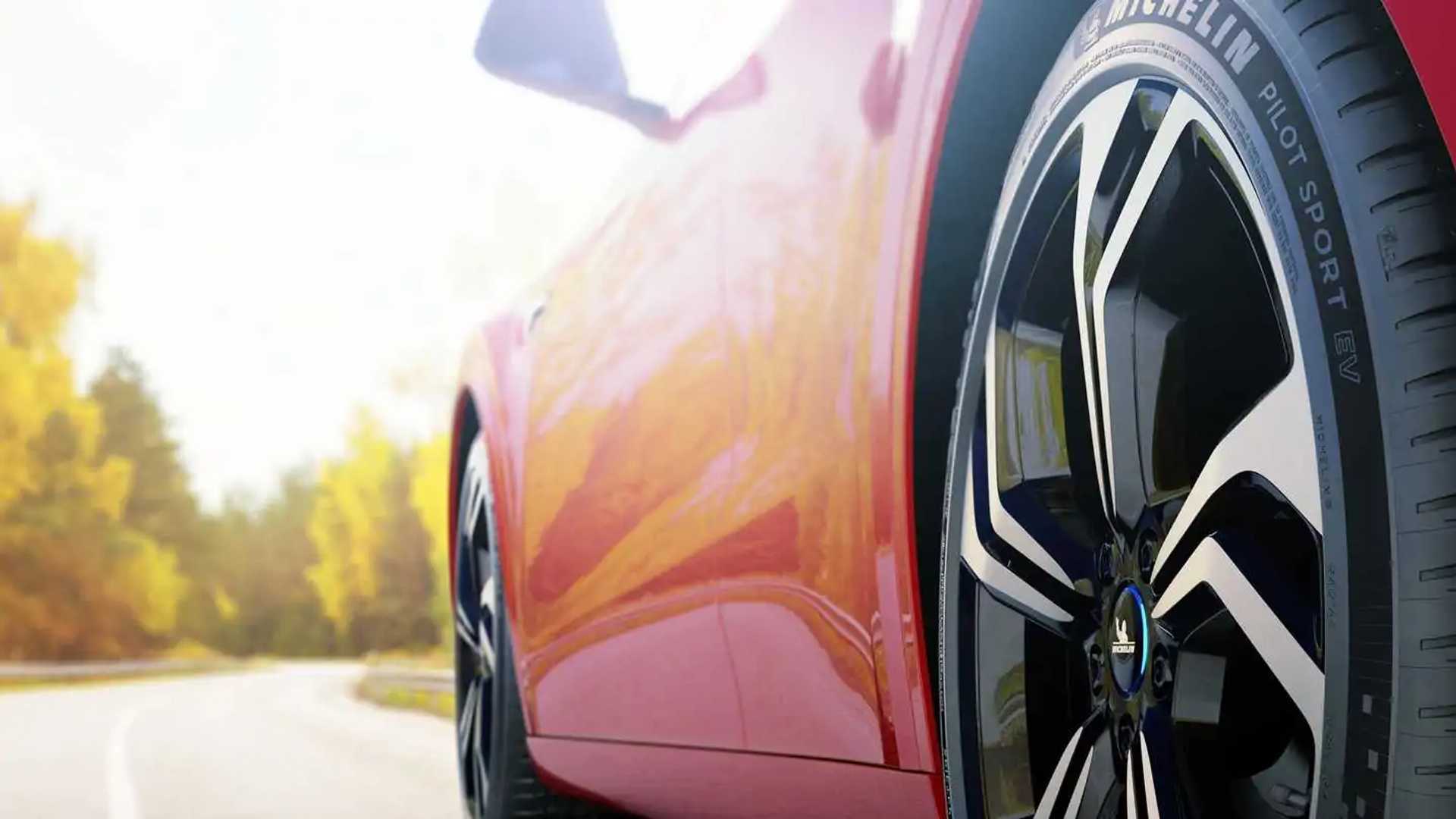
Another key feature is noise suppression. The near-silent operation of electric powertrains makes tire roar far more noticeable, prompting manufacturers to incorporate technologies like acoustic foam inside the tire structure to minimise cabin noise. Michelin, a leading tire manufacturer, clarifies that while these features are integrated into EV-specific tires, their purposes are distinct; for instance, a quieter tire is not automatically a longer-lasting one.
Durability Improvements and Compatibility
Many tire manufacturers, including Michelin, report continuous durability improvements across their newer tire lines designed to better handle the additional weight and high torque characteristics of electric vehicles. These advancements are vital for reducing the frequency and cost of tire replacements for EV owners.
However, it is important to note that an EV-specific marking is not always a strict prerequisite. ADAC advises that standard tires, provided they meet the vehicle’s specific requirements—including dimensions, speed rating, and crucially, load capacity—can also be perfectly suitable for electric vehicles. Owners should always consult their vehicle’s manual or a qualified tire expert to ensure proper tire selection.
Practical Strategies for Extending EV Tire Lifespan
While the inherent characteristics of electric vehicles contribute to faster tire wear, drivers can significantly influence tire longevity through proactive maintenance and mindful driving practices. These strategies are largely consistent with best practices for any vehicle, but their importance is amplified for EVs.
Driving Habits and Maintenance Fundamentals
The most impactful factor remains driving style. Smooth accelerator inputs, avoiding aggressive starts and rapid braking, significantly reduces the strain on tires. Gentle acceleration and gradual deceleration help distribute forces more evenly across the tire surface, slowing down tread wear. Regenerative braking in EVs can also be utilised smoothly to reduce reliance on friction brakes, further lessening tire stress.
Beyond driving habits, fundamental tire care is paramount. Maintaining the manufacturer’s recommended tire pressures is crucial for even tread wear and optimal performance. Under-inflated tires flex excessively, leading to heat buildup and accelerated wear on the shoulders, while over-inflation can cause excessive wear in the centre of the tread. Regular checks for uneven wear patterns can identify alignment issues or suspension problems before they cause irreversible tire damage.
Importance of Rotation and Selection
Following the manufacturer’s rotation guidance, where applicable, is another effective strategy. Regular tire rotation ensures that all four tires wear down more uniformly, potentially extending the overall life of a set. For electric vehicles, particularly those with uneven weight distribution or powerful dual motors, rotation can be even more critical.
When purchasing new tires for an EV, Michelin’s tire care guidance recommends considering not just the initial cost, but also key performance indicators such as predicted lifespan, grip characteristics (especially crucial for handling instant torque), braking performance, and impact on the vehicle’s range. Investing in high-quality tires designed to handle EV demands can be a wise long-term decision.
Conclusion: Navigating the Nuances of EV Tire Wear
The evidence unequivocally indicates that electric vehicles, owing to their increased weight and instantaneous power delivery, do indeed tend to wear out their tires faster than their internal combustion engine counterparts. This is not a mere myth but a reality supported by various studies and real-world observations.
However, the extent of this accelerated wear is far from a fixed universal figure. It is subject to a complex interplay of factors, including the specific vehicle model, the type of tires used, the environmental conditions, and, perhaps most crucially, the driver’s habits. By understanding these dynamics and adopting responsible driving and maintenance practices, EV owners can mitigate the impact of accelerated tire wear, ensuring a safer and more cost-effective ownership experience.
Frequently Asked Questions About EV Tire Wear
Do electric vehicles inherently wear tires faster than gasoline cars?
Yes, studies generally show that electric vehicles tend to wear tires faster. This is primarily due to their heavier weight, stemming from large battery packs, and the instant, high torque delivered by electric motors. These factors place greater stress on tires during acceleration, braking, and cornering.
What makes EV tires wear out quicker?
The two main culprits are increased vehicle weight and instant torque. Heavier EVs create more friction and heat, accelerating tread degradation. Instantaneous power delivery puts significant shear forces on the tires, especially during aggressive driving, leading to faster wear.
Are EV-specific tires necessary for electric vehicles?
While not always strictly necessary, EV-specific tires are designed to address the unique demands of electric vehicles. They often feature reinforced structures for heavier loads, compounds for durability and low rolling resistance, and acoustic foams for noise reduction. Standard tires can be suitable if they meet the EV’s load capacity and other specifications.
How much faster do EV tires wear compared to ICE vehicle tires?
The degree of accelerated wear varies significantly across studies and real-world scenarios. Some research indicates EVs can experience 20% to over 30% higher wear rates or require replacements 22% sooner. However, specific vehicle models, driving conditions, and driver behaviour heavily influence these figures.
What can EV owners do to extend their tire lifespan?
EV owners can significantly prolong tire life by adopting smooth driving habits, avoiding harsh acceleration and braking. Regular maintenance is also crucial: maintaining correct tire pressure, performing consistent tire rotations as per manufacturer guidance, and routinely checking for uneven wear patterns.
Does driving style affect EV tire wear more than vehicle weight?
Both vehicle weight and driving style play significant roles. While an EV’s inherent weight contributes to wear, aggressive driving habits, such as frequent hard acceleration and braking, can amplify this effect dramatically. Many experts suggest that conscious driving choices can mitigate a substantial portion of the weight-induced wear.
Is there an environmental impact associated with faster EV tire wear?
Yes, faster tire wear in EVs contributes to increased microplastic particle emissions from tires and the road surface. Studies suggest EVs can release more such particles compared to conventional cars. This aspect highlights the broader environmental considerations beyond tailpipe emissions in the lifecycle of electric vehicles.