
Key Takeaways:
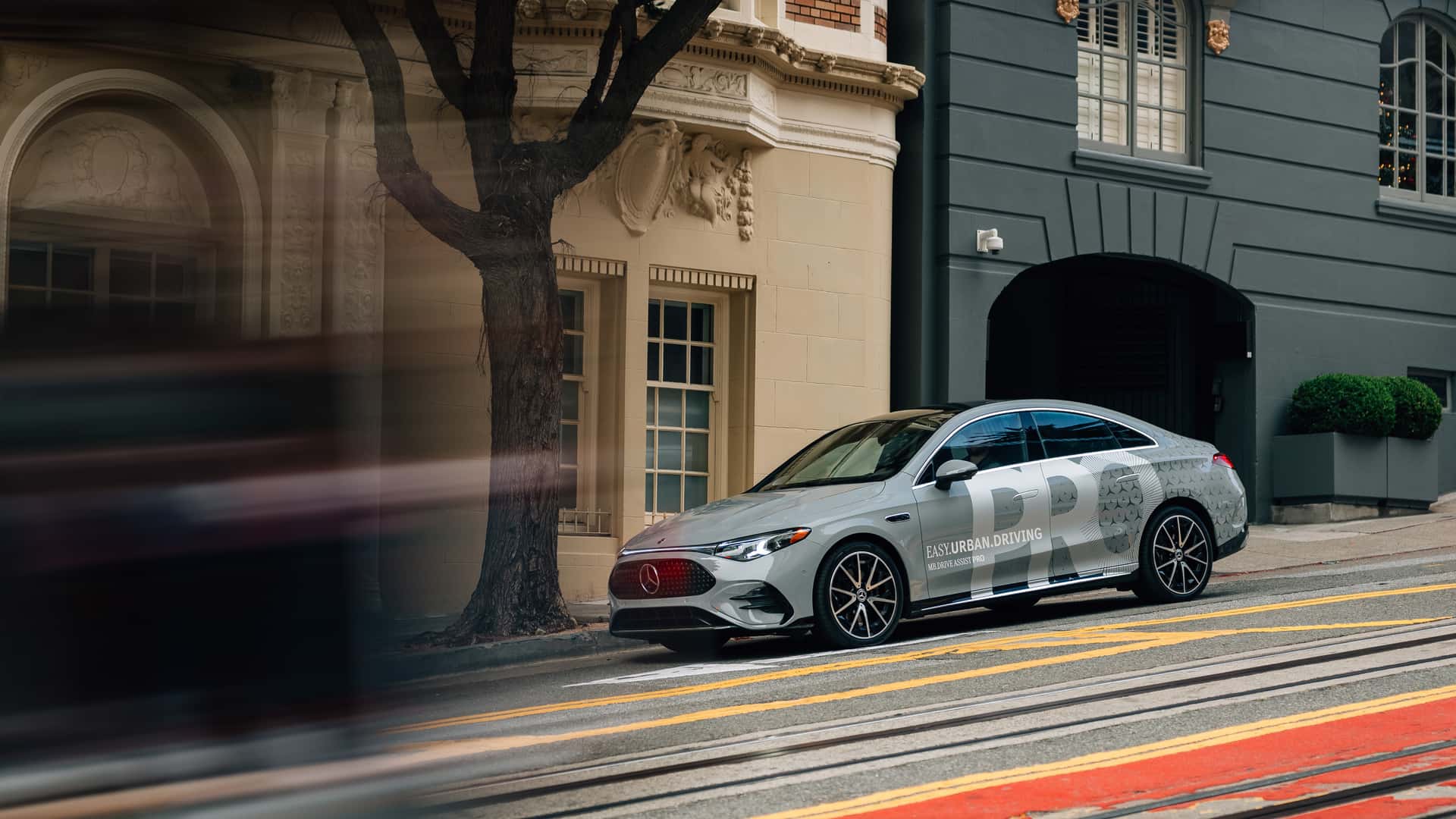
- Mercedes-Benz is set to roll out its MB.Drive Assist Pro autonomous driving technology, offering point-to-point navigation and automated parking.
- The system is classified as SAE Level 2, requiring drivers to keep hands on the wheel on surface streets, unlike Tesla’s FSD (Supervised) which allows hands-off driving in similar conditions.
- Mercedes emphasizes a philosophical adherence to defined autonomy levels, prioritizing driver responsibility at Level 2.
- MB.Drive Assist Pro utilizes a multi-sensor suite (cameras, radar, ultrasonic) for enhanced safety and perception, contrasting with Tesla’s camera-centric approach.
- Consumer reception is divided, with some valuing the hands-on requirement for safety, while others accustomed to Tesla’s hands-off experience find it a step backward.
For many commuters, the daily grind can be a tedious and endless ordeal. Consider Lucian Capellaro, whose routine drive through Laurel Canyon in Los Angeles’ west end often feels like a never-ending nightmare. Naturally, the allure of advanced driver assistance systems that promise to lighten this burden has grown considerably.
Capellaro, like many, has listened intently as colleagues praise the capabilities of Tesla’s Full Self-Driving (FSD) feature. The concept of simply entering a destination and allowing the car to navigate there autonomously sounds like a transformative solution. However, Capellaro’s preference lies beyond Tesla, citing reasons such as design aesthetics, interior quality, and overall body style.
A significant alternative is now emerging from Mercedes-Benz. The German luxury automaker is preparing to introduce its MB.Drive Assist Pro point-to-point automated driving system. This advanced autonomous driving technology is slated for integration into a wide array of the brand’s electric and internal combustion vehicles starting early next year. Existing eligible vehicles will also gain access to this feature through convenient over-the-air updates.
Mercedes-Benz Enters the Advanced Driver Assistance Race
The introduction of MB.Drive Assist Pro marks a pivotal moment in the ongoing evolution of driver assistance systems. Mercedes-Benz, known for its engineering prowess and commitment to safety, is entering a highly competitive segment traditionally dominated by innovators like Tesla.
This new system is designed to alleviate driver fatigue on long commutes and in complex urban environments, offering a sophisticated blend of convenience and intelligent control. Its rollout underscores a growing trend among premium automakers to equip their vehicles with cutting-edge autonomous driving capabilities.
MB.Drive Assist Pro: A New Contender
Much like Tesla’s Full Self-Driving (Supervised) feature, the Mercedes-Benz MB.Drive Assist Pro system empowers drivers to input a destination, with the vehicle then undertaking the entire journey, including parking. However, a fundamental distinction sets these two advanced driver assistance systems apart.
While the Mercedes system, like FSD, allows for hands-free operation on controlled-access highways, it mandates that drivers maintain a hand on the steering wheel when navigating surface streets. This critical operational difference reflects a broader philosophical divergence in the development of autonomous driving technology.
The Regulatory Framework: SAE Levels of Autonomy Explained
The distinction in driver engagement is not arbitrary but rooted in Mercedes-Benz’s strict interpretation of autonomous driving levels, as defined by the Society of Automotive Engineers (SAE). These globally recognized standards categorize vehicle automation from Level 0 (no automation) to Level 5 (full automation under all conditions).
MB.Drive Assist Pro, akin to FSD (Supervised), is classified as a Level 2 system, which Mercedes-Benz sometimes refers to as “Level 2 Plus Plus.” At this level, the driver is still considered primarily responsible for the vehicle’s operation and must remain engaged and ready to intervene. Features such as watching a movie or reading a book while the car drives are characteristic of Level 3 systems, where the vehicle assumes primary responsibility under specific conditions.
“There is a very important borderline between the levels,” Mercedes Chief Technology Officer Jörg Burzer told InsideEVs. “That borderline is that with Level 2 Plus Plus, you are responsible. At Level 3, the machine, the car, the software stack, is responsible.” This statement clearly outlines the company’s commitment to a phased, safety-first approach to advanced autonomous driving technology.
The Core Distinction: Hands-On Versus Hands-Off Driving
The requirement to keep hands on the wheel when using the Mercedes-Benz MB.Drive Assist Pro on surface streets is not an indicator of the system’s inferiority. Instead, it highlights Mercedes’ cautious and safety-centric development philosophy. The decision is deeply embedded in their understanding of driver responsibility and the complexities of varying driving environments.
Mercedes executives argue that while controlled-access highways present a relatively predictable environment for Level 2 systems, urban and surface streets are far more dynamic and complex. The presence of pedestrians, cyclists, varied road infrastructure, and unexpected events necessitates higher levels of driver attentiveness and readiness for immediate intervention.
Mercedes’ Adherence to Safety and Responsibility
This logical approach resonates with drivers like Lucian Capellaro, who, despite being a motorcycle rider and not risk-averse, understands the importance of immediate control. “Think about the reaction time it must be for someone to take their hands from off the wheel to on the wheel,” he reflected. “I’d view my hand on the wheel as lessening the seconds of reaction time to something crazy happening.” His perspective underscores a fundamental aspect of vehicle safety standards.
Jörg Burzer further noted that customer research, particularly among European drivers, tends to align with Capellaro’s viewpoint. “In the city, they like to have something, some regulation or some requirement that you have to have a hand on the wheel,” Burzer stated, though he added a caveat regarding the U.S. market, “I don’t know about U.S. customers yet.” The cultural and regulatory variances across regions undoubtedly influence driver preferences and expectations for autonomous driving technology.
When directly confronted with the question of why a consumer would opt for the Mercedes system over Tesla’s hands-off capability on surface streets, Burzer reiterated Mercedes’ focus on established regulations and the SAE levels of autonomy. He emphasized, “The big question is when is level 3 coming? Because then you can have the hands off (anywhere).” This stance reinforces Mercedes-Benz’s methodical progression towards higher levels of autonomous driving, prioritizing compliance and verifiable safety over perceived convenience.
User Expectations and the Tesla FSD Experience
However, many Tesla FSD users hold a different perspective, suggesting their vehicles are already performing at a level that transcends strict SAE definitions. These users often gauge their system’s capability by its real-world performance rather than regulatory classifications. Antonio Hidalgo, an L.A. resident and frequent FSD user, exemplifies this sentiment, admitting that he has occasionally napped while driving with the system engaged, with only minor flaws noted in parking.
Hidalgo’s assessment directly challenges Mercedes’ approach. “If the (Mercedes system) worked the same but I had to keep my hand on the wheel … You know, I probably wouldn’t (make the switch). I mean, I think I would be interested in having a nicer car with a better interior. But no.” This highlights that for some, the hands-off experience is a core value proposition that outweighs other vehicle attributes.
Mharlon Barrientos, who relies on FSD for his commute in Indianapolis, echoed this sentiment. After an initial period of “hovering” his hand over the wheel, system updates and prolonged experience have made him fully hands-off. “Having a hand on the wheel as a requirement would be a bit of a step back to the feel of full autonomous driving that I’ve gotten used,” Barrientos noted, emphasizing his adaptation to a truly hands-free experience over time.
Technological Approaches to Autonomous Driving
Beyond the philosophical differences, a significant divergence exists in the underlying technological architecture of these autonomous driving systems. This technological debate centers on the choice of sensors and how they perceive the vehicle’s environment.
Mercedes’ Multi-Sensor Strategy
Mercedes-Benz is quick to highlight the advantages of its robust sensor suite within MB.Drive Assist Pro. Unlike Tesla’s FSD (Supervised) which primarily relies on cameras, the Mercedes system integrates an array of diverse sensors. This comprehensive setup includes multiple cameras, five radar sensors, and 12 ultrasonic sensors, all feeding raw data into the car’s powerful Nvidia-powered computer.
This multi-sensor approach, often referred to as sensor fusion, is designed to create a more resilient and accurate perception of the vehicle’s surroundings. Christoph von Hugo, Mercedes’ Head of Active Safety, stated, “Different sensor inputs increases performance and safety.” He added, in veiled references to what he perceived as Tesla’s less comprehensive strategy, that “Relying on one just is not enough.” Mercedes maintains that this redundancy and diversity in sensing mechanisms are crucial for mitigating risks and enhancing overall vehicle safety, especially as autonomous driving technology advances.
Furthermore, Mercedes-Benz is clear that its progression to higher levels of autonomy, specifically Level 3 capability, will necessitate the addition of LiDAR technology. This sophisticated laser-based sensing system will complement the existing cameras, radar, and ultrasonic sensors, providing an even more precise environmental map. (It is worth noting that Mercedes did briefly offer a Level 3 system in the U.S., but it has since been phased out, underscoring the complexities and continuous evolution in this field).
The Debate: Camera-Only vs. Sensor Fusion
The debate between camera-only vision systems and sensor fusion approaches is central to the development of autonomous driving technology. Proponents of sensor fusion argue that combining different sensor types — each with its unique strengths and weaknesses — provides a more robust and reliable perception system. For example, radar excels in adverse weather conditions like fog or heavy rain where cameras struggle, while cameras offer rich contextual information about road signs and traffic lights.
Conversely, a camera-only approach, championed by Tesla, aims to mimic human vision more closely, theoretically simplifying the system and reducing hardware costs. However, critics often point to potential limitations in scenarios with poor visibility or when encountering novel, unpredicted situations. The long-term performance and safety implications of each approach remain subjects of intense industry research and real-world validation.
Consumer Perspectives and Future Adoption
The ultimate success and adoption of advanced driver assistance systems like Mercedes-Benz MB.Drive Assist Pro and Tesla FSD will largely depend on consumer trust and perceived value. Driver priorities often extend beyond mere technical specifications to encompass comfort, convenience, and overall driving experience.
Trust, Comfort, and Driving Preference
For some, the intricate details of the underlying technology, such as the number and type of sensors, are not the primary driver of adoption. Mharlon Barrientos articulated this, stating, “I honestly haven’t even thought about the tech behind it, so I’m not so sure knowing that there’s radar and ultra-sonic sensors (on the window sticker) would be a huge selling point.” He emphasized that practical experience and demonstrable performance are far more influential. “Just like the Tesla system, I think it would take me some mileage on both highway and streets to gain a trust for the system to know it’ll handle either situation well.” This highlights the critical role of real-world validation in building driver confidence.
Moreover, Barrientos indicated that his loyalty is not solely tied to a single brand or an autonomous feature. “The hands-on requirement in the city would not be enough to sway me off of the car provided I like the rest of the car,” he explained. He underscored that autonomous functionality, while appreciated, is just one factor among many. “While I like the functionality of FSD, it’s still a bit further down the list of what I look for in a car. Functionality, comfort, value … I still like to feel the mechanics and have the feel of actually driving a car.” This multifaceted consumer perspective suggests that the overall vehicle package remains paramount.
Navigating the Evolving Landscape
Lucian Capellaro, for instance, wondered how much the Mercedes-Benz MB.Drive Assist Pro would differ from the adaptive cruise control and low-speed, hands-free highway driving assist found in his wife’s BMW i4. His decision, he implies, will hinge on a firsthand experience. “I guess I’d just have to experience (MB.Drive Assist Pro) for myself, but if it can navigate all the craziness that is Laurel Canyon through Hollywood, and it is literally just my hand resting on the wheel, and that’s it, then sure,” he said. “The fact that it’s truly point-to-point, then yes, that sounds super appealing.” The real-world utility in challenging environments like his daily commute will be a key differentiator.
The Road Ahead for Autonomous Driving Technology
The rivalry between Mercedes-Benz MB.Drive Assist Pro and Tesla FSD (Supervised) exemplifies the dynamic landscape of autonomous driving technology. It underscores the ongoing industry debate about safety protocols, regulatory interpretations, technological approaches, and consumer expectations.
As these sophisticated driver assistance systems become more prevalent, their real-world performance will be scrutinized more intensely. The question remains whether Mercedes’ conservative, hands-on approach on surface streets will be perceived as a vital safety measure or a limitation by consumers accustomed to greater autonomy.
FAQ Section
What is Mercedes-Benz MB.Drive Assist Pro?
MB.Drive Assist Pro is Mercedes-Benz’s advanced point-to-point autonomous driving system. It allows the vehicle to navigate to a set destination and park automatically. It supports hands-free operation on controlled-access highways but requires drivers to keep a hand on the steering wheel on surface streets, aligning with SAE Level 2 autonomous driving standards.
How does MB.Drive Assist Pro differ from Tesla Full Self-Driving (FSD)?
The primary difference is driver engagement on surface streets. While both systems offer point-to-point navigation, Mercedes-Benz MB.Drive Assist Pro mandates hands-on driving in urban environments due to its adherence to SAE Level 2. Tesla FSD (Supervised) allows for hands-off driving on both highways and surface streets, though it still requires driver supervision.
Why does Mercedes-Benz require hands on the wheel on surface streets?
Mercedes-Benz adheres strictly to SAE Level 2 definitions, where the driver remains responsible. Executives state that surface streets present significantly more chaotic and complex variables compared to controlled-access highways. This hands-on requirement is a philosophical decision prioritizing immediate driver intervention and safety in unpredictable urban scenarios.
What sensors does MB.Drive Assist Pro use?
MB.Drive Assist Pro employs a comprehensive multi-sensor suite for environmental perception. This includes multiple cameras, five radar sensors, and 12 ultrasonic sensors. Mercedes-Benz emphasizes that this sensor fusion approach enhances performance and safety, contrasting with Tesla’s camera-only strategy for FSD (Supervised).
Will MB.Drive Assist Pro be available for existing Mercedes-Benz vehicles?
Yes, Mercedes-Benz has confirmed that eligible vehicles already purchased will be able to add the MB.Drive Assist Pro system. This functionality will be enabled through convenient over-the-air (OTA) updates, allowing a broader range of the brand’s electric and internal combustion vehicle owners to access this advanced autonomous driving technology.
What is the customer sentiment towards the hands-on requirement?
Customer sentiment is varied. Some drivers, particularly in Europe, appreciate the safety aspect of keeping hands on the wheel in city driving. However, some Tesla FSD users find the hands-on requirement a step back, as they are accustomed to a fully hands-off experience in diverse driving conditions and prioritize this convenience in their autonomous driving technology.
Ultimately, the performance of Mercedes-Benz MB.Drive Assist Pro in real-world scenarios will be the true test. While initial passenger-seat impressions from InsideEVs in January were promising, a comprehensive review will be crucial to assess its capabilities. The debate continues: Is keeping a hand on the wheel truly for the best in terms of safety and responsibility, or does it represent a significant limitation in the pursuit of advanced autonomous driving technology? The answers will unfold as these sophisticated systems become more widespread.