
Key Takeaways:
- Honda’s global electric vehicle sales plummeted by half to just 15,000 units in the October-December financial quarter.
- The automaker anticipates a substantial $4.48 billion loss from its EV business by the end of the current fiscal year.
- Honda’s joint venture with General Motors for EV production has encountered significant setbacks, leading to reduced orders and potential compensation to GM.
- The Acura ZDX electric crossover has been discontinued after only one model year due to poor sales.
- Honda is undertaking a “fundamental review” of its electric car strategy and shifting towards an in-house developed EV architecture.
- The company has dramatically scaled back its ambitious global EV sales targets for 2030, citing market and regulatory challenges.
In a significant development for the global automotive industry, Honda’s electric vehicle (EV) business experienced a sharp downturn in the previous financial quarter, reporting a substantial drop in sales. This decline, which saw global EV sales fall to just 15,000 units between October and December, has prompted a strategic re-evaluation by the Japanese automaker and inadvertently positioned General Motors (GM) to potentially gain from the challenges.

The setbacks underscore the complex landscape of the rapidly evolving electric vehicle market, where even established giants face considerable hurdles in scaling production and meeting sales targets. Honda’s struggles highlight the capital-intensive nature of EV development and the intense competition characterizing the segment.
A Steep Decline in Electric Vehicle Sales
Honda’s global electric car business suffered a significant blow in the final quarter of the calendar year, corresponding to its fiscal third quarter. During this period, the automaker’s EV sales plunged by half, reaching only 15,000 units worldwide. This sharp contraction in demand has directly impacted Honda’s financial performance, contributing to a broader reassessment of its electric mobility roadmap.
The immediate financial implications are stark. Honda’s consolidated profits experienced a substantial 61% drop in the October-December fiscal third quarter. This sustained underperformance has resulted in the company recording its fourth consecutive quarter of operating losses, signaling deep-seated challenges within its EV division.
The GM Partnership: A Double-Edged Sword
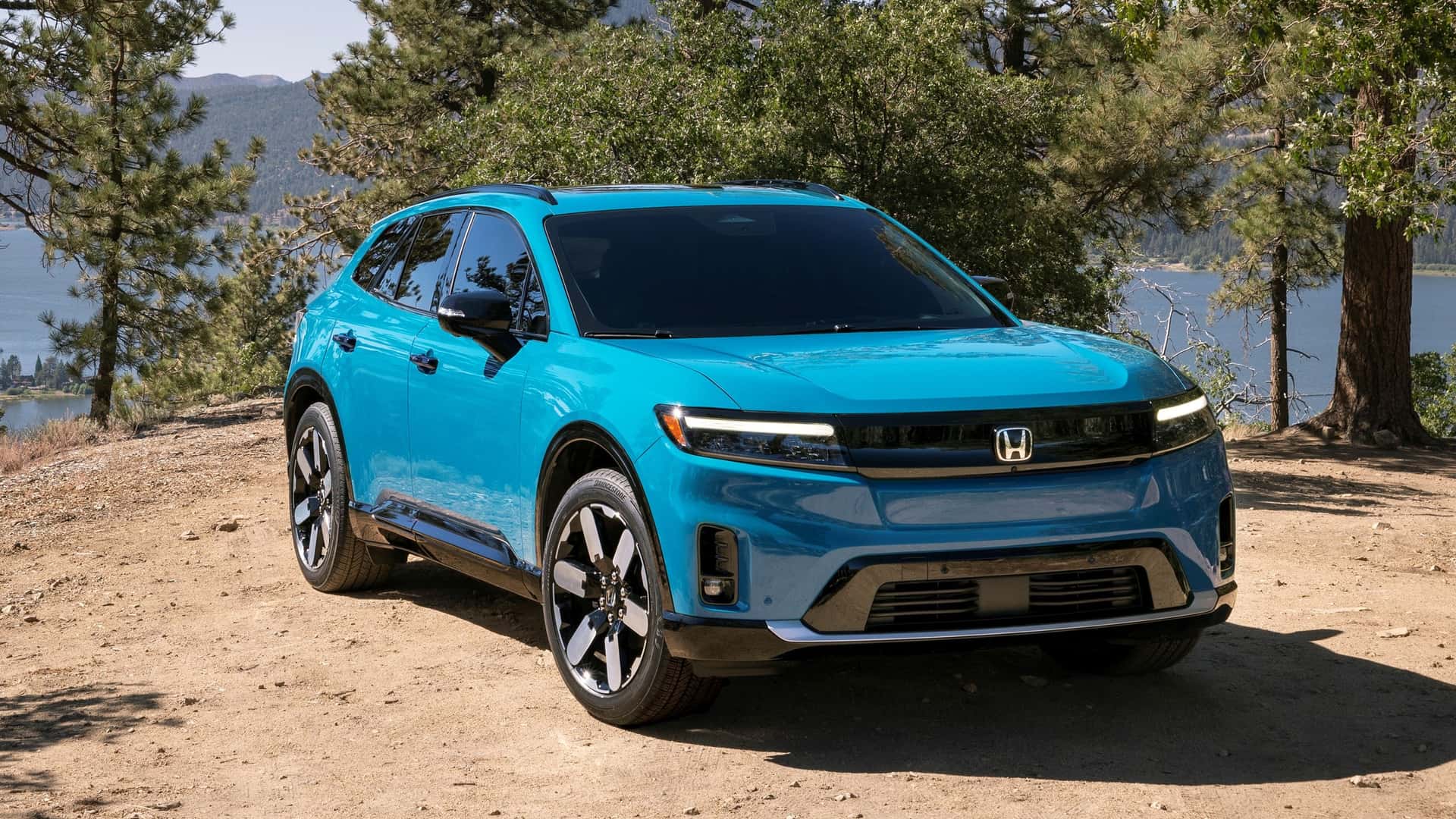
A crucial element of Honda’s initial electric vehicle offensive involved a strategic partnership with General Motors. This collaboration aimed to leverage GM’s Ultium electric platform for Honda’s first wave of electric crossovers, specifically the Honda Prologue and the now-discontinued Acura ZDX. Both models were slated for assembly at GM’s manufacturing facilities, signifying a shared vision for accelerating EV adoption.
However, the rapid deceleration in sales of these jointly developed models has triggered unforeseen consequences for Honda. As reported by Automotive News, Honda has significantly reduced its orders to General Motors. Under the terms of their agreement, this reduction in output will necessitate compensation payments from the Japanese firm to the American automaker, effectively making GM a beneficiary despite Honda’s struggles.
Acura ZDX: A Short-Lived Endeavour
The Acura ZDX electric crossover, assembled at GM’s Spring Hill plant in Tennessee, exemplifies the challenges faced by Honda’s initial EV strategy. The vehicle was pulled from the market just before the crucial $7,500 federal tax credit was canceled, a move that likely impacted its already struggling sales.
Despite being positioned as a premium electric offering, the Acura ZDX survived for only a single model year. Its total sales amounted to a mere 19,411 units, underscoring a significant miscalculation in market demand or product positioning. This swift discontinuation highlights the intense pressure on automakers to deliver competitive and appealing electric models.
Prologue’s Challenging Market Entry
Similarly, the Honda Prologue, manufactured at GM’s Ramos Arizpe plant in Mexico, has encountered substantial headwinds. While the Prologue showed an initial promising start, its sales trajectory reversed sharply in the most recent quarter. Last year, Honda sold 39,194 Prologue EVs in the U.S., a figure that reportedly represented an 18.7% increase compared to sales in 2024.
Despite this earlier reported growth, the vehicle’s market performance declined precipitously in the October-December quarter. During this period, Prologue sales tumbled by 86%, falling to a mere 2,641 units. This dramatic drop is a core reason behind Honda’s decision to scale back production orders from General Motors, leading to the aforementioned compensation obligations.
Financial Repercussions and Strategic Rethink
The downturn in electric vehicle sales has had a profound impact on Honda’s financial health, extending beyond quarterly profit statements. The company’s consolidated profits plunged by 61% in the October-December fiscal third quarter, marking a fourth consecutive period of operating losses.
For the first nine months of the previous financial year, which concludes in March 2026, Honda’s write-offs and associated expenses for its EV business escalated to $1.71 billion. Projections indicate that these EV-related losses are expected to balloon further, reaching an estimated $4.48 billion by the fiscal year’s end. Furthermore, the cumulative impact of U.S. import duties is set to add an additional $1.98 billion in losses by the close of March, contributing to an anticipated 55% decrease in the automaker’s overall operating profit.
In response to these substantial financial pressures and market challenges, Honda has announced that it will undertake a “fundamental review” of its electric car strategy. This comprehensive assessment is expected to scrutinize various aspects of its EV business, including product development, manufacturing partnerships, and market approach, as the company seeks to identify sustainable pathways for its future in electric mobility.
Mitigation Efforts and Incentives
To counteract the slumping sales of the Prologue crossover, Honda has outlined plans to boost fleet sales, targeting corporate and rental car agencies. Alongside this, the automaker anticipates increased spending on manufacturer incentives, a common strategy to stimulate demand and clear inventory in a competitive market.
Illustrating the intensity of these efforts, Honda reportedly invested over $17,000 in incentives for every Prologue sold in the U.S. last month. Despite this significant financial commitment aimed at attracting buyers, the strategy yielded limited results, with only 664 units finding new owners in that period. This highlights the deep-seated resistance or lack of appeal the model currently faces among individual consumers.
Charting a New Course: Honda’s Independent EV Future
In a pivot away from its reliance on external platforms, particularly GM’s Ultium architecture, Honda is now committing to the development of its own bespoke electric vehicle lineup. This new direction centers around an in-house developed platform known as the ‘0 Series’. This strategic shift signals Honda’s intent to regain full control over its EV technology and manufacturing processes.
The first model slated to emerge from this new architecture will be the Acura RSX crossover, with its market debut anticipated by the end of this year. Following the RSX, two new Honda-branded models, the 0 Series SUV and the 0 Series Saloon, are expected to be introduced, forming the vanguard of Honda’s next-generation electric fleet.
Revisiting Ambitious EV Targets
The current market realities have forced Honda to significantly recalibrate its long-term electric vehicle sales ambitions. Back in 2024, the company had set an ambitious target of selling as many as two million EVs globally by the year 2030, reflecting an optimistic outlook on the pace of electrification.
However, that lofty estimate was drastically revised last year, falling to a more conservative range of approximately 700,000 to 750,000 units. This substantial reduction in its 2030 forecast highlights the impact of various factors, including regulatory changes, evolving trade policies, and the slower-than-anticipated consumer adoption in key markets that have challenged Honda’s initial projections.
FAQ Section
Q: Why did Honda’s EV sales decline in the last quarter?
A: Honda’s global EV sales plummeted by half to 15,000 units in the October-December quarter due to poor market performance of its jointly developed models, the Prologue and Acura ZDX, and broader challenges in the electric vehicle market.
Q: How is General Motors involved, and how does it benefit?
A: General Motors partnered with Honda to develop and assemble the Prologue and Acura ZDX on its Ultium platform. With Honda reducing its orders for these vehicles due to poor sales, it is obligated to compensate GM for the reduced output, turning GM into an unexpected beneficiary.
Q: What happened to the Acura ZDX?
A: The Acura ZDX electric crossover was discontinued after just one model year due to poor sales, totaling only 19,411 units. Its cancellation occurred shortly before the federal $7,500 tax credit was removed, further impacting its viability.
Q: What is the financial impact of this decline on Honda?
A: Honda reported a 61% drop in consolidated profits in the October-December quarter, marking its fourth consecutive quarter of operating losses. EV-related losses are projected to reach $4.48 billion for the full fiscal year, with an additional $1.98 billion from U.S. import duties.
Q: What is Honda’s new strategy for electric vehicles?
A: Honda is undertaking a “fundamental review” of its car strategy and is shifting focus to developing its own in-house EV architecture, known as the ‘0 Series’. The first new model, the Acura RSX crossover, is expected by the end of this year, followed by two Honda 0 Series models.
Q: Has Honda changed its long-term EV sales targets?
A: Yes, Honda has significantly revised its 2030 global EV sales target. The initial goal of two million units has been scaled back to a more conservative estimate of 700,000 to 750,000 units, reflecting challenges from regulatory changes and market dynamics.