
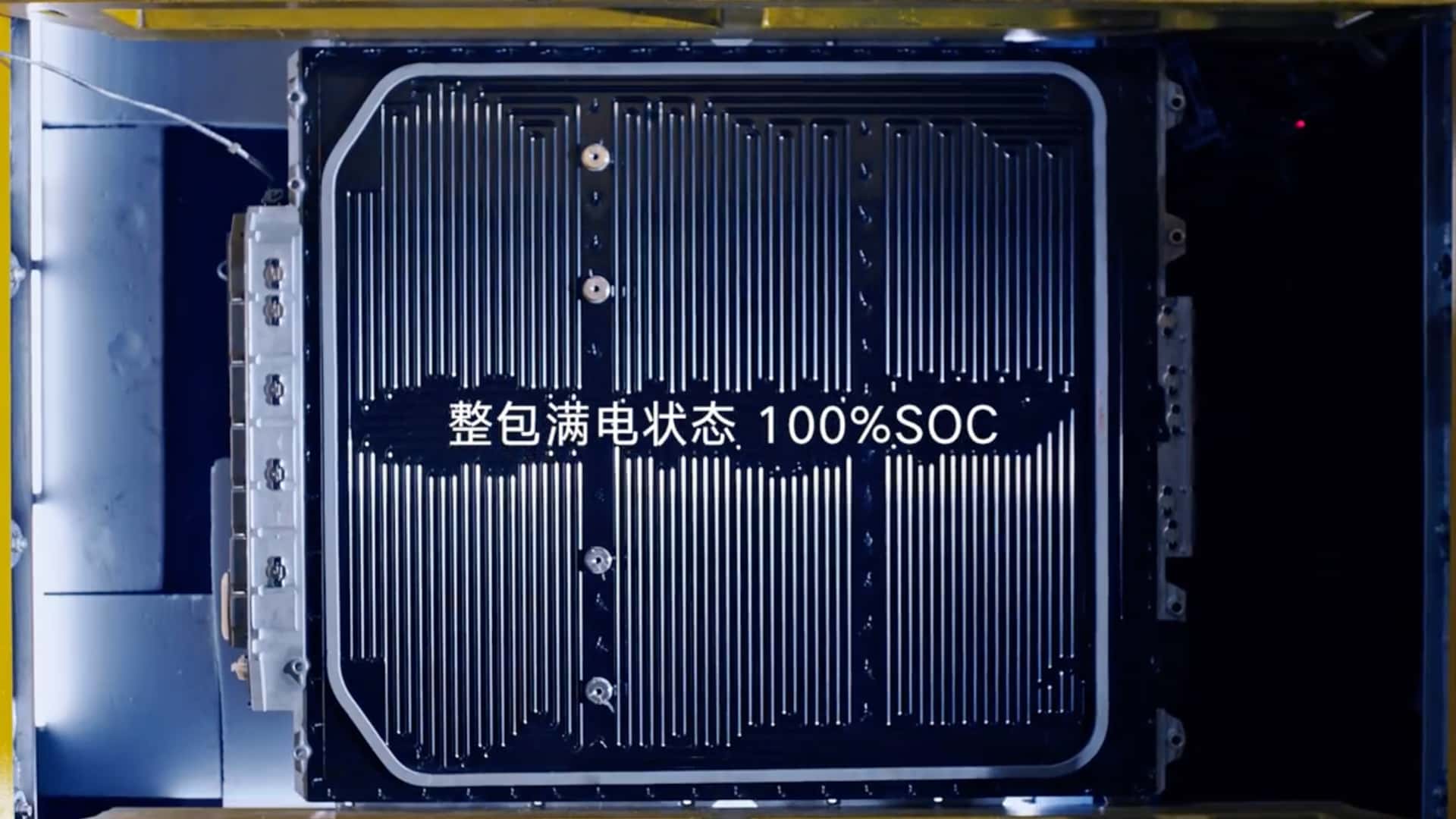
BYD, the world’s largest electric vehicle manufacturer, has unveiled its second-generation Blade battery, a significant advancement poised to redefine EV charging speeds and potentially challenge established Western automotive technology. The new battery boasts enhanced energy density and efficiency, coupled with revolutionary charging capabilities that could make EV range anxiety a relic of the past.
Revolutionary Charging Speeds Unveiled
The core of BYD’s innovation lies in its drastically reduced charging times. The second-generation Blade battery is capable of achieving a 10% to 70% charge in a mere five minutes. More remarkably, it can reach a 10% to 97% state of charge in under 10 minutes. This rapid charging capability aims to make recharging an EV as convenient as refueling a gasoline-powered car.
This advancement is further supported by BYD’s new Flash charging stations, which deliver power exceeding the megawatt-class chargers introduced previously. These stations are designed to seamlessly integrate with the new batteries, optimizing the charging process for maximum speed and efficiency.
Performance in Extreme Conditions
A key highlight of BYD’s announcement is the battery’s exceptional performance in frigid temperatures. The company demonstrated the second-generation Blade battery charging flawlessly from 20% to 97% at -22°F (-30°C) in approximately 12 minutes. This is only a marginal increase compared to charging times at normal temperatures, a feat that traditional lithium-ion batteries often struggle to achieve.
Extreme cold typically hinders the movement of electrons within a battery, significantly slowing down charging efficiency. BYD’s achievement in maintaining rapid charging speeds under such conditions addresses a critical pain point for EV adoption in colder climates.

Real-World Demonstration and Range Estimates
BYD showcased the capabilities of its new battery technology through a live demonstration featuring the Denza Z9GT, a luxury electric wagon. Utilizing the company’s new 1,500-kilowatt Flash charging station, the vehicle was charged from a 9% state of charge.
In just 9 minutes and 51 seconds, the Denza Z9GT reached a 97% state of charge. The vehicle’s range prediction system then displayed an impressive 1,008 kilometers (626 miles). It is important to note that these range figures are likely based on the China Light-Duty Test Cycle (CLTC), which is generally more optimistic than the EPA test cycle used in the United States.
These charging speeds represent a dramatic improvement over the 20-40 minute charging stops common for many EVs currently available in the U.S. market.
Commitment to Safety and Compliance
Safety remains a paramount concern in battery technology, and BYD emphasizes its commitment to meeting rigorous standards. The company states that its second-generation Blade battery not only complies with China’s latest battery safety regulations but also excels in durability testing.
China has implemented some of the world’s most stringent battery safety requirements. These mandate that EV batteries must prevent fire or explosion for at least two hours after a single cell experiences thermal runaway. BYD’s demonstration included multiple nail penetration tests on a single battery pack, which, according to company reports, did not result in the pack catching fire.
Market Integration and Future Prospects
BYD’s new battery technology is not a distant concept; it is slated for integration into approximately ten production models. Among the confirmed vehicles to feature the second-generation Blade battery are the Yangwang U7, Denza Z9GT, Seal 07, and Sealion 06, among others.
This widespread adoption across various models underscores BYD’s strategy to democratize its advanced EV technology. The move comes at a time when BYD experienced a significant sales decline in February, attributed to intense competition within China’s EV market. The introduction of this cutting-edge battery technology is expected to bolster the company’s market position and drive future sales.
The design of the new 1,500-kilowatt Flash charging stations, resembling traditional gas stations, further emphasizes BYD’s focus on user convenience, allowing for quick drive-in and drive-out charging experiences.
Broader Implications for the EV Industry
BYD’s advancements in battery technology, particularly its focus on ultra-fast charging and performance in extreme temperatures, could set a new benchmark for the global electric vehicle industry. The ability to add significant range in a matter of minutes, comparable to gasoline refueling times, directly addresses a key barrier to widespread EV adoption.
As the EV market continues to mature, innovations in battery technology are crucial for sustained growth. BYD’s second-generation Blade battery represents a significant leap forward, potentially compelling competitors, including Western automakers, to accelerate their own research and development in this critical area.