
Key Takeaways (TL;DR):
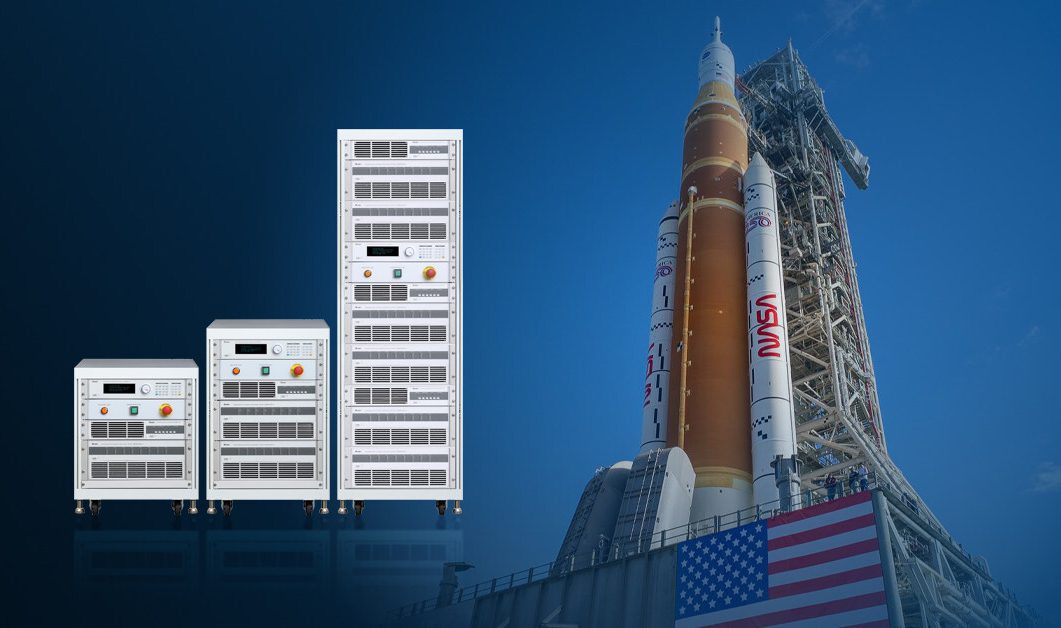
- Chroma Systems Solutions’ 17020 Battery Test System has validated the lithium-ion power systems aboard NASA’s Orion crew capsule for the Artemis II mission.
- Artemis II marks a significant step as the first crewed circumlunar flight of the Artemis program, carrying four astronauts.
- The rigorous testing involved two phases: initial lab evaluations for performance, reliability, and safety, followed by direct integration into the launch tower for continuous validation until liftoff.
- Chroma’s programmable system simulated critical mission conditions, including eclipse periods where batteries bear the full operational load.
- Orion’s power architecture includes four primary lithium-ion batteries in the crew module and specialized batteries for the crucial, no-failure-tolerated launch abort system.
- This validation underscores the paramount importance of robust and reliable battery technology for human space exploration.
Chroma’s Advanced Battery Tester Validates Orion for NASA’s Artemis II
In a significant stride for human space exploration, Chroma Systems Solutions has confirmed the successful validation of the lithium-ion battery systems powering NASA’s Orion crew capsule for the upcoming Artemis II mission. This critical validation was performed using the sophisticated Chroma 17020 Battery Test System, ensuring the integrity and performance of the power units essential for the first crewed Artemis flight.

The Artemis II mission represents a pivotal moment in humanity’s return to the Moon. As a circumlunar voyage, it will carry four astronauts farther into space than any human has traveled before, orbiting the Moon before returning to Earth. The reliability of every onboard system, particularly the power infrastructure, is paramount for the safety and success of such a monumental endeavor.
A Critical Step in Human Spaceflight
The Orion capsule, central to NASA’s deep-space exploration plans, relies on robust battery technology to sustain its various operations, especially during critical mission phases. The Artemis II mission is designed to test Orion’s systems with astronauts aboard, paving the way for future lunar landings and eventual missions to Mars. This makes the validation of its power systems an absolutely non-negotiable requirement.
The advanced testing conducted by Chroma Systems Solutions directly addresses the complex power demands of a crewed spacecraft navigating the extreme environment of deep space. Ensuring that the lithium-ion systems can handle every foreseeable scenario is fundamental to mitigating risks in human spaceflight.

Rigorous Testing Protocols for Mission Success
The validation process for Orion’s battery systems was meticulously structured and executed, underscoring the high stakes involved in space missions. Chroma’s 17020 Battery Test System played a central role throughout these stringent evaluations, providing comprehensive data on the batteries’ capabilities.
The programmable nature of the Chroma 17020 platform allowed NASA engineers to conduct highly specific simulations. These simulations replicated diverse mission-specific load conditions, ensuring that the batteries could perform optimally under the exact stresses and demands they would encounter during the circumlunar voyage.
Two-Phase Validation: From Lab to Launchpad
The testing regimen was bifurcated into two distinct yet interconnected phases, each designed to provide a holistic assessment of the battery performance. The initial phase focused on exhaustive laboratory evaluations, where the Chroma 17020 system was deployed to meticulously scrutinize battery performance, reliability, and safety characteristics.
This phase involved subjecting the lithium-ion systems to a battery of tests designed to push their limits and identify any potential vulnerabilities under controlled conditions. Data gathered from these lab trials informed subsequent real-world integration and validation efforts.
Following successful lab completion, the Chroma 17020 system transitioned to the launch site. Here, it was directly integrated into the launch tower infrastructure, continuing its critical role in validating battery performance. This on-site monitoring extended right up to the final countdown, providing real-time assurance of power system readiness for liftoff.
Simulating the Harsh Realities of Space
One of the most crucial aspects of the testing involved simulating eclipse periods. During these times, the Orion capsule is temporarily shielded from solar radiation, making solar charging unavailable. Consequently, the onboard batteries are required to bear the full demand for all critical spacecraft functions.
These functions include vital communication links with Earth, precise navigation systems guiding the capsule through space, and propulsion systems necessary for orbital maneuvers and trajectory corrections. The Chroma 17020’s ability to accurately simulate these high-demand scenarios was instrumental in confirming the batteries’ capacity to operate autonomously and reliably during such energy-intensive phases.
Orion’s Mission-Critical Battery Systems
The Orion crew capsule’s power architecture is designed with redundancy and specialized capabilities to meet the rigorous demands of deep-space travel. It incorporates multiple battery systems, each engineered for specific roles within the spacecraft’s operational framework.
Powering the Crew Module
The heart of Orion’s sustained operations lies in its four primary lithium-ion batteries housed within the crew module. These batteries are the main powerhouses, responsible for continuously supplying energy to the capsule’s life support systems, onboard computers, scientific instruments, and crew amenities. Their consistent and reliable performance is directly tied to the mission’s duration and the well-being of the astronauts.
Each of these four batteries is engineered to stringent aerospace standards, undergoing extensive qualification to ensure they can withstand the vibrations of launch, the vacuum of space, and the wide temperature fluctuations encountered during a lunar mission.
The Vital Launch Abort System
Beyond the primary power sources, Orion is equipped with specialized batteries dedicated solely to its launch abort system. This system represents a critical safety net, designed to execute a single, no-failure-tolerated event if an emergency arises during the initial ascent phase of the mission.
The batteries powering the launch abort system must be capable of delivering an instantaneous surge of power with absolute certainty. Any failure in this system could have catastrophic consequences, emphasizing the extreme level of reliability demanded from these specialized units. The Chroma 17020’s validation included these critical components, reinforcing the system’s ability to perform under the most severe emergency conditions.
Industry Acknowledgment and Future Horizons
The successful validation of Orion’s battery systems through Chroma’s technology marks a significant milestone not just for the Artemis program but also for the broader field of advanced battery testing.
Fred Sabatine, CEO of Chroma Systems Solutions, expressed the company’s pride in contributing to this groundbreaking mission. “We are proud to contribute to a mission that represents a major step forward in human space exploration,” Sabatine stated, acknowledging the profound impact of their technology on NASA’s ambitious goals.
This partnership between Chroma and NASA highlights the collaborative effort required to push the boundaries of space exploration. The rigorous testing methodologies and advanced battery technology proven for Artemis II will undoubtedly influence future developments in spacecraft design and validation, setting new benchmarks for reliability in mission-critical applications.
Frequently Asked Questions (FAQ)
What is the Artemis II mission?
Artemis II is NASA’s first crewed mission of the Artemis program, designed to orbit the Moon and return to Earth. It will carry four astronauts, marking a crucial step towards future lunar landings and human exploration of deep space.
What is the role of Chroma’s 17020 Battery Test System?
The Chroma 17020 Battery Test System was used to rigorously evaluate the performance, reliability, and safety of the lithium-ion battery systems aboard NASA’s Orion crew capsule, from initial lab tests to continuous validation at the launch tower.
Why is battery testing critical for space missions?
Battery testing is critical to ensure that spacecraft power systems can reliably meet the intense and continuous demands of space travel, including powering communication, navigation, and propulsion, especially during periods like solar eclipses when solar charging is unavailable.
How did the testing simulate mission conditions?
The programmable Chroma 17020 system allowed NASA engineers to simulate various mission-specific load conditions, including the complete power demands during eclipse periods when batteries must solely sustain all essential spacecraft functions.
What types of batteries does the Orion capsule use?
The Orion crew module utilizes four primary lithium-ion batteries for its main power supply. Additionally, it features specialized batteries dedicated to the launch abort system, designed for a single, no-failure-tolerated event during ascent emergencies.
What is the significance of validating the launch abort system batteries?
Validating the launch abort system batteries is paramount because this system must function flawlessly in an emergency during ascent. Its batteries must deliver instantaneous, reliable power to ensure astronaut safety in a critical, no-failure-tolerated scenario.
Who confirmed the use of Chroma’s system for Artemis II?
Chroma Systems Solutions itself announced that its Chroma 17020 Battery Test System was utilized for evaluating the lithium-ion battery systems on NASA’s Orion crew capsule for the Artemis II mission.