
Key Takeaways:
- The Paris Motor Show revealed a significant technological gap between Chinese and European electric vehicle (EV) manufacturers.
- Chinese brands showcased advanced EV technology, particularly in rapid charging, high power, and innovative designs, with several models offering 10-80% charge times under 11 minutes.
- European Car Companies largely countered with concept versions of classic models, leaning on brand heritage and design rather than groundbreaking EV tech.
- European automakers face mounting pressure from collapsing sales in China, US tariffs, and increasing competition in their home markets.
- While tariffs offer some defense, European brands must accelerate product development and innovation to truly compete with the fast-moving Chinese EV industry.
PARIS, France – The recent Paris Motor Show served as a stark demonstration of the evolving global automotive landscape, highlighting the formidable challenge now confronting European Car Companies from their Chinese counterparts. While the event was hosted on European soil, the pervasive presence and technological prowess of Chinese electric vehicle (EV) manufacturers like Geely, BYD, Li Auto, Zeekr, and Denza commanded significant attention, overshadowing traditional European stalwarts.
Visitors to the Paris expo Porte de Versailles were greeted by an array of advertisements for Chinese brands, with the initial exhibition booths dedicated to innovators such as Li Auto. These companies presented a vision of the future that included ultra-fast charging capabilities, impressive power figures, and avant-garde designs, many of which were already production-ready.
Chinese Innovators Redefine EV Capabilities
The display by Chinese EV manufacturers underscored a clear technological lead. Brands like Zeekr introduced models such as the 9X, an ultra-plug-in-hybrid boasting a 111-mile electric range and luxurious interior features, including plush recliners. The Zeekr 9X notably operates on a 900-volt architecture, indicating advanced battery and charging systems.
Li Auto showcased its Megahome concept, described as a “mobile home from the future,” alongside its first European-market EV, the Li 6. This model reportedly charges from 10-80% in under 11 minutes and offers premium features like massaging rear recliners, sophisticated software, and a cushioned air suspension system.
BYD further pushed the boundaries, demonstrating cars capable of achieving a 10-97% charge in a remarkable nine minutes. These rapid advancements in battery technology and charging infrastructure highlight a significant differentiator that Chinese firms are leveraging to gain market share globally.
European Car Companies Lean on Legacy Amidst Tech Gap
In contrast to the cutting-edge technological showcases, many European Car Companies opted for a strategy rooted in nostalgia and brand heritage. Renault, Peugeot, and other continental manufacturers presented re-interpreted concept versions of their iconic models.
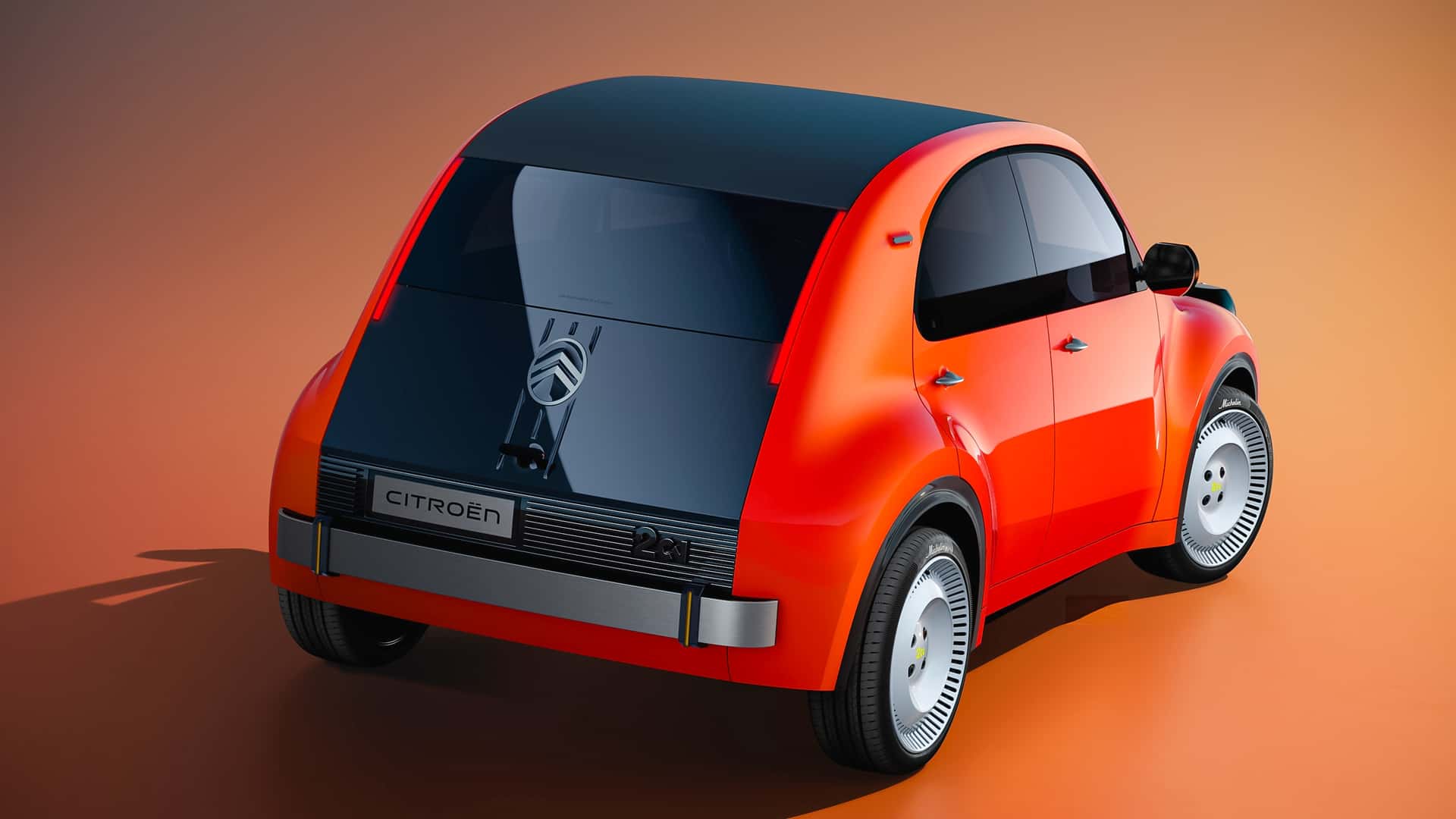
Examples included a reimagined Renault Espace, a concept for the return of the Citroën 2CV, and the Alpine A310 Vision concept. The underlying message was a clear invitation to consumers: “Stick with us, and it’ll be just like the good ole’ days.” This approach aimed to evoke an emotional connection, banking on loyalty built over decades of automotive history.
However, the efficacy of this strategy remains a significant question. While Chinese brands unveiled production-ready vehicles with advanced specifications, the most compelling European offerings were often concept cars, their market availability and technological specifications still years away or uncertain.
The Accelerating Charging War and Western Lag
The speed of electric vehicle charging has emerged as a crucial battleground, and at the Paris Motor Show, the disparity between East and West was particularly pronounced. At least five production models on display, none from Western brands, demonstrated the ability to charge from 10-80% in less than 11 minutes.
Mercedes-Benz’s upcoming AMG GT 4-Door, for instance, achieves this benchmark in exactly 11 minutes, a figure the brand proudly highlights. Yet, when Zeekr mentioned its updated 7X, which already has a waiting list in Europe, now charges from 10-80% in 10.5 minutes, the announcement was delivered without significant fanfare.
This understated presentation by Chinese firms underscores a reality where such charging speeds are becoming commonplace in their home market. Companies like Geely and BYD are already deploying Megawatt charging speeds, enabling 10-97% charge in under nine minutes, and even 10-70% in less than five minutes. For Li Auto, stating its European-market Li 6 could achieve 10-80% in approximately 10 minutes felt more like meeting industry standards than a competitive advantage.
This quantifiable edge in charging speed is indicative of a broader qualitative gap. While many European luxury brands like Mercedes and BMW are just introducing their first software-defined, 800-volt EVs, Chinese automakers are already on their second, fifth, or even tenth iteration of such platforms. The Zeekr 9X, a plug-in hybrid, operates at 900 volts, further illustrating this technological divergence.
European Car Companies Face Multi-Front Assault
The challenges facing European Car Companies extend beyond technological competition to significant market pressures. Unlike American legacy firms, which enjoy temporary protection in their domestic market due to regulations hindering Chinese EV sales, European automakers are confronting an immediate crisis.
The European automotive industry is under assault on three fronts: Sales in China are rapidly declining as domestic competitors capture market share; profits in the American market are being eroded by aggressive tariffs; and market share at home is increasingly threatened by a growing influx of Chinese brands. Concurrently, higher energy, labor, and regulatory costs within Europe further exacerbate their competitive disadvantage on a global scale.
Automotive executives from major European brands are no longer downplaying these threats, openly expressing alarm in earnings calls and discussions with government officials. As European nations weigh the potential implications for one of their most valuable industries, protective measures are being implemented.
Tariff Barriers and the Pursuit of Competitive Edge
To mitigate the impact of Chinese competition, European governments have imposed steep tariffs on Chinese EVs, with some brands, like Li Auto, facing cumulative duties exceeding 40%. Europe is also tightening restrictions on hybrid imports, a category previously less affected. Despite these protective barriers, Chinese brands remain highly competitive.
For example, Li Auto plans to price its Li 6 in line with the BMW iX3. While the iX3 offers greater maximum range, the Li 6 aims to compensate with superior interior space and faster charging speeds, highlighting how Chinese automakers are strategically positioning their products even with tariff disadvantages.
The effectiveness of legal and tariff barriers alone appears insufficient. Consequently, European Car Companies are scrambling to close the technology gap. While models like the BMW iX3 offer impressive range and the Mercedes GLC EV boasts high efficiency, these attributes may not generate the necessary excitement to fend off new competitors.
This scenario explains why European brands are increasingly relying on their acclaimed design and branding teams. The hope is to rekindle consumer enthusiasm and reclaim the market luster that has been diminished by the rapid ascent of Chinese EV technology.
The Enduring Power of Design and Emotional Connection
The emotional appeal of car ownership remains a powerful factor, even in an increasingly technology-driven market. The recent emergence of models like the multi-colored Renault Twingo EVs, which combine decent EV technology with captivating design, demonstrates this principle.
Similarly, the reborn Citroën 2CV concept, maintaining the friendly and unique aesthetic of its predecessor while appearing more refined, holds significant promise. The E-Space concept, an innovative lounge-on-wheels design, could potentially compete with the growing segment of E-MPVs from emerging brands, especially given that swivel-seat Chinese production EVs were also showcased at the same event, suggesting that such advanced interior configurations are viable.
These designs, including the Renault 5 and Twingo EVs, could prove durably charming and attract a loyal customer base, even as the market is flooded with Chinese alternatives offering lower prices and longer ranges. However, potential remains contingent on rapid and effective execution.
The Imperative for Speed and Agile Execution
For European Car Companies to succeed, speed and agility in product development are paramount. Chinese manufacturers operate with remarkable pace, frequently launching new products and quickly iterating or discontinuing less successful ideas. This contrasts sharply with the often-longer development cycles of traditional European automakers, where concepts can take years to materialize into production vehicles.
European brands must embrace faster development cycles, be willing to take more calculated risks, and adopt a stance of humility, recognizing their current position of disadvantage. In a landscape marked by dwindling profits and heightened competition, this strategic shift is critical yet challenging. No company wishes to gamble with its core business. However, at the Paris Motor Show, the commitment to leveraging design, heritage, and loyal customer bases was evident, serving as a significant bet to sustain these companies until they can match the technological advancements of their Chinese competitors.
The path ahead for European Car Companies is fraught with challenges, and success is far from guaranteed. Yet, as the industry grapples with these seismic shifts, the question remains: what other viable options do they have?
FAQ Section
What was the main difference observed between European and Chinese EVs at the Paris Motor Show?
Chinese EV manufacturers primarily showcased advanced production-ready models with superior charging speeds, innovative technology, and unconventional designs. In contrast, European Car Companies often presented concept vehicles based on their historic models, emphasizing brand heritage and design rather than cutting-edge EV innovation already available to consumers.
How fast are Chinese EVs charging compared to European models?
Many Chinese production EVs demonstrated charging from 10-80% in under 11 minutes, with some even achieving 10-97% in nine minutes, and 10-70% in under five minutes. European models are generally behind, with Mercedes’ upcoming AMG GT 4-Door, for instance, managing 10-80% in 11 minutes, which is a benchmark already surpassed by several Chinese vehicles.
What strategic challenges do European automakers face globally?
European Car Companies are contending with plummeting sales in the Chinese market, where domestic brands are thriving. They also face profit erosion in the U.S. due to aggressive tariffs. Additionally, their home market share is increasingly threatened by the growing presence of technologically advanced and often more affordable Chinese electric vehicles.
Are there any protective measures in place for European Car Companies?
Yes, European governments have implemented steep tariffs on Chinese EV imports, with some duties exceeding 40%. Restrictions on hybrid vehicle imports are also being tightened. However, these measures alone may not be sufficient to fully counteract the competitive advantages held by Chinese manufacturers.
How are European brands trying to compete with Chinese EV technology?
European Car Companies are heavily relying on their established brand heritage, distinctive designs, and emotional appeal to consumers. They are hoping that re-imagined classic models and innovative design concepts, combined with a focus on ride comfort and user experience, will retain customer loyalty and buy them time to catch up technologically.
What is the critical next step for European Car Companies to remain competitive?
The most critical step for European automakers is to accelerate their product development cycles significantly. They need to move faster in bringing exciting concept designs to market with competitive EV technology, take more calculated risks, and operate with greater agility and humility, similar to the rapid innovation seen from Chinese manufacturers.