
Key Takeaways
- The European Commission has announced a substantial €1.5 billion in interest-free loans aimed at accelerating EV battery cell manufacturing within the European Economic Area (EEA).
- This crucial funding, derived from the EU Emissions Trading System’s Innovation Fund, targets the high-cost “ramp-up phase” for emerging battery producers.
- The initiative seeks to counter the recent struggles faced by European battery ventures, several of which have experienced financial difficulties or halted production plans.
- It also aims to reduce the region’s heavy reliance on Chinese manufacturers, who currently dominate over 80 percent of global battery output.
- Eligible projects can receive up to 60 percent of their costs, capped at €500 million per beneficiary, with applications open until September 30.
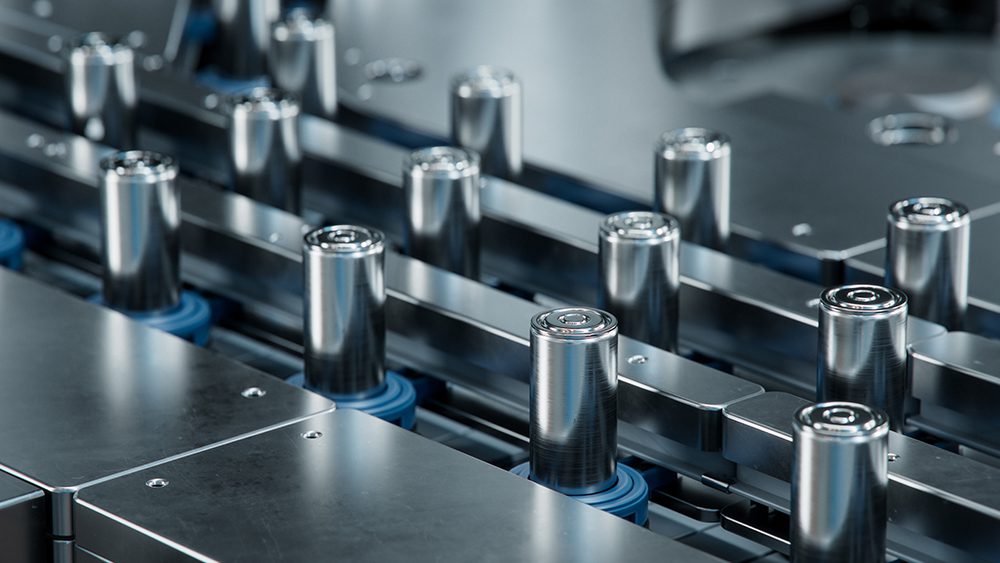
In a significant move to bolster its strategic independence and accelerate the transition to electric mobility, the European Commission has unveiled a new call for proposals offering up to €1.5 billion in interest-free loans. This substantial financial backing is specifically targeted at companies engaged in the manufacturing of electric vehicle (EV) battery cells within the European Economic Area (EEA).
The initiative, announced on August 10, 2026, reflects a growing global trend where major economic blocs are providing robust support to their domestic EV industries. Both China and, in the past, the USA have implemented similar interest-free loan schemes to foster the growth of their respective EV ecosystems, particularly in the critical battery sector.

A Critical Intervention for European EV Battery Makers
The European Commission’s decision comes at a pivotal moment for the continent’s automotive industry. As the world rapidly shifts towards electric vehicles, the ability to produce advanced battery cells domestically is paramount for economic competitiveness, energy security, and environmental goals.
These interest-free loans are designed to bridge a critical financing gap. They specifically target the ‘ramp-up phase’ of battery production, a period defined by significant capital expenditure and a lack of stable revenue. This phase occurs between initial production runs and the commencement of full-scale commercial activity.
Climate Commissioner Wopke Hoekstra underscored the importance of this timing, stating that this transition period, during which firms face heavy costs and have yet to begin generating stable revenue, “the most critical and capital-intensive phase of industrial scale-up.” The new funding aims to mitigate the financial risks associated with scaling up innovative battery technologies.
The Innovation Fund: Fueling Europe’s Green Transition
The financial resources for this ambitious program are drawn from the Innovation Fund, a key instrument established by the European Union. This fund is primarily financed by revenues generated from the EU Emissions Trading System (EU ETS).
The EU ETS is a cornerstone of the EU’s policy to combat climate change and its key tool for cost-effectively reducing greenhouse gas emissions. By allocating revenues from carbon allowances, the Innovation Fund strategically invests in breakthrough technologies and large-scale projects that drive the decarbonization of European industries.
Leveraging the Innovation Fund for EV battery production underscores the European Union’s commitment to fostering green technologies and achieving its ambitious climate targets. It signifies a direct investment in the infrastructure necessary for a sustainable, electrified future across the continent.
Addressing the “Ramp-Up” Challenge
The ramp-up phase for complex manufacturing processes like battery cell production is inherently challenging. It involves significant investment in specialized machinery, facility construction, skilled labor recruitment, and the optimization of intricate production lines.
During this period, companies must commit substantial capital before they can generate meaningful sales revenue. This financial strain can be particularly acute for innovative startups and even established players venturing into new, capital-intensive territories. The provision of interest-free loans aims to alleviate this pressure, allowing companies to focus on operational excellence and market entry without the burden of high debt servicing costs.
Such support is vital for ensuring that promising battery technologies developed in Europe can successfully transition from pilot projects to full-scale industrial production, securing a robust domestic supply chain for European EV battery makers.
A Troubled Landscape for European Battery Ventures
The urgency of the European Commission’s intervention is underscored by the recent difficulties encountered by several high-profile European battery manufacturing ventures, as reported by the Brussels Signal. These challenges highlight the intense capital requirements and competitive pressures within the global battery market.
Notably, Sweden’s Northvolt, once a beacon of European battery ambition, faced bankruptcy in 2024, with its assets subsequently acquired by a US buyer. This event sent ripples through the European industry, raising concerns about the viability of domestic battery production without substantial support.
Further setbacks include Porsche’s decision to close its Cellforce venture in 2025. Similarly, the Stellantis-led Automotive Cells Company (ACC) cancelled planned factories in both Germany and Italy, indicating a re-evaluation of investment strategies in the face of market realities.
The trend continued into early 2026, with Volvo Cars placing its Novo Energy subsidiary into hibernation in January. May saw Norway’s Morrow Batteries encountering significant financial difficulties, further illustrating the precarious nature of the European EV battery sector.
These instances collectively paint a picture of an industry grappling with immense financial and operational hurdles, making targeted governmental intervention critical for its long-term survival and growth.
Navigating Global Competition: China’s Dominance
A primary driver behind the European Commission’s strategy is the overwhelming dominance of Chinese manufacturers in the global battery market. Chinese companies currently account for more than 80 percent of worldwide battery output, establishing a formidable lead in terms of production capacity, technological advancements, and cost efficiency.
This global asymmetry has compelled many European carmakers to forge partnerships with Chinese firms, relying on them for both battery cells and crucial manufacturing expertise. While these collaborations enable European companies to access essential components, they also highlight a strategic vulnerability and a dependency on external supply chains.
The new interest-free loans are designed to foster indigenous European EV battery makers, thereby reducing this reliance and building a resilient, self-sufficient battery industry within the continent. This move is essential for safeguarding Europe’s automotive future and ensuring its leadership in the global EV transition.
Eligibility and Application Details
To qualify for these critical interest-free loans, projects must meet specific criteria designed to align with the fund’s objectives. Firstly, the projects must be physically sited within the European Economic Area, ensuring that the investment directly benefits the regional economy and employment.
Secondly, the battery cells produced must be suitable for use in electric vehicles, emphasizing the fund’s focus on the EV supply chain. This ensures that the funded projects directly contribute to the electrification of transport.
Crucially, applicants must demonstrate that their projects have already reached the defined ‘ramp-up phase’ at the time the call for proposals opened. This criterion ensures that the funding supports projects that are beyond initial research and development and are actively moving towards industrial scale production.
The loans can cover a significant portion of eligible costs, specifically up to 60 percent, with a maximum allocation of €500 million per beneficiary. This substantial support is intended to provide a powerful impetus to qualifying European EV battery makers.
Prospective applicants are urged to act swiftly, as all submissions must be received before the deadline of September 30. This tight timeframe underscores the urgency with which the European Commission aims to revitalize its domestic battery manufacturing capabilities. Source: Brussels Signal
Strengthening Europe’s Automotive Future
The European Commission’s €1.5 billion loan program represents a strategic investment in the future of European industry. By directly supporting EV battery makers, the EU aims to create a more robust, self-reliant, and competitive automotive sector.
This initiative is not merely about financial aid; it is about cultivating innovation, fostering job creation, and ensuring that Europe remains at the forefront of the global transition to sustainable transportation. The success of these loans will be pivotal in determining Europe’s position in the fiercely competitive global EV market.
The outcome will impact the entire value chain, from raw material sourcing and cell production to vehicle manufacturing and recycling, ultimately contributing to a greener and more economically secure future for the European continent.
Frequently Asked Questions (FAQ)
What is the purpose of the European Commission’s new loan program?
The program aims to provide up to €1.5 billion in interest-free loans to companies manufacturing EV battery cells within the European Economic Area, supporting them through the critical and capital-intensive industrial scale-up phase and reducing reliance on foreign supply chains.
Where does the funding for these loans come from?
The funding originates from the Innovation Fund, which is financed by revenues generated through the EU Emissions Trading System (EU ETS). This mechanism ensures that climate-related initiatives are supported by a dedicated financial instrument.
Which phase of battery production do these loans target?
The loans are specifically designed for the “ramp-up phase,” which occurs between the initial production runs and the commencement of full commercial activity. This period is characterized by high costs and a lack of stable revenue generation.
What are the eligibility criteria for applying for these loans?
To qualify, projects must be located in the European Economic Area, produce battery cells suitable for EVs, and have already reached the ramp-up phase at the time the call for proposals opened. The application deadline is September 30.
Why is the European Commission implementing this initiative now?
The initiative addresses the recent financial struggles of several European battery ventures and the overwhelming dominance of Chinese manufacturers, who produce over 80 percent of global battery output. It seeks to strengthen European domestic production and reduce strategic dependencies.
What is the maximum amount a single beneficiary can receive?
Eligible projects can receive loans covering up to 60 percent of their total eligible costs, with a maximum ceiling of €500 million per individual beneficiary. This substantial support aims to facilitate significant industrial expansion.
How does this initiative align with broader EU climate goals?
By investing in EV battery production, the program directly supports the transition to electric vehicles, a key component of the EU’s strategy to reduce greenhouse gas emissions and combat climate change, aligning with the objectives of the EU Emissions Trading System.