
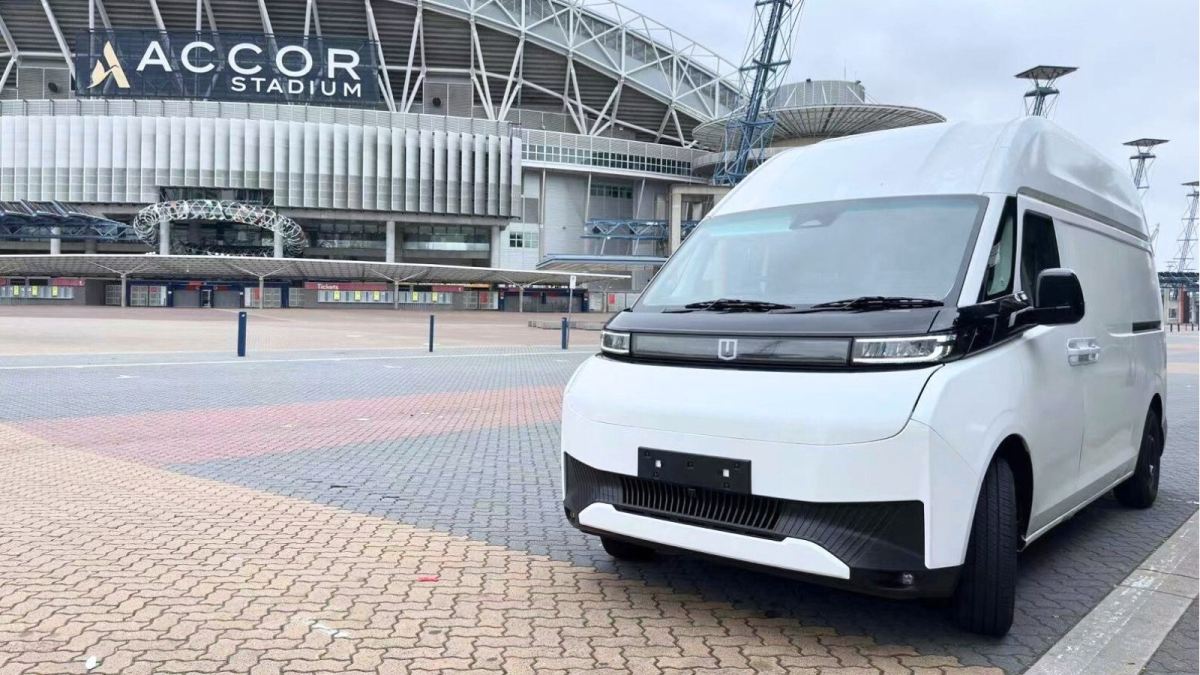
Farizon, the commercial vehicle division of automotive giant Geely Holdings, is offering a significant incentive for Australian buyers of its versatile SV electric van. As part of a Lunar New Year promotion, the company is providing a $3,888 cashback on all three variants of the SV van. This offer is available until March 15, 2026, aiming to encourage the adoption of electric commercial vehicles.
Farizon SV: An Overview of the Electric Van
Geely Holdings, a global automotive group with significant investments in brands like Volvo Cars, Polestar, Zeekr, and Lotus, has been actively expanding its electric vehicle presence worldwide. Farizon, its commercial vehicle arm, launched in Australia in 2025 and is now focusing on its SV van model to capture market interest.
The Farizon SV van is positioned as a versatile electric vehicle designed to meet the needs of various commercial applications, from tradespeople to last-mile delivery services and even the emerging electric camper market. The company’s website highlights the Lunar New Year cashback as a special opportunity for customers: “Celebrate the Lunar New Year with $3,888* cashback on your Farizon SV.”
Pricing and Variants on Offer
The $3,888 cashback applies across the three distinct variants of the Farizon SV van, each tailored to different operational requirements and user needs. The pricing for these variants, before the cashback is applied, is as follows:
- SWB Low Roof: $69,990
- LWB Low Roof: $72,990
- LWB High Roof: $76,990
This pricing structure positions the Farizon SV as a competitive option in the growing electric van segment in Australia. The limited-time nature of the cashback offer underscores the company’s strategy to drive sales and market penetration during the promotional period.

Key Specifications: Range, Battery, and Charging
The Farizon SV boasts a substantial 83 kWh battery pack, a key component for its electric powertrain. This battery capacity contributes to its overall range and performance characteristics, making it a viable option for businesses seeking to transition to electric fleets.
Charging Capabilities
Charging the 83 kWh battery is facilitated through both AC and DC charging options. The van supports 11 kW AC charging, providing a convenient overnight or off-peak charging solution. For faster top-ups, it features DC charging capability capped at 140 kW. This allows the battery to charge from 30% to 80% in approximately 36 minutes, a crucial feature for commercial vehicles that require minimal downtime during the workday.
Performance and Payload
The performance metrics, including range and payload capacity, vary across the different SV van configurations:
- SWB Low Roof: Offers a WLTP range of 376 km and a payload capacity of 1,300 kg. This variant is considered suitable for tradies and business-to-consumer (B2C) companies.
- LWB Low Roof: Delivers a WLTP range of 355 km with a payload capacity of 1,235 kg. This model is seen as a strong contender for small to medium businesses and those involved in last-mile delivery operations.
- LWB High Roof: Features a WLTP range of 319 km. This variant is particularly marketed towards fleet operators and the burgeoning electric camper conversion market.
The physical dimensions of the van are also noteworthy. The length ranges from 4,990 mm for the Short Wheelbase (SWB) models to 5,490 mm for the Long Wheelbase (LWB) configurations. This makes the LWB variants longer than some competing electric vans, such as the LDV e-Deliver 7 in its long-wheel-base form, potentially offering more cargo space.
Market Positioning and Future Outlook
Farizon’s Supervan is positioned as its first truly global van, and its introduction in Australia with competitive specifications and an attractive launch offer signals a serious intent to establish a foothold in the Australian commercial EV market. The van’s versatility, coupled with the current financial incentive, could prove appealing to businesses looking to electrify their fleets in 2026.
The company’s presence was felt at the Everything Electric show in Melbourne in November 2025, where an electric camper conversion of the LWB High Roof variant drew significant attention. This suggests a broader appeal beyond traditional commercial uses, tapping into the growing trend of recreational vehicle electrification.
As businesses across Australia continue to evaluate and implement strategies for fleet electrification, offers like the one from Farizon are likely to play a crucial role in accelerating the transition. The company’s investment in developing and bringing to market a van with robust specifications and a compelling price point, further enhanced by a limited-time cashback, positions it as a noteworthy player in the evolving electric commercial vehicle landscape.
The author, Riz Akhtar, is the founder of carloop, based in Melbourne. Carloop specializes in Australian EV data, insight reports, and trends. Akhtar, a mechanical engineer with a background in transport infrastructure, has a strong passion for electric vehicles and aims to contribute to reducing transport emissions in Australia. He currently drives a Tesla Model 3.