
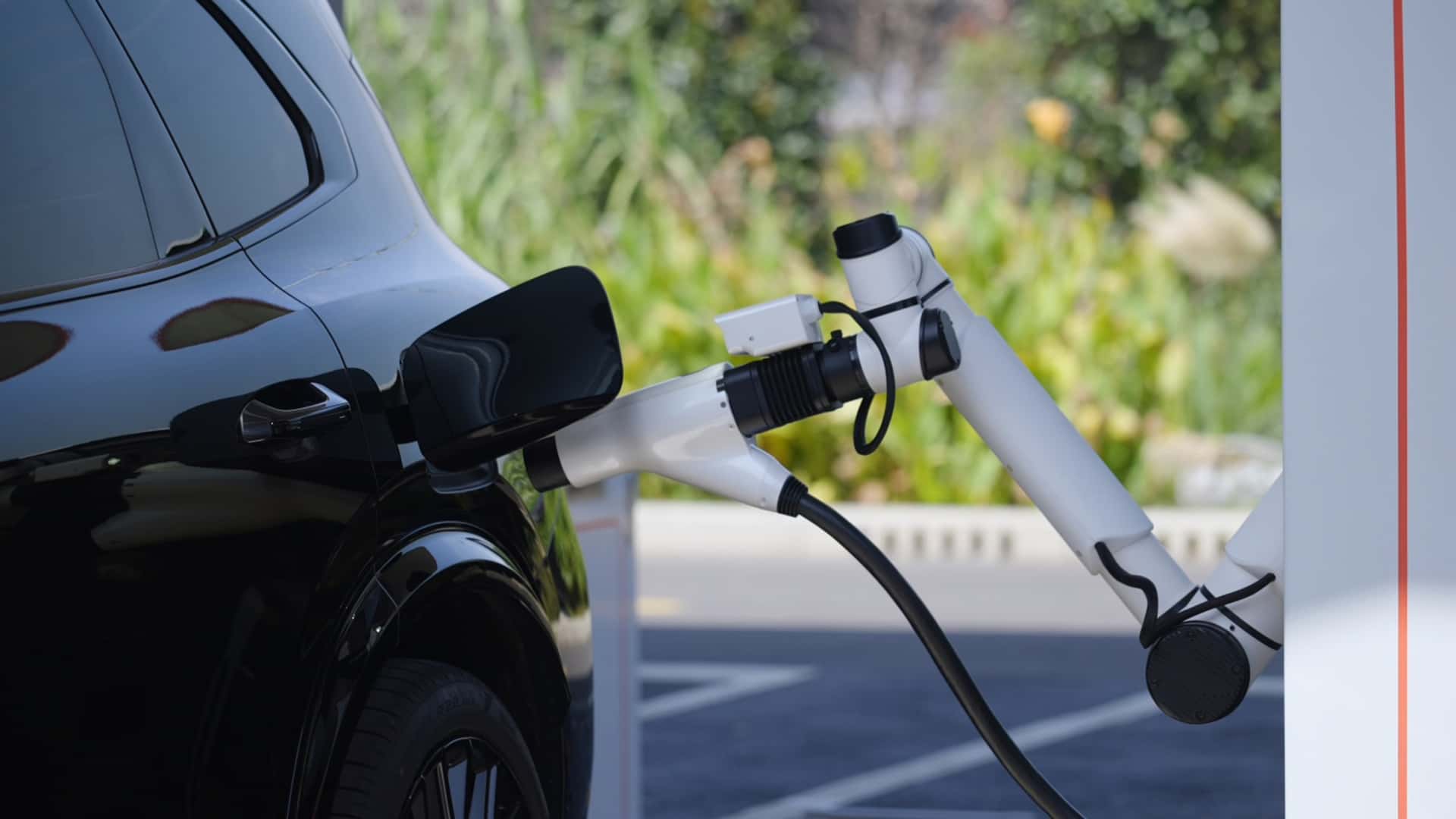
China’s automotive giant Geely Auto Group has unveiled a groundbreaking electric vehicle (EV) charging system, boasting an unprecedented peak charging speed of 2.25 megawatts. This advancement significantly outpaces existing industry benchmarks, including the 1.5-megawatt Flash chargers introduced by rival BYD last year, positioning Geely at the forefront of ultra-fast EV charging technology.
Key Takeaways
- Geely’s new Smart Charging System delivers an industry-leading 2.25 megawatts of peak charging power.
- Equipped Lynk & Co 10 and Zeekr 001 models can achieve a 10-70% charge in a mere 4 minutes and 30 seconds.
- The system incorporates an AI-powered thermal management solution, Xingrui PowerMind, to safeguard battery health during rapid charging.
- A novel “lithium-ion pulse restoration” technology targets lithium plating, a common degradation issue in ultra-fast charging scenarios.
- This development sets a new global standard, substantially exceeding charging speeds available in Western markets.
Geely’s EV Charger: Redefining Rapid Recharge
The announcement from Geely Auto Group on Wednesday marked a significant milestone for electric mobility. The company revealed its fifth-generation Smart Charging System alongside a new Ultra Short Blade Battery. This powerful Geely’s EV Charger system can deliver an astonishing 2,250 kilowatts of peak charging speed, fundamentally altering the landscape of fast charging infrastructure.
This capacity not only overshadows current Western EV and charging solutions but also escalates the intense competition within the Chinese EV market. The race for superior fast-charging speeds has seen major players like Geely and BYD vying for technological dominance, with Geely now claiming a decisive lead.
Unprecedented Charging Times for Lynk & Co and Zeekr
Leveraging this advanced charging system and the new battery architecture, electric vehicles from Geely Auto Group’s premium brands, Lynk & Co and Zeekr, demonstrate remarkable real-world charging performance. The automaker asserts that these vehicles can achieve a 10-70% state of charge in just 4 minutes and 30 seconds.
Furthermore, a more comprehensive charge from 10% to 97% is reportedly completed in a swift 8 minutes and 40 seconds. To put this into perspective, BYD’s previously impressive Flash chargers manage a 10-70% charge in approximately five minutes and a 10-97% charge in nine minutes, highlighting Geely’s significant leap forward in efficiency.
Intelligent Thermal Management and Battery Protection
Such formidable power delivery, while beneficial for speed, inherently poses risks to battery longevity if not meticulously managed. Pumping electrons into a battery at these blistering speeds can lead to detrimental effects on the cells. Geely has addressed this critical concern with an innovative suite of technologies.
Central to this protection is an AI-powered system dubbed Xingrui PowerMind. This intelligent system is designed to continuously predict battery temperatures and dynamically adjust charging speeds. Its primary objective is to maintain the battery’s average temperature at an optimal 55 degrees Celsius, with a strict ceiling of 65 degrees Celsius, thereby preserving the battery’s long-term health and performance.
Integrated Liquid Cooling for Sustained Performance
Beyond intelligent software, Geely’s EV Charger system incorporates an advanced thermal management solution, termed an “end-to-end five-point liquid cooling” system. This comprehensive system orchestrates heat management across multiple crucial components:
- The battery pack itself.
- The charging port.
- The charging cable.
- The charging dispenser.
- The energy storage batteries that support the charging stations.
This coordinated approach to thermal regulation across the entire charging ecosystem is pivotal in enabling the system to consistently deliver 2.2 megawatts of power, a level of speed previously considered unattainable for a single charging plug.
Addressing Lithium Plating with Pulse Restoration
Geely has also made notable claims regarding its new Ultra Short Blade Battery technology. The company reports the development of a “lithium-ion pulse restoration” technology. This innovative feature utilizes micro pulse currents to reactivate lithium ions that accumulate at the anode during repeated cycles of fast charging.
This process directly addresses the phenomenon known as lithium plating. During ultra-fast charging, lithium ions can accumulate and deposit as metallic lithium on the anode, rather than smoothly intercalating into the electrode material. This plating can degrade battery capacity, reduce its lifespan, and even pose safety risks. Analogous to pouring water into a bottle faster than its opening can accommodate, causing spillage, lithium plating occurs when ions cannot be absorbed quickly enough.
In theory, these micro pulses could effectively dislodge these ‘stuck’ lithium ions, restoring their mobility and utility within the battery. This could significantly mitigate the degradation commonly associated with frequent ultra-fast charging, reinforcing the long-term viability of Geely’s EV Charger system.
Global Comparisons: China Leads the Charge
To contextualize Geely’s achievement, it is imperative to examine the fastest-charging EVs currently available in Western markets, particularly in the United States. Models such as the Lucid Gravity and the Porsche Cayenne Electric represent the upper echelon with maximum charging rates of 400 kilowatts. While impressive, this figure is a fraction of Geely’s 2.25-megawatt capacity.
The upcoming Mercedes-AMG GT 4-Door Coupe is anticipated to set a new benchmark among Western automakers with a peak charging speed of 600 kilowatts, enabling a 10-80% charge in just 11 minutes. Even this advanced Western offering, however, remains significantly behind the speeds now routinely available in China. Although Geely has not explicitly stated the maximum charging rate its individual vehicles can sustain, the system’s output capability sets a new global standard.
Deployment Scale: The Next Frontier for Geely’s EV Charger
While Geely has made an undeniable technological leap, the practical impact of such innovation also hinges on the scale of deployment. Rival BYD currently holds an advantage in this regard. As of August, BYD had already deployed 10,000 of its T-shaped Flash chargers across China, with ambitious plans to expand this network to 20,000 by the end of the year. Moreover, BYD is targeting the installation of 3,000 of these megawatt-class chargers in Europe.
The critical question now facing Geely is whether it can match or exceed this extensive deployment strategy. The widespread availability of ultra-fast charging infrastructure is as crucial as the technology itself for accelerating EV adoption. The coming years will reveal how rapidly Geely can roll out its powerful EV charger network, both domestically and potentially internationally, to capitalize on its technological lead.
Impact on the Future of Electric Mobility
The introduction of Geely’s 2.25-megawatt EV charger represents more than just a technological upgrade; it signifies a pivotal moment in the evolution of electric vehicles. Rapid charging speeds directly address one of the most persistent concerns among potential EV buyers: range anxiety and the inconvenience of long charging times.
By bringing charge times closer to the refueling experience of traditional internal combustion engine vehicles, Geely’s innovation could accelerate the mainstream adoption of EVs globally. As the automotive industry continues its pivot towards electrification, such advancements in infrastructure and battery technology will be crucial determinants of success, fostering greater confidence and accessibility for electric vehicle users.
FAQ Section
What is the peak charging speed of Geely’s new EV charger?
Geely’s latest Smart Charging System can deliver an unprecedented peak charging speed of 2.25 megawatts (2,250 kilowatts), making it the fastest EV charger currently announced globally.
How quickly can Geely’s EVs charge with this new system?
EVs from Geely Auto Group brands like Lynk & Co and Zeekr can charge from 10-70% in approximately 4 minutes and 30 seconds, and from 10-97% in 8 minutes and 40 seconds.
What technologies does Geely use to protect the battery during ultra-fast charging?
Geely employs an AI-powered system called Xingrui PowerMind to dynamically adjust charging speeds and maintain optimal battery temperatures. It also features an “end-to-end five-point liquid cooling” system for comprehensive thermal management.
What is “lithium-ion pulse restoration” technology?
This technology uses micro pulse currents to reactivate lithium ions that accumulate on the anode during rapid charging. This process aims to prevent lithium plating, which can degrade battery performance and lifespan over time.
How does Geely’s EV charger compare to Western fast-charging systems?
Geely’s 2.25-megawatt system significantly surpasses Western counterparts. For instance, some of the fastest U.S. EVs like Lucid Gravity and Porsche Cayenne Electric have maximum rates of 400 kilowatts, while the Mercedes-AMG GT 4-Door Coupe is expected to reach 600 kilowatts.
What is the primary challenge for Geely’s new charging technology?
The main challenge for Geely, despite its technological lead, will be the widespread deployment and scaling of its 2.25-megawatt charging infrastructure to match or exceed the extensive networks being rolled out by competitors like BYD.