
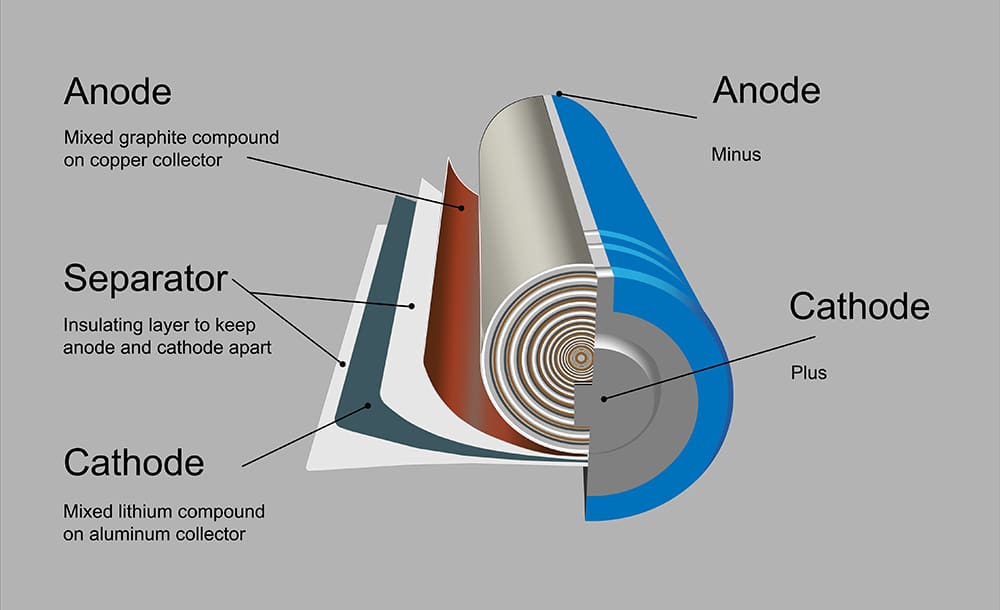
Key Takeaways:
- Graphite One has secured a prime site in Conneaut, Ohio, for its Active Anode Materials facility, strategically leveraging Great Lakes access and rail connectivity.
- The facility aims for Phase One production of 10,000 tonnes per year by Q4 2027, producing diverse anode materials crucial for lithium-ion batteries in EVs and grid storage.
- A Phase Two expansion targeting 25,000 tonnes per year of graphitization capacity is planned for Q3 2028, significantly increasing domestic processing capabilities.
- This project is vital for reducing the United States’ 100% reliance on imported natural graphite, utilizing the nation’s largest graphite deposit in Alaska.
- Graphite One is actively engaging with major EV manufacturers and battery companies, having delivered commercial-grade samples and initiated binding offtake discussions.
In a significant move poised to reshape the electric vehicle (EV) and energy storage landscape in the United States, Graphite One has officially secured a strategic site in Conneaut, Ohio, for its ambitious Active Anode Materials facility. This development marks a pivotal step in establishing a robust domestic supply chain for critical battery components, directly addressing the nation’s complete import dependence on natural graphite.

The planned facility, set to be a cornerstone of American critical mineral processing, underscores a broader national effort to secure essential materials for the burgeoning EV industry and large-scale grid storage solutions. With an aggressive timeline, Graphite One aims to commence production by late 2027, laying the groundwork for substantial domestic output of high-grade graphite anode materials.
Strategic Location and Logistical Advantages
The selection of Conneaut, Ohio, as the location for the state-of-the-art battery anode materials facility is a testament to its unparalleled logistical advantages. Situated on the shores of Lake Erie, the site offers direct access to the vital Great Lakes shipping corridor. This waterway connectivity is crucial for the efficient transportation of raw materials and finished products, reducing reliance on less sustainable or cost-effective modes.
Beyond water access, the Conneaut site boasts multi-line CN rail connectivity, further enhancing its appeal as an industrial hub. Rail infrastructure provides a reliable and high-capacity means for inbound raw materials and outbound processed graphite anode materials, streamlining the company’s vertically integrated supply chain. Moreover, the presence of an existing on-site substation ensures a readily available and robust power supply, essential for the energy-intensive processing operations.
These combined attributes position the Ohio facility as a highly efficient and economically viable center for graphite processing. The strategic location not only minimizes transportation costs and environmental impact but also strengthens the resilience of the domestic supply chain, a critical factor for national energy security and industrial independence.
Ambitious Production Timelines and Capacities
Graphite One’s plans for the Ohio battery anode materials facility are characterized by ambitious targets and a phased approach to scaling production. The company anticipates completing construction of Phase One by the fourth quarter of 2027, setting the stage for initial commercial operations. This rapid development schedule highlights the urgency and strategic importance of establishing domestic processing capabilities for graphite anode materials.
Phase One production is projected at 10,000 tonnes per year of processed anode materials, a significant volume designed to meet a diverse range of market demands. This output will be meticulously split across three key categories:
- 4,000 tonnes of energy storage material, vital for grid-scale battery systems and other stationary applications.
- 3,000 tonnes of fast-charging material, critical for advanced EV batteries that require rapid recharge capabilities.
- 3,000 tonnes of high-energy-density material, essential for enhancing the range and performance of electric vehicles.
All these materials are specifically engineered for lithium-ion battery applications, targeting both the rapidly expanding EV market and the crucial grid storage sector. The diversified product portfolio ensures that Graphite One can cater to various segments of the battery industry, maximizing its impact on the domestic supply chain.
Expanding Graphitization Capacity in Phase Two
Looking beyond initial operations, Graphite One has outlined plans for a substantial Phase Two expansion. Targeted for the third quarter of 2028, this expansion aims to achieve a graphitization capacity of 25,000 tonnes per year. Graphitization is a highly specialized and energy-intensive process that converts raw graphite into the high-purity, spherical graphite required for premium battery anodes.
The significant increase in graphitization capacity underscores Graphite One’s commitment to becoming a major player in the domestic production of advanced battery materials. This expansion will further solidify the Ohio facility’s role in supplying the burgeoning North American EV and energy storage industries, reducing dependence on foreign sources for this critical processing step.
Paving the Way for Domestic Graphite Supply
A central pillar of Graphite One’s strategy is its vertically integrated model, designed to create a secure, end-to-end domestic supply chain for natural graphite. The United States currently faces a critical vulnerability: it is 100% import-dependent for natural graphite, a mineral indispensable for modern lithium-ion batteries. This reliance on foreign sources poses significant economic and national security risks, particularly amidst global supply chain uncertainties.
Graphite One’s innovative approach directly addresses this challenge by linking its Graphite Creek deposit in Alaska to the processing facilities in Ohio. The Graphite Creek deposit, identified by the U.S. Geological Survey (USGS) as the largest graphite deposit in the country, represents an invaluable national resource. Leveraging this domestic source is paramount to achieving supply chain resilience and strategic independence.
The integration plan involves extracting raw graphite from the Alaskan deposit and transporting it to the Ohio processing facilities, likely via the Port of Nome and the Great Lakes shipping corridor. This seamless flow from mine to market within U.S. borders is a game-changer, offering a secure alternative to current import channels and significantly strengthening North American resource security.
Industry Engagement and Future Prospects
Graphite One’s progress is not merely theoretical; the company has already demonstrated tangible engagement with key players in the EV and battery manufacturing sectors. According to company statements, Graphite One has delivered commercial-grade anode material samples—in quantities of up to 20 kg—to three major EV manufacturers and three prominent battery companies. This proactive engagement reflects a strong market interest in securing domestic sources of battery materials.
These potential customers are currently undertaking rigorous specification testing of the samples. This testing phase is crucial for validating the material’s performance, purity, and suitability for their specific battery chemistries and applications. Successful testing outcomes are essential precursors to formal commercial agreements and widespread adoption.
Encouragingly, Graphite One has entered into binding offtake discussions with participants from this group of manufacturers and battery companies. While no agreements have yet been signed, these advanced discussions indicate a high level of confidence in Graphite One’s product quality and its potential to deliver at scale. Securing long-term offtake agreements will be critical for the financial viability and long-term success of the Ohio battery anode materials facility.
The Broader Impact on the EV and Energy Storage Landscape
The establishment of Graphite One’s battery anode materials facility in Ohio represents more than just a new industrial plant; it signifies a strategic shift in the broader landscape of the clean energy transition. By providing a secure and domestic source of graphite anode materials, the facility directly supports the growth of EV manufacturing within the United States, reducing reliance on geopolitical factors that can disrupt global supply chains.
This initiative aligns with national objectives to foster a robust domestic EV ecosystem, encompassing everything from raw material extraction and processing to battery cell production and vehicle assembly. It also plays a crucial role in enhancing the resilience of the nation’s energy infrastructure by providing essential components for grid-scale energy storage solutions, which are vital for integrating renewable energy sources like solar and wind power.
Beyond its direct industrial impact, the project is expected to create significant economic opportunities in the Ohio region, including job creation in advanced manufacturing, logistics, and related support services. It also demonstrates how a strategic focus on critical minerals can drive innovation and economic growth, positioning the U.S. as a leader in the global clean energy economy.
The move by Graphite One is a powerful illustration of private sector leadership in addressing critical national supply chain vulnerabilities. As the world transitions towards sustainable energy and electric mobility, securing the raw materials and processing capabilities at home becomes not just an economic imperative, but a cornerstone of national security and technological leadership.
Frequently Asked Questions (FAQs)
What is the primary purpose of Graphite One’s new facility in Ohio?
The Graphite One facility in Conneaut, Ohio, is designed to produce Active Anode Materials for lithium-ion batteries. Its primary purpose is to establish a domestic supply chain for natural graphite, reducing the United States’ 100% reliance on imported sources for this critical EV and energy storage component.
What makes the Conneaut, Ohio, location strategic for this project?
The Conneaut site offers several strategic advantages, including direct access to Lake Erie and the Great Lakes shipping corridor, multi-line CN rail connectivity, and an existing on-site electrical substation. These features ensure efficient logistics for raw materials and finished products, as well as a reliable power supply for operations.
What are the planned production capacities for the Ohio facility?
Phase One production, targeted for Q4 2027, is planned at 10,000 tonnes per year of various anode materials. A Phase Two expansion, aimed for Q3 2028, will boost graphitization capacity to 25,000 tonnes per year, significantly increasing the output of high-purity battery-grade graphite.
How does this project address the US’s dependence on imported graphite?
The project directly addresses US import dependence by leveraging the Graphite Creek deposit in Alaska, identified as the largest in the nation. Graphite One’s vertically integrated model links this domestic resource to processing facilities in Ohio, creating a secure, end-to-end US-based supply chain for natural graphite.
What types of anode materials will be produced at the facility?
The facility will produce a diversified range of anode materials, including 4,000 tonnes of energy storage material, 3,000 tonnes of fast-charging material, and 3,000 tonnes of high-energy-density material annually in Phase One. These are all crucial for lithium-ion battery applications in electric vehicles and grid storage systems.
Has Graphite One engaged with potential customers for its materials?
Yes, Graphite One has delivered commercial-grade anode material samples to three major EV manufacturers and three battery companies. These entities are currently conducting specification testing, and the company has entered into binding offtake discussions with participants from this group, signaling strong market interest.
What is the timeline for the facility’s construction and operation?
Graphite One aims to complete construction of Phase One of the Active Anode Materials facility by Q4 2027, with production commencing shortly thereafter. The Phase Two expansion, targeting increased graphitization capacity, is planned for Q3 2028.
What is graphitization capacity, and why is it important?
Graphitization capacity refers to the facility’s ability to convert raw graphite into high-purity, spherical graphite suitable for battery anodes. This specialized processing step is critical because it enhances the performance, longevity, and safety of lithium-ion batteries. Increasing this capacity domestically is vital for producing advanced battery materials within the US.