
Key Takeaways
- Researchers at Hanyang University have established 2.5 nanometers as the minimum effective thickness for lithium niobium oxide (LNO) coatings to protect cathodes in sulfide-based all-solid-state batteries.
- This critical discovery provides a quantitative benchmark for optimizing the cathode-electrolyte interface, a persistent challenge in developing next-generation battery technology.
- The study, published in *Energy Storage Materials*, highlights that a 2.5 nm LNO coating significantly suppresses degradation reactions, extending cycle life by 43% and halving interfacial resistance compared to uncoated cells.
- While thinner 1.0 nm coatings showed higher initial capacity, they failed to prevent side reactions, leading to considerably shorter cycle life and increased resistance.
- The research utilized rotary powder atomic layer deposition (ALD) to apply LNO coatings to NCM811 cathode powders, a method deemed promising for scalable manufacturing despite existing integration challenges.
SEO Keyword: sulfide solid-state battery cathodes
In a significant stride towards the advancement of next-generation energy storage, researchers at Hanyang University have pinpointed a crucial parameter for improving the longevity and performance of sulfide-based all-solid-state batteries. Their groundbreaking study identifies 2.5 nanometers as the precise minimum thickness required for lithium niobium oxide (LNO) coatings to effectively shield cathode materials, thereby offering a much-needed quantitative guideline for the field.

This finding addresses a critical challenge in the development of solid-state batteries, particularly those employing sulfide solid electrolytes. These electrolytes, while promising for their high ionic conductivity, are inherently reactive at the cathode interface. This reactivity leads to the formation of resistive degradation products upon contact with active cathode materials, which significantly curtails the battery’s cycle life and overall efficiency.
The Promise and Challenge of Sulfide Solid-State Batteries
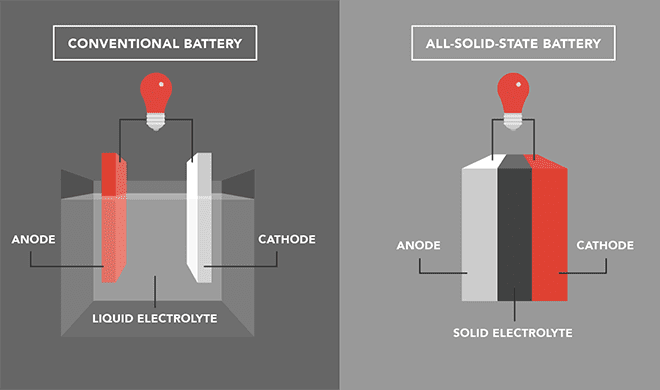
Solid-state batteries are widely regarded as a potential successor to conventional lithium-ion batteries, offering superior safety, higher energy density, and faster charging capabilities. Among various solid electrolyte types, sulfide-based solid electrolytes stand out due to their excellent ionic conductivity, which rivals that of liquid electrolytes.
Despite their advantages, sulfide solid-state batteries face considerable hurdles. The primary issue revolves around the chemical instability at the interface between the cathode material and the sulfide electrolyte. This interface is prone to side reactions that form a high-resistance layer, leading to capacity fade and premature battery failure.

To counteract this, protective coatings are applied to cathode materials. These thin films act as diffusion barriers, preventing direct contact between the cathode and the solid electrolyte, thereby mitigating unwanted chemical interactions. However, determining the optimal thickness of these coatings has remained an empirical challenge, lacking a precise quantitative understanding.
Hanyang University’s Breakthrough Methodology
The research team at Hanyang University focused their efforts on lithium niobium oxide (LNO) as the protective coating material. LNO is recognized for its chemical stability and insulating properties, making it an ideal candidate for interfacial protection in solid-state battery systems. The team applied these LNO coatings to NCM811 cathode powders, a nickel-rich lithium nickel cobalt manganese oxide often favored for its high energy density.
A sophisticated rotary powder atomic layer deposition (ALD) technique was employed for the coating process. ALD is a thin-film deposition method known for its exceptional control over film thickness and conformality, crucial for achieving uniform and precise coatings even on complex powder geometries. The Hanyang team utilized a supercycle ALD method, meticulously alternating lithium and niobium deposition steps with ozone exposure to ensure precise control over the composition and thickness of the LNO layers.
Quantifying the Optimal Coating Thickness
To establish a quantitative lower bound for effective protection, the researchers deposited LNO coatings at three distinct thicknesses: 1.0 nm, 2.5 nm, and 5.0 nm. The performance of cells fabricated with these varied coating thicknesses was then rigorously evaluated, revealing a clear trade-off between initial capacity and long-term cycle stability.
The cells with a 1.0 nm LNO coating exhibited the highest initial discharge capacity, reaching 229 mAh g⁻¹. However, this initial advantage was short-lived. The cycle life of these cells was approximately 28% shorter than those with a 2.5 nm coating, and their interfacial resistance was a staggering 59% higher. Spectroscopic analysis provided crucial insights, confirming that side reactions were not effectively suppressed at this minimal thickness, indicating that the 1.0 nm coating was simply too thin to prevent detrimental electrolyte contact.
In contrast, the 2.5 nm coated cells achieved an initial capacity of 216 mAh g⁻¹. More importantly, these cells demonstrated significantly improved cycle stability. The comprehensive analysis confirmed that side reactions at the cathode-electrolyte interface were effectively suppressed at this thickness. Further increasing the coating to 5.0 nm led to a slight reduction in initial capacity to 207 mAh g⁻¹ without providing any meaningful additional gain in cycle life. This indicated that 2.5 nm represented a sweet spot, offering substantial protection without unduly sacrificing initial energy storage capability.
Impact on Battery Performance and Longevity
The performance benefits of the 2.5 nm LNO coating were stark when compared to an uncoated cell. The Hanyang University team reported that the 2.5 nm coating extended the battery’s cycle life by an impressive 43%. Furthermore, it managed to cut the interfacial resistance to less than half, a critical factor in enhancing power delivery and reducing energy loss during charging and discharging.
Prof. Tae Joo Park, who spearheaded this pivotal research, articulated the significance of their findings: “Our results show that the minimum effective thickness of the LNO protective layer to suppress side reactions in sulfide-based ASSBs is 2.5 nm. This provides a practical guideline for cathode–electrolyte interface optimization in next-generation solid-state batteries.” This quantitative benchmark is invaluable for battery developers, enabling them to design more robust and efficient sulfide solid-state battery cathodes with greater precision.
Scalability and Future Prospects for Electric Vehicles
The methodology employed, specifically powder ALD, holds considerable promise for scalable manufacturing processes. The ability to uniformly coat powdered cathode materials is essential for high-volume production of solid-state batteries, which will be critical for their widespread adoption in electric vehicles (EVs) and other applications requiring advanced energy storage solutions.
However, the researchers acknowledge that integrating such advanced coating techniques into gigafactory-scale production lines remains an open challenge. Overcoming these manufacturing hurdles will be key to transitioning solid-state battery technology from laboratory breakthroughs to commercial reality. Nevertheless, the fundamental understanding provided by this research on the optimal LNO coating for sulfide solid-state battery cathodes represents a significant step forward.
As the demand for more efficient, safer, and longer-lasting batteries continues to grow, particularly within the rapidly expanding electric vehicle market, advancements in core battery components like sulfide solid-state battery cathodes are paramount. This research from Hanyang University, published in the esteemed journal *Energy Storage Materials*, provides a clear pathway for engineers and scientists to refine battery designs, paving the way for the next generation of high-performance energy storage solutions. The focus on enhancing the stability and longevity of sulfide solid-state battery cathodes underscores the ongoing global effort to unlock the full potential of these transformative power sources.
FAQ Section
What is the main finding of the Hanyang University study?
The study determined that 2.5 nanometers is the minimum effective thickness for lithium niobium oxide (LNO) coatings to protect cathode materials in sulfide-based all-solid-state batteries, significantly suppressing degradation reactions and improving battery life.
Why are sulfide-based all-solid-state batteries important?
Sulfide-based all-solid-state batteries offer potential advantages over traditional lithium-ion batteries, including enhanced safety, higher energy density, and faster charging capabilities, making them crucial for the future of electric vehicles and portable electronics.
What problem does the LNO coating address?
The LNO coating acts as a diffusion barrier, preventing direct chemical reactions between reactive sulfide solid electrolytes and cathode active materials. These reactions typically form resistive degradation products that shorten the battery’s cycle life.
How was the LNO coating applied to the cathode materials?
The LNO coating was applied to NCM811 cathode powders using a rotary powder atomic layer deposition (ALD) method. This technique allows for precise control over the film thickness and ensures uniform coverage of the particles.
What were the performance differences between the tested coating thicknesses?
A 1.0 nm coating showed high initial capacity but poor cycle life. The 2.5 nm coating achieved optimal performance with a 43% extended cycle life and over 50% reduction in interfacial resistance compared to uncoated cells. A 5.0 nm coating offered no significant additional benefits.
What are the practical implications of this research?
This research provides a quantitative guideline for optimizing the cathode-electrolyte interface in sulfide solid-state batteries, which can lead to the development of more stable and durable battery cells. It aids in designing next-generation batteries with improved longevity.
What are the challenges for integrating this technology into manufacturing?
While powder atomic layer deposition (ALD) is a promising method for scalable production, integrating this sophisticated coating technique into large-scale gigafactory manufacturing operations still presents significant logistical and engineering challenges that need to be addressed.