
Key Takeaways:
- Horizon Motor has debuted a new Class 8 electric truck, aiming to compete directly with established players like Tesla Semi.
- The e-truck features a 350-mile range, a two-seat half-sleeper cab, and a dual-plug CCS1 charging system, with a curb weight of 29,000 pounds.
- The first production unit is slated for real-world testing with a California fleet customer, with orders expected to commence soon.
- Horizon plans to integrate solid-state batteries, which could either halve battery weight or double range, following a significant supply agreement.
- CEO Sean Jones highlights the substantial ROI of electric trucks through fuel savings and simpler maintenance, but acknowledges current limitations for long-haul routes and the cost inefficiency of hydrogen fuel cells.
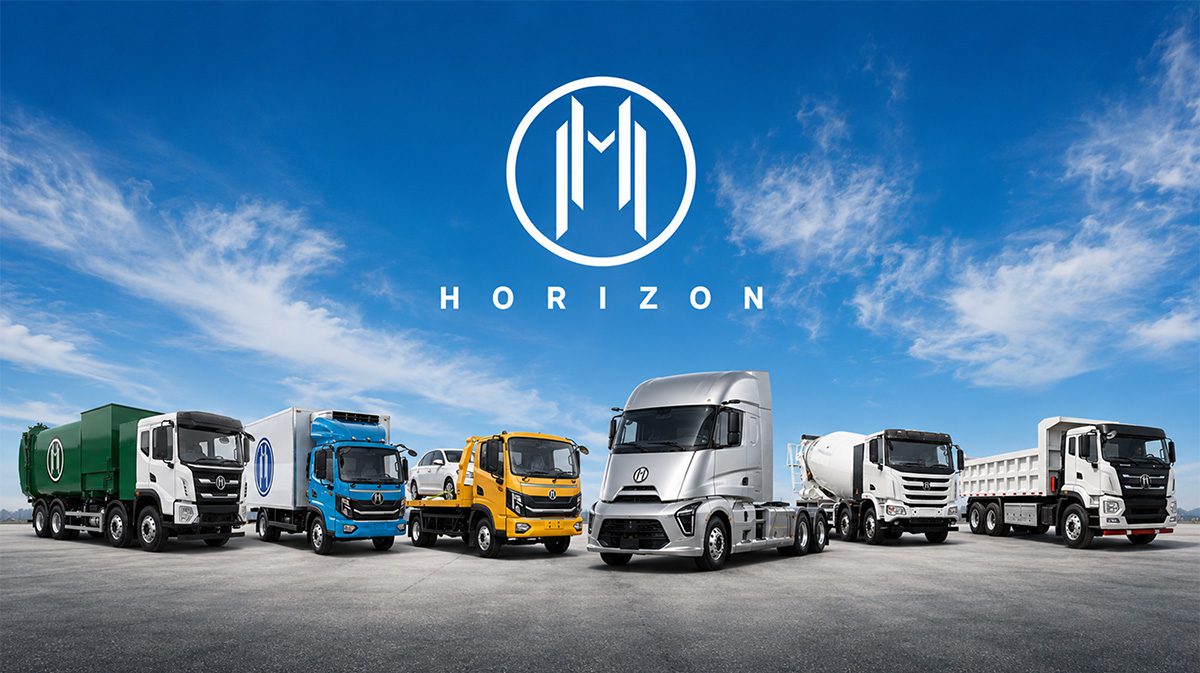
In a significant development for the heavy-duty trucking sector, startup Horizon Motor has officially unveiled its new Class 8 electric truck. Positioned as a direct competitor to existing models, including the Tesla Semi, this new entrant aims to carve out a substantial share in the rapidly evolving market for sustainable commercial vehicles. The reveal took place at the recent ACT Expo 2026, drawing considerable attention from industry experts and potential fleet operators.
The introduction of Horizon Motor’s Class 8 electric truck comes at a time when the electric vehicle (EV) transition in commercial transport is gaining momentum, yet faces complex challenges. While legacy OEMs such as Volvo, Daimler Truck, and Traton have their own electric truck offerings, there’s a perception in the industry that some are more inclined towards lobbying efforts than aggressive market competition. This landscape creates an opening for agile startups like Horizon Motor, alongside innovators such as Tesla and Windrose, which are pushing the boundaries with competitively priced Class 8 electric trucks.
Horizon Motor’s Entry into the Electric Commercial Vehicle Market
Jay Traugott, Senior Editor at Clean Trucking, provided an initial assessment of the new Horizon e-truck during the ACT Expo 2026, engaging directly with Horizon CEO Sean Jones. This firsthand look offered crucial insights into the vehicle’s design and strategic market approach.
The newly unveiled Class 8 electric truck, designed for heavy-duty applications, boasts a comprehensive set of features tailored for modern logistics. It incorporates a practical two-seat half-sleeper cab, addressing the needs of drivers on varied routes. For recharging, the vehicle is equipped with a dual-plug CCS1 charging system, facilitating efficient power replenishment.

Performance specifications indicate a curb weight of 29,000 pounds, a standard figure for a Class 8 electric truck of this configuration. Crucially, Horizon Motor states that the truck delivers a competitive 350-mile range, making it suitable for a wide array of regional haul and vocational tasks where a robust electric semi-truck is increasingly preferred over traditional diesel variants.
Pilot Program and Production Timeline
The Class 8 electric truck showcased at the ACT Expo 2026 represents Horizon Motor’s first production unit. This truck is not merely a prototype but a fully functional vehicle destined for immediate real-world evaluation. It is set to be deployed with a fleet customer in California, a state often at the forefront of electric vehicle adoption and regulatory mandates.
This deployment marks a critical step for Horizon Motor, allowing the company to gather essential operational data and refine its product based on actual commercial usage. Following this testing phase, Horizon plans to commence taking orders in the near future, with an ambitious delivery timeline projected between 120 and 150 days from order placement. Such a rapid turnaround would be a significant advantage in an industry often characterized by longer lead times for new heavy-duty EVs.
Advancements in Battery Technology: The Solid-State Vision
Looking to the future, Horizon Motor has already outlined ambitious plans to transition its Class 8 electric truck lineup to advanced solid-state batteries. This strategic move highlights the company’s commitment to innovation and pushing the capabilities of electric heavy-duty transport.
Sean Jones, Horizon CEO, shared details on this forward-looking strategy during his discussion with Clean Trucking. He revealed that Horizon Motor has secured a significant agreement to procure up to one gigawatt-worth of solid-state batteries. These next-generation batteries are renowned for having twice the energy density of current battery technologies, promising substantial enhancements for the Class 8 electric truck.
Speaking on the transformative potential, Jones stated, “When that agreement goes through, we should be able to start swapping our vehicles over to the new solid-state batteries, so we have the choice of either dropping half the battery weight or doubling range.” This flexibility in application – either reducing the overall vehicle weight to increase payload capacity or dramatically extending the operational range – could significantly improve the economic viability and appeal of Horizon’s electric trucks for a wider range of fleet operators and logistics companies.
Economic Incentives for Electric Truck Adoption
Sean Jones is a strong advocate for the economic benefits of electric vehicles, particularly in the commercial sector. He firmly believes that electric propulsion will replace diesel in numerous use cases in the foreseeable future, driven primarily by compelling financial returns for fleet owners. The total cost of ownership (TCO) for a Class 8 electric truck is becoming increasingly attractive.
Highlighting the immediate financial advantages, Jones explained, “It’s by far the best ROI you have.” He elaborated on the substantial operational savings: “You’re talking about normally like 60 percent fuel savings and right now almost 80 percent fuel savings.” Beyond fuel, he emphasized the inherent simplicity of electric powertrains compared to their diesel counterparts.
Jones further articulated the operational advantages: “And these things are such simple vehicles compared with diesel. You’ve got a battery, you’ve got a motor, you’ve got some controllers. I was at some presentations about the new diesel trucks and what they’re doing to try and make them more efficient. Basically they’re just adding a lot more complexity.” This reduced complexity translates into fewer moving parts, lower maintenance requirements, and ultimately, greater uptime for heavy-duty transport operations.
Navigating the Challenges: Long-Haul and Hydrogen Fuel Cells
While optimistic about the widespread adoption of Class 8 electric trucks, Sean Jones also offered a pragmatic perspective on their current limitations, especially concerning ultra-long-haul routes. The comprehensive electrification of the freight industry still faces significant infrastructural hurdles, which must be addressed for seamless integration of heavy-duty EVs across all segments.
Jones candidly acknowledged the current boundaries, stating, “It’s not going to work for long-haul thousand-mile trips.” He attributed this limitation primarily to the nascent stage of the necessary charging infrastructure: “The infrastructure isn’t there. There are places where diesel is going to be around for a long, long time.” This realistic assessment underscores that while the EV transition is accelerating, it will likely be a phased process, with diesel continuing to serve specific niches until charging networks are robust enough for widespread long-distance electric freight.
Horizon Motor’s experience also extends to alternative fuel technologies, specifically hydrogen fuel cells. Jones recounted the company’s foray into this area, noting, “We actually built a hydrogen fuel cell truck back in 2019.” However, this early experience revealed significant operational and economic drawbacks compared to battery-electric solutions.
He detailed the complexities associated with hydrogen, citing challenges such as “just the complexity of those things and trying to get the fuel cells not to fail after 60,000 miles—and the testing that you have to do on the tanks regularly.” Beyond the technical and maintenance complexities, the cost factor proved prohibitive. “Even with diesel at the current price, hydrogen’s best case is about three times the cost per mile. We just could not figure out a way our customers could make money with it,” Jones concluded, explaining Horizon Motor’s current focus on battery-electric Class 8 electric truck development.
The Evolving Landscape of Commercial Freight Transport
Horizon Motor’s strategic entry into the Class 8 electric truck market underscores the dynamic and competitive nature of the heavy-duty transport industry. The company’s immediate focus on regional haul applications, coupled with its long-term vision for solid-state battery integration, positions it as a significant player to watch.
The push for electric vehicle adoption in commercial fleets is driven by a confluence of environmental goals, regulatory pressures, and increasingly, compelling economic benefits. As charging infrastructure evolves and battery technologies continue to improve, the operational flexibility and cost savings offered by a Class 8 electric truck will only grow, reshaping the future of logistics and supply chain management.
Source: Clean Trucking
Frequently Asked Questions About Horizon Motor’s New Electric Truck
What makes Horizon Motor’s new electric truck competitive?
Horizon Motor positions its Class 8 electric truck as a direct challenger to existing market offerings, including the Tesla Semi. It combines practical features like a half-sleeper cab and a 350-mile range with a strategy focused on future battery advancements and significant operational cost savings for fleet operators. This aggressive market entry highlights its competitive stance.
What are the key specifications of the new Class 8 electric truck?
The Horizon Motor Class 8 electric truck features a two-seat half-sleeper cab, a dual-plug CCS1 charging system, and a curb weight of 29,000 pounds. It boasts a stated range of 350 miles on a single charge, making it suitable for regional hauls and various heavy-duty commercial applications.
When will Horizon Motor’s electric trucks be available for order?
Horizon Motor plans to begin taking orders for its new Class 8 electric truck soon. Following the placement of an order, the company projects a delivery timeline of approximately 120 to 150 days. The first production unit is currently undergoing real-world testing with a California fleet customer.
What is Horizon Motor’s strategy regarding future battery technology?
Horizon Motor intends to transition to solid-state batteries in the future. CEO Sean Jones stated that the company has an agreement to acquire up to one gigawatt of these batteries, which offer double the energy density of current models. This could either reduce battery weight by half or double the truck’s range.
Why does Horizon Motor’s CEO emphasize ROI for electric trucks?
Sean Jones highlights the significant return on investment (ROI) for electric trucks due to substantial fuel savings, potentially up to 80% currently. He also points to the simplicity of electric powertrains compared to complex diesel engines, leading to lower maintenance costs and greater operational efficiency for commercial fleets.
Does Horizon Motor see electric trucks replacing diesel for all routes?
No, Sean Jones acknowledges current limitations. He states that electric trucks are not yet suitable for long-haul thousand-mile trips due to inadequate charging infrastructure. He believes diesel vehicles will continue to be necessary for such routes for a considerable time until the infrastructure matures.
What is Horizon Motor’s stance on hydrogen fuel cell trucks?
Horizon Motor previously built a hydrogen fuel cell truck in 2019 but found the technology to be too complex and expensive. Jones noted challenges with fuel cell reliability after 60,000 miles and regular tank testing, alongside a cost-per-mile three times higher than even current diesel prices, making it unprofitable for customers.