
Key Takeaways:
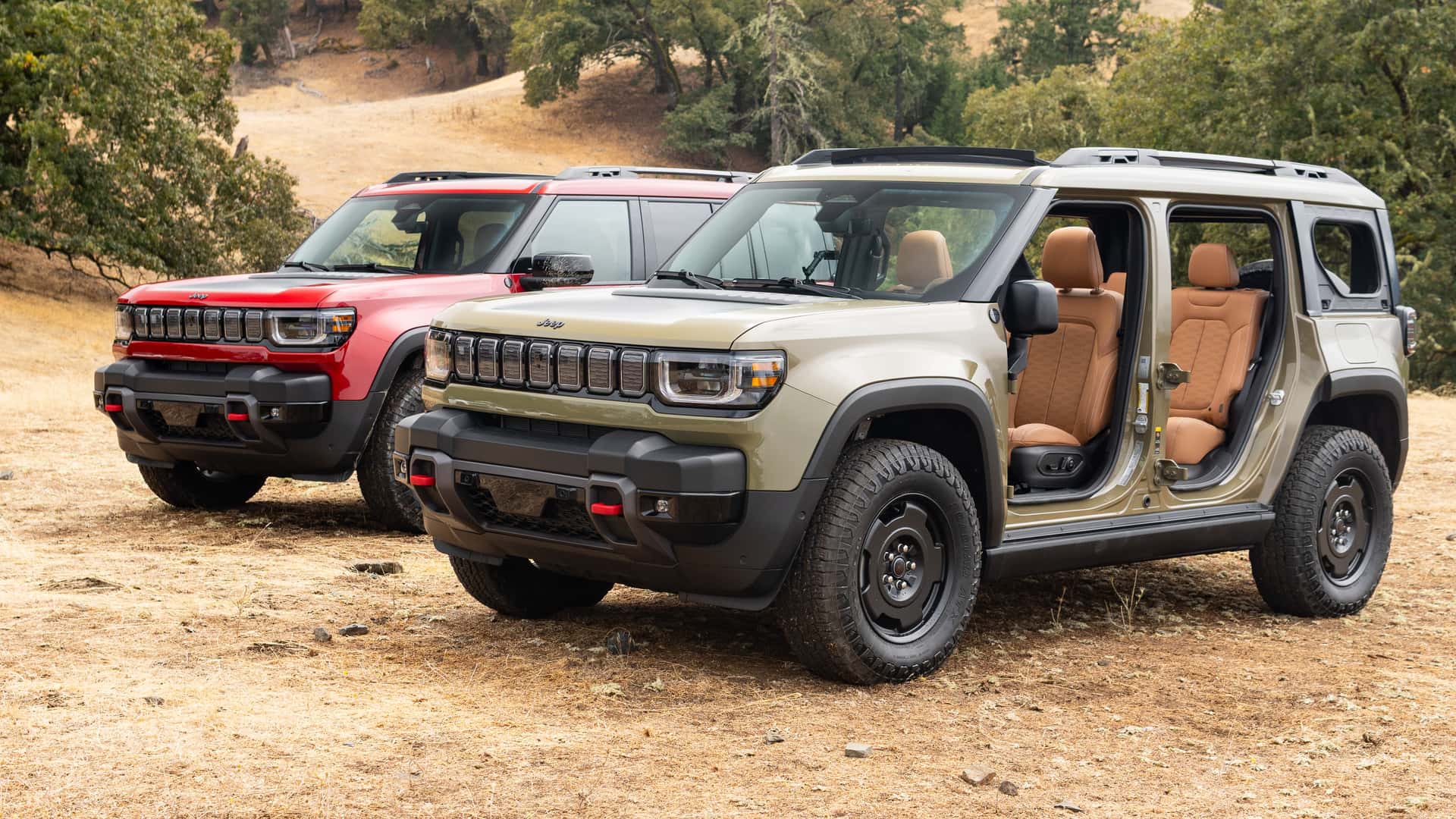
- The all-electric Jeep Recon Moab has faced criticism for its 222-mile range and $66,995 starting price.
- This range is a direct consequence of the vehicle’s design for extreme off-road capability, embodying a fundamental compromise between efficiency and ruggedness.
- Features like high ground clearance, heavy skid plates, 33-inch all-terrain tires, a boxy design, and aggressive 15:1 rear motor gearing significantly reduce the Recon’s efficiency.
- Comparable off-road EVs like the Rivian R1S and Mercedes G580 also demonstrate similar trade-offs, with higher prices for extended range or enhanced capability.
- The inherent challenges of electrifying inefficient vehicle types mean consumers must often choose between range, price, and dedicated off-road features in the current EV market.
The announcement of the all-electric Jeep Recon Moab’s range, reportedly under 230 miles, has ignited considerable debate within the automotive community. Journalists at the Los Angeles Auto Show last year expressed reservations, and subsequent public commentary has often echoed a desire for both extended range and a more accessible price point for the vehicle. Critics argue that Jeep should have engineered the EV to travel farther on a single charge while simultaneously reducing its cost.
Specifically, the Recon Moab’s estimated 222-mile range and a starting price of $66,995 do not position it as a mass-market electric vehicle (EV) immediately compelling to a broad consumer base. However, this perspective, while understandable, may overlook the intricate engineering compromises inherent in developing an EV designed for serious off-road capabilities. The notion that Jeep could have delivered superior range and a lower price without sacrificing performance is a fundamental misunderstanding of automotive manufacturing and the specialized demands of off-roading.
Both car-building and off-roading are disciplines centered on the art of compromise. Achieving exceptional off-road prowess, an attractive price, and extensive electric range are often conflicting objectives. While the Jeep Recon Moab might appear to have under-delivered on range and cost expectations, these aspects are intrinsically linked to its primary design mandate: uncompromised off-road capability.
The Inherent Conflict: Range Versus Off-Road Capability
The dynamic between vehicle efficiency and off-road capability is a long-standing principle, equally applicable to traditional internal combustion engine (ICE) vehicles and their electric counterparts. Drivers of gas-powered, body-on-frame, 4×4 trucks equipped with lifted suspensions and aggressive gearing routinely experience fuel economy figures significantly lower than typical passenger vehicles, often registering less than 20 miles per gallon, and frequently closer to 10 or 15 mpg.
This reality is intuitively understood by experienced off-road enthusiasts. Various design elements crucial for navigating challenging terrains inherently diminish a vehicle’s efficiency on conventional roads. For instance, a tall suspension system, while providing essential ground clearance for rock crawling and overcoming obstacles, dramatically increases aerodynamic drag, particularly at higher speeds.
Similarly, large, knobby, all-terrain tires are indispensable for gripping through mud, sand, and loose surfaces. Yet, these same tires are inherently inefficient and noisy when cruising at highway speeds compared to their smoother, more aerodynamic road-oriented counterparts. The very design that enables superior traction off-road actively works against energy conservation on paved surfaces.
Furthermore, a robust 4×4 system, critical for maintaining traction in slippery or uneven conditions, inherently consumes more energy than a two-wheel-drive system when engaged. Aggressive gearing, another cornerstone of off-road design, significantly amplifies torque at the wheels, which is vital for climbing steep grades and powering through difficult terrain. However, this engineering choice typically results in the powertrain operating at higher revolutions per minute (RPM) during highway cruising, leading to increased fuel consumption in traditional vehicles.
Consider a vehicle like an older Tahoe equipped with 33-inch all-terrain tires, a 4WD system featuring low range, and a potent V-8 engine designed for low-end grunt. Such a configuration would realistically deliver around 13 miles per gallon in city driving, illustrating the direct trade-off between ruggedness and fuel economy.
The Prius Analogy: Visualizing the Compromise
The distinct designs of a Toyota Prius and a Jeep Wrangler visually encapsulate this fundamental trade-off. One is meticulously engineered for optimal fuel efficiency and aerodynamics, while the other is purpose-built for extreme off-road performance. While it is certainly possible to modify a Prius to enhance its off-road capability, such modifications—like lifting the vehicle, adding larger tires, and removing aerodynamic body panels—would inevitably result in a significant reduction in its characteristic 50 mpg fuel economy. Enhancing off-road capability nearly always comes at the expense of on-road efficiency.
These principles remain unchanged in the realm of electric vehicles. High ground clearance, the incorporation of multiple motors (dual-motor designs), sizable tires, and inherently boxy vehicle shapes—all characteristics essential for a capable off-roader—directly contribute to reduced EV range and efficiency. These are not merely optional features; they are foundational requirements for a vehicle to genuinely claim off-road credentials. A vehicle with minimal ground clearance and thin street tires, regardless of its powertrain, cannot effectively tackle rugged trails.
Jeep’s Strategic Engineering Decisions for the Recon
Jeep’s product portfolio already includes an electric vehicle optimized for on-road efficiency: the Wagoneer S. This model, utilizing the same 100.5 kWh battery pack found in the Recon, achieves an impressive estimated range of up to 294 miles. The Wagoneer S, however, features approximately 6 inches of ground clearance and is equipped with street-oriented tires, prioritizing aerodynamic efficiency and on-road performance.
In stark contrast, the Recon is purpose-built for genuine off-road capability. It boasts a substantial 9.1 inches of ground clearance, is fitted with a suite of heavy skid plates for underbody protection, and rolls on robust 33-inch all-terrain tires. Its upright, boxy design is not merely aesthetic; it is engineered to optimize approach and departure angles, crucial metrics for navigating steep inclines and descents without damaging the vehicle. These design elements, while indispensable for off-roading, inherently contribute to higher weight and increased aerodynamic drag, thereby reducing the vehicle’s overall efficiency and, consequently, its Jeep Recon range.
A critical factor often overlooked by the general public is the role of gear ratios in EVs. While electric vehicles do not employ multi-speed transmissions in the same way as ICE vehicles, they still feature fixed gear ratios that dictate how the electric motor’s torque is delivered to the wheels. Taller gear ratios (represented by a lower first number, such as 9:1 for an EV) are optimized for cruising efficiency and higher top speeds.
Conversely, shorter gearing significantly increases the torque delivered to the wheels from a standstill. This enhancement in wheel torque is paramount for off-roading, enabling the vehicle to climb steep obstacles, power through challenging terrain, and exert immense force when required. For the Recon, Jeep has implemented aggressive 15:1 gearing on its rear motor, a decision that makes perfect strategic sense for a dedicated off-road vehicle. An additional benefit of this low gearing is quicker acceleration, contributing to the Recon’s ability to achieve 0-60 mph in 3.6 seconds.
However, this choice comes with an unavoidable trade-off: lower gearing inherently reduces efficiency, especially at higher speeds. This engineering decision partially explains why test drives of the Recon have yielded efficiency figures as low as 2.5 miles per kWh, impacting the overall Jeep Recon range.
Competitor Perspectives: Rivian and Mercedes-Benz
To further contextualize the Recon’s design philosophy, it is valuable to examine how other players in the burgeoning off-road EV segment manage similar trade-offs. The heavier Rivian R1S, for instance, generally demonstrates higher efficiency than the Recon, even when equipped with all-terrain tires.
However, Rivian itself employs strategic limitations: it does not offer all-terrain tires on models equipped with its base 108-kWh battery pack. To opt for all-terrain tires, buyers must upgrade to the larger 140-kWh battery version. Even then, the Rivian R1S’s range drops from an estimated 410 miles to 370 miles with the all-terrain configuration. While 370 miles remains substantial, the cost of this enhanced capability, combined with the larger battery, pushes the price point to approximately $96,000. Furthermore, the Rivian R1S, with its taller gearing and lack of a locking rear differential, misses some of the extreme off-road advantages specifically engineered into the Recon.
Moving up the spectrum, the Mercedes-Benz G580 with EQ Technology represents the pinnacle of electric off-road capability, surpassing both the Recon and R1S. This luxury off-roader features separate low-range gears for each of its four motors. This advanced hardware allows it to offer superior climbing performance compared to the Jeep or Rivian, while also providing the flexibility to switch to higher gears for more efficient on-road cruising.
Despite this clever engineering, a premium price tag of $163,000, and a substantial 116 kWh of usable battery capacity, the Mercedes G580 still achieves an EPA-estimated range of only 239 miles. For all these vehicles, it is also important to anticipate that highway range will likely be significantly lower than combined range estimates, as the aforementioned factors (aerodynamics, tire resistance, gearing) compound at higher speeds.
Implications for the Evolving EV Industry
The discourse surrounding the Jeep Recon range highlights a crucial takeaway for the expanding electric vehicle industry: consumer expectations must adapt to the physical and engineering realities of vehicle design. The electrification pathway is complex, and it has become increasingly apparent that vehicle segments traditionally characterized by high inefficiency — such as heavy-duty trucks and dedicated off-roaders — present the most significant challenges for EV conversion.
It should therefore not come as a surprise when vehicles like the Volkswagen ID. Buzz or the Jeep Recon offer ranges that, on paper, may seem modest compared to sleek, aerodynamically optimized sedans. Integrating an absurdly large battery pack to compensate for inherent inefficiencies comes with substantial cost and weight penalties. A 91-kWh or 100-kWh battery, such as that in the Recon, is far from small or inexpensive to produce.
However, the substantial energy stored in these packs simply does not translate into equivalent mileage when the vehicle in question is large, boxy, and heavy. This effect is compounded when designers add critical off-road enhancements like aggressive all-terrain tires, elevated ground clearance, and specialized aggressive gearing. As battery technology continues to advance, charging times decrease, and the charging infrastructure expands, many of these existing limitations are expected to gradually diminish.
Nevertheless, for the foreseeable future, prospective buyers seeking robust electric off-roading capabilities will likely need to reconcile with an inherent compromise on both the achievable range and the overall purchase price. This is the current reality of merging extreme capability with electric propulsion.
Frequently Asked Questions About Off-Road EV Range
Why does the Jeep Recon have a lower range compared to some other EVs?
The Jeep Recon’s 222-mile range is a direct result of its design priorities for extreme off-road capability. Features like high ground clearance, heavy skid plates, bulky 33-inch all-terrain tires, a boxy aerodynamic profile, and aggressive 15:1 gearing for enhanced torque all contribute to reduced efficiency, thus limiting its overall range.
Are off-road features the primary reason for reduced EV range?
Yes, off-road specific features significantly impact EV range. Elements such as increased ride height, non-aerodynamic shapes, the weight of reinforced underbody protection, and the high rolling resistance of large, knobby tires inherently increase energy consumption, demanding more power from the battery for the same distance.
How do gear ratios affect an EV’s range and off-road performance?
In off-road EVs like the Recon, shorter (more aggressive) gear ratios amplify torque at the wheels, which is essential for climbing and overcoming obstacles. However, this gearing makes the vehicle less efficient at higher speeds, requiring the motors to work harder, thereby consuming more battery power and reducing the effective range.
Is the Jeep Recon’s range typical for an off-road EV?
The Jeep Recon range is comparable to other capable electric off-roaders when factoring in their specifications. As seen with the Rivian R1S and Mercedes G580, achieving high off-road performance in an EV often leads to trade-offs in range, especially when equipped with features like all-terrain tires and specialized gearing, or results in a significantly higher price point.
Will EV off-road ranges improve in the future?
Yes, improvements are anticipated. Advances in battery technology, leading to higher energy density and lighter packs, coupled with faster charging infrastructure development, will likely mitigate current range limitations. However, the fundamental physics of moving a heavy, aerodynamically challenged vehicle will always present a unique challenge for efficiency.
Why is off-roading harder to electrify than other vehicle types?
Off-roading vehicles are inherently inefficient due to their design needs: heavy construction, high ground clearance, large tires, and robust powertrains. Electrifying these traits means carrying very large, heavy batteries, which further increases inefficiency. Balancing the power demands of challenging terrain with sufficient range remains a significant engineering hurdle compared to passenger cars.