
Key Takeaways
- The Jeep Recon Moab’s 222-mile range and $66,995 starting price have drawn criticism, but these figures are a direct consequence of design choices prioritizing extreme off-road capability.
- Achieving superior off-road performance in any vehicle, electric or internal combustion, inherently reduces on-road efficiency due to factors like high ground clearance, aggressive tires, and specialized gearing.
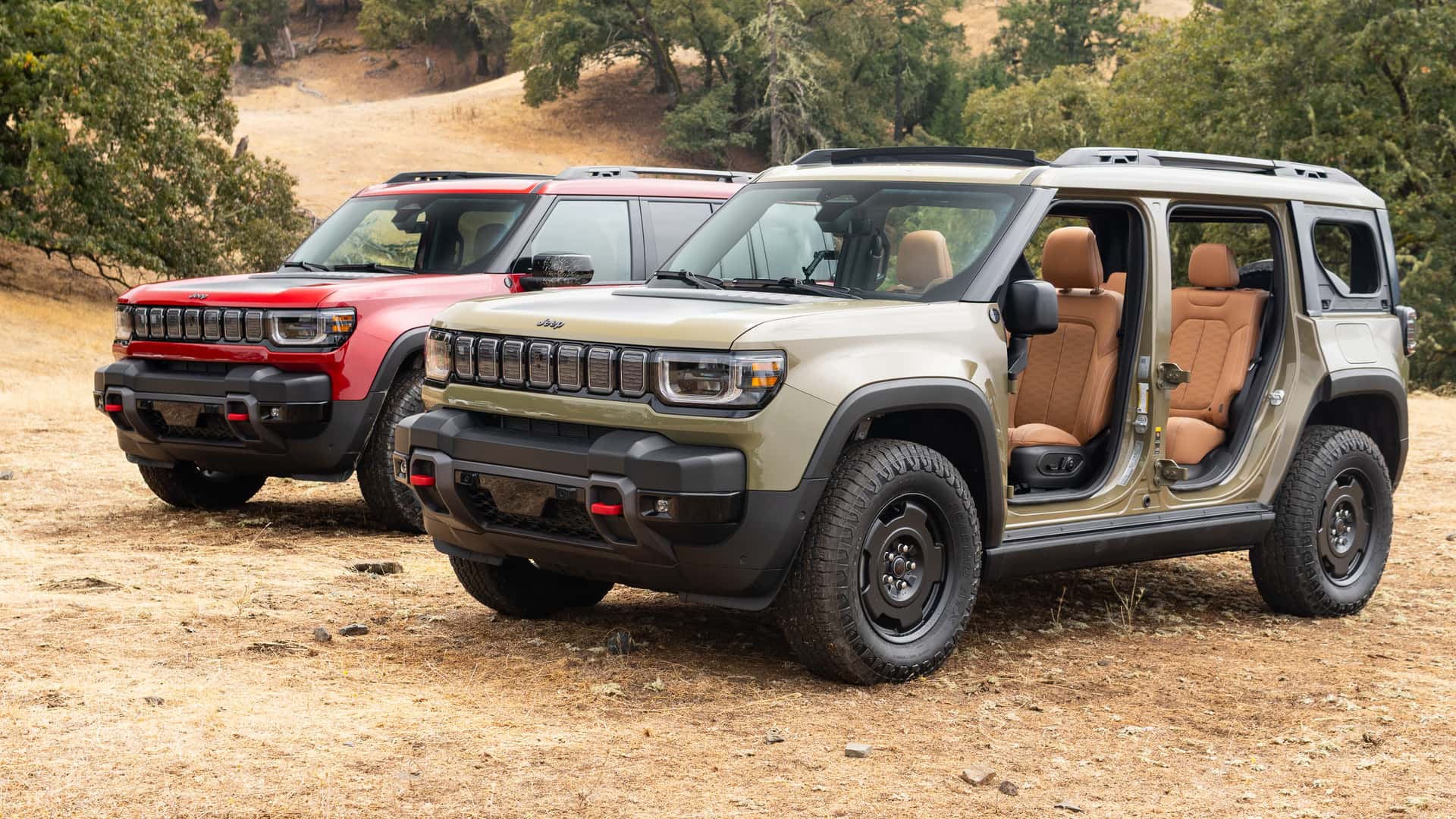
- Unlike road-focused EVs, the Recon features 9.1 inches of ground clearance, robust skid plates, 33-inch all-terrain tires, and a unique 15:1 rear motor gearing, all of which enhance torque for off-roading but diminish electric vehicle range.
- Comparisons with vehicles like the Jeep Wagoneer S, Rivian R1S, and Mercedes G580 demonstrate that balancing off-road prowess with extensive range and a competitive price remains a significant challenge across the electric vehicle industry.
- As battery technology and charging infrastructure evolve, the current compromises on range and price for capable EV off-roaders are expected to diminish.
The unveiling of the all-electric Jeep Recon Moab, particularly its stated range of under 230 miles, ignited considerable debate among automotive journalists and enthusiasts. Following initial reports from events like the L.A. Auto Show last year and recent test drives, many critics voiced a desire for the electric off-roader to offer greater range at a more accessible price point.
While a 222-mile range coupled with a $66,995 starting price may not position the Jeep Recon Moab as a mass-market vehicle, it is crucial to understand the strategic design choices that underpin these specifications. The notion that Jeep could have delivered more range for less money without compromising its core off-road capabilities overlooks the fundamental engineering trade-offs inherent in vehicle design, especially within the specialized segment of rugged, electric SUVs.

The Fundamental Compromise in Automotive Engineering
The automotive industry, at its core, operates on the principle of compromise. This is particularly true when balancing disparate objectives such as fuel efficiency, performance, and specialized capabilities like extreme off-roading. Achieving excellence in one area often necessitates concessions in another, a reality that applies equally to internal combustion engine (ICE) vehicles and electric vehicles (EVs).
Off-road vehicle design inherently involves elements that are antithetical to on-road efficiency. Consider a gas-powered, body-on-frame 4×4 truck equipped with lifted suspension and aggressive gearing. Such vehicles typically yield fuel economy figures closer to 10 or 15 miles per gallon, a fact intuitively understood by seasoned off-road enthusiasts.
Off-Road Features Versus On-Road Efficiency
Several key design elements contribute to this efficiency penalty. Tall suspension, while vital for increased ground clearance during rock crawling, significantly boosts aerodynamic drag. Knobby, large all-terrain tires excel at traction in mud and over uneven terrain but are notably inefficient and noisy at highway speeds due to increased rolling resistance.

Furthermore, a robust 4×4 system provides indispensable traction in challenging conditions, yet its engagement invariably leads to reduced fuel efficiency. Aggressive gearing, engineered to multiply torque at the wheels for superior climbing and obstacle negotiation, typically causes the engine to rev higher, consuming more fuel during highway cruising.
These principles are clearly demonstrated in contrasting vehicle types. A Toyota Prius, optimized for fuel efficiency, bears little resemblance to a Jeep Wrangler, designed for off-road prowess. Modifying a Prius for off-road capability—by lifting it, adding larger tires, and altering its aerodynamic profile—would inevitably result in a substantial reduction in its 50 mpg fuel economy.
Jeep Recon’s Strategic Engineering Decisions
The aforementioned trade-offs are not unique to gasoline vehicles; they directly translate to the realm of electric vehicles. For the Jeep Recon, key off-road attributes such as high ground clearance, a dual-motor all-wheel-drive system, large all-terrain tires, and a distinctively boxy shape, while essential for its intended purpose, collectively impact its energy efficiency and, consequently, its electric vehicle range.
Jeep offers a compelling illustration of this compromise with its Wagoneer S. This electric SUV shares the same 100.5 kWh battery pack as the Jeep Recon but is engineered for road-biased performance. With 6 inches of ground clearance and street tires, the Wagoneer S achieves an impressive 294 miles of range. This stark contrast highlights the significant efficiency cost associated with building a vehicle for true off-road capability.
The Jeep Recon, by design, prioritizes such capability. It boasts 9.1 inches of ground clearance, incorporates heavy skid plates for underbody protection, features 33-inch all-terrain tires, and adopts a more upright design to optimize approach and departure angles crucial for rugged terrain. Each of these specifications inherently contributes to a reduced range compared to a more aerodynamically efficient, road-oriented EV.
The Role of Gearing in EV Performance
A frequently overlooked factor in EV efficiency is gearing. While electric vehicles lack traditional multi-speed transmissions, they still utilize gear ratios that dictate how motor torque is delivered to the wheels. Taller ratios, characterized by a lower first number (e.g., 9:1), are generally more conducive to cruising efficiency. Conversely, shorter gearing amplifies torque at the wheels from a standstill, significantly improving climbing ability and acceleration, but at the expense of higher-speed efficiency.
For the Jeep Recon, low-end torque is paramount for off-roading. Consequently, the vehicle is equipped with 15:1 gearing on its rear motor. This engineering choice provides immense wheel torque, enabling the Recon to surmount challenging obstacles and navigate demanding terrain more effectively. An added benefit of this aggressive gearing is quicker acceleration, allowing the Jeep Recon to achieve 0-60 mph in approximately 3.6 seconds. However, this direction comes with an inherent compromise: the shorter gearing negatively impacts efficiency, partially explaining the observed 2.5 miles per kWh during test drives.
Comparative Landscape: Rivian R1S and Mercedes G580
The challenges faced by the Jeep Recon are not isolated but reflect broader industry realities in the nascent electric off-road segment. Other high-profile electric adventure vehicles also demonstrate similar trade-offs between capability, range, and price.
For instance, the heavier Rivian R1S generally exhibits better efficiency than the Jeep Recon, even when fitted with all-terrain tires. However, Rivian’s strategy mandates an upgrade to the larger 140 kWh battery pack to even offer AT tires, a configuration that sees the range drop from 410 to 370 miles and pushes the price point to around $96,000. Furthermore, the R1S, with its taller gearing and lack of a locking rear differential, sacrifices some of the raw off-road advantages inherent in the Jeep Recon’s design.
At the pinnacle of electric off-roading, the Mercedes G580 with EQ Technology offers even more sophisticated capabilities, featuring separate low-range gears for each of its four motors. This advanced hardware allows it to excel in climbing and then revert to higher gears for more efficient on-road cruising. Despite its $163,000 price tag and a substantial 116 kWh usable battery capacity, the G580 still yields an EPA-estimated range of just 239 miles. For all these vehicles, it is critical to note that highway range typically falls significantly below combined range estimates, as the cumulative impact of various efficiency-reducing factors becomes more pronounced at higher speeds.
Implications for the Electric Vehicle Market
The key takeaway from the Jeep Recon’s specifications and its peer comparisons is a call for adjusted expectations within the burgeoning electric vehicle industry. The electrification of traditionally inefficient vehicle segments, particularly large, heavy, and aerodynamically challenging off-roaders, presents a complex engineering frontier.
While equipping these vehicles with substantial battery packs, such as the 91- or 100-kWh units found in many contemporary EVs, entails considerable cost, the energy stored within them is consumed more rapidly when propulsion involves a large, boxy, heavy vehicle designed with features like all-terrain tires, elevated ground clearance, and aggressive gearing. These factors compound to significantly reduce the overall driving range.
However, the outlook is dynamic. As advancements in battery technology lead to higher energy density and faster charging capabilities, and as the charging infrastructure continues to expand and improve, many of these existing challenges are expected to diminish. For the foreseeable future, consumers seeking a highly capable electric off-roading experience will likely need to accept a degree of compromise regarding both total range and the associated price point. This ongoing evolution underscores the nuanced journey toward a fully electric automotive future.
Frequently Asked Questions About the Jeep Recon
- Why does the Jeep Recon have a relatively low range?
- The Jeep Recon’s 222-mile range is a direct outcome of its design prioritizing extreme off-road capability. Features like high ground clearance, heavy skid plates, large all-terrain tires, a boxy shape, and specialized low gearing are essential for rugged terrain but inherently reduce aerodynamic efficiency and increase energy consumption compared to road-focused electric vehicles.
- How do off-road features impact EV range?
- Off-road features like tall suspensions increase air resistance, knobby tires create more rolling resistance, and aggressive gearing delivers high torque at the wheels for climbing but uses more energy at higher speeds. These elements, while crucial for off-roading, collectively decrease the overall efficiency of an electric vehicle, thus reducing its range.
- Is 222 miles of range sufficient for an off-road EV?
- The sufficiency of a 222-mile range depends on the user’s specific off-roading patterns. For local trails or trips with access to charging infrastructure, it may be adequate. However, for extended backcountry expeditions far from charging points, this range might present limitations, requiring careful planning and potentially portable charging solutions.
- What are the key engineering compromises in the Jeep Recon?
- The primary compromises involve balancing off-road capability with range and price. Jeep opted for features like 9.1 inches of ground clearance, 33-inch all-terrain tires, and a 15:1 rear motor gearing to maximize off-road torque and durability. These choices, while enhancing ruggedness, inevitably lead to lower energy efficiency and contribute to the vehicle’s price point and range figures.
- How does the Jeep Recon compare to other off-road EVs in terms of range and capability?
- Compared to a road-focused EV like the Jeep Wagoneer S (same battery, higher range), the Recon sacrifices range for capability. Against other off-road EVs like the Rivian R1S or Mercedes G580, the Recon offers competitive capability at a potentially lower price point, though others may offer more advanced hardware (like the G580’s multi-gear system) or larger battery options for extended range.
- Will EV off-roaders eventually achieve longer ranges?
- Yes, it is anticipated that EV off-roaders will achieve longer ranges as battery technology continues to advance, offering greater energy density and improved efficiency. Additionally, the expansion of fast-charging networks and innovations in vehicle aerodynamics and powertrain optimization specifically for rugged applications will contribute to enhanced range in future models.