
Key Takeaways
- The all-electric Jeep Recon Moab offers an EPA-estimated range of 222 miles, sparking debate among automotive enthusiasts and critics regarding its perceived limitations.
- This range is a direct consequence of engineering choices prioritizing extreme off-road capability, including high ground clearance, aggressive tires, robust underbody protection, and specialized gearing.
- Achieving superior off-road performance in an electric vehicle inherently impacts efficiency and increases manufacturing costs, leading to trade-offs in range and pricing.
- Comparisons with other electric off-roaders like the Rivian R1S and Mercedes G580 highlight industry-wide challenges in balancing power, range, and cost for highly capable EVs.
- As electric vehicle technology evolves, consumer expectations for off-road EVs must adjust to the current realities of battery size, aerodynamic drag, and powertrain design compromises.
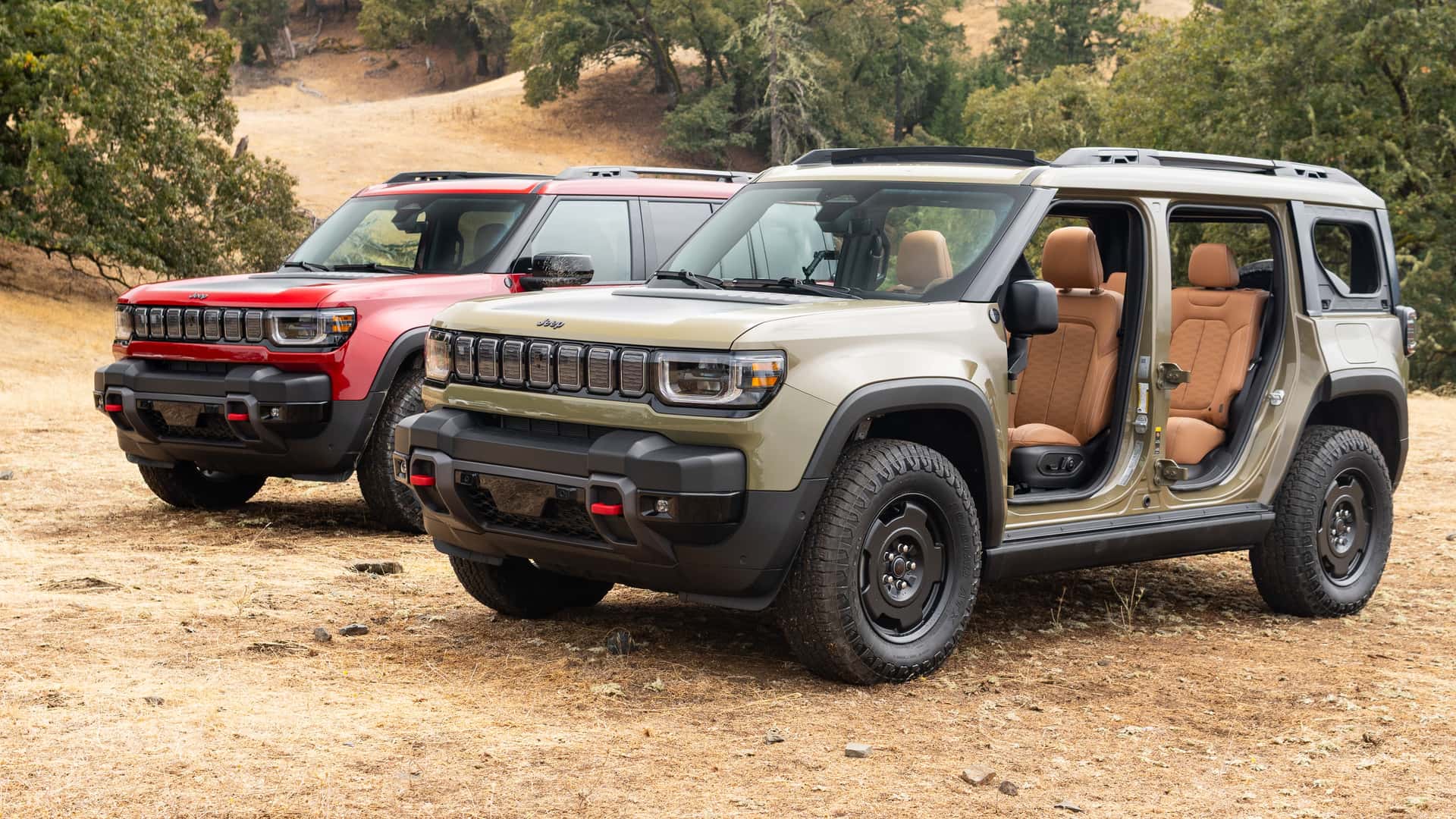
The announcement of the all-electric Jeep Recon Moab’s estimated 222-mile range has ignited considerable discussion within the automotive community. Journalists at the Los Angeles Auto Show last year expressed reservations, a sentiment echoed by numerous commentators and critics who posited that the vehicle should offer greater range at a more accessible price point.
While the combination of a 222-mile range and a starting price of $66,995 might not position the Recon Moab as a mass-market contender, a deeper understanding reveals that these specifications are not arbitrary. Instead, they represent a calculated compromise inherent in the design and engineering of a purpose-built off-road electric vehicle.
Understanding the Jeep Recon Moab Range Debate
The Core of the Contention: Range vs. Capability
The automotive industry operates on a principle of engineering compromises, particularly when merging disparate objectives like off-road prowess and electric vehicle efficiency. The expectation that Jeep could deliver an extended range for less money without sacrificing its foundational off-road capabilities overlooks fundamental manufacturing and design realities.
Developing a vehicle with exceptional off-road capabilities, an affordable price, and a substantial electric range presents conflicting goals. For the Jeep Recon Moab, its specifications, including its 222-mile range and price point, are dictated by deliberate choices made to ensure its readiness for challenging terrains.
Engineering for Off-Road Dominance: The Technical Trade-offs
Traditional gas-powered, body-on-frame 4×4 trucks with lifted suspensions and aggressive gearing typically yield fuel efficiency figures often below 20 miles per gallon, frequently closer to 10 or 15 mpg. This reality is intuitively understood by seasoned off-road enthusiasts.
Several design elements crucial for off-road performance inherently reduce a vehicle’s efficiency, whether it runs on gasoline or electricity.
Impact of Physical Attributes on Electric Vehicle Efficiency
- Tall Suspension: While vital for increased ground clearance during rock crawling, elevated suspension significantly increases aerodynamic drag, hindering efficiency at higher speeds.
- Knobby All-Terrain Tires: Large, aggressive all-terrain tires excel in mud and uneven terrain but are inefficient and often loud on paved roads, contributing to higher rolling resistance.
- 4×4 Systems: Essential for traction in slippery conditions, a constantly engaged 4×4 system is less fuel-efficient than a 2WD setup.
- Boxy Aerodynamics: Upright, boxy designs, while offering superior approach and departure angles for obstacles, are aerodynamically inefficient compared to streamlined vehicles.
These principles apply equally to electric vehicles. High ground clearance, dual-motor configurations, large tires, and a non-aerodynamic body shape all contribute to a reduced electric range. Many of these features are not merely desirable for an off-roader; they are indispensable. An off-road vehicle cannot credibly claim its designation with minimal ground clearance and thin tires.
The Crucial Role of Gearing in EV Off-Roaders
Even without traditional multi-speed transmissions, electric vehicles utilize gear ratios to manage motor torque delivery. Taller ratios, characterized by a lower numerical value (e.g., 9:1 for an EV), are optimized for cruising efficiency.
Conversely, shorter gearing enhances torque at the wheels from a standstill, massively improving climbing capabilities but reducing efficiency at higher speeds. This low-end torque is paramount in off-roading scenarios, enabling vehicles to surmount difficult obstacles.
The Jeep Recon Moab, designed for superior off-road capability, features 15:1 gearing on its rear motor. This decision provides significant wheel torque, crucial for challenging terrains, and also contributes to its impressive 0-60 mph acceleration in 3.6 seconds. However, this aggressive gearing inherently compromises the vehicle’s efficiency, a factor illustrated by observed figures of just 2.5 miles per kWh during test drives.
Comparing the Jeep Recon to Competitors
To further illustrate Jeep’s design philosophy for the Recon Moab, it is useful to consider other vehicles within the Stellantis portfolio and the broader electric off-roading market.
Jeep itself offers the Wagoneer S, an EV designed for on-road performance rather than rugged off-road trails. Despite sharing the same 100.5 kWh battery pack as the Recon, the Wagoneer S achieves an impressive 294 miles of range. This higher efficiency is attributable to its 6 inches of ground clearance and street-optimized tires, showcasing the direct trade-off between capability and range within the same manufacturer’s stable.
Lessons from the Rivian R1S and Mercedes G580
The heavier Rivian R1S generally demonstrates better efficiency than the Recon, even when equipped with all-terrain tires. However, Rivian’s strategy highlights a similar compromise: all-terrain tires are not offered on models with the base 108 kWh battery pack. Customers must upgrade to the larger 140 kWh version to access AT tires, a choice that reduces range from 410 to 370 miles and pushes the price point to approximately $96,000. Furthermore, the R1S’s taller gearing and lack of a locking rear differential mean it does not match some of the Recon’s dedicated off-road advantages.
The Mercedes G580 with EQ Technology offers an even higher level of off-road capability, featuring separate low-range gears for each of its four motors. This advanced system allows for superior climbing ability and then switches to higher gears for more efficient on-road cruising. Despite this sophisticated hardware, a significant price tag of $163,000, and a usable battery capacity of 116 kWh, the G580 still achieves an EPA estimated range of only 239 miles. For all these highly capable vehicles, highway range is also expected to be notably lower than combined range estimates due to the cumulative effect of design factors at higher speeds.
Broader Implications for the Electric Vehicle Market
The discussion surrounding the Jeep Recon Moab range underscores a crucial insight for the burgeoning electric vehicle industry: the electrification of inherently inefficient vehicle types, such as rugged off-roaders, presents unique and significant challenges. It is therefore unsurprising when vehicles like the Volkswagen ID. Buzz or the Jeep Recon offer ranges that might seem modest compared to their on-road counterparts.
Navigating the Future of Electrified Off-Roading
Fitting an exceptionally large battery pack incurs substantial costs, and battery packs in the 91- to 100-kWh range, such as that in the Recon, are far from small. The challenge lies in the fact that the energy stored within these batteries does not translate into extensive range when propelled through a large, boxy, and heavy vehicle.
This efficiency challenge is compounded by the addition of essential off-road features like all-terrain tires, increased ground clearance, and aggressive gearing. As advancements in battery technology, charging speeds, and the expansion of charging infrastructure continue, these inherent problems are expected to diminish over time. However, for the foreseeable future, consumers seeking robust electric off-roading capabilities should anticipate a necessary compromise on both the vehicle’s overall range and its price.
Frequently Asked Questions (FAQ)
What is the estimated range of the Jeep Recon Moab?
The all-electric Jeep Recon Moab has an EPA-estimated range of 222 miles. This figure reflects the vehicle’s design prioritization of extreme off-road capability over maximizing on-road efficiency, a common trade-off in rugged vehicle engineering.
Why does the Jeep Recon Moab have a lower range compared to some other EVs?
The 222-mile range of the Jeep Recon Moab is influenced by its off-road specific design elements. These include high ground clearance (9.1 inches), heavy skid plates, large 33-inch all-terrain tires, a boxy aerodynamic profile, and aggressive 15:1 gearing for enhanced low-end torque, all of which reduce overall energy efficiency.
What is the starting price of the Jeep Recon Moab?
The Jeep Recon Moab starts at an approximate price of $66,995. This pricing reflects the advanced electric powertrain, specialized off-road hardware, and the significant engineering required to integrate these capabilities into an electric platform.
How do off-road features impact an EV’s efficiency?
Off-road features like elevated suspension, knobby tires, robust underbody protection, and specialized gearing increase aerodynamic drag, rolling resistance, and mechanical losses. These factors demand more energy to move the vehicle, directly leading to a lower overall range compared to an EV designed for on-road efficiency.
How does the Jeep Recon Moab compare to other electric off-roaders like the Rivian R1S or Mercedes G580?
The Jeep Recon Moab, Rivian R1S, and Mercedes G580 all make different compromises. While the Rivian R1S offers higher ranges with larger batteries (at a higher price) and the G580 provides extreme capability with a high price and similar range to Recon, the Recon aims for a specific balance of capability and relative accessibility within the dedicated off-road EV segment.
Will the range of off-road EVs improve in the future?
Yes, the range of off-road EVs is expected to improve with advancements in battery technology, which will offer higher energy density and lighter weights. Additionally, improvements in charging infrastructure and faster charging times will enhance the practicality of these vehicles for extended off-road excursions and daily use.