
Key Takeaways
- Taiwanese company ProLogium, with investment from Mercedes-Benz, has announced the commencement of mass production for all-solid-state battery cells.
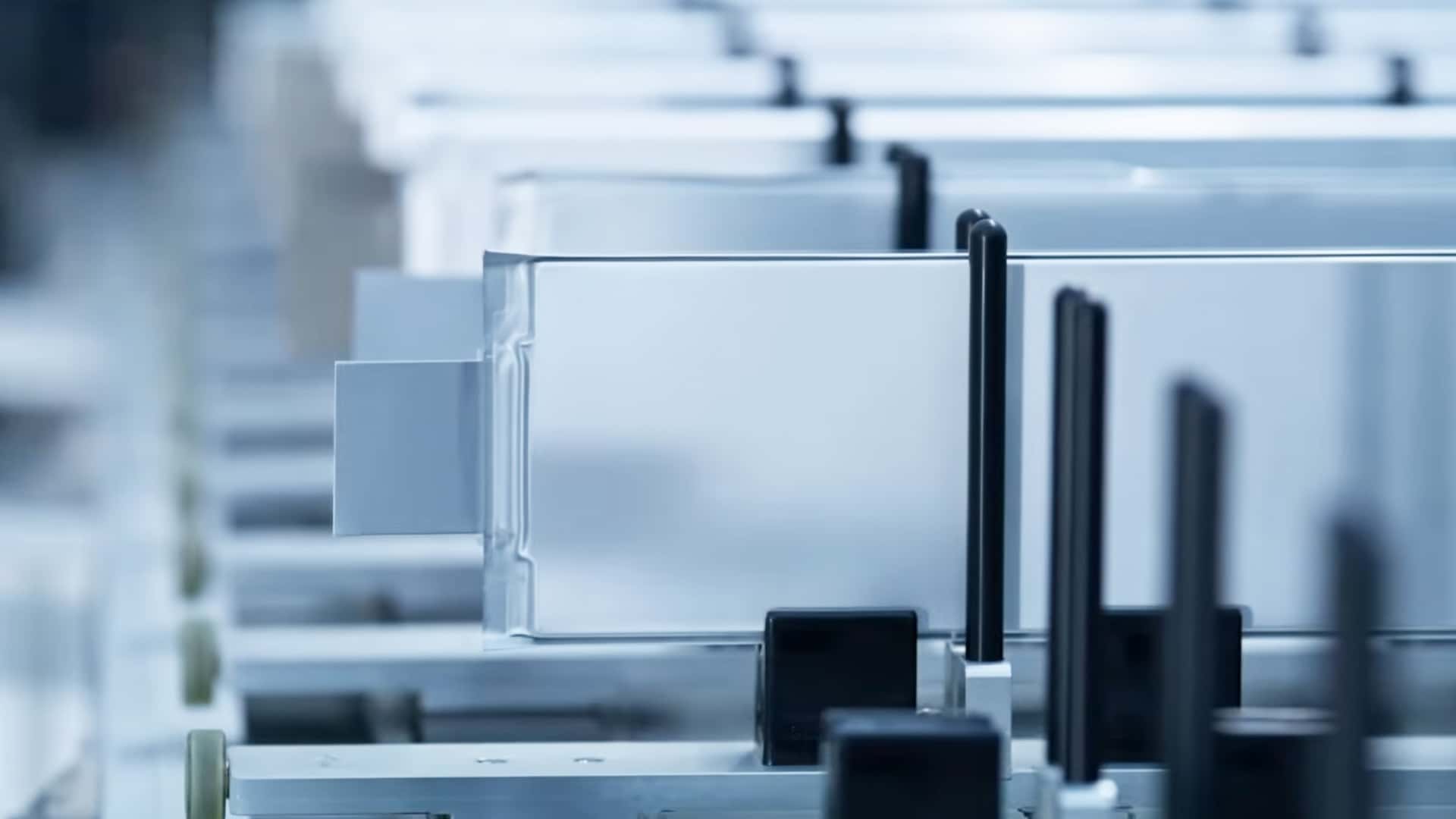
- The initial batch of large-format pouch cells is being manufactured at its gigawatt-capable facility in Taoyuan, Taiwan.
- ProLogium’s Generation 3.5 Lithium Ceramic Battery (LCB) cell offers a gravimetric energy density of 381 Wh/kg, significantly surpassing conventional EV batteries.
- The solid-state battery technology promises ultra-fast charging, achieving 5% to 80% state of charge in under 10 minutes, alongside enhanced safety features.
- Ambitious expansion plans are underway, including a 44 GWh facility in Dunkirk, France, slated to boost global solid-state battery supply.
A significant milestone in electric vehicle (EV) battery technology has been announced by Taiwan’s ProLogium, a company notably backed by automotive giant Mercedes-Benz. The firm claims it has officially commenced the mass production of all-solid-state battery cells, marking a potential turning point for the automotive industry’s transition towards sustainable mobility.
This development comes as the global automotive sector seeks to overcome existing limitations of lithium-ion batteries, particularly concerning energy density, charging speed, and safety. ProLogium’s breakthrough promises to deliver longer driving ranges, substantially faster charging times, and inherently safer power units for electric vehicles.
Paving the Way for Solid-State Battery Adoption
While the promise of solid-state batteries has been a consistent topic of discussion and research within the battery tech landscape, concrete evidence of mass production has largely remained elusive. Earlier this year, Finland’s Donut Lab made ambitious claims regarding its solid-state battery offerings, yet tangible market availability has not materialized.
In contrast, ProLogium’s announcement is bolstered by significant industry investments, including a strategic stake from Mercedes-Benz, underscoring the credibility and potential impact of its technology. The company is now rolling out its Generation 3.5 large-format 185.4 ampere-hour Lithium Ceramic Battery (LCB) cells from its advanced Taoke assembly line, located in Taoyuan, Taiwan.
Unmatched Energy Density and Performance
The performance metrics of ProLogium’s newly mass-produced solid-state battery cells are notably impressive. Tested by Germany’s reputable TÜV, the LCB cell demonstrated a gravimetric energy density of 381 watt-hours per kilogram (Wh/kg). Additionally, it achieved a volumetric energy density of 903 watt-hours per liter (Wh/L), positioning it at the forefront of battery innovation.
To put this into perspective, current mainstream nickel-manganese-cobalt (NMC) cells, which power the majority of electric cars in markets like the United States, typically offer a gravimetric energy density of around 300 Wh/kg at the cell level. More cost-effective lithium-iron-phosphate (LFP) cells, increasingly prevalent in EVs globally, range between 150 and 200 Wh/kg.
This means ProLogium’s solid-state battery technology boasts approximately 30% greater energy density compared to leading NMC cells, translating directly into enhanced range capabilities and lighter battery packs for electric vehicles. The previous claim by Donut Lab cited 400 Wh/kg, making ProLogium’s verified performance a significant competitive advancement.
Rigorous Testing Confirms All-Solid-State Status
Beyond energy density, the integrity and classification of these advanced battery cells were independently verified. UL Solutions, a global leader in safety science and certification, subjected ProLogium’s large-format cells to China’s rigorous new GB/T 43568-2026 methodology. This standard, introduced in July, is specifically designed to differentiate genuine all-solid-state cells from those that still incorporate elements of liquid electrolyte.
During the stringent testing, a ProLogium cell was maintained in a vacuum for six hours at a constant temperature of 248°F (120°C). The recorded weight loss was less than 0.05%, comfortably falling below the 0.5% maximum threshold required for products to be legitimately labeled as all-solid-state batteries. This certification solidifies ProLogium’s claim and reinforces the trustworthiness of its technology.
Proprietary Design for Enhanced Safety and Efficiency
The Gen 3.5 cell employs a sophisticated design featuring a composite solid electrolyte combined with a ceramic separator. This architecture is further enhanced by a proprietary edge-frame structure, meticulously crafted to isolate potential burrs while simultaneously ensuring superior sealing and insulation properties. These design elements are crucial for maintaining the long-term stability and safety of the solid-state battery cells.
Previously, ProLogium’s Gen 3 cell showcased remarkable resilience, capable of fast-charging from 5% to 80% state of charge in a mere eight and a half minutes. Furthermore, the company has publicly stated that its batteries exhibit exceptional safety characteristics, remaining stable and free from combustion even when subjected to extreme conditions such as being shot with a bullet, exposure to temperatures as high as 338°F (170°C), or being overcharged at twice their rated voltage.
Scaling Production: Ambitious Global Expansion
The initial production capacity at the Taoyuan facility for the Gen 3.5 large-format pouch cells is 0.5 gigawatt-hours (GWh). While this capacity translates to approximately 6,000 EV battery packs, assuming an 80 kWh capacity per pack, it represents a foundational step rather than a large-scale output comparable to traditional lithium-ion plants.
However, ProLogium has outlined ambitious expansion plans to significantly ramp up its global solid-state battery manufacturing capabilities. The Taiwan facility is projected to double its production by 2030. More significantly, a second, much larger production facility is under development in Dunkirk, France. This European plant is designed for an initial annual output of 4 GWh, with plans to scale up to an impressive maximum capacity of 44 GWh. The French factory is anticipated to commence operations in 2028, with full production ramp-up targeted through 2030, which will be critical for widespread solid-state battery adoption in the European automotive market.
The Horizon: Next-Generation Battery Innovations
Looking ahead, ProLogium is already on the cusp of introducing its next iteration: the Gen 4 battery cell. This upcoming generation promises to push the boundaries of solid-state battery technology even further. It will incorporate a fully inorganic superfluidized electrolyte system, which is expected to deliver even faster charging times and significantly improved performance in low-temperature environments, addressing a common challenge for electric vehicles in colder climates.
A key strategic advantage of this advancement is its cost-effectiveness in implementation. ProLogium asserts that factories currently manufacturing Gen 3.5 cells will require only about a 10% upgrade to their existing line equipment to transition to assembling Gen 4 cells. This minimal investment in infrastructure upgrades is crucial for maintaining competitive production costs and accelerating the deployment of next-generation solid-state battery technology into the global automotive supply chain.
This sustained innovation and strategic scaling underscore ProLogium’s commitment to transforming the electric vehicle landscape with its advanced battery solutions, backed by solid partnerships and rigorous validation.
Frequently Asked Questions (FAQ)
What are solid-state batteries and why are they important for EVs?
Solid-state batteries use a solid electrolyte instead of a liquid one, offering higher energy density, faster charging capabilities, and improved safety by reducing fire risks. They are crucial for extending EV driving ranges and making electric vehicles more competitive with gasoline-powered cars.
Which company is behind this solid-state battery mass production?
Taiwanese company ProLogium is the firm that has announced the commencement of mass production for all-solid-state battery cells. They have received significant investment and backing from automotive giant Mercedes-Benz, highlighting industry confidence in their technology.
What are the key performance metrics of ProLogium’s new battery?
ProLogium’s Generation 3.5 Lithium Ceramic Battery (LCB) cell offers a gravimetric energy density of 381 Wh/kg and a volumetric energy density of 903 Wh/L. These figures represent a substantial improvement over conventional lithium-ion batteries, enhancing both range and efficiency.
How does ProLogium ensure the safety of its solid-state batteries?
ProLogium batteries have undergone rigorous testing, including certification under China’s GB/T 43568-2026 methodology by UL Solutions, confirming their all-solid-state nature. They are designed to be non-flammable even under extreme conditions like bullet impacts, high temperatures (338°F), or significant overcharging.
What are ProLogium’s production capacity and future expansion plans?
The initial production capacity at their Taoyuan facility is 0.5 GWh. ProLogium plans to double this by 2030 and establish a larger facility in Dunkirk, France, with an initial output of 4 GWh, eventually scaling up to 44 GWh, expected to be operational by 2028.
How do these new solid-state batteries compare to current EV batteries?
ProLogium’s cells provide approximately 30% higher energy density than mainstream NMC (nickel-manganese-cobalt) lithium-ion batteries (around 300 Wh/kg). They also offer significantly faster charging, with 5% to 80% state of charge achieved in under 10 minutes, outperforming most current EV battery technologies.
What is the significance of Mercedes-Benz’s investment in ProLogium?
Mercedes-Benz’s investment in ProLogium underscores the automotive industry’s commitment to adopting advanced battery technologies. It provides ProLogium with crucial financial backing and validation, accelerating the development and integration of solid-state batteries into future electric vehicle models.