
Key Takeaways
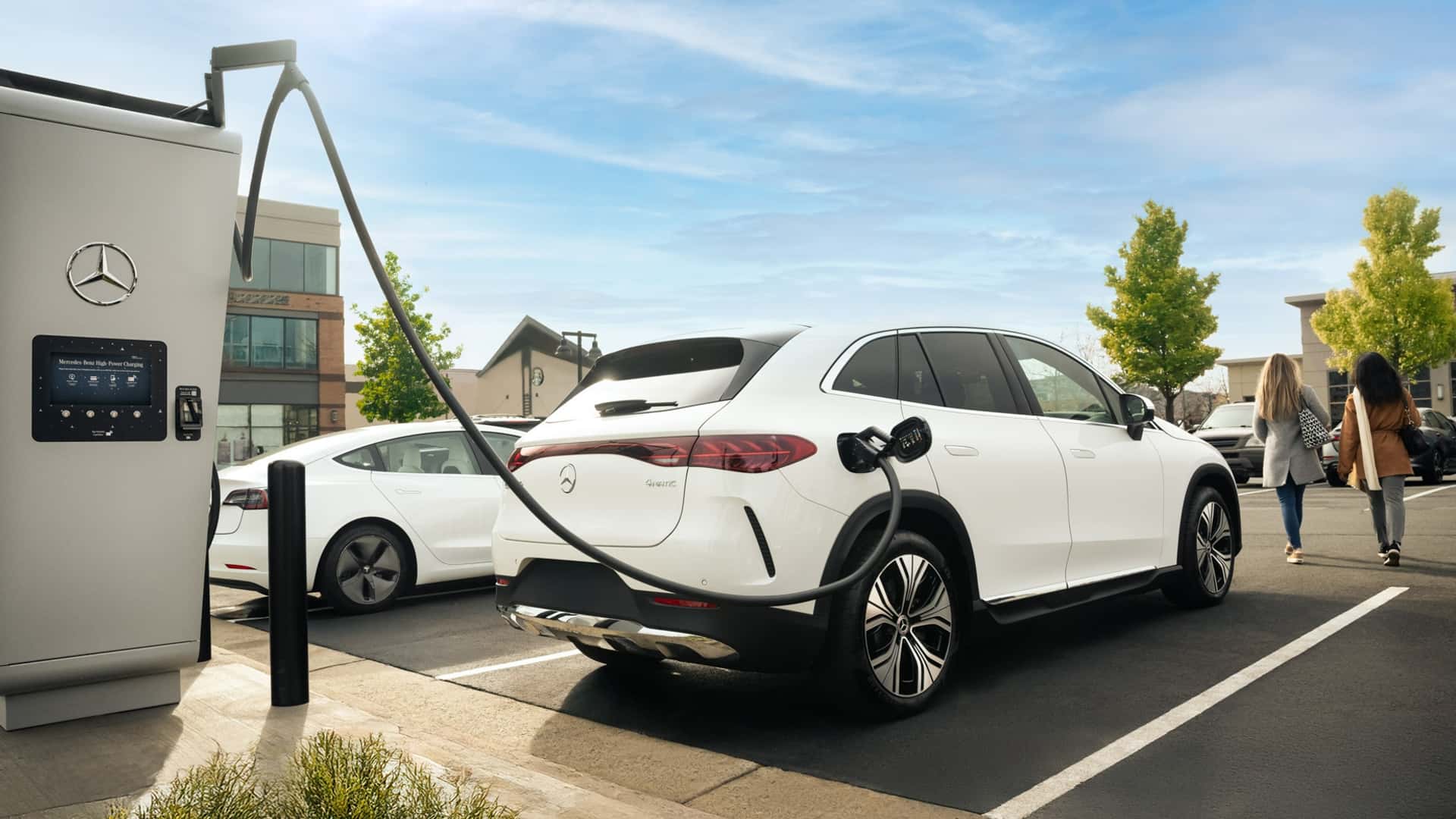
- The Mercedes-Benz High-Power Charging (MB HPC) network has reached 100 operational locations across the U.S. and Canada in just three years.
- The network now features nearly 1,000 charging ports, exclusively offering high-speed 400-kilowatt chargers.
- Mercedes-Benz boasts a near-perfect uptime rate and has significantly improved its ‘first-time success rate’ for charging sessions to over 90%.
- The network supports both CCS and NACS connectors, with the majority of stalls offering dual compatibility, ensuring broad access for EV drivers.
- Over a million charging sessions have been recorded since 2023, serving more than 245,000 unique customers.
A Milestone in Electric Mobility: Mercedes-Benz’s North American Network Expansion
Mercedes-Benz High-Power Charging (MB HPC) network in North America has achieved a significant milestone, commemorating its third anniversary by surpassing 100 operational locations across the United States and Canada’s British Columbia. This rapid expansion underscores Mercedes-Benz’s unwavering commitment to developing robust electric vehicle (EV) charging infrastructure, a critical component for accelerating EV adoption.
Since its inception in November 2023, the Mercedes-Benz EV charging network has scaled remarkably from a limited presence to nearly 1,000 individual charging ports. This strategic build-out aims to address range anxiety and provide Mercedes-Benz EV owners, as well as drivers of other compatible electric vehicles, with reliable and high-speed charging options.
Powering the Future: Advanced Charging Technology and Capacity
400 kW Chargers: Driving Rapid Replenishment
A hallmark of the Mercedes-Benz EV charging network is its exclusive deployment of 400-kilowatt (kW) fast chargers. These ultra-rapid dispensers, primarily sourced from Alpitronic, represent the pinnacle of current charging technology, capable of delivering substantial power to an EV battery in a remarkably short duration.
The high power output ensures that vehicles can quickly replenish their charge, minimising downtime for drivers. Since 2023, the network has recorded over a million charging sessions, demonstrating its significant capacity and the growing demand for efficient EV charging infrastructure.
Universal Compatibility: Bridging CCS and NACS Standards
In a forward-looking move, the Mercedes-Benz EV charging network has embraced a dual-connector strategy to cater to the evolving EV market. The vast majority of its charging stalls are equipped with both CCS (Combined Charging System) and NACS (North American Charging Standard) connectors.
This approach provides maximum flexibility for a wide array of electric vehicles, irrespective of their charging port design. While NACS-equipped vehicles can utilise CCS stations via adapters and vice-versa, Mercedes-Benz’s direct integration of both standards at most locations simplifies the charging process for drivers. Currently, only 7% of the network’s locations feature CCS-only connectors.
The shift towards the Tesla-style NACS port gained significant momentum among traditional automakers after Ford initiated the trend, subsequently leading other manufacturers, including Mercedes-Benz, to adopt the standard for future models. This adaptability in the Mercedes-Benz EV charging network ensures it remains future-proof and accessible to the broadest possible user base.
Setting Industry Benchmarks for Reliability and User Experience
Unwavering Uptime and Enhanced First-Time Success
From its very launch, the Mercedes-Benz EV charging network has prioritised operational excellence, consistently reporting a near-perfect uptime rate. This commitment to reliability is crucial for building driver confidence in the nascent EV ecosystem.
Beyond uptime, Mercedes-Benz has focused intently on another critical metric: the first-time success rate. This indicator measures the percentage of charging sessions that initiate successfully on the very first attempt. Back in 2023, this rate stood at approximately 84%. Three years later, through continuous optimisation and operational refinements, this figure has climbed impressively to over 90%, cementing the network’s reputation for dependable service.
Strategic Placement for Optimal User Convenience
The strategic placement of Mercedes-Benz EV charging network hubs is another key aspect of its user-centric design. These stations are typically located at or around premium shopping destinations, allowing drivers to conveniently charge their vehicles while attending to other errands or enjoying leisure activities.
The size and scale of these operations vary to suit regional demand and available space. The largest MB HPC site, for instance, is situated in Orlando, Florida, boasting 20 charging stalls. Conversely, smaller operations in locations like Conyers, Georgia, and Red Bluff, California, each feature four stalls, ensuring coverage in diverse environments.
Seamless Payments and Transparent Pricing
The Mercedes-Benz EV charging network offers a range of flexible payment solutions designed to simplify the charging experience. All locations are equipped with standard credit card readers, providing immediate accessibility for most users. Additionally, EV drivers can utilise various dedicated charging applications or an RFID card issued directly by Mercedes-Benz dealers.
The network also supports Plug & Charge functionality, offering a streamlined process where charging begins automatically upon plugging in the vehicle, with billing handled through a pre-registered account. Pricing for charging sessions varies geographically, ranging between $0.35 per kilowatt-hour (kWh) and $0.60 per kWh, depending on the specific location.
A temporary $25 pre-authorization fee is held at the start of each session to verify available funds. Upon completion of the charging session, drivers are only charged for the actual energy consumed, and the remainder of the pre-authorised amount is promptly released.
Leadership and Future Outlook of the Mercedes-Benz EV Charging Network
Further solidifying its commitment to the North American market, Mercedes-Benz High-Power Charging North America recently appointed Madeline Ebert as its new CEO. This leadership change signals a continued strategic focus on expanding and enhancing the network’s capabilities and reach across the region.
It is noteworthy that while Mercedes-Benz has chosen to sell its EV charging network in Europe, its strategy in the U.S. and Canada remains firmly rooted in expansion and direct ownership. This divergence highlights the company’s tailored approach to different global markets, recognising the unique dynamics and competitive landscapes of each.
The consistent growth and focus on reliability within the Mercedes-Benz EV charging network in North America underscore the brand’s dedication to supporting the transition to electric mobility. By providing a high-quality, convenient, and ever-expanding charging infrastructure, Mercedes-Benz is playing a crucial role in shaping the future of EV ownership and usage.
FAQ Section
How many locations does the Mercedes-Benz EV charging network have in North America?
The Mercedes-Benz High-Power Charging (MB HPC) network currently boasts 100 operational locations across the United States and British Columbia, Canada. This milestone was achieved within three years of its debut, significantly expanding the availability of high-speed charging for electric vehicle owners.
What is the power output of chargers in the Mercedes-Benz network?
All fast chargers within the Mercedes-Benz EV charging network are capable of delivering up to 400 kilowatts (kW) of power. These ultra-rapid chargers, predominantly from Alpitronic, are designed to offer quick and efficient charging, minimizing the time electric vehicle drivers spend at a station.
Does the network support both CCS and NACS connectors?
Yes, the vast majority of stalls in the Mercedes-Benz EV charging network are equipped with both CCS (Combined Charging System) and NACS (North American Charging Standard) connectors. This dual compatibility ensures broad accessibility for a wide range of electric vehicles, reflecting the evolving industry standards.
How reliable is the Mercedes-Benz charging network?
The Mercedes-Benz EV charging network maintains a near-perfect uptime rate, a key indicator of its reliability. Furthermore, its first-time success rate, measuring sessions that start on the first attempt, has improved to over 90% from approximately 84% in 2023, showcasing a strong commitment to operational excellence.
How many charging sessions has the network facilitated?
Since 2023, the Mercedes-Benz High-Power Charging network has facilitated over one million charging sessions. This substantial number highlights the growing utilisation of its infrastructure by more than 245,000 unique customers, demonstrating its vital role in the electric vehicle ecosystem.
What payment options are available at Mercedes-Benz charging stations?
Drivers can pay using credit card readers available at all locations. Additionally, various charging apps and RFID cards issued by Mercedes-Benz dealers are supported. The network also features Plug & Charge functionality for seamless, automatic billing, enhancing convenience for registered users.
What is the pricing structure for charging?
Pricing for charging sessions on the Mercedes-Benz EV charging network varies by location, ranging from $0.35 per kilowatt-hour (kWh) to $0.60 per kWh. A temporary $25 pre-authorization fee is held, but drivers are only charged for the actual energy consumed after the session concludes, with any remaining funds released.
Where are the Mercedes-Benz charging stations typically located?
Mercedes-Benz charging stations are strategically located at or around premium shopping destinations. This placement provides convenience for EV drivers, allowing them to charge their vehicles while engaging in shopping, dining, or other activities, integrating charging seamlessly into their routines.