
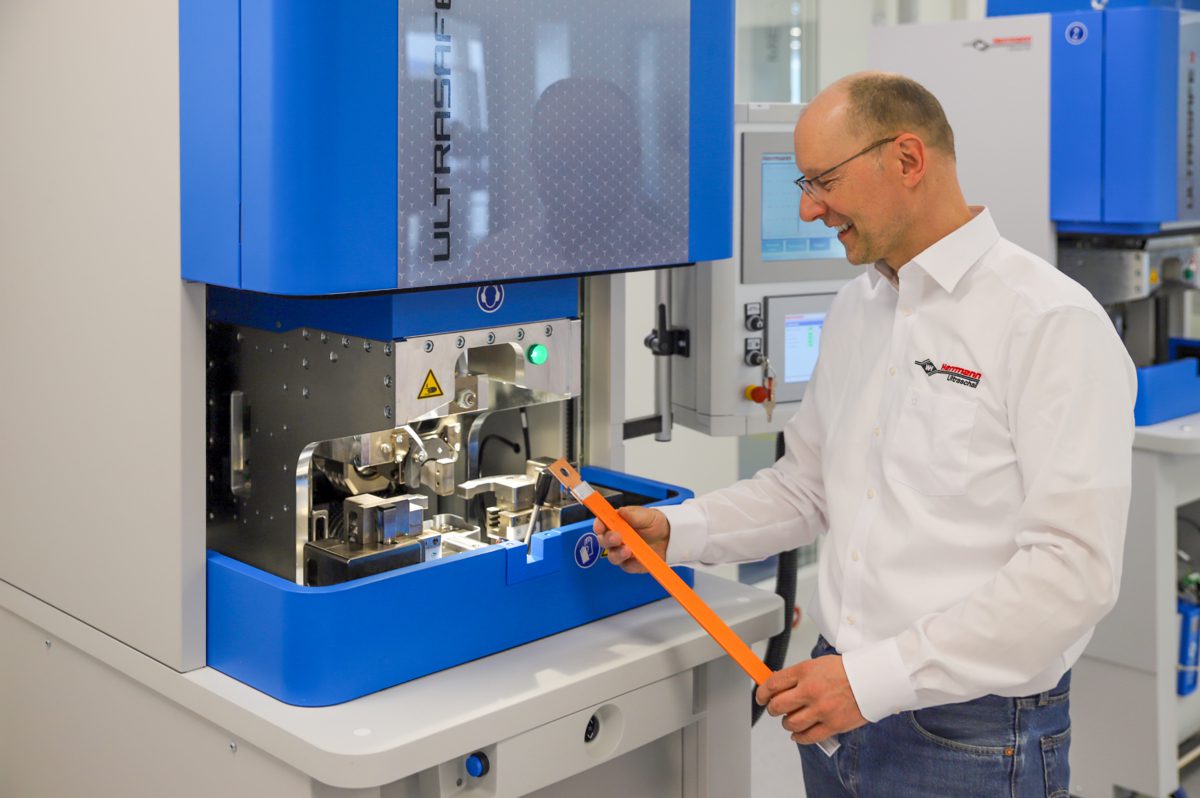
In an era defined by escalating performance demands across critical sectors such as e-mobility, high-capacity data centers, and advanced power electronics, conventional busbar manufacturing processes are increasingly facing significant limitations. The need for superior electrical connections that are both robust and highly conductive has never been more pressing. This demand necessitates a re-evaluation of established joining techniques to meet the rigorous standards of modern electrical systems.
A white paper from industry leader Herrmann Ultraschall explores how ultrasonic welding is emerging as a transformative solution in this landscape. This innovative technology redefines the method of joining non-ferrous metals, including critical materials like copper and aluminum. Crucially, it achieves this without the inherent drawbacks of heat application, external additives, or the risk of material degradation, presenting a compelling alternative for enhancing busbar production.

Key Takeaways: Redefining Busbar Manufacturing
- Traditional busbar production methods struggle to meet escalating demands in e-mobility, data centers, and power electronics.
- Ultrasonic welding offers a revolutionary method for joining non-ferrous metals like copper and aluminum, eliminating heat, additives, and material degradation.
- The technology ensures high-strength, low-resistance electrical connections critical for modern applications.
- Benefits include short cycle times without cooling, precise process control, and real-time data monitoring for optimal efficiency.
- Ultrasonic welding significantly improves manufacturing efficiency, reduces costs, increases output, and maintains consistent quality at scale.
- It presents a superior alternative to conventional methods like laser welding, crimping, and soldering by ensuring optimal conductivity and reliability, even for thicker busbars.
The Evolution of Electrical Conductivity: Why Busbars Matter
Busbars are fundamental components in nearly all electrical power distribution systems. They serve as efficient conductors for distributing electrical power with minimal loss, connecting high-current components within a system. As industries push the boundaries of performance, from the power density in electric vehicle battery packs to the thermal management in data server racks, the integrity and efficiency of these connections become paramount.
Traditional methods of joining busbars, such as soldering, crimping, and even some forms of laser welding, often introduce challenges. These can include material changes due to heat, the reliance on flux or other additives, and potential inconsistencies in connection quality. These issues directly impact the overall performance, longevity, and safety of advanced electrical systems.
Understanding Ultrasonic Welding: A Cold Joining Process
Ultrasonic welding operates on a principle distinct from conventional thermal joining methods. It employs high-frequency mechanical vibrations to create a metallurgical bond between two surfaces of similar or dissimilar non-ferrous metals. The friction generated at the interface under pressure causes the materials to soften and bond at a molecular level, without reaching their melting point.

This ‘cold’ joining process is particularly advantageous for materials like copper and aluminum, which are highly conductive and often challenging to weld reliably with heat-based techniques due to their high thermal conductivity and propensity to form oxides. By avoiding high temperatures, ultrasonic welding preserves the intrinsic properties of the metals, ensuring optimal electrical and mechanical performance of the joint.
The Seven Pillars of Optimized Busbar Manufacturing with Ultrasonics
The comprehensive analysis highlights seven distinct benefits that position ultrasonic welding as a leading technology for modern busbar production:
1. High-Strength, Low-Resistance Connections
One of the foremost advantages of ultrasonic welding is its ability to create exceptionally strong metallurgical bonds with minimal electrical resistance. This is critical for applications in e-mobility and power electronics, where even minor resistance can lead to significant energy losses and heat generation. The robust connections ensure reliable power transmission and enhanced system efficiency.
2. Short Cycle Times Without Cooling
Unlike thermal welding processes that often require substantial cooling periods, ultrasonic welding offers remarkably short cycle times. The absence of a heat-affected zone means components can be handled immediately after welding, significantly streamlining the manufacturing process and reducing overall production bottlenecks. This leads directly to higher throughput and productivity in busbar production.
3. Precise Process Control
Modern ultrasonic welding systems incorporate advanced control mechanisms that allow for precise regulation of critical parameters such as weld force, amplitude, and time. This level of control ensures consistent bond quality, making the process highly repeatable and predictable. Such precision is vital for maintaining uniform quality across large-scale manufacturing operations.
4. Real-time Data Monitoring
Equipped with sophisticated sensors and software, ultrasonic welding machines provide real-time data monitoring capabilities. Operators can track key performance indicators and identify potential issues instantly. This feature is instrumental for proactive quality assurance, enabling immediate adjustments and contributing to a more data-driven approach to manufacturing.
5. Scalable Production Capabilities
The inherent efficiency and control offered by ultrasonic welding make it ideally suited for scalable production environments. From small-batch specialized components to high-volume assembly lines for electric vehicle battery packs, the technology can be adapted to various production scales, facilitating rapid expansion to meet growing market demands.
6. Minimal Rejects
By ensuring consistent bond quality, precise control, and real-time monitoring, ultrasonic welding significantly reduces the occurrence of manufacturing defects and rejects. This not only minimizes material waste but also lowers production costs and improves overall operational efficiency. The high yield rates contribute directly to a more sustainable and profitable manufacturing model.
7. No Heat, Additives, or Material Degradation
The ‘cold’ nature of ultrasonic welding eliminates the need for external heat sources, fluxes, or filler materials. This preserves the original properties of the base metals, preventing common issues such as annealing, embrittlement, or the formation of intermetallic compounds that can degrade electrical conductivity and mechanical strength. This is particularly important for high-purity copper and aluminum components.
Comparative Advantages: Ultrasonic Welding vs. Traditional Methods
When contrasted with established joining techniques, the benefits of ultrasonic welding become even clearer:
Against Laser Welding
While laser welding offers precision, it is a thermal process that introduces heat, potentially altering material microstructure and requiring careful thermal management. For highly reflective materials like copper and aluminum, laser absorption can be challenging, leading to inconsistencies. Ultrasonic welding bypasses these thermal issues, ensuring a more stable and often more reliable joint for conductive materials without complex optics.
Against Crimping
Crimping relies on mechanical deformation to create an electrical connection. While fast and straightforward, crimped connections can be susceptible to environmental factors like vibration and corrosion over time, potentially leading to increased resistance. Ultrasonic welding provides a metallurgical bond that is more stable and resistant to these external influences, ensuring long-term reliability.
Against Soldering
Soldering involves the use of a filler metal (solder) and heat to create a joint. This introduces a foreign material into the electrical path, which can have different electrical and thermal properties than the base metals. Additionally, soldering can create brittle joints, and the lead content in some solders raises environmental concerns. Ultrasonic welding creates a direct metal-to-metal bond, ensuring optimal conductivity and eliminating the need for hazardous additives.
Impact Across Key Industries
The implications of optimized busbar production through ultrasonic welding resonate deeply across multiple high-growth sectors:
E-mobility
In electric vehicles, busbars are vital for battery pack interconnections, power inverters, and charging infrastructure. The need for compact, efficient, and robust power distribution demands the highest quality connections. Ultrasonic welding contributes significantly to safer, more efficient, and longer-lasting EV components by providing superior, lightweight electrical connections, directly impacting vehicle range and charging efficiency.
Data Centers
The sheer power density and continuous operation of modern data centers require extremely reliable and efficient power distribution systems. Downtime is costly, and thermal management is critical. High-performance busbars, joined with ultrasonic precision, ensure consistent power delivery, reduce heat generation, and enhance the overall reliability of server racks and power units.
Power Electronics
From renewable energy inverters to industrial motor drives and semiconductor devices, power electronics necessitate highly efficient current pathways. Ultrasonic welding enables the creation of complex busbar geometries and robust connections essential for minimizing losses and maximizing performance in these demanding applications. It helps meet the evolving requirements for higher power density and reliability.
A Competitive Edge in Modern Manufacturing
For manufacturers navigating the complex demands of today’s electrical systems, embracing ultrasonic welding for busbar production offers a distinct competitive advantage. It translates directly into a more efficient, cost-effective manufacturing process that not only increases output but also supports the growing performance demands of crucial modern electrical systems while maintaining consistent quality at scale.
The strategic adoption of this technology ensures that companies can deliver products with superior performance, enhanced reliability, and reduced operational costs, positioning them at the forefront of innovation in their respective industries. Further technical insights and detailed applications are explored in the comprehensive whitepaper available from Herrmann Ultraschall.
Frequently Asked Questions (FAQs)
What is a busbar and why is its production critical?
A busbar is a metallic strip or bar used to conduct electricity within a switchboard, distribution board, or battery bank. Its efficient production is critical because it forms the backbone of power distribution in modern electrical systems, impacting performance, safety, and longevity in applications like EVs and data centers.
How does ultrasonic welding differ from traditional busbar joining methods?
Ultrasonic welding uses high-frequency vibrations to create a metallurgical bond without external heat, additives, or fillers. This contrasts with traditional methods like soldering (which uses filler metals and heat) or crimping (mechanical deformation), preserving material properties and offering superior electrical and mechanical performance.
What are the primary advantages of using ultrasonic welding for copper and aluminum busbars?
For copper and aluminum, ultrasonic welding prevents issues associated with heat-based methods such as oxidation and material degradation. It creates strong, low-resistance connections, ensures optimal conductivity, and offers short cycle times, making it ideal for these highly conductive non-ferrous metals without compromising their integrity.
Can ultrasonic welding be used for thicker busbars?
Yes, ultrasonic technology is capable of reliably welding even thicker busbars. Advanced systems are engineered to provide sufficient power and control to create robust bonds across a range of material thicknesses, ensuring optimal conductivity and mechanical strength, which is vital for high-power applications.
How does ultrasonic welding contribute to cost-effectiveness in manufacturing?
By offering short cycle times, precise process control, and minimal rejects, ultrasonic welding significantly reduces material waste and labor costs. Its efficiency and scalability enable higher output with consistent quality, leading to lower per-unit production costs and improved overall manufacturing profitability.
What industries benefit most from optimized busbar production using ultrasonic welding?
Industries experiencing rapid technological advancements and increasing power demands benefit significantly. Key sectors include e-mobility (electric vehicles and charging infrastructure), data centers (for reliable power distribution), and power electronics (inverters, converters, industrial controls), where high-performance, durable electrical connections are paramount.
What kind of quality control features are integrated into ultrasonic welding systems for busbars?
Modern ultrasonic welding systems feature precise process control and real-time data monitoring. This allows operators to track weld parameters, detect anomalies instantly, and ensure consistent bond quality. These integrated features contribute to high reliability, minimal rejects, and robust quality assurance protocols for busbar production.