
Key Takeaways
- SpaceX has finalized its third significant compute agreement, providing Reflection AI with immediate access to NVIDIA GB300 chips at its Colossus 2 data center in Southaven, Mississippi.
- Reflection AI will pay SpaceX $150 million per month, commencing July 1, 2026, with the contract potentially generating $6.3 billion through 2029.
- This deal reinforces SpaceX’s strategic pivot into a high-margin AI infrastructure provider, leveraging its massive Colossus supercomputing capabilities initially built for xAI’s Grok models.
- The new agreement follows earlier multi-billion-dollar partnerships with Anthropic (estimated $45 billion) and Google (nearly $29.5 billion), collectively positioning SpaceX to earn tens of billions in AI compute revenue.
- The rapid expansion highlights the soaring global demand for advanced AI training and inference capacity, particularly amid persistent chip shortages and intense generative AI development.
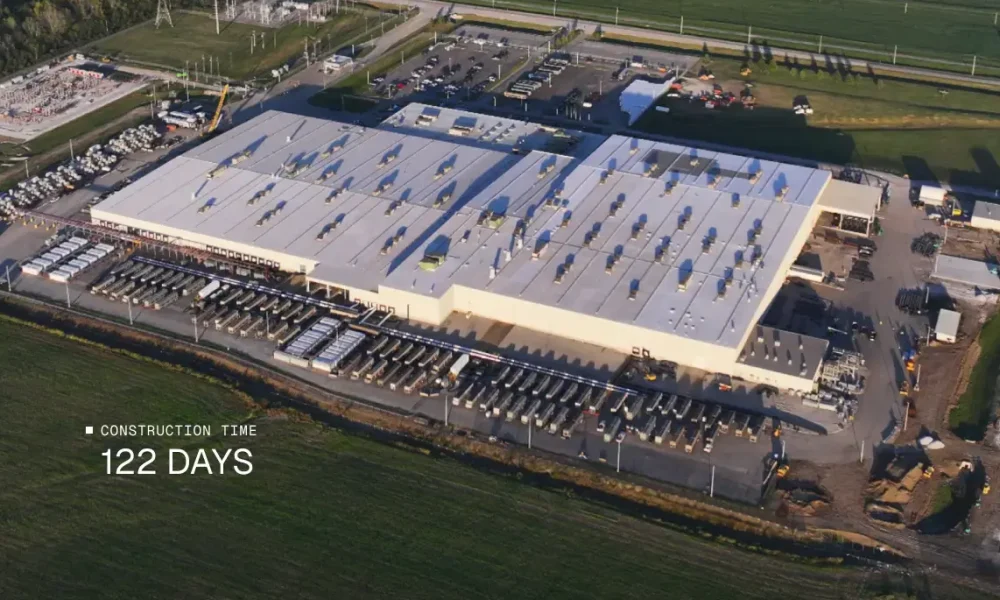
Southaven, Mississippi – SpaceX today officially confirmed the signing of its third substantial compute deal, significantly expanding its footprint as a leading provider of high-performance computing infrastructure within the burgeoning artificial intelligence sector. The latest agreement sees Reflection AI gaining immediate access to advanced NVIDIA GB300 chips housed within SpaceX’s Colossus 2 data center.
Under the terms of the new contract, Reflection AI is set to commence monthly payments of $150 million to SpaceX starting July 1, 2026. Should the agreement run its full course until 2029, the total revenue generated for SpaceX is projected to reach approximately $6.3 billion. Both parties retain the flexibility to terminate the agreement with 90 days’ notice, following an initial three-month period.

The news of this landmark partnership was initially reported by CNBC, signaling a pivotal moment in the commercialization of SpaceX’s robust supercomputing assets.
🚨 SpaceXAI has agreed to a new compute deal with Reflection AI.
Reflection gets access to NIVIDIA GB300s, and will pay $150M per month to SpaceXAI for the compute.
— TESLARATI (@Teslarati) June 22, 2026
SpaceX’s Strategic Expansion into AI Compute
This latest collaboration underscores SpaceX’s aggressive strategy to commercialize its formidable Colossus supercomputing infrastructure. This sophisticated network was initially developed to power the intensive computational demands of Elon Musk’s Grok AI models, developed by xAI.

Following its merger with xAI in February 2026—a transaction that valued the combined entity at an impressive $1.25 trillion—SpaceX has rapidly diversified its business model. The company is now actively expanding its customer base within the competitive and capital-intensive artificial intelligence market, leveraging its unique position as a hardware and infrastructure provider.
Unpacking the Colossus Ecosystem: A Look at Previous Mega-Deals
SpaceX has been systematically building its portfolio of AI compute clients, with the Reflection AI deal representing the third major partnership. Each agreement highlights the unprecedented demand for high-end graphical processing units (GPUs) and the infrastructure to support them.
The company previously secured an exclusive agreement with Anthropic, granting the AI research firm full access to the entirety of its Colossus 1 data center. This massive facility boasts a capacity exceeding 300 megawatts and houses over 220,000 NVIDIA GPUs, making it one of the largest private AI training clusters globally.
According to details disclosed in SpaceX’s IPO filings, Anthropic is committed to paying SpaceX a staggering $1.25 billion per month through May 2029. This long-term contract is poised to generate an estimated $45 billion in revenue for SpaceX over its duration, marking it as one of the most lucrative compute deals in history.
Adding to its impressive roster of clients, SpaceX also entered into a significant partnership with Google. The technology giant agreed to pay SpaceX $920 million per month for compute capacity, with payments scheduled from October 2026 through June 2029. This 32-month arrangement will provide Google with access to approximately 110,000 NVIDIA GPUs, complemented by an array of supporting processors and memory infrastructure.
The Google agreement incorporates a ramp-up period through September 2026 at a reduced fee, with termination options available after the first year. This structured approach allows both parties flexibility while ensuring substantial long-term commitment.
Beyond these large-scale partnerships, SpaceX has also made strategic moves to integrate AI capabilities directly into its ecosystem. This includes establishing arrangements for computing power with Cursor, an AI coding startup that SpaceX acquired in a substantial $60 billion all-stock deal. This acquisition represents SpaceX’s first post-IPO move, further cementing its commitment to advancing AI technologies both internally and through its commercial offerings.
The NVIDIA GB300 Advantage and Market Dynamics
The inclusion of NVIDIA GB300 chips in the Reflection AI deal is particularly noteworthy. The GB300 is part of NVIDIA’s cutting-edge Blackwell platform, designed to deliver unprecedented performance for large language models (LLMs) and other complex AI workloads. These chips are critical for training and deploying the next generation of artificial intelligence models, which require immense computational horsepower.
The global AI market is currently experiencing exponential growth, driven by breakthroughs in generative AI, machine learning, and deep learning. This surge in demand has created significant bottlenecks, particularly concerning the availability of advanced AI chips and the specialized data center infrastructure required to run them effectively.
Persistent chip shortages and the capital-intensive nature of building and maintaining hyperscale AI data centers have pushed many companies to seek external compute providers. SpaceX, with its substantial investment in the Colossus data center, is uniquely positioned to capitalize on this demand, offering pre-built and readily available capacity.
Financial and Strategic Implications for SpaceX
These compute arrangements collectively position SpaceX as a formidable AI infrastructure powerhouse, promising high-margin revenue potential that significantly diversifies its income streams. While SpaceX is traditionally known for its innovative rocket launches, satellite internet services (Starlink), and aspirations for Martian colonization, these AI deals represent a new pillar of profitability.
The Google deal alone is projected to generate nearly $29.5 billion over its term, while the Reflection AI contract adds another $6.3 billion to SpaceX’s future revenues. When combined with the estimated $45 billion from the Anthropic arrangement, SpaceX stands to realize tens of billions in revenue from compute leasing in the coming years.
This financial diversification is crucial for a company with ambitious long-term goals that require substantial capital. By transforming its capital-intensive data centers, initially built for internal AI development, into flexible and high-revenue-generating assets, SpaceX is creating a sustainable funding mechanism for its broader technological ventures.
Reflection AI’s Focus on ‘American Open Intelligence’
Reflection AI, valued at $25 billion, positions itself as a key player in “American open intelligence.” This focus highlights a growing trend towards developing and deploying AI solutions with specific geopolitical and national security considerations.
The company has cited recent restrictions on closed models as a validation for its open-source approaches. Access to cutting-edge hardware like the NVIDIA GB300s from SpaceX’s Colossus data center will be instrumental in Reflection AI’s mission to develop robust and transparent AI systems, particularly those with government and national security applications.
The Future of AI Infrastructure and SpaceX’s Role
SpaceX’s rapid emergence as a critical AI compute provider is transforming the landscape of artificial intelligence development. Its ability to offer vast quantities of state-of-the-art GPU capacity on demand addresses a pressing need in the industry, enabling AI companies to scale their research and deployment efforts without the prohibitively high upfront costs and lead times associated with building their own supercomputing clusters.
The strategy not only supports external AI ambitions but also feeds back into SpaceX’s own AI endeavors. The company, post-IPO and after its merger with xAI, is actively developing its own AI models and applications, including the Grok AI and the ambitious ‘Digital Optimus’ (also known as Macrohard) project. This project, a joint Tesla-xAI initiative, aims to create AI agents capable of handling complex digital tasks, leveraging both dedicated compute units and hardware in parked Tesla vehicles.
Modular data center hardware systems, such as those potentially alluded to by Tesla’s recent ‘MEGAPOD’ trademark filing, could further complement SpaceX’s Colossus strategy by enabling distributed AI workloads, possibly at Supercharger stations or other edge locations. This integrated approach solidifies SpaceX’s position at the forefront of AI innovation, bridging the gap between physical infrastructure and cutting-edge software development.
FAQs on SpaceX’s AI Compute Deals
What is SpaceX’s Colossus data center?
SpaceX’s Colossus data center is a massive supercomputing infrastructure located in Southaven, Mississippi. Originally built to power xAI’s Grok AI models, it houses hundreds of thousands of NVIDIA GPUs and is now being commercialized to provide high-performance computing capacity to external artificial intelligence companies, generating significant revenue for SpaceX.
Which companies have signed compute deals with SpaceX?
SpaceX has signed major compute deals with several prominent AI players. These include Anthropic, which has exclusive access to Colossus 1; Google, for substantial GPU capacity from Colossus 2; and most recently, Reflection AI, also accessing Colossus 2. Additionally, SpaceX acquired AI coding startup Cursor, integrating its compute needs.
How much revenue is SpaceX expected to generate from these deals?
Collectively, these compute deals are projected to generate tens of billions of dollars for SpaceX. The Anthropic deal alone is estimated at $45 billion, Google’s contract is nearly $29.5 billion, and the Reflection AI agreement is valued at approximately $6.3 billion. This represents a significant new revenue stream for the company.
What are NVIDIA GB300 chips, and why are they important?
NVIDIA GB300 chips are advanced graphical processing units (GPUs) from NVIDIA’s Blackwell platform. They are crucial for training and deploying large language models (LLMs) and complex AI workloads due to their unparalleled performance and efficiency. Access to these cutting-edge chips is highly sought after by AI developers worldwide.
Why is SpaceX diversifying into AI infrastructure?
SpaceX is diversifying into AI infrastructure to commercialize its significant investments in supercomputing, initially made for internal AI development. This strategy leverages the high demand for AI compute power amid chip shortages, creates a high-margin revenue stream, and provides financial flexibility to fund its other capital-intensive ventures like space exploration and Starlink operations.
What is Reflection AI’s focus?
Reflection AI is valued at $25 billion and focuses on “American open intelligence.” The company emphasizes open-source approaches to AI development, particularly in response to restrictions on closed models. Its ties to government and national security suggest a commitment to developing secure and transparent AI solutions for critical applications.