
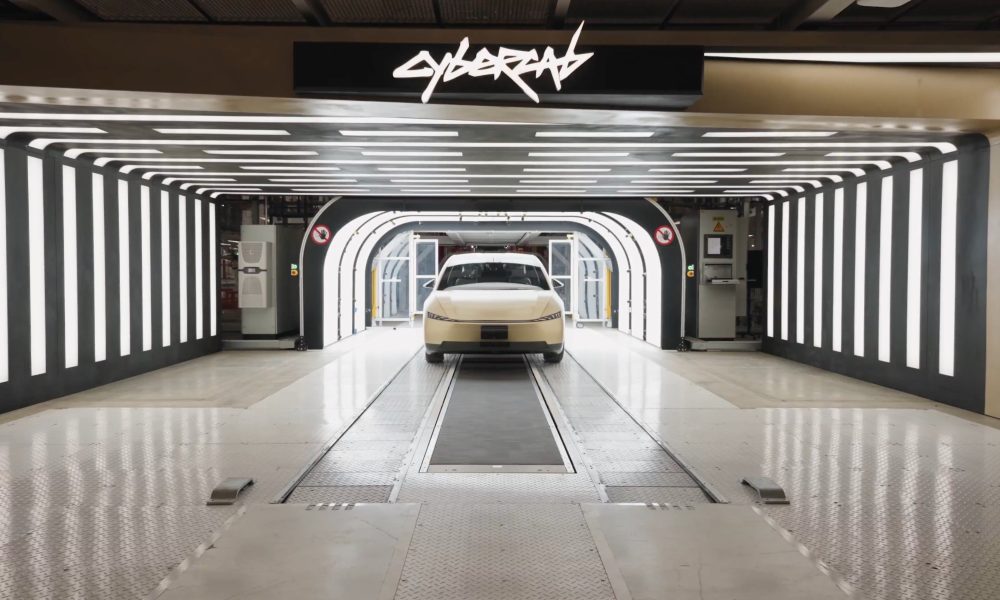
Key Takeaways:
- Tesla’s Cybercab completely bypasses traditional automotive paint shops, leveraging advanced material science and in-mold coloring techniques.
- This innovative approach significantly reduces factory costs, frees up substantial floor space, and streamlines the manufacturing process.
- Structural components are made from specialized aluminum alloys that resist oxidation, negating the need for comprehensive anti-corrosion treatments.
- Exterior panels are colored using Reaction Injection Molding (RIM), integrating color directly into the polyurethane resin for a durable, Class-A surface.
- The strategy aligns with Tesla’s ‘unboxed’ modular assembly process, enhancing production efficiency and contributing to environmental benefits by eliminating volatile organic compound (VOC) emissions associated with traditional spray painting.
In a bold move that challenges established automotive manufacturing paradigms, Tesla has unveiled an unorthodox approach to vehicle finishing for its upcoming Cybercab. Eschewing the conventional, resource-intensive paint shop entirely, the fully autonomous vehicle will instead rely on specialized alloys and an innovative in-mold coloring process. This strategic departure is poised to significantly cut factory costs, optimize floor space utilization, and drastically reduce manufacturing complexity at its Giga Texas facility.

Revolutionising Automotive Production: Eliminating the Paint Shop
The traditional automotive paint shop stands as one of the most capital-intensive and space-consuming elements within vehicle production. Building a conventional paint line can demand an investment stretching into hundreds of millions of dollars and require a million man-hours for construction alone. These facilities necessitate extensive infrastructure, climate control systems, and specialized equipment to handle multiple layers of primers, basecoats, and clear coats, often over several hours or even days.
Such processes are not only expensive but also contribute significantly to a factory’s environmental footprint due to energy consumption and the emission of volatile organic compounds (VOCs). For decades, these challenges have been accepted as an unavoidable aspect of high-volume vehicle manufacturing, making Tesla’s decision to bypass them a monumental engineering and strategic feat.
A Radical Departure from Conventional Methods
The impetus behind this radical shift stems directly from Tesla’s foundational principle: questioning every requirement. During a factory walkthrough with Munro Live, Tesla Vice President of Vehicle Engineering, Lars Moravy, articulated this philosophy, stating: “One of the most expensive parts of the factory is a paint line… a few hundred million dollars, a million man hours to build one… rule number one at Tesla, question the requirements. Why do you need paint?… the alloys we use in the castings… don’t oxidize and reduce strength over time.”

This ‘first-principles thinking’ prompted Tesla engineers to re-evaluate the fundamental necessity of paint, leading to a solution rooted in material science and advanced manufacturing techniques. By addressing the core reasons for traditional paint – primarily corrosion protection and aesthetics – Tesla developed alternative solutions tailored for the Cybercab.
Engineered for Durability: The Role of Advanced Materials
The structural integrity of the Tesla Cybercab relies heavily on advanced material selection. Unlike many common automotive aluminum alloys that are prone to oxidation and a resultant loss of strength over time, the specific aluminum alloys employed in the Cybercab’s front and rear castings are inherently resistant to such degradation. This eliminates the need for extensive anti-corrosion dips or protective paint layers on these major structural components.
However, selective protection is still applied where deemed necessary. Only the side modules of the Cybercab, which are built around hot-stamped boron-steel door rings, receive an anti-corrosion e-coat, also known as a dip coat. This targeted application ensures critical areas prone to corrosion or wear are adequately protected, while other sections benefit from the natural resilience of their chosen materials.
This approach stands in stark contrast to other Tesla models like the Model Y and Model 3, where vehicle bodies are fully coated and painted from bumper to bumper to ensure comprehensive protection and a uniform aesthetic finish. The Cybercab’s differentiated treatment underscores a tailored engineering strategy that prioritizes efficiency without compromising long-term durability.
The Innovation of In-Mold Coloring and Reaction Injection Molding (RIM)
For the exterior aesthetics and final finish, Tesla’s Cybercab leverages what its engineers humorously refer to as “our paint shop”: the plastics shop. This is where the vehicle’s body panels are meticulously produced using an advanced manufacturing technique known as Reaction Injection Molding (RIM). RIM is a low-pressure process that allows for the creation of large, complex parts with excellent surface finish.
In this innovative process, color is not applied as a separate layer but is instead mixed directly into a polyurethane resin at the mix head, immediately prior to injection into the mold. This ensures that the panel emerges from the mold already colored, boasting a pristine Class-A surface finish. The color is integral to the material itself, not merely a superficial layer.
Beyond Surface-Level Aesthetics: Integral Colouring Benefits
The benefits of in-mold coloring via RIM extend far beyond simplified production. Robots are employed to precisely trim any overflow, meticulously controlling sink marks and flow lines that can plague conventionally molded parts. Critically, this process inherently sidesteps common spray-paint defects such as ‘orange peel’ texture or unwanted paint bleed, resulting in a consistently smooth and high-quality finish straight off the production line.
Furthermore, the integral nature of the color provides a significant advantage in terms of durability and repairability. Because the color permeates the entire panel material rather than existing as a surface coating, shallow scratches do not expose a contrasting undercoat. This means minor abrasions are far less noticeable and can be repaired with compatible coatings that behave “basically like paint,” restoring the original aesthetic seamlessly.
Operational Efficiency and Environmental Stewardship
The manufacturing payoff from removing the traditional paint shop is substantial and multifaceted. This elimination, combined with Tesla’s revolutionary ‘unboxed’ modular assembly process, is projected to cut the required factory floor space per vehicle by approximately 50 percent. This reduction not only translates to lower real estate costs but also allows for more agile and compact factory layouts, optimizing overall operational footprint.
Beyond spatial and capital efficiencies, the Cybercab’s paint strategy offers significant environmental advantages. By eliminating the vast majority of traditional spray painting for its body panels, the manufacturing process drastically reduces, if not entirely eliminates, the release of volatile organic compound (VOC) emissions. VOCs are harmful airborne chemicals typically associated with paint solvents and curing, making this a substantial step towards more sustainable automotive production.
Moreover, the coloring cycle itself is dramatically shortened from what could take hours in a conventional paint shop to mere minutes with the in-mold coloring process. This acceleration in production flow contributes to faster manufacturing times and increased throughput, highlighting a systemic improvement across the entire production chain.
Synergy with Modular Manufacturing: The ‘Unboxed’ Approach
The Cybercab’s distinctive paint process is not an isolated innovation but rather a foundational element of Tesla’s broader ‘unboxed’ manufacturing strategy. This revolutionary approach involves building and testing distinct vehicle modules—front, rear, side, and center—in parallel, rather than sequentially on a single, long assembly line. This parallelism drastically shortens the final assembly stage, which becomes a rapid convergence of pre-finished, pre-tested components.
The removal of the complex paint shop perfectly synergizes with this modular construction. Each module can be completed and colored independently, without the bottleneck or spatial demands of a centralized paint facility. Lars Moravy confirmed that the final assembly itself utilizes only about 25 automated stations, a significantly smaller number compared to a typical Model Y line. Overall, the Cybercab production line operates with approximately 78 percent automation, pushing the boundaries of manufacturing efficiency.
A Paradigm Shift in Vehicle Manufacturing
Ultimately, the Tesla Cybercab’s paint strategy transcends mere aesthetic considerations. It represents a concrete manifestation of Tesla’s commitment to applying first-principles questioning to one of the automotive industry’s most entrenched factory requirements. By systematically deleting capital-intensive, energy-heavy, and space-consuming steps, the company demonstrates how advanced material science and innovative process design can render previously indispensable manufacturing stages obsolete.
This holistic approach not only optimizes production costs and efficiency but also aligns with broader environmental sustainability goals. The Cybercab, therefore, emerges not just as an autonomous vehicle but as a testament to a revolutionary manufacturing philosophy that could redefine the future of vehicle production globally.
FAQ Section
What is unique about the Tesla Cybercab paint process?
The Tesla Cybercab bypasses traditional paint shops entirely. Instead, it uses specialized, oxidation-resistant aluminum alloys for structural parts and an in-mold coloring process for exterior panels. This method integrates color directly into the material during production, eliminating the need for separate paint application steps, reducing costs, and saving factory floor space.
Why did Tesla decide to eliminate the traditional paint shop?
Tesla’s decision stems from a first-principles approach, questioning the necessity of traditional paint. Conventional paint lines are among the most expensive and space-intensive parts of a factory. By using advanced materials and in-mold coloring, Tesla significantly reduces capital expenditure, operational complexity, and the overall footprint of its manufacturing facilities.
How are the Cybercab’s exterior panels colored?
Exterior panels for the Cybercab are produced using Reaction Injection Molding (RIM). In this process, color is mixed into a polyurethane resin just before injection into a mold. This means the panel emerges from the mold already colored, with the aesthetic finish integral to the material rather than a surface layer, achieving a high-quality Class-A surface.
What are the benefits of in-mold coloring for the Cybercab?
In-mold coloring prevents common spray-paint defects like orange peel and paint bleed. Since color is integrated, shallow scratches do not expose a contrasting undercoat, making them less noticeable and easier to repair. This process also shortens the coloring cycle from hours to minutes and eliminates volatile organic compound (VOC) emissions.
Are all parts of the Cybercab uncoated?
No, not all parts are uncoated. While the front and rear aluminum castings do not require anti-corrosion treatment due to their specialized alloys, the side modules, which are built around hot-stamped boron-steel door rings, do receive an anti-corrosion e-coat (dip coat). This ensures targeted protection for specific components.
How does this paint process impact factory efficiency?
Eliminating the paint shop, combined with Tesla’s ‘unboxed’ modular manufacturing process, cuts factory floor space per vehicle by approximately 50 percent. It streamlines assembly by allowing modules to be built and tested in parallel. This results in fewer automated stations for final assembly and an overall higher level of automation on the production line.