
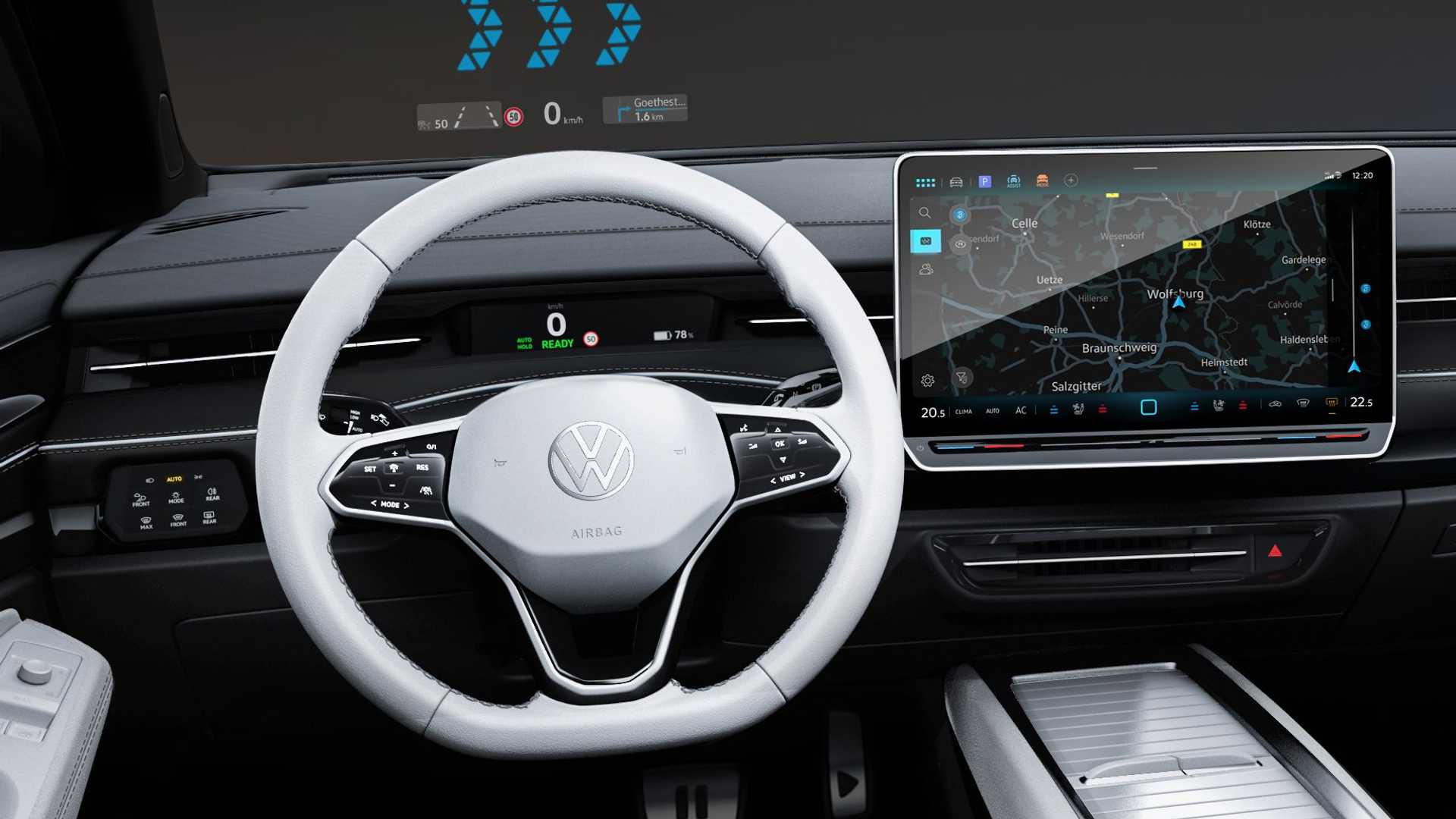
Volkswagen Group’s dedicated software subsidiary, Cariad, has once again reported substantial operating losses, signaling a challenging period for the automotive giant’s ambitious push into in-house software development. Despite an increase in sales revenue, the division’s financial performance highlights the complexities and high costs associated with creating advanced automotive software for a diverse vehicle portfolio.
Key Takeaways
- Cariad recorded an operating loss of $2.64 billion (€2.431 billion) in the past year, with revenues reaching $1.44 billion (€1.327 billion).
- This marks a continuation of a trend, with total operating losses for the Cariad software division exceeding $7.5 billion between 2022 and 2024.
- Software glitches and delays attributed to Cariad have impacted key electric vehicle launches, including the Porsche Macan Electric and Audi Q6 E-Tron.
- Volkswagen Group plans to lay off 1,600 employees at Cariad as part of a broader “rescaling of operations.”
- The company is shifting its strategy, leveraging a significant investment in Rivian for future software architecture and advanced driver assistance systems.
A Deep Dive into Cariad’s Financial Woes
Cariad, initially envisioned as the technological powerhouse for Volkswagen Group’s future mobility solutions, has faced persistent financial headwinds since its inception. The latest figures from Volkswagen Group’s 2024 financial report reveal an operating loss of $2.64 billion (€2.431 billion) for the software division.

This deficit comes despite a notable increase in sales revenue, which stood at $1.44 billion (€1.327 billion) for the same period. The revenue growth, up from $1.17 billion (€1.078 billion) in 2023, was primarily driven by higher licensing revenue. This revenue stream is generated from the increased sales of vehicles across the Volkswagen Group equipped with Cariad software.
Mounting Losses Amidst Revenue Growth
The financial trajectory for Cariad software indicates a deepening challenge. In 2023, the division registered an operating loss of $2.6 billion (€2.392 billion). This followed a loss of $2.28 billion (€2.1 billion) in 2022, which was incurred on revenue of $870 million (€800 million).
Cumulatively, over the three-year period from 2022 to 2024, Cariad has accumulated operating losses exceeding $7.5 billion. During this same timeframe, the total revenue generated by the software subsidiary amounted to nearly $3.5 billion. This stark disparity underscores the immense investment and operational costs associated with developing complex automotive software at scale.

Interestingly, while Cariad’s licensing revenue saw an uptick, the broader Volkswagen Group experienced a slight decline in overall vehicle sales. The group’s sales figures decreased by 2.3%, from 9.24 million cars in 2023 to 9.02 million units in the past year. This context suggests that while more vehicles are adopting Cariad software, the overall market dynamics also play a role in the division’s financial landscape.
Software Glitches and Production Delays
Beyond the financial statements, the operational challenges faced by Cariad have had tangible impacts on Volkswagen Group’s product roadmap. The division’s difficulties in delivering stable and functional software have led to significant delays for critical electric vehicle models from premium brands within the group.
Notably, the market launches of the highly anticipated Porsche Macan Electric and the Audi Q6 E-Tron were both postponed by a full year. These delays were directly attributed to software troubles originating from Cariad. Such setbacks can have profound consequences, including lost sales opportunities, damage to brand reputation, and competitive disadvantages in the rapidly evolving EV market.
The Ripple Effect on Flagship EV Launches
Earlier iterations of Cariad software were also responsible for widely reported issues in mass-market electric vehicles like the Volkswagen ID.4 and ID.5. These vehicles were initially plagued by software that was “notorious for freezing and glitching,” impacting early adopter experiences and requiring subsequent over-the-air updates to improve functionality and user satisfaction.
These persistent software challenges prompted a significant organizational response. In 2023, Volkswagen Group implemented a “massive shakeup among the division’s top-ranking officials,” leading to the appointment of a new chief operating officer, chief technology officer, and finance director at Cariad. This executive overhaul aimed to inject new leadership and strategic direction into the troubled software unit.
Leadership Changes and Restructuring Efforts
While subsequent software versions have shown improvements, the overall health and efficiency of the Cariad software division remain a pressing concern for the Volkswagen Group leadership. The company has publicly acknowledged the need for significant restructuring to address these ongoing issues.
According to a report by Handelsblatt, Volkswagen Group is preparing to implement substantial workforce reductions at Cariad. Plans include laying off 1,600 people by the end of the year. This move aligns with the group’s official statement in its 2024 financial results, where it acknowledged that a “rescaling of operations is planned” for the software unit.
Strategic Overhaul and Workforce Reduction
Such a large-scale reduction underscores the urgency with which Volkswagen Group is approaching the optimization of its Cariad software operations. The restructuring efforts are aimed at streamlining processes, improving development cycles, and ultimately reducing the heavy financial burden the division currently places on the group.
The decision to reduce staff also reflects a strategic reevaluation of the internal software development model. While in-house capabilities remain crucial, the path forward appears to involve a more focused approach, potentially integrating external expertise to accelerate development and ensure robust, reliable software solutions.
The Genesis and Evolving Mandate of Cariad
Cariad was established in 2020, initially named the Car.Software Organization, with a bold vision: to centralize and standardize the software development efforts across the vast Volkswagen Group. With nearly 6,000 employees worldwide, its core mission was to create a “uniform operating system and a uniform electrical architecture” for all upcoming vehicles.
This ambitious goal aimed to move Volkswagen Group away from fragmented software solutions used by its various brands, towards a cohesive, scalable platform. Such a unified approach was expected to unlock synergies, accelerate innovation, and position the group competitively in the era of software-defined vehicles.
From Vision to Reality: Cariad’s Foundational Ambitions
One of Cariad’s most significant initial projects was the development of software for Volkswagen’s flagship electric vehicle, internally known as Project Trinity. This project was conceived to showcase the pinnacle of the group’s electric and digital capabilities, promising advanced features and a seamless user experience powered by Cariad software.
However, “multiple delays forced the group to start from scratch” on Project Trinity. This setback highlighted the immense technical and organizational hurdles in building a completely new, highly complex software stack from the ground up, especially for a project of such strategic importance.
Shifting Gears: The Rivian Partnership
In response to these challenges and to accelerate its software development timeline, Volkswagen Group has pivoted its strategy, looking beyond its internal capabilities for key aspects of future vehicle architecture. A significant part of this revised strategy involves leveraging external partnerships.
The group is now set to make strategic use of its substantial $5.8 billion investment in the American electric vehicle manufacturer, Rivian. This investment signifies a deeper collaboration beyond mere financial interest.
Leveraging External Expertise for Future Platforms
According to Automotive News, the revamped flagship architecture for Volkswagen Group’s future vehicles will incorporate “Rivian software know-how.” This collaboration is expected to integrate advanced features, including “Level 4 driver assistance systems,” into Volkswagen’s next-generation platforms. The partnership aims to combine Volkswagen’s vast manufacturing scale with Rivian’s agile software development expertise, particularly in areas like autonomous driving and sophisticated in-car digital experiences.
This strategic alliance with Rivian represents a pragmatic shift for Volkswagen Group. It acknowledges the need to tap into proven external solutions to overcome internal development hurdles and accelerate the deployment of cutting-edge automotive software. This could allow Cariad to focus on integration and customization rather than building every component from scratch.
The Broader Implications for Volkswagen Group
The struggles of the Cariad software division reflect a broader industry challenge: the transformation of traditional automakers into software-driven technology companies. The modern vehicle is increasingly defined by its software, which controls everything from infotainment and connectivity to powertrain management and advanced driver assistance systems.
For Volkswagen Group, a successful Cariad software division is not just about financial performance; it’s about maintaining its competitive edge and leadership in the global automotive landscape. The ability to deliver seamless, intuitive, and secure software experiences is paramount for attracting and retaining customers in the evolving market for electric and autonomous vehicles.
Software as the New Automotive Frontier
The planned “rescaling of operations” and the strategic partnership with Rivian underscore a renewed commitment from Volkswagen Group to rectify the challenges at Cariad. While the journey has been costly and fraught with delays, the lessons learned are invaluable.
The future success of Volkswagen’s next generation of vehicles, and indeed its entire transition to an electric and digitally integrated ecosystem, hinges on its ability to master automotive software. The efforts to refine Cariad’s operations and integrate external expertise are critical steps towards ensuring Volkswagen Group remains a formidable force in the future of mobility.
Conclusion
Cariad’s journey highlights the immense complexities and financial demands of building advanced automotive software. Despite significant losses and operational setbacks, Volkswagen Group is actively addressing these challenges through strategic restructuring, workforce adjustments, and crucial external partnerships. The investment in Rivian’s software expertise signals a pragmatic shift, aiming to accelerate development and ensure future Volkswagen vehicles are equipped with competitive, reliable, and innovative digital platforms. The evolution of Cariad remains a critical component of Volkswagen’s long-term vision for a software-defined future in the automotive industry.
FAQ Section
What is Cariad?
Cariad is the Volkswagen Group’s dedicated software division, established in 2020. Its primary purpose is to develop a uniform operating system and a standardized electrical architecture for all upcoming vehicles across the Volkswagen Group’s diverse brands, aiming for cohesive digital experiences.
How much has Cariad lost financially?
Between 2022 and 2024, Cariad has accumulated over $7.5 billion in operating losses. In the most recent financial year, the division posted an operating loss of $2.64 billion (€2.431 billion), despite generating $1.44 billion (€1.327 billion) in sales revenue.
What impact have Cariad’s software issues had on Volkswagen vehicles?
Cariad’s software challenges have led to significant delays, including year-long postponements for the Porsche Macan Electric and Audi Q6 E-Tron launches. Earlier software versions in vehicles like the Volkswagen ID.4 and ID.5 were also known for freezing and glitching, affecting initial customer experience.
Why is Volkswagen Group laying off employees at Cariad?
Volkswagen Group plans to lay off 1,600 employees at Cariad as part of a “rescaling of operations.” This restructuring aims to streamline processes, improve development efficiency, reduce costs, and address the division’s ongoing financial and operational challenges in software development.
How is Volkswagen addressing Cariad’s challenges?
Beyond internal restructuring and layoffs, Volkswagen Group is leveraging its $5.8 billion investment in Rivian. The revamped flagship vehicle architecture will incorporate Rivian’s software know-how, particularly for advanced features like Level 4 driver assistance systems, to accelerate development and ensure robust solutions.
What was Project Trinity and how did Cariad relate to it?
Project Trinity was envisioned as Volkswagen’s flagship electric vehicle, intended to feature cutting-edge software developed by Cariad. However, due to multiple delays and technical hurdles with the Cariad software, Volkswagen Group had to restart the project, rethinking its foundational software approach.
What is the strategic importance of Cariad to Volkswagen Group’s future?
Cariad is strategically vital for Volkswagen Group’s transition into a software-defined mobility provider. Its success is crucial for developing competitive electric and autonomous vehicles, enhancing user experience, and maintaining market leadership in an automotive industry increasingly driven by digital innovation and seamless connectivity.